
 Paryono Ramadhan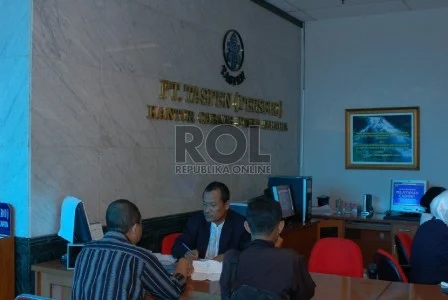
PT Taspen, the state-owned enterprise responsible for civil servant social insurance and pension funds, is scheduled to commence the reimbursement of Civil Servant Housing Savings (Taperum PNS) starting June 1st. This significant initiative is specifically designed for all civil servants who are entering retirement on or after this date, with the notable exception of personnel within the Ministry of Defense, the Indonesian National Armed Forces (TNI), and the National Police (Polri), who are typically covered by separate housing and welfare schemes. The move marks a crucial step in the government’s commitment to fulfilling its obligations to retired civil servants and streamlining the management of their welfare benefits.
Understanding Taperum PNS and its Historical Context
Taperum PNS, or Tabungan Perumahan Pegawai Negeri Sipil, translates to Civil Servant Housing Savings. It was a mandatory housing savings program established by the Indonesian government to assist civil servants in acquiring or improving their housing. The program aimed to provide a financial cushion, albeit modest, to help civil servants overcome the challenges of housing affordability, which has long been a pressing issue for many public sector employees. The primary mechanism for managing these savings was the Badan Pertimbangan Tabungan Perumahan Pegawai Negeri Sipil (Bapertarum PNS), an advisory board for civil servant housing savings.
Bapertarum PNS was established based on Presidential Decree (Keputusan Presiden or Kepres) No. 14 of 1994, which mandated the collection of monthly contributions from civil servants’ salaries. These contributions were then managed to provide housing assistance in various forms, such as down payment subsidies, interest rate reductions on housing loans, or direct financial aid for home renovations. The underlying philosophy was to create a collective savings pool that could support civil servants throughout their careers, ensuring that upon retirement, they would either have owned a home or received a portion of their accumulated savings back. However, over time, the effectiveness and efficiency of Bapertarum PNS faced scrutiny, particularly regarding its operational scope and the adequacy of its benefits compared to the escalating costs of housing.
The Transition: From Bapertarum to Taspen
The decision to transfer the management and reimbursement responsibilities of Taperum PNS from Bapertarum PNS to PT Taspen was a strategic move by the government to consolidate civil servant welfare programs under a more robust and experienced entity. Bapertarum PNS was eventually dissolved, and its functions were officially transferred to PT Taspen, a company with extensive experience in managing pension funds and social insurance for civil servants. This transition was formalized through a cooperation agreement between Taspen and the now-dissolved Bapertarum PNS, aimed at ensuring a smooth handover of responsibilities and uninterrupted service delivery to civil servants.
PT Taspen was deemed the most suitable institution for this task due to its existing infrastructure, nationwide branch network, and established expertise in handling large-scale financial disbursements for millions of civil servants. Taspen already manages the Tabungan Hari Tua (THT) or Old Age Savings, and the pension scheme for civil servants, making it a logical choice to integrate Taperum PNS reimbursements into its existing framework. This consolidation is expected to improve administrative efficiency, reduce bureaucratic complexities, and enhance the transparency of the Taperum PNS program. The goal was to provide a single, integrated platform for civil servants to manage their post-employment benefits, thereby simplifying the process for retirees.
Eligibility and Exclusions for Reimbursement
The reimbursement of Taperum PNS funds is specifically targeted at civil servants who reach their retirement age on or after June 1st. This cut-off date is critical for identifying the cohort of retirees who will be the first beneficiaries of this new system under Taspen’s management. Corporate Secretary of Taspen, Iwan Soeroto, emphasized in a press statement that this payment is part of a broader commitment to ensuring civil servants receive their entitled benefits promptly and conveniently upon exiting public service.
Crucially, the policy explicitly excludes civil servants affiliated with the Ministry of Defense, the Indonesian National Armed Forces (TNI), and the National Police (Polri). This exclusion is not arbitrary; these specific government sectors operate under distinct welfare and housing provisions tailored to their unique service conditions. For instance, military and police personnel often have access to specialized housing programs, housing loans with specific terms, or even housing allowances provided directly through their respective ministries or institutions. Therefore, their housing savings and benefits are managed separately, distinct from the general civil servant Taperum PNS scheme. This differentiation underscores the fragmented, yet purpose-specific, nature of welfare provisions across Indonesia’s diverse public sector.
Streamlined Payment Mechanism: The ‘One Package’ Approach
One of the key features highlighted by Iwan Soeroto is the "one package" approach to payment. The Taperum PNS reimbursement will be processed and disbursed simultaneously with the first pension payment and the Tabungan Hari Tua (THT) at Taspen’s respective branch offices across Indonesia. This integrated payment method is designed to maximize convenience for retiring civil servants, allowing them to receive all their accumulated benefits in a single transaction.
The rationale behind this bundled approach is rooted in simplifying the bureaucratic process and reducing the burden on retirees. Instead of navigating multiple agencies or making separate visits for different entitlements, civil servants can complete the necessary procedures at one location. This not only saves time and effort but also minimizes potential confusion or delays. For a country with a vast number of civil servants spread across numerous regions, such an efficient disbursement mechanism is vital for ensuring equitable access to benefits. Taspen’s extensive network of branch offices, strategically located nationwide, facilitates this streamlined process, making it accessible even to retirees in remote areas. This focus on user convenience is a hallmark of modern public service delivery and aligns with broader government efforts to enhance bureaucratic efficiency.

Civil Servant Contributions: A Historical Overview and Future Prospects
While Taperum PNS offers reimbursements, it is fundamentally a savings program built on mandatory contributions from civil servants’ salaries. The historical contribution structure has been governed by Kepres Nomor 46 Tahun 1994. Under this decree, civil servants (excluding those in TNI/Polri/Kemhan) were required to contribute fixed monthly amounts based on their salary ‘Golongan’ or classification:
- Golongan I (Class I): Rp 3,000 per month
- Golongan II (Class II): Rp 5,000 per month
- Golongan III (Class III): Rp 7,000 per month
- Golongan IV (Class IV): Rp 10,000 per month
These fixed contribution rates, established nearly three decades ago, have remained largely unchanged despite significant economic shifts and inflation. The inadequacy of these fixed amounts in the face of rising housing costs has been a long-standing point of discussion. A contribution of Rp 10,000 for a Golongan IV civil servant, for example, represents a negligible fraction of their monthly salary and has limited impact on their ability to afford housing in contemporary markets.
Recognizing this disparity, PT Taspen is actively pursuing a significant reform to the contribution system. The proposal aims to replace the fixed monetary contributions with a percentage-based deduction: 2.5 percent of the civil servant’s total monthly salary. This proposed change is a critical development, as it would introduce a more equitable and dynamic contribution model. A percentage-based contribution would automatically adjust with salary increases, ensuring that the savings grow in proportion to a civil servant’s earning capacity and, theoretically, their capacity to invest in housing. It would also make the program more financially robust and responsive to economic realities, potentially leading to more substantial housing assistance or reimbursements for future retirees. This reform aligns with modern pension and social security schemes globally, which often rely on proportional contributions to ensure long-term sustainability and fairness.
Chronology of Taperum and Bapertarum’s Evolution
To fully appreciate the current development, a brief chronology of Taperum PNS and Bapertarum is essential:
- Early 1990s: The concept of a dedicated housing savings program for civil servants gains traction within government policy circles, driven by concerns over housing affordability for public sector employees.
- 1994: Presidential Decree No. 14 of 1994 is issued, formally establishing Bapertarum PNS (Badan Pertimbangan Tabungan Perumahan Pegawai Negeri Sipil) to manage the Taperum PNS program. This decree also outlined the initial framework for contributions and benefits.
- 1994: Presidential Decree No. 46 of 1994 is issued, detailing the fixed monthly contribution rates for different civil servant classifications (Golongan I-IV), which would remain largely unchanged for decades.
- Subsequent Years (1995-2010s): Bapertarum PNS operates, collecting contributions and disbursing housing assistance in various forms, including subsidies and low-interest loans, though the impact of these benefits is often perceived as limited by civil servants due to inflation and rising housing costs.
- Late 2010s: Discussions intensify within government about the need to reform or consolidate civil servant welfare programs. Bapertarum PNS’s operational efficiency and the adequacy of its benefits come under review.
- Early 2020s (Specific date varies by source but broadly 2020-2021): The government decides to dissolve Bapertarum PNS and transfer its functions, assets, and liabilities related to Taperum PNS to PT Taspen. This decision is part of a broader strategy to streamline state-owned enterprise operations and enhance service delivery.
- Ongoing (2021-Present): PT Taspen works on integrating Taperum PNS management into its existing systems, establishing cooperation agreements, and preparing for the reimbursement process.
- June 1st: The official date for PT Taspen to commence the reimbursement of Taperum PNS funds for all eligible civil servants retiring on or after this date. This marks the culmination of the transition process and the beginning of a new chapter for the program under Taspen’s stewardship.
Broader Context: Government Housing Policy and Civil Servant Welfare
The Taperum PNS program, and its transition to Taspen, must be viewed within the broader context of Indonesia’s government housing policy and its commitment to civil servant welfare. Providing adequate housing for public servants is a long-standing challenge for many developing nations. In Indonesia, civil servants, while enjoying job security, often face salary constraints that make homeownership difficult, especially in urban areas with rapidly appreciating property values.
Government initiatives for civil servant housing have evolved over time, ranging from direct provision of housing to various forms of financial assistance. Taperum PNS was one such mechanism, designed to complement other efforts. The current move to streamline its management under Taspen reflects a recognition that existing mechanisms needed modernization and better integration. The proposed shift to a 2.5% salary contribution signals a potential policy pivot towards making the program more sustainable and impactful, ensuring that future civil servants have a more robust housing savings pool. This reform could also serve as a model for other welfare programs, emphasizing equity and responsiveness to economic realities.
Stakeholder Reactions and Implications
The announcement by PT Taspen is likely to elicit various reactions from key stakeholders and carry several implications:
- For Retiring Civil Servants: This news will be largely welcomed. The "one package" payment method offers significant convenience, and the timely reimbursement of accumulated savings provides a welcome financial boost as they transition into retirement. Many retirees rely on these funds for various post-employment expenses, including healthcare, family support, or even further investment. The clarity and predictability of the process under Taspen will be a relief.
- For PT Taspen: Taking on Taperum PNS adds another significant portfolio to Taspen’s responsibilities. While it leverages existing infrastructure, it also entails managing a new fund, processing additional disbursements, and potentially dealing with historical data from Bapertarum PNS. This transition will require robust financial management, efficient administrative processes, and effective communication strategies. The proposed 2.5% contribution rate, if implemented, would significantly increase the fund’s capital, requiring careful investment strategies to ensure long-term growth and sustainability.
- For the Government (e.g., Ministry of Finance, Ministry of State-Owned Enterprises): This move demonstrates the government’s commitment to fulfilling its financial obligations to civil servants and rationalizing state-owned enterprise functions. The Ministry of Finance, which oversees state finances, will likely monitor the financial health and management of the Taperum PNS fund under Taspen. The Ministry of State-Owned Enterprises will view this as a successful consolidation, enhancing the efficiency and effectiveness of a key SOE.
- For Civil Servant Associations and Unions: These organizations will likely endorse the streamlined reimbursement process. They will also be keen observers and advocates regarding the proposed shift to a 2.5% contribution rate. While a percentage-based contribution is generally seen as fairer, they might push for additional benefits or clearer guidelines on how these funds will be managed and what specific housing assistance mechanisms will be available in the future. Their role will be crucial in ensuring that the reforms genuinely benefit civil servants.
- Broader Economic Impact: While individual Taperum reimbursements may not significantly impact the national economy, the cumulative effect of regular disbursements to retirees could provide a minor stimulus to local economies, particularly in areas with high concentrations of retired civil servants. The proposed shift to a percentage-based contribution could, over the long term, inject more substantial capital into housing-related financial instruments, potentially influencing the housing finance sector.
Future Outlook
The commencement of Taperum PNS reimbursements by PT Taspen marks a new chapter for civil servant housing welfare in Indonesia. The immediate focus will be on ensuring the smooth and efficient disbursement of funds to eligible retirees. Beyond this, the attention will undoubtedly shift to the proposed reform of the contribution system. The transition to a 2.5 percent salary deduction, if approved and implemented, represents a fundamental restructuring of the program, moving it towards a more sustainable and equitable model.
Successful implementation of these reforms will require clear communication, robust financial governance, and continuous monitoring. The ultimate goal is to ensure that the Taperum PNS program, under Taspen’s capable management, effectively serves its original purpose: to genuinely assist Indonesian civil servants in achieving their housing aspirations, thereby enhancing their overall welfare and recognizing their invaluable contributions to public service. This evolution signifies a commitment to modernizing welfare provisions and adapting them to the socio-economic realities of the 21st century.








