Tyo Susilo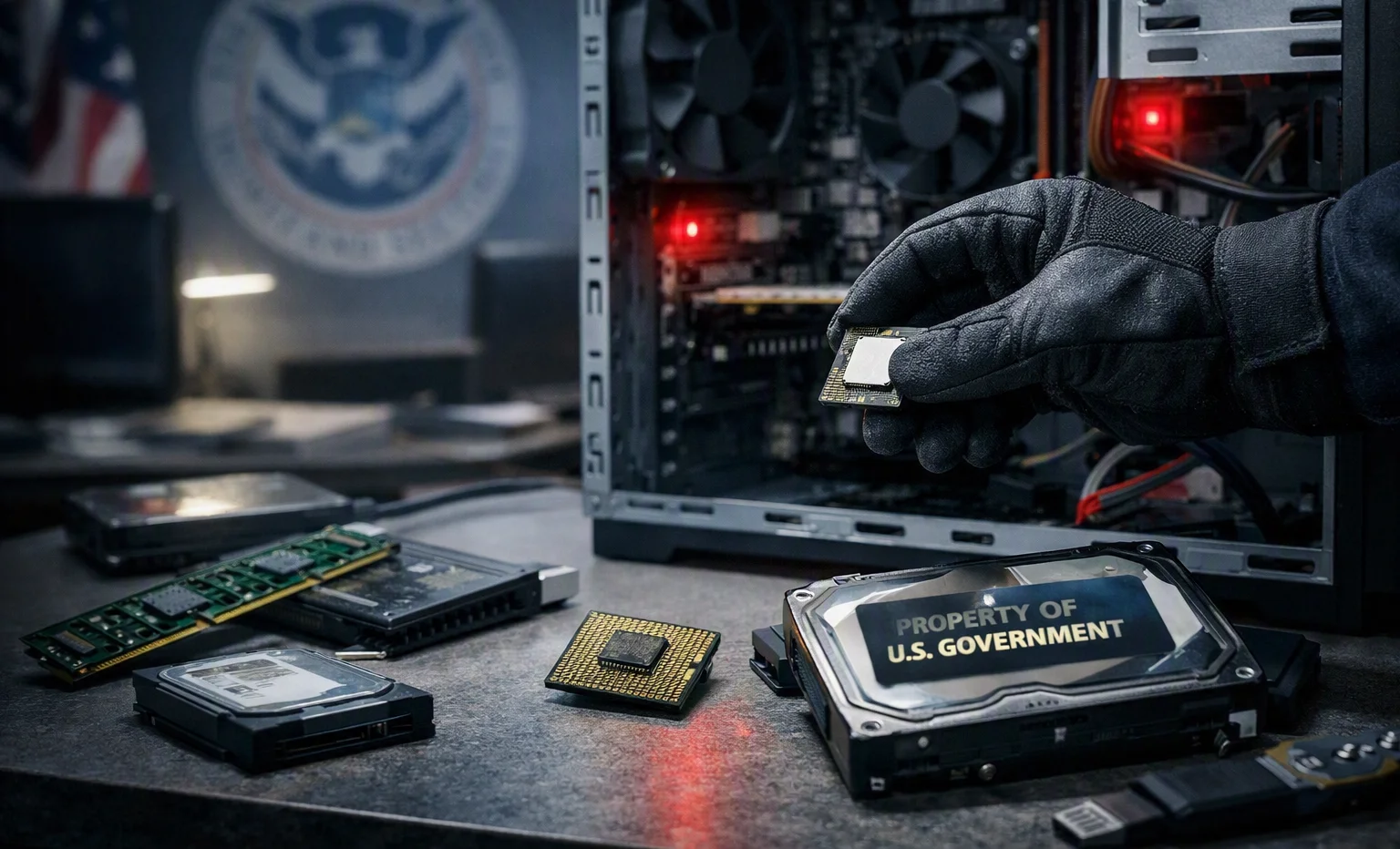
Federal law enforcement authorities in the United States have arrested a Customs and Border Protection (CBP) supervisor stationed in Maine following a bizarre and sophisticated internal hardware theft scheme. The official is accused of systematically stripping high-performance components from government-owned computers and replacing them with inferior, outdated hardware to avoid immediate detection, all while monetizing the stolen parts through mainstream consumer marketplaces.
The case, which highlights vulnerabilities in government asset management and internal IT oversight, has sent shockwaves through federal agencies operating along the northern border. Terry "Jiajia" Liu, a CBP supervisor stationed in Calais, Maine, now faces multiple federal charges related to government property theft, abuse of position, and fraud after an extensive investigation by the Federal Bureau of Investigation (FBI).
Scope of the Theft and Affected Infrastructure
The investigation revealed that Liu targeted at least 46 computer systems belonging to the Department of Homeland Security (DHS). These affected machines were not centralized in a single server room or administrative office; rather, they were distributed across three critical border enforcement and customs facilities throughout the state of Maine.
Rather than walking out of the facilities with entire desktop towers—a method that would have triggered immediate physical security alarms or inventory discrepancies—Liu executed a methodical "downgrade" operation. Between May 2025 and July 2026, he systematically opened government-issue desktop computers, extracted high-value internal hardware, and installed severely underpowered substitutes.
The targeted components were exclusively high-performance parts essential for modern analytical and operational workloads. Among the stolen hardware were high-end Intel Core i7 processors—specifically models from the 14th Generation Raptor Lake Refresh lineup—alongside high-capacity RAM modules and enterprise-grade storage drives. In many instances, the stolen processors were replaced with obsolete Intel Pentium chips, fundamentally crippling the processing power of the workstations.

Internal audits following Liu’s arrest uncovered the staggering extent of the hardware swapping:
- 39 computers had their advanced processors replaced with lower-tier CPUs.
- 6 computers suffered from missing or downgraded RAM modules.
- 8 computers had their high-capacity hard drives swapped for storage components with significantly lower capacities and speeds.
Modus Operandi and Surveillance Evidence
Liu’s position within the department provided him with a degree of access, though it explicitly did not grant him authorization to tamper with or modify government computer hardware. As part of his duties, Liu provided internal IT support to fellow personnel. However, Port Director Theodore Cummings had previously issued explicit, written directives explicitly forbidding Liu from relocating or altering any agency computers or their internal components.
Ignoring direct administrative orders, Liu exploited his overnight shifts to carry out the thefts. Federal investigators secured compelling physical and digital evidence, including extensive closed-circuit television (CCTV) footage. Surveillance recordings from midnight shifts captured Liu systematically dismantling secure computer towers. In specific video clips, Liu was documented meticulously utilizing an electronic screwdriver to strip thermal paste off enterprise-grade CPUs before extracting them. Other footage captured him removing high-density RAM modules and secreting them away in personal desk drawers.
To monetize the stolen government property without raising immediate local suspicion, Liu turned to commercial online trade-in programs. Investigators discovered that Liu utilized the Newegg Trade-In program to liquidate the stolen Intel Core i7 processors. Records from American Express and Newegg established a consistent pattern of fraudulent transactions: Liu successfully exchanged government-sourced processors 16 times over a 14-month period, receiving store credit valued between $200 and $210 per CPU. Financial forensics investigators traced multiple $200 credits directly into Liu’s personal financial accounts.
When questioned initially about the widespread performance degradation across agency terminals, Liu attempted to obfuscate the truth. He claimed that the hardware modifications and component swaps were executed as an unorthodox measure to accelerate routine computer maintenance and repair workflows. However, as the physical evidence and digital transaction trails mounted, the justification collapsed, revealing a deliberate theft-for-profit enterprise.
Chronology of the Investigation
The unfolding of the scandal followed a structured timeline of discovery, surveillance, and eventual apprehension:

- May 2025: The timeline of illicit activities begins, with Liu executing his first documented processor trade-in via the Newegg platform, acquiring approximately $200 in trade-in credit.
- May 2025 – July 2026: Over a span of 14 months, Liu systematically targets computers across three DHS facilities in Maine during overnight shifts, executing 16 separate processor exchanges alongside unauthorized RAM and storage extractions.
- Mid-2026: Field personnel begin reporting severe, unexplained performance bottlenecks and sluggish system responses on standard operational workstations, prompting an internal review of IT asset integrity.
- July 2026: Port Director Theodore Cummings’ previous administrative warnings are re-examined as physical inspections reveal widespread hardware mismatches against official agency asset registries. Security camera footage is reviewed, confirming unauthorized tampering during off-hours.
- September 2026: Federal investigators formally compile transaction records linking American Express accounts and Newegg trade-in histories to Liu, culminating in his arrest by the FBI and subsequent federal indictments.
Financial and Operational Impact
The financial fallout from Liu’s actions extends far beyond the immediate value of the components liquidated on consumer marketplaces. According to preliminary assessments conducted by federal procurement specialists, simply acquiring replacement hardware to restore the compromised machines to their original specifications carries an estimated price tag of $20,460.
However, rectifying the issue comprehensively is far more complex. Agency analysts estimate that replacing all 46 compromised computers entirely with equivalent, secure, government-vetted hardware configurations would cost approximately $105,800. This higher figure accounts not just for raw hardware procurement, but also for the labor-intensive processes of secure imaging, software deployment, encryption compliance, and configuration management required before the terminals can safely rejoin the Department of Homeland Security network.
Operationally, the downgrading of processing power created significant friction for customs and border personnel. Border security operations rely on rapid data processing, real-time background checks, and seamless communication across interconnected databases. By swapping out high-performance Core i7 processors for aging Pentium chips, Liu inadvertently introduced debilitating latency into critical border enforcement workflows, potentially impacting the efficiency of agents processing entries and monitoring regional security vectors along the Maine-Canada border.
Broader Implications for Government IT Security
The arrest of Terry "Jiajia" Liu has triggered broader conversations regarding internal security controls within federal agencies, particularly concerning endpoint management and physical access to sensitive hardware. While cybersecurity frameworks heavily prioritize network defense, encryption, and protection against remote intrusion, incidents of insider threat involving physical hardware manipulation remain a challenging vector for organizations of all sizes.
Federal installations typically maintain strict physical security protocols, yet trust-based access granted to IT support personnel can create single points of failure. The ease with which an internal employee was able to systematically dismantle dozens of secure systems over a prolonged period without immediate flagging has prompted internal audits of inventory tracking mechanisms across regional Department of Homeland Security outposts.
As the legal proceedings against Liu progress through the federal court system, the case serves as a stark reminder of the vulnerabilities inherent in physical asset management. For the Department of Homeland Security, the immediate priority remains the remediation of the compromised terminals in Maine, ensuring that all border security facilities operate with fully functional, high-integrity hardware capable of supporting modern law enforcement demands.