Tyo Susilo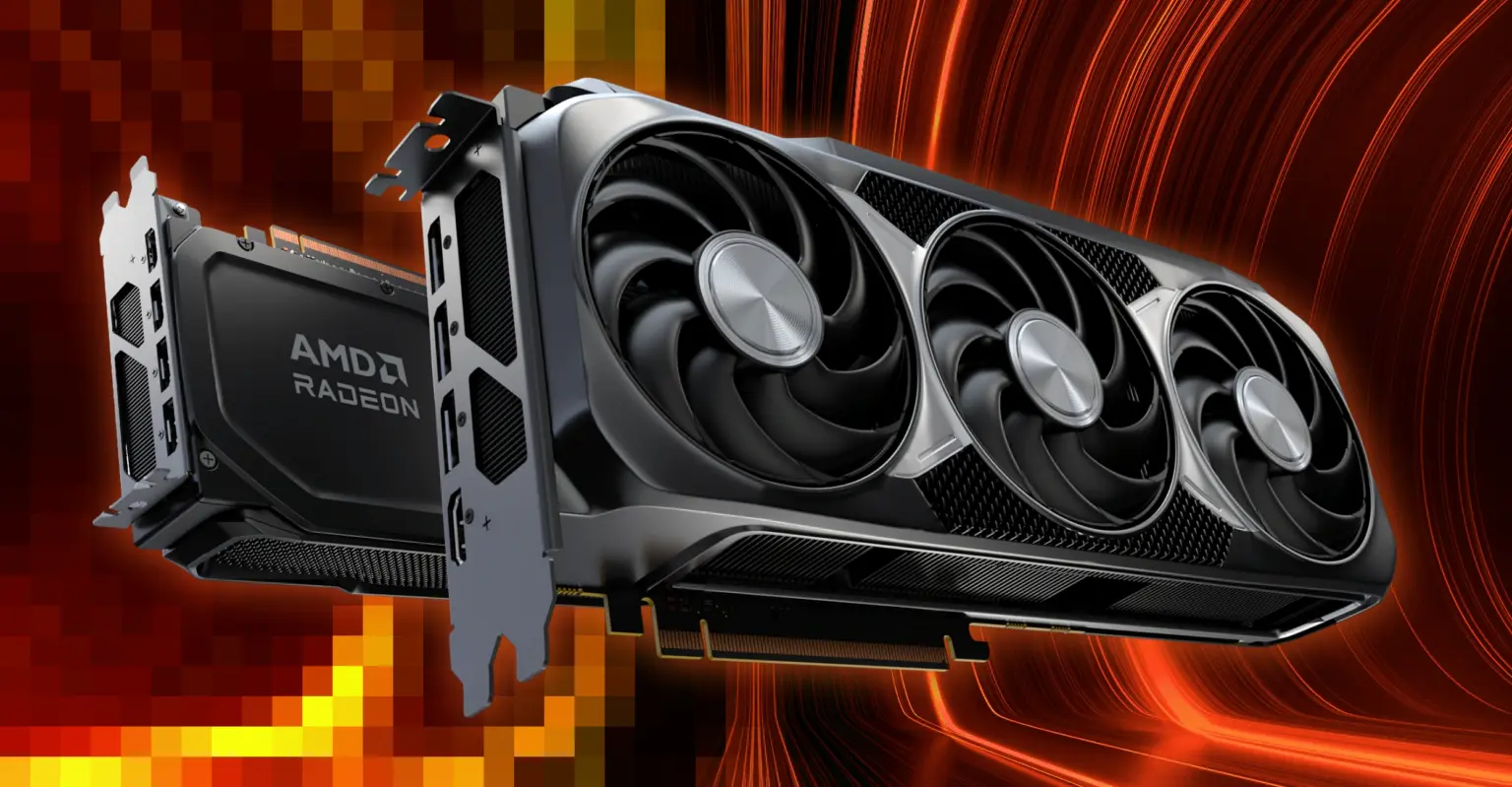
The landscape of real-time computer graphics is undergoing a fundamental shift, moving away from traditional rasterization and deterministic ray tracing toward artificial intelligence-driven neural rendering. While competitors NVIDIA and Intel have already established their footholds in this emerging sector with proprietary AI graphics pipelines, Advanced Micro Devices is reportedly preparing its own counter-strategy. According to recent industry leaks, AMD is actively developing a cutting-edge neural rendering feature known as "Neural Lighting," slated for integration into its upcoming graphics processing architecture, RDNA 5.
This development signals a critical pivot for the semiconductor giant as it seeks to maintain hardware competitiveness in an era where software-defined rendering and machine learning increasingly dictate visual fidelity and frame rates in modern PC gaming.
The Evolution of Neural Rendering in Modern GPUs
Neural rendering represents a paradigm shift in how digital scenes are computed, rendered, and displayed. Traditional graphics pipelines rely heavily on mathematical approximations, geometric calculations, and explicit ray tracing formulas to simulate light behavior, reflections, shadows, and textures. While highly accurate, these conventional methods demand extraordinary computational resources, often becoming the primary bottleneck for high-resolution gaming and real-time visualization.
In response, the graphics industry has rapidly adopted machine learning models to approximate complex visual phenomena. NVIDIA pioneered this commercial trajectory with its Deep Learning Super Sampling (DLSS) technology, evolving from a simple spatial upscaler into a sophisticated neural graphics framework that handles reconstruction, ray reconstruction, and increasingly complex lighting scenarios. Intel followed closely behind with its Xe Super Sampling (XeSS) architecture, leveraging XMX hardware engines to accelerate AI workloads on consumer hardware.
AMD’s current upscaling technology, FidelityFX Super Resolution (FSR), has largely relied on spatial and temporal algorithms rather than dedicated neural network processing running on specialized hardware accelerators, though recent iterations have begun incorporating machine learning techniques. The reported development of "Neural Lighting" for RDNA 5 suggests that AMD is moving beyond mere resolution upscaling to tackle foundational rendering workloads, such as global illumination and shadow calculation, through neural networks.
Origins of the Leak and Hardware Requirements
The initial intelligence regarding AMD’s "Neural Lighting" project surfaced via Kepler_L2, a notoriously reliable hardware industry insider and leaker who shared the information on the AnandTech forums. According to Kepler_L2’s disclosures, the proprietary technology is designed to leverage advanced machine learning models to manage complex lighting calculations within video games dynamically.
Industry analysts and hardware enthusiasts immediately drew parallels between this unconfirmed feature and NVIDIA’s forward-looking roadmap, particularly concepts akin to a theoretical DLSS 5 framework that deeply integrates AI into core rendering pipelines. However, it is essential to contextualize that these reports originate from a single, unverified source within the supply chain and have not received official validation from AMD corporate communications.
A critical detail highlighted in the leak concerns hardware exclusivity. Kepler_L2 asserted that "Neural Lighting" will likely remain hardware-locked to the forthcoming RDNA 5 architecture, meaning owners of current-generation RDNA 3 (Radeon RX 7000 series) or older hardware would be excluded from utilizing the feature. The rationale behind this restriction lies in the intense computational demands of real-time neural rendering. Training and executing inference models for lighting simulation in real time require dedicated hardware acceleration blocks—such as advanced matrix cores or specialized AI accelerators—that are expected to be fundamentally integrated into the silicon design of RDNA 5 graphics processors.
Timeline and Release Expectations for RDNA 5
The roadmap for AMD’s graphics architecture transitions remains a subject of intense speculation within the semiconductor industry. While the immediate focus for consumers rests on the deployment and market stabilization of intermediate product refreshes, long-term industry projections paint a measured timeline for the arrival of RDNA 5 and its associated software ecosystems.

Current market intelligence and supply chain rumors indicate a staggered release schedule for the architecture. Industry leaks suggest that AMD may introduce a preliminary, singular high-end configuration of an RDNA 5-based graphics card as early as 2027. A broader, more comprehensive rollout encompassing mainstream desktop GPUs, mobile variants, and custom silicon solutions is projected to follow suit throughout 2028.
This extended timeline underscores the immense engineering complexity involved in designing an entirely new graphics microarchitecture from the ground up, particularly one that heavily integrates neural processing units tailored specifically for real-time graphics rendering. Because the timeline stretches several years into the future, technical specifications, feature names, and performance metrics remain entirely fluid and subject to corporate strategic pivots.
Contextualizing FSR Diamond and the Broader Software Ecosystem
To understand where "Neural Lighting" fits into AMD’s broader product strategy, one must examine the company’s recent software disclosures. In March of the preceding year, AMD publicly acknowledged the conceptual framework of its next-generation upscaling initiative, widely referred to within the industry by the moniker "FSR Diamond."
While FSR 1, 2, and 3 relied primarily on spatial and temporal algorithms, the incoming FSR Diamond paradigm is anticipated to incorporate deep learning methodologies more aggressively, aligning AMD’s ecosystem closer to NVIDIA’s Tensor Core-driven approach. Observers in the graphics community suggest that "Neural Lighting" may not exist as a completely isolated feature, but rather as an advanced subsystem or subsidiary module operating under the broader umbrella of FSR Diamond or a similarly branded neural rendering suite.
By unifying resolution scaling, frame generation, and neural lighting under a cohesive machine learning framework, AMD aims to provide game developers with a standardized, cross-platform toolset that can optimize performance without sacrificing visual fidelity. This is particularly vital as modern game engines increasingly adopt path tracing and real-time lumen-style global illumination systems that routinely cripple hardware running legacy rasterization pipelines.
Implications for the Competitive GPU Market
The potential introduction of a hardware-accelerated neural lighting system on RDNA 5 carries significant strategic implications for the consumer graphics card market. For years, critics have noted a widening feature gap between NVIDIA’s GeForce RTX ecosystem and AMD’s Radeon lineup, particularly regarding advanced ray tracing efficiency, path tracing performance, and AI-assisted rendering features.
Should AMD successfully deploy "Neural Lighting" on RDNA 5 alongside a fully mature neural upscaling pipeline, it would narrow the technological deficit, offering developers a viable, standardized alternative to proprietary frameworks like NVIDIA DLSS and RTX Direct Lighting (RTXDL). Furthermore, as gaming consoles from Sony and Microsoft look toward future generations—historically powered by customized AMD architectures—any foundational advancements in neural rendering developed for RDNA 5 could eventually find their way into living-room hardware, democratizing advanced AI lighting for millions of console players.
Conclusion and Outlook
As the industry awaits official confirmation from AMD, the narrative surrounding RDNA 5 continues to evolve from a purely hardware-centric discussion into a broader conversation about software-defined graphics performance. With competitors continuously pushing the boundaries of what neural networks can achieve within a real-time rendering loop, AMD’s entry into this domain is not merely advantageous, but essential for long-term market viability.
Until corporate leadership provides concrete demonstrations, official release dates, and technical whitepapers detailing "Neural Lighting" and the RDNA 5 architecture, consumers and analysts alike must exercise caution regarding unverified leaks. Nevertheless, the trajectory is clear: the future of real-time computer graphics is undeniably neural, and AMD is positioning its next-generation silicon to meet that reality head-on.