Bambang Pamungkas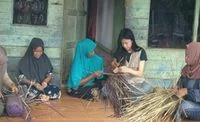
Jakarta, CNBC Indonesia – In the heart of South Kalimantan’s sprawling peatlands, where the persistent threat of forest and land fires casts a perennial shadow over local communities, a naturally occurring wetland plant has emerged as an unlikely catalyst for ecological preservation and economic renewal. Known scientifically as Lepironia articulata and locally as purun, this sturdy sedge has long been woven into traditional mats and baskets by rural villagers. However, despite its deep cultural roots, purun handicrafts have historically remained confined to low-margin, localized markets, offering minimal financial incentive for the intensive protection of the fragile wetlands where the plant thrives.
This dynamic is rapidly shifting thanks to the initiative of Alexandra Christy Untono, a 12th-grade student at Jakarta Intercultural School (commonly referenced as ACS Jakarta). Driven by a vision to harmonize environmental conservation with grassroots economic development, Alexandra founded Gaia Weave, a social enterprise that reimagines traditional purun into sleek, modern, functional commodities. By pivoting the raw material toward contemporary urban demands—producing items such as tech organizers, document pouches, high-end tote bags, and corporate merchandise—Gaia Weave has successfully elevated the global profile of an indigenous plant while simultaneously addressing the socio-economic vulnerabilities of local wetland communities.
The Ecological Imperative of Peatland Preservation
The launch of Gaia Weave intersects with a critical environmental challenge in Indonesia. South Kalimantan’s peatlands are globally significant carbon sinks, but when these marshy ecosystems dry out, they become dangerously susceptible to catastrophic subterranean fires that release massive volumes of greenhouse gases into the atmosphere and blanket the region in toxic haze. Maintaining a high water table is essential to mitigating this fire risk, yet conservation mandates often fail when local populations lack viable, sustainable livelihoods linked directly to the health of their natural surroundings.
Recognizing this disconnect, Alexandra formulated a market-based conservation model. Because purun flourishes exclusively in wet, thriving wetland environments, creating a robust, high-value commercial demand for the plant provides local inhabitants with a powerful, tangible financial incentive to keep the peatlands wet and protected.
"Purun grows abundantly in wet environments, and by creating economic value from purun, we want to build a real incentive so that the community sees the protection value of the ecosystem where this plant grows," Alexandra stated in an official release on Friday, October 2, 2026.
This philosophy underpins Gaia Weave’s operational ethos. Rather than treating conservation as a purely restrictive regulatory framework, the enterprise transforms ecological stewardship into a lucrative livelihood. By tying financial prosperity directly to the preservation of the wetland landscape, Gaia Weave aligns the economic self-interest of rural villagers with the broader ecological goals of carbon emission reduction and wildfire prevention.
Scaling Up: From Traditional Craft to Modern Supply Chains
For generations, the craftsmanship surrounding purun was an informal, supplemental activity passed down through families, mostly yielding seasonal income with restricted market reach. Gaia Weave altered this paradigm by introducing rigorous design standards, quality control protocols, and product diversification tailored to urban professionals and corporate clients.
This professionalization of the craft has enabled a massive scaling of the artisan network. To date, Gaia Weave has forged formal partnerships with 126 women artisans spread across 15 villages in South Kalimantan. By streamlining the supply chain and opening direct channels to metropolitan and institutional buyers, the enterprise has drastically improved the financial standing of its manufacturing base.
The quantitative impact on household incomes has been substantial. According to data provided by the initiative, participating artisans have experienced a 100% to 150% surge in monthly earnings. Previously, artisans earned between IDR 1 million and IDR 1.5 million per month; under the Gaia Weave partnership, average monthly incomes have climbed to approximately IDR 2.7 million to IDR 3 million.
A striking example of this transformation is reflected in the experience of Ibu Idang, a local resident who previously depended entirely on seasonal farming. Prior to her involvement with the enterprise, Ibu Idang earned a modest daily wage of IDR 40,000 to IDR 50,000 from agricultural labor. Today, she integrates purun weaving into her daily routine, working from home after returning from the fields. This added productivity generates an extra IDR 80,000 to IDR 100,000 per day.
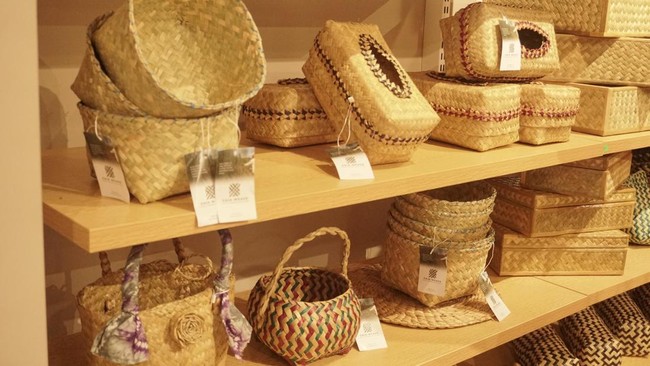
"After returning from the fields, I continue weaving at home. The skills we already possess now provide additional real income, and our weaving is used by many people," Ibu Idang shared, illustrating how modern social entrepreneurship can seamlessly integrate with existing rural lifestyles without displacing traditional routines.
Foundations in Sustainability and Circular Economics
The operational blueprint of Gaia Weave did not emerge in a vacuum. Alexandra’s foundational approach to sustainable business was shaped by her prior involvement in various rigorous environmental initiatives. Her hands-on experience includes conducting seaweed mapping research with Birufinery in Nusa Tenggara Timur (East Nusa Tenggara) and collaborating with the EcoFunCycle recycling network. These formative experiences instilled a deep appreciation for supply chain transparency, community-led resource management, and the principles of circular economics.
Speaking on the core philosophy of her enterprise, Alexandra emphasized that true circularity extends far beyond the mere utilization of biodegradable or eco-friendly materials.
"Circular economy is not just about using materials that are environmentally friendly or biodegradable. The most important foundation is ensuring that the people along the supply chain, especially the artisans in the villages, get a fair economic benefit," Alexandra asserted.
By prioritizing equitable compensation, Gaia Weave rejects traditional exploitative models of handicraft sourcing, ensuring that the communities bearing the burden of environmental stewardship capture the lion’s share of the economic value generated by their labor.
Future Projections and Strategic Roadmap Toward 2030
Building upon its early successes, Gaia Weave has established ambitious growth targets for the remainder of the decade. By the year 2030, the social enterprise aims to expand its cooperative network to encompass more than 1,000 artisans across South Kalimantan. This expansion will be supported by aggressive efforts to tap into international export markets and forge strategic procurement partnerships with premium hospitality sectors, such as eco-resorts and luxury hotels that demand sustainable, ethically sourced room accessories and corporate gifts.
To maintain consumer trust and substantiate its sustainability claims, Gaia Weave is currently developing a QR-based traceability system. This technological integration will empower end-users to scan product labels and trace the exact origins of the raw materials, gaining insight into the journey of the product and the specific artisan communities involved in its creation.
Implications and Broader Industry Analysis
The trajectory of Gaia Weave offers a compelling case study for modern conservation economics in Southeast Asia. For decades, government agencies and international NGOs have struggled to curb the recurring devastation of Indonesia’s peatlands through top-down enforcement and punitive measures against land clearing. While regulatory frameworks remain necessary, economists and environmental scientists increasingly argue that sustainable land management must be underpinned by robust bottom-up economic incentives.
By bridging the gap between indigenous ecological knowledge and modern urban aesthetics, Gaia Weave demonstrates that rural communities do not need to choose between economic survival and ecological preservation. Instead, when traditional craftsmanship is re-engineered to meet contemporary market standards, protecting the natural landscape becomes a direct prerequisite for financial prosperity.
As climate change accelerates and the global market increasingly demands verified ethical supply chains, initiatives like Gaia Weave point the way toward a resilient future. By turning a humble wetland sedge into a symbol of sustainable enterprise, this youth-led initiative proves that local empowerment and environmental defense are not mutually exclusive, but rather two sides of the same coin.