Bambang Pamungkas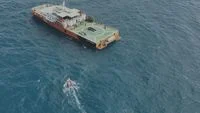
The tragic capsizing of the passenger vessel KM Virgo Transport 8 in the treacherous waters of the Java Sea has once again thrust the state of maritime safety, passenger protection, and corporate accountability in Indonesia into the national spotlight. The maritime incident, which occurred in the early hours of September 13, 2026, while the vessel was en route from the bustling port of Surabaya in East Java to Banjarmasin in South Kalimantan, carried onboard a total of 243 individuals, comprising passengers and crew members. While initial law enforcement actions have swiftly targeted the ship’s captain, criminal justice experts and legal analysts argue that focusing solely on the individual operating the vessel at the helm ignores systemic corporate failures that often plague the archipelagic nation’s domestic sea transport sector.
The tragedy has prompted rigorous debates surrounding the enforcement of maritime regulations, the operational compliance of shipping companies, and the applicability of modern criminal law doctrines—specifically regarding corporate liability—to ensure comprehensive justice for the victims and their families. This comprehensive review examines the chronology of the disaster, the emerging legal proceedings, witness testimonies highlighting critical safety lapses, and the broader implications for maritime jurisprudence in Indonesia.
Chronology of a Disaster: The Final Hours of KM Virgo Transport 8
The voyage of KM Virgo Transport 8 began routinely as it departed from the port city of Surabaya, navigating the busy shipping lanes of the Java Sea toward Banjarmasin. However, what was scheduled to be a standard inter-island transit turned fatal under the cover of darkness.
According to reports compiled from survivor accounts and official marine authorities, the disaster unfolded rapidly in the early hours of Sunday, September 13, 2026. At approximately 1:00 AM local time, while the vast majority of the 243 passengers and crew were fast asleep in their quarters, the vessel began to list dangerously to one side before eventually capsizing. The suddenness of the event left little time for organized evacuation, catching travelers completely off-guard.
Rescue operations were swiftly initiated following distress signals, mobilizing coastal authorities, local fishermen, and commercial vessels in the vicinity to pull survivors from the dark, turbulent waters of the Java Sea. While a significant portion of the occupants was rescued, the incident underscored harrowing deficiencies in emergency preparedness, ranging from delayed responses to the complete absence of organized crew-led evacuation protocols during the critical moments preceding the capsizing.
Witness Testimonies: Silence in the Dark and Missing Life Jackets
The human cost of the disaster and the systemic failures governing onboard safety protocols were vividly brought to light through the harrowing accounts of survivors. Among them was Agus, an expedition truck driver originating from Palangkaraya, who shared his terrifying experience with journalists at the Trisakti Port in Banjarmasin.
At the time the vessel began its fatal tilt, Agus was asleep in his designated cabin. He was abruptly awakened not by automated alarm systems, flashing emergency lights, or official crew announcements, but by a fellow truck driver who rushed in to warn him that the ship was listing heavily.
"When I woke up, there was no alarm sounding. I only heard about the danger from friends who told me the ship was tilting," Agus recounted, emphasizing the critical communication vacuum that characterized the emergency.
His testimony pointed to a deeply troubling reality: the absence of a functional early warning system and the apparent failure of the ship’s command structure to alert passengers promptly. Compounding this operational failure was the observation by numerous survivors that a distressingly high number of passengers were unable to access or did not wear life jackets. In a maritime disaster occurring at 1:00 AM, where darkness and panic severely impede survival instincts, the lack of accessible safety gear and audible emergency alarms transforms a manageable maritime mishap into a widespread tragedy. These revelations shifted public scrutiny away from mere acts of nature or unpredictable sea conditions, directing intense focus instead toward pre-existing negligence.
The Legal Pursuit: Criminal Investigation and the Captain as Suspect
As rescue operations transitioned into forensic investigations and accountability proceedings, the legal apparatus moved swiftly. On September 28, 2026, the investigation into the sinking of KM Virgo Transport 8 was officially escalated, with jurisdiction transferred from the South Kalimantan Regional Police (Polda Kalsel) to the national headquarters of the Indonesian National Police, specifically handled by the Directorate of Water Police under the Corps of Water and Air Police (Korpolairud) of the Security Maintenance Agency (Baharkam Polri).
Two days later, on September 30, 2026, the National Police formally announced a major development in the case. Kasubdit Gakkum Ditpolair Korpolairud Baharkam Polri, Senior Commissioner Kukuh Prabowo, confirmed that the vessel’s captain, identified as Arief Yunianto, had been officially designated as a criminal suspect. According to investigators, the decision to name the captain a suspect was backed by at least two robust pieces of legal evidence, satisfying the formal requirements under Indonesian criminal procedure. Consequently, Captain Arief Yunianto was placed into police custody to facilitate ongoing interrogations.
Nevertheless, law enforcement authorities emphasized that the investigation remains open-ended. Investigators are actively probing whether other individuals within the operational chain share culpability for the disaster. This institutional posture reflects a growing recognition that holding a ship’s captain solely responsible may serve as an incomplete application of justice if upstream systemic failures are ignored.
Beyond the Bridge: Corporate Liability and the Role of Employers
The designation of Captain Arief Yunianto as the sole primary suspect in the initial phases of the investigation has ignited a broader legal debate among criminologists, legal scholars, and public policy analysts. A fundamental question arises: Does legal responsibility for a maritime disaster of this magnitude rest exclusively on the shoulders of the individual navigating the vessel, or should the corporate entity that employs the captain and operates the commercial enterprise bear equal or primary accountability?
In the commercial maritime industry, a captain does not operate in a vacuum. A shipmaster functions as an employee within a corporate hierarchy, executing duties mandated by a shipping company that owns, maintains, and profits from the vessel’s operations. The company is fundamentally responsible for ensuring that the ship is seaworthy, adequately equipped with mandatory safety gear such as functional life rafts and life jackets, outfitted with working early-warning systems, and staffed by adequately trained crew members operating under strict safety compliance guidelines.
When survivors report the complete absence of emergency alarms and a widespread shortage of utilized life jackets during a nocturnal sinking, these deficiencies point directly to operational, managerial, and budgetary decisions made ashore by corporate executives. Consequently, legal experts argue that stopping investigations at the captain level fails to address the root causes of maritime negligence.
The Application of Vicarious Liability in Modern Jurisprudence
To adequately address the complexities of corporate wrongdoing, modern legal systems rely on established doctrines of corporate accountability. Foremost among these is the doctrine of vicarious liability, a legal principle extensively recognized in comparative jurisprudence and increasingly integrated into contemporary legal frameworks, including Indonesia’s updated criminal code structure.
As articulated by legal scholars Christy Bieber and Mike Cetera, vicarious liability is a legal principle that allows an individual or a corporate entity to be held legally accountable for the wrongful acts or omissions of another person, provided a specific legal relationship—such as an employer-employee dynamic—exists and the acts occurred within the scope of employment. In an employer-employee relationship, a company can be held liable for damages or criminal negligence caused by its workers while executing corporate duties.
This doctrine does not necessarily absolve the individual employee of personal responsibility; rather, it establishes that the liability can run concurrently, capturing the organization that created the environment, established the operational guidelines, or failed to enforce mandatory safety standards.
In the context of the KM Virgo Transport 8 disaster, applying the principles of vicarious liability necessitates probing whether the corporate management fostered a culture of regulatory compliance or whether systemic cost-cutting, deferred maintenance, and lax oversight directly contributed to the absence of operational alarms and safety gear. If the captain failed to sound an alarm or ensure life jacket distribution, investigators must ask whether the company provided functional systems and enforced protocols requiring such measures under emergency scenarios.
Strict Liability and Corporate Compliance under the New Criminal Code
Further expanding the legal landscape of corporate accountability in Indonesia is the evolution of statutory frameworks, particularly concerning corporate crime as addressed in modern legislative provisions like the 2023 Criminal Code (KUHP). The updated legal framework opens formal avenues to prosecute corporate entities directly, moving beyond traditional models that only target natural persons.
A critical dimension of this legal evolution involves the concept of strict liability, or criminal liability without the explicit requirement to prove subjective fault or intent. As stipulated under provisions such as Article 37 letter a of the 2023 KUHP, in instances explicitly determined by statutory law, individuals or corporations can be penalized solely based on the fulfillment of the objective elements of a criminal offense, without the necessity of proving negligence or wrongful intent.
Applied to maritime safety, strict liability provisions become exceptionally relevant when dealing with mandatory regulatory compliance. Statutory laws governing sea transportation explicitly mandate shipowners and operators to provide certified safety equipment, maintain communication and alarm systems, and adhere strictly to passenger capacity limits. If a corporate entity fails to meet these non-negotiable statutory obligations, the failure itself constitutes a direct breach of law, rendering the corporation culpable for resulting disasters regardless of whether corporate executives actively intended for a sinking to occur.
Furthermore, provisions such as Article 48 and Article 49 of the 2023 KUHP broaden the scope of corporate criminal liability to include not only the corporate body as a legal entity but also functional administrators, individuals who issued unlawful orders, operational controllers, and beneficial owners of the corporation. This multi-tiered legal architecture ensures that corporate shields cannot be easily utilized by decision-makers sitting in comfortable corporate offices far from the maritime routes to evade responsibility for operational negligence.
A Litmus Test for Indonesian Maritime Justice
The tragedy of KM Virgo Transport 8 transcends the boundaries of a localized maritime accident; it serves as a critical litmus test for the integrity, thoroughness, and progressive application of Indonesia’s legal and regulatory enforcement systems.
While the detention and prosecution of Captain Arief Yunianto represent necessary steps in the immediate wake of the disaster, true justice requires a paradigm shift in how maritime accidents are investigated. Law enforcement agencies and the judicial system must look past the bridge of the sinking ship and examine the corporate boardrooms, management policies, and operational oversight mechanisms that govern commercial passenger shipping across the archipelago.
If investigations uncover systemic failures in maintaining emergency equipment, training crews, or enforcing safety protocols, accountability must extend comprehensively to the corporate entities and decision-makers whose statutory duty it is to guarantee the safety of every passenger and crew member who steps foot on a commercial vessel. Only through rigorous, uncompromising enforcement against both individuals and corporate bodies can the state honor the victims of the KM Virgo Transport 8 disaster, provide genuine solace to grieving families, and restore public trust in the safety of Indonesia’s vital domestic sea transport network.