Nila Kartika Wati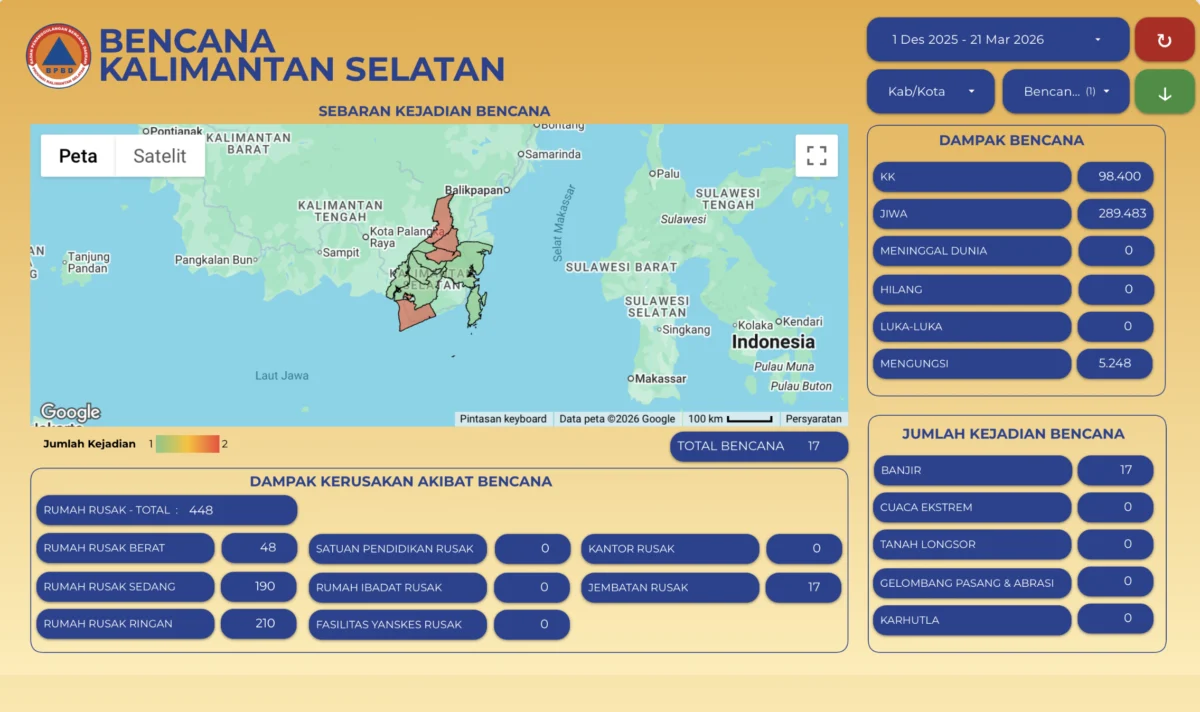
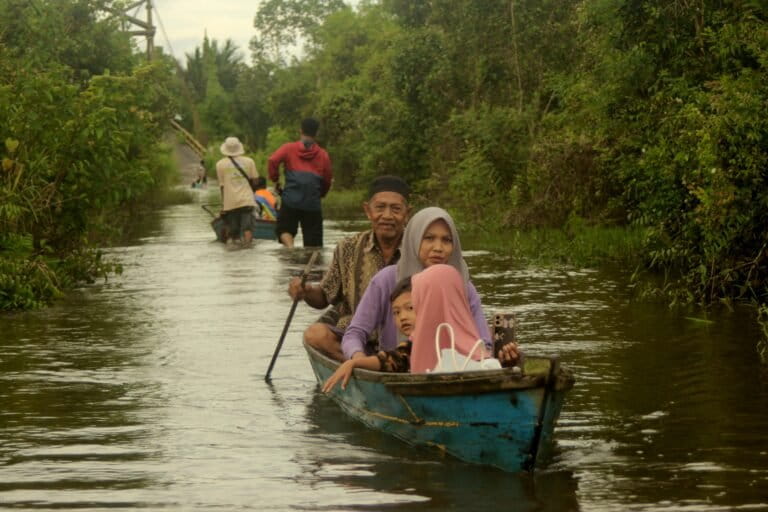
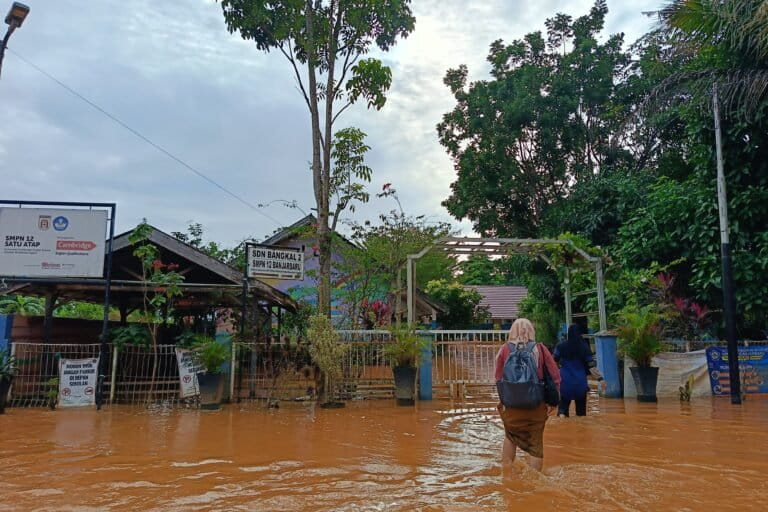
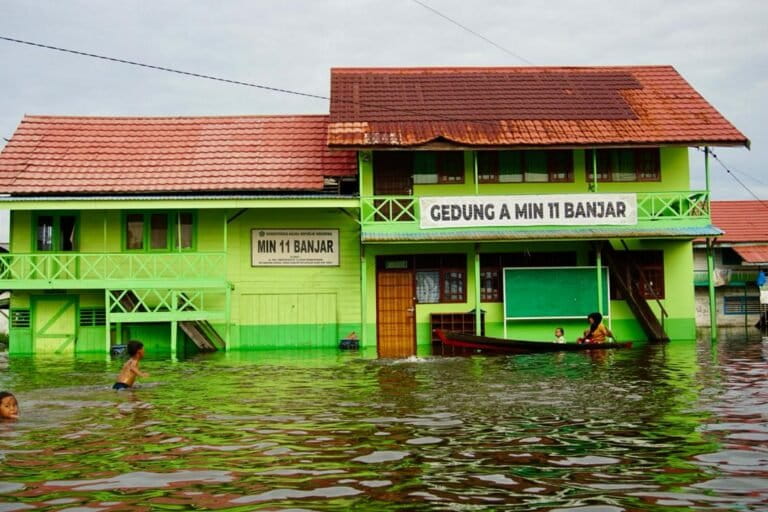
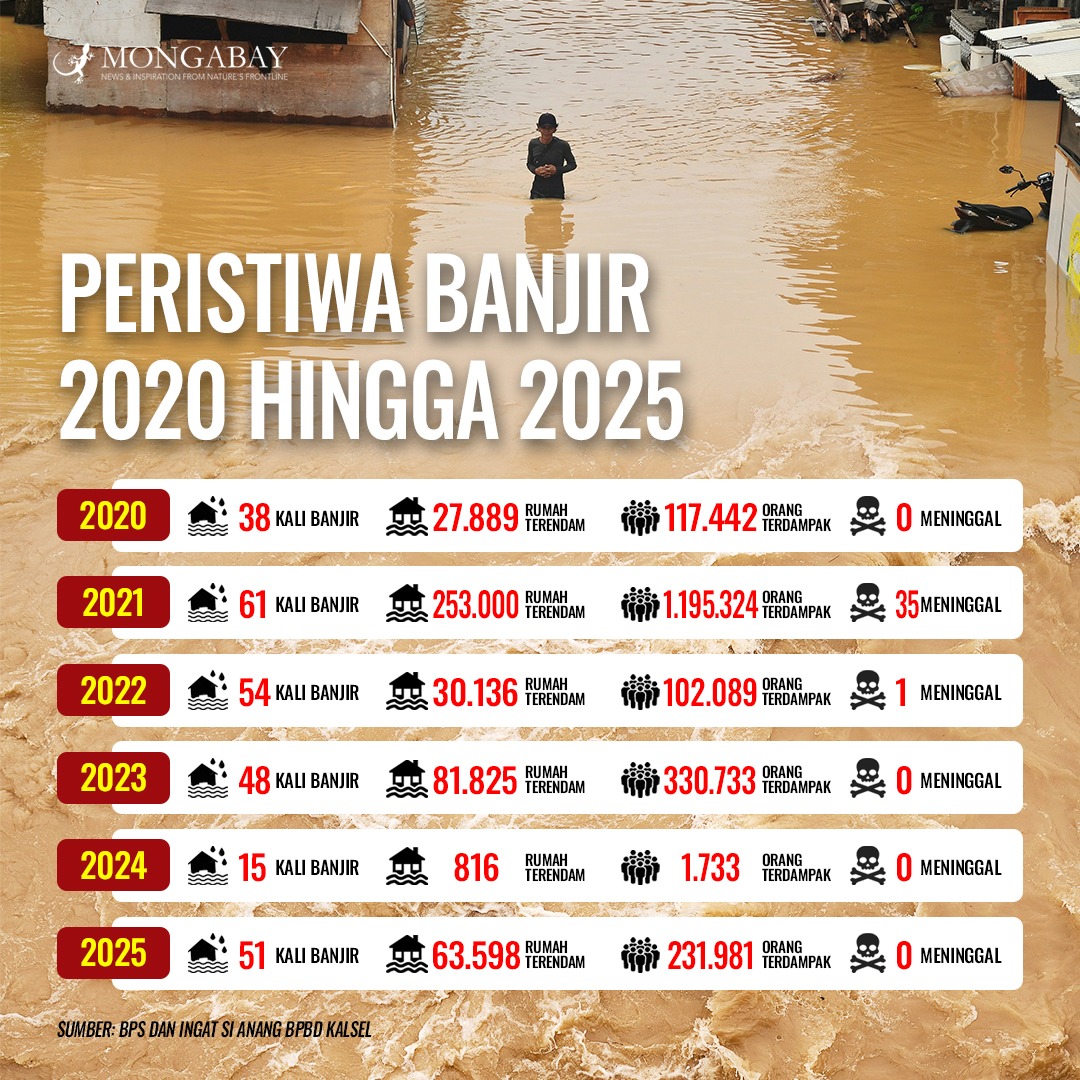
South Kalimantan has faced a prolonged environmental emergency as catastrophic flooding ravaged the province from late 2025 into the early months of 2026, a disaster that civil society groups and environmental experts attribute to the systemic destruction of forest cover and the massive conversion of land for industrial use. Between December 27, 2025, and January 31, 2026, the deluge submerged 11 out of the 13 regencies and cities in the province, including Tabalong, Balangan, Hulu Sungai Utara, Hulu Sungai Selatan, Hulu Sungai Tengah, Tapin, Banjar, Tanah Laut, Barito Kuala, Banjarbaru, and Banjarmasin. Data from the South Kalimantan Regional Disaster Management Agency (BPBD) reveals that between December 1, 2025, and March 21, 2026, a total of 17 major flooding incidents occurred, impacting 289,483 residents and damaging or destroying at least 448 homes.
The scale of the disaster has reignited a fierce debate over land management in one of Indonesia’s most resource-rich provinces. Environmental organizations argue that the floods are a direct consequence of a "fragile water management system" caused by decades of prioritizing extractive industries over ecological stability. Analysis from Greenpeace Indonesia suggests that the degradation of two primary watersheds—the Barito Watershed (DAS Barito) and the Maluka Watershed (DAS Maluka)—played a decisive role in the severity of the 2025-2026 floods.
The Collapse of the Maluka and Barito Watersheds
A detailed spatial analysis conducted by Greenpeace Indonesia, utilizing deforestation data from the University of Maryland, paints a grim picture of the Maluka Watershed. Out of its total area of 88,000 hectares, only about 828 hectares of natural forest remain—a figure representing less than 1% of the total landscape. Anggi Prayoga, a Forest Campaigner for Greenpeace Indonesia, noted that this near-total loss of forest cover has stripped the region of its ability to act as a natural sponge. Without vegetation to facilitate water infiltration, the area has lost its function as a buffer zone, significantly increasing the vulnerability of surrounding settlements to flash floods and prolonged inundation.
The Barito Watershed, which spans across several provinces, tells a similarly troubling story. Of its 6.2 million hectares, only 3.04 million hectares of natural forest remain. Within the South Kalimantan portion of this watershed, nearly 58% of the land is currently burdened by various industrial permits, including forestry concessions (PBPH), palm oil plantations, and coal mining operations. The loss of land cover in the middle and lower reaches of the Barito Watershed has led to an estimated erosion rate of 474 million tons per year. Approximately 54% of this erosion occurs in "very high" erosion zones, where soil loss exceeds 180 tons per hectare annually. This massive sediment load flows into the rivers, causing rapid shallowing (sedimentation) and reducing the drainage capacity of the river systems, which in turn forces water into densely populated residential areas during heavy rains.
A Timeline of Deforestation and Environmental Decay
The current crisis is the culmination of years of rapid land-use changes. Research from Forest Watch Indonesia (FWI) indicates that between 2017 and 2024, South Kalimantan lost a staggering 385,524 hectares of forest cover. The regencies hardest hit by the recent floods are the same areas that have seen the most significant forest loss. Tabalong Regency, for instance, lost 29,637 hectares of forest during this period, while Banjar Regency lost 23,022 hectares. Other affected areas include Balangan (11,811 hectares) and Hulu Sungai Utara (3,417 hectares).
Even in the shorter term, the trend remains alarming. Between 2021 and 2024, forest loss continued in critical areas such as Hulu Sungai Tengah (289.51 hectares), Hulu Sungai Selatan (303.39 hectares), and Tapin (248.27 hectares). Respati Bayu Kusuma, a researcher at FWI, explained that the reduction of vegetation in upstream areas directly correlates with increased surface run-off. When the "natural infrastructure" of the forest is removed, the soil can no longer hold water, leading to a "critical phase" where the landscape’s resilience is pushed to its breaking point.
Academic Perspectives on Hydrological Imbalance
Badaruddin, a watershed management expert from Lambung Mangkurat University (ULM), described the flooding as a "loud alarm" signaling the collapse of the province’s hydrological support system. He emphasized that the disaster is a result of a total imbalance between the upstream, middle, and downstream sections of the watersheds. In the upstream regions, forests that should regulate water flow are under constant pressure from mining and production activities. Consequently, rainwater no longer seeps into the ground but rushes directly into river channels, causing river levels to spike almost instantly.
The problem is compounded in the middle and downstream areas. Natural retention basins such as swamps, wetlands, and floodplains—which historically acted as overflow zones—have been converted into housing estates, plantations, and infrastructure projects. Furthermore, when high tides occur in the coastal areas, the accumulated water from the upstream cannot be discharged into the sea, resulting in stagnant floodwaters that remain in residential areas for days or even weeks. Badaruddin warned that without a radical shift toward reforestation and the protection of remaining peatlands and riverbanks, flooding will become a permanent fixture in South Kalimantan, occurring even during non-extreme rainfall events.
Government Response and Statistical Discrepancies
In response to the accusations from civil society, the South Kalimantan provincial government has offered a different set of data. Fatimattuzahra, the Head of the South Kalimantan Forestry Service, disputed the claim that 58% of the Barito Watershed is burdened by industrial permits. Citing data from the Ministry of Environment and Forestry (KLHK), she stated that the Barito Watershed in South Kalimantan consists of 39.3% forest area and 60.7% "Other Purpose Areas" (APL). According to her records, forestry-related permits within the Barito Watershed cover only 194,522 hectares, or approximately 10.75% of the watershed’s total area in the province.
For the Maluka Watershed, the Forestry Service maintains that 34.43% of the land remains "vegetated," consisting of 12,509 hectares of forest and 16,164 hectares of plantations. Fatimattuzahra argued that the floods cannot be blamed on a single factor, pointing instead to a combination of extreme rainfall, inadequate drainage systems, tidal influences, and natural sedimentation. She also highlighted the province’s efforts in Forest and Land Rehabilitation (RHL), claiming that critical land in South Kalimantan has decreased from 511,594 hectares in 2018 to 376,633 hectares in 2024 through various government-led planting programs.
The Call for Accountability and Environmental Audits
Despite the government’s defensive stance, the central government has acknowledged the role of industrial activity in the crisis. During a visit to the flooded regions in late December 2025, the Minister of Environment, Hanif Faisol Nurofiq, stated that industrial activities in the upstream sections of the watersheds had significantly worsened downstream hydrological conditions. He pledged to conduct comprehensive environmental audits of companies operating in these sensitive areas.
However, as of March 2026, the results of these audits remain pending. Yulia Suryanti, Head of Public Relations at the Ministry of Environment, confirmed that the process is still ongoing. This delay has drawn criticism from legal activists. Muhammad Pazri, a prominent legal practitioner in South Kalimantan, urged the Ministry to ensure that the audit is not merely a "political gesture." He argued that if companies are found to have violated environmental standards or contributed to the disaster through negligence, the government must pursue strict administrative, civil, and criminal sanctions under the Law on Environmental Protection and Management.
Broader Implications and the Path Forward
The 2025-2026 floods in South Kalimantan serve as a stark reminder of the hidden costs of rapid industrial expansion at the expense of environmental integrity. The socio-economic impact is profound: hundreds of families have lost their homes, infrastructure has been crippled, and the provincial economy faces significant recovery costs. Beyond the immediate damage, the recurring nature of these floods threatens the long-term food security and health of the region’s inhabitants.
Environmental advocates and academics agree that "business as usual" is no longer an option. The consensus among civil society groups is a demand for a systemic paradigm shift in how land is allocated and managed. Key recommendations include:
- Permit Audits: A transparent and thorough review of all mining, plantation, and forestry permits to ensure compliance with environmental regulations.
- Law Enforcement: Strict prosecution of illegal land clearing and activities that encroach upon protected forest zones.
- Restoration of Natural Buffers: Moving beyond simple tree-planting to the restoration of complex ecosystems, including riverbanks and wetlands that provide natural flood protection.
- Spatial Planning Reform: Redesigning urban and regional plans to prohibit development in high-risk floodplains and to prioritize the preservation of water absorption zones.
The disaster in South Kalimantan is a microcosm of a larger national struggle to balance economic growth with ecological survival. As the province waits for the floodwaters to recede and the government’s audit results to be released, the message from the landscape remains clear: when forests are sacrificed for short-term gain, the long-term consequence is an inevitable and costly harvest of disaster.