Nasution Nanang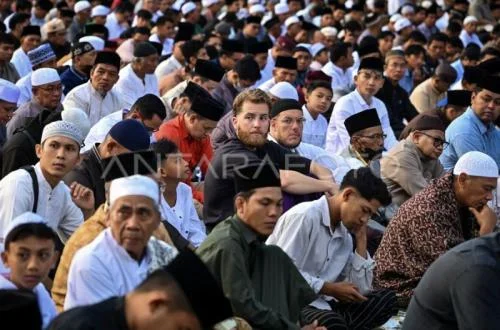
MATARAM, West Nusa Tenggara – On Saturday, March 21, thousands of residents across West Nusa Tenggara (NTB) reverently observed Eid al-Fitr, marking the culmination of the holy month of Ramadan. In the provincial capital of Mataram, communities gathered in expansive fields and local mosques, participating in communal prayers that underscored a powerful message of togetherness and social equality, resonating deeply within the predominantly Muslim province. This annual celebration, while deeply spiritual, transcends mere religious observance in NTB, serving as a critical juncture for social reflection, intertwining profound religious values with the rich tapestry of local culture and the persistent challenges of regional development. The people of NTB continuously strive to balance personal piety with collective social responsibility, transforming Eid al-Fitr into a significant platform for communal evaluation and introspection regarding their path forward.
A Province United in Prayer and Reflection
The atmosphere on Eid al-Fitr was characterized by profound solemnity and joyous communal spirit. As dawn broke, the air in cities and villages alike was filled with the rhythmic echoes of takbir, the exclamations of "Allahu Akbar" (God is Greatest), signifying the triumph of faith and perseverance after a month of fasting, prayer, and self-restraint. These pre-dawn chants built anticipation for the morning’s central event: the Eid al-Fitr communal prayer. In Mataram, the vast expanse of Lapangan Bumi Gora became a focal point, drawing thousands of worshippers from diverse socioeconomic backgrounds. Similarly, across Central Lombok and other regencies, mosques overflowed with congregants, transforming public spaces into vibrant symbols of unity. This mass participation, devoid of social stratification, powerfully embodied the Islamic principle of equality, reminding individuals of their inherent fitrah – a pure, unblemished state of being, unburdened by worldly distinctions. The collective bowing, standing, and prostrating in unison symbolized a shared humanity and a renewed commitment to spiritual purity.
The communal prayer ceremony, often led by respected local imams and religious scholars, typically includes a sermon (khutbah) that not only reiterates the spiritual significance of Eid but also touches upon contemporary social issues relevant to the community. These sermons frequently emphasize themes of forgiveness, generosity, perseverance, and the importance of helping those less fortunate, thus linking spiritual fulfillment directly to tangible social action. For many in NTB, particularly after a month of intense spiritual discipline, Eid al-Fitr represents a fresh start, a moment to reconcile differences, strengthen familial bonds, and recommit to community welfare. The sheer scale of participation, from the bustling urban centers to the serene rural landscapes, underscores the deep-seated religiosity of the NTB populace and their commitment to shared values.
The Deep Significance of Fitrah and Social Equality
The concept of fitrah, meaning an innate, pure, and original human nature, is central to the philosophy of Eid al-Fitr. It posits that all humans are born inherently good, and the practices of Ramadan, culminating in Eid, are designed to cleanse the individual of accumulated impurities and return them to this pristine state. In the context of NTB, this spiritual ideal translates into a tangible manifestation of social equality. During Eid prayers, the Governor might pray shoulder-to-shoulder with a farmer, a business tycoon next to a fisherman, all united in their submission to God. This powerful visual representation transcends societal hierarchies, fostering a temporary but impactful suspension of social divides. It reinforces the notion that before God, all humans are equal, judged not by wealth or status but by piety and good deeds.
This principle of equality extends beyond the prayer grounds. The post-prayer traditions, such as visiting relatives and neighbors (silaturahmi) and sharing meals, further dismantle social barriers. Homes are opened to all, regardless of background, promoting a sense of shared community and mutual respect. This cultural practice, deeply embedded in NTB’s social fabric, transforms Eid into a powerful engine for social cohesion, mending strained relationships and solidifying existing bonds. In a province that, like many parts of Indonesia, grapples with socioeconomic disparities, these moments of enforced equality and universal welcome are not merely symbolic; they are crucial for maintaining social harmony and fostering a collective identity that transcends individual differences. The spirit of gotong royong (mutual cooperation), a cornerstone of Indonesian culture, finds renewed vigor during Eid, as communities come together to celebrate, share, and support one another.
Addressing Persistent Poverty Through Collective Action
Beneath the celebratory veneer of Eid al-Fitr, West Nusa Tenggara continues to contend with significant developmental challenges, most notably persistent poverty. While official statistics from Statistics Indonesia (BPS) indicate a gradual decline in the poverty rate in NTB over the past decade, it remains above the national average, particularly in rural areas and among vulnerable populations. For instance, as of March 2023, the poverty rate in NTB was reported at 13.82%, slightly higher than the national average of 9.36%, highlighting the ongoing need for targeted interventions. The cultural predisposition towards sharing and generosity, deeply ingrained in the local psyche and amplified during Eid, provides a valuable foundation. However, the original article correctly points out that this cultural goodwill needs to be complemented by systematic public policy and more strategic management of philanthropic resources.
Islamic instruments of charity such as zakat, infaq, and sedekah (ZIS) are inherently powerful tools for wealth redistribution and poverty alleviation. Zakat, as one of the five pillars of Islam, is an obligatory annual payment made to charitable and religious causes. Infaq and sedekah are voluntary donations. During Ramadan and Eid, the collection and distribution of ZIS surge significantly. However, for these contributions to effectively address structural poverty, their management requires greater institutionalization and strategic allocation. Provincial and regency governments, in collaboration with religious institutions and non-governmental organizations, could enhance the efficiency and transparency of ZIS collection and distribution. This might involve integrating ZIS funds with existing social welfare programs, establishing more robust data collection systems to identify the most deserving recipients, and investing in sustainable empowerment initiatives rather than just temporary relief.
Moreover, traditional practices of sharing food and visiting during Lebaran could be scaled up into broader social movements. This could involve developing community-based economic programs that leverage local resources and skills, providing microfinance opportunities for small enterprises, or establishing cooperative models that empower impoverished communities to generate sustainable income. For instance, initiatives that connect local farmers or artisans directly to markets, or vocational training programs tailored to regional economic needs, could transform transient Eid generosity into long-term economic resilience. Governor Zulkieflimansyah, or a representative from the Provincial Social Affairs Agency, might emphasize in a public statement the dual importance of spiritual devotion and practical action, urging citizens to channel the Eid spirit into sustained efforts for community upliftment. "Eid reminds us that our faith calls for justice and compassion," a hypothetical official might state. "While individual acts of charity are vital, we must also build robust systems that ensure no one is left behind, leveraging our collective resources for lasting impact."
The Vibrant Cultural Tapestry and Economic Resonance
Eid al-Fitr in NTB is also a vibrant celebration of the province’s rich cultural heritage. Beyond the prayers, the tradition of halal bihalal, a formal or informal gathering for mutual apologies and reconciliation, is deeply ingrained. Families, friends, and even colleagues gather to ask for forgiveness for any wrongdoings over the past year, symbolizing a fresh start in relationships. These gatherings, often accompanied by elaborate feasts featuring local delicacies like ayam taliwang, plecing kangkung, and various traditional cakes, showcase the vitality of NTB’s living culture. These traditions not only strengthen social bonds but also unlock significant economic opportunities.
The period surrounding Eid witnesses a substantial surge in economic activity. The "mudik" (homecoming) phenomenon, where millions travel from urban centers to their hometowns, fuels the transportation sector. Buses, ferries, and airlines operate at peak capacity. Local markets bustle with increased demand for food, clothing, and gifts. Small and medium enterprises (SMEs) catering to festive needs experience a significant boost in sales. The tourism sector, a cornerstone of NTB’s economy, particularly in Lombok and Sumbawa, also thrives. Iconic destinations such as Senggigi Beach, Mandalika International Street Circuit, and the Gili Islands become magnets for both returning residents and domestic tourists seeking leisure after the fasting month. The Provincial Tourism Agency might report a significant increase in hotel occupancy rates and visitor arrivals during the Eid holiday period, potentially reaching 80-90% occupancy in key tourist areas, compared to an average of 60-70% in off-peak seasons. This influx stimulates local economies, providing income for tour operators, hoteliers, restaurant owners, and souvenir vendors.
Navigating the Surge: Tourism, Commerce, and Public Services
While the economic boom of Eid is welcome, it also presents distinct challenges, particularly concerning environmental sustainability and public service provision. The massive influx of visitors and increased consumerism inevitably lead to a surge in waste generation. Beaches, tourist sites, and urban areas often face an overload of plastic waste and other debris. Without robust waste management infrastructure and public awareness campaigns, this can quickly degrade NTB’s pristine natural environment, which is itself a major draw for tourism. The provincial government and local communities must work in concert to implement effective waste collection, recycling, and public education initiatives to mitigate these negative impacts. A statement from the head of the Provincial Environmental Agency could underscore the importance of "responsible tourism and consumption," reminding both residents and visitors that "the beauty of NTB is a shared heritage that requires collective stewardship."
Beyond environmental concerns, Eid also serves as a critical stress test for public services. The smooth flow of mudik traffic, particularly on inter-island ferries connecting Lombok and Sumbawa or within the main island, requires meticulous planning and coordination from transportation authorities. Police and military personnel are often deployed to manage traffic, ensure public safety, and prevent criminal activity. Healthcare facilities must be adequately staffed and equipped to handle potential emergencies arising from increased travel and gatherings. The availability and reliability of essential utilities like electricity and water also come under scrutiny. In essence, Eid al-Fitr becomes a de facto performance review for the provincial and local governments, indicating their capacity to ensure public safety, convenience, and welfare during periods of heightened activity. Failures in these areas can lead to public discontent and erode trust in governance. Conversely, a well-managed Eid period reinforces the perception of a responsive and effective government.
Towards Sustainable Development: Integrating Faith and Policy
The reflection prompted by Eid al-Fitr offers NTB a unique opportunity to recalibrate its development agenda, aligning it more closely with principles of justice, equity, and sustainability. The core message of "returning to fitrah" can be interpreted not just individually, but collectively, as a call for society to revert to a state of natural balance and fairness. This implies a development model that prioritizes human dignity, environmental protection, and equitable distribution of resources. Concrete steps toward this vision include strengthening the institutional framework for zakat and other local philanthropic initiatives. This could involve developing modern, tech-enabled platforms for ZIS collection, enhancing transparency through public reporting, and investing in the capacity building of local religious councils (Baznas and LAZ) to manage and distribute funds more effectively.
Furthermore, integrating social programs with religious values can create more culturally resonant and impactful interventions. For example, poverty alleviation programs could be framed within the Islamic imperative of caring for the poor, making them more acceptable and sustainable within the community. Public education campaigns during Ramadan and Eid could go beyond purely spiritual messages to include civic responsibilities, environmental awareness, and health guidelines, thereby broadening the scope of "kemenangan Ramadhan" (the victory of Ramadan) to encompass positive behavioral changes across society. These integrated approaches leverage NTB’s strong religious identity as a catalyst for social progress rather than seeing it as separate from development efforts.
Leveraging Local Strengths for a Just Future
In a world grappling with myriad global and local challenges, West Nusa Tenggara possesses invaluable inherent strengths: a deeply rooted culture of gotong royong (mutual cooperation), strong community bonds, and profound religiosity. If these intrinsic values are carefully nurtured and strategically integrated into the province’s overarching development framework, Eid al-Fitr can indeed serve as more than just an annual celebration; it can become a powerful launchpad for sustainable and equitable transformation. By channeling the spiritual fervor and communal solidarity of Eid into sustained, collective action, NTB can chart a course towards a future where economic growth is balanced with social justice, environmental stewardship, and cultural preservation. This requires a concerted effort from all stakeholders – government, religious leaders, civil society organizations, the business community, and individual citizens – to ensure that the "victory of Ramadan" truly translates into a lasting victory for the prosperity and well-being of all in West Nusa Tenggara. The province’s journey towards realizing its full potential is deeply intertwined with its ability to continuously reflect on and act upon the timeless lessons embedded within its most sacred traditions.