Nila Kartika Wati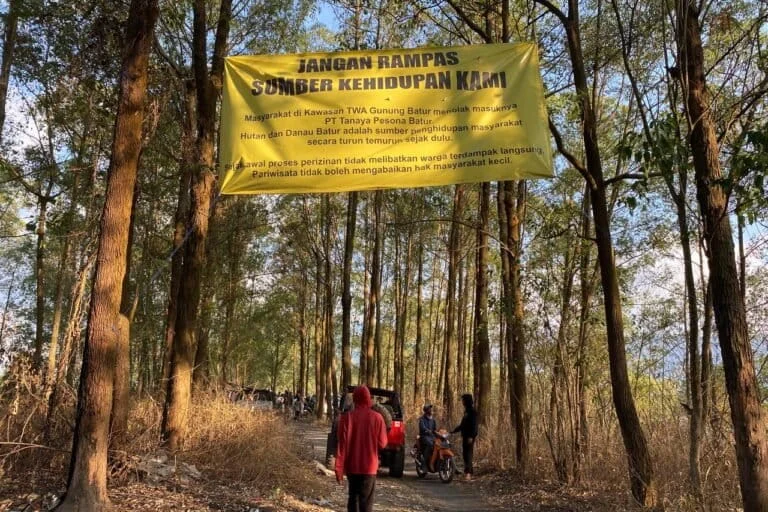
Indonesia is currently grappling with an acute state of ecological destruction that has transitioned from sporadic environmental incidents into a "permanent disaster" phase, according to the 2026 Environmental Outlook report released by the Indonesian Forum for Environment (WALHI). The report, presented recently in Jakarta, paints a grim picture of a nation where natural disasters—ranging from catastrophic floods and landslides in Sumatra to tidal flooding (rob) on Java’s northern coast and severe industrial pollution—have become a normalized routine rather than seasonal anomalies. This systemic crisis is identified as the direct consequence of a national development trajectory that has veered away from constitutional mandates, instead favoring an extractive economic model driven by aggressive growth targets.
Wahyu Eka Setyawan, the Urban Justice Campaigner for WALHI’s National Executive, emphasized that the current environmental degradation is no longer a natural fluke but a "death knell" for the safety of human living spaces. He argued that Indonesia has entered a terrifying new era where disasters are part of the daily rhythm of life. Setyawan challenged the prevailing narrative often propagated by authorities that blames heavy rainfall or divine providence for these tragedies. He noted that while rain is a natural cycle, the land’s inability to absorb or manage that water is a direct failure of governance and land-use management.
The Eight Percent Growth Ambition and the Formula for Destruction
At the heart of this ecological crisis lies the ambitious goal set by President Prabowo Subianto’s administration to achieve an eight percent economic growth rate. This target is a cornerstone of the "Golden Indonesia 2045" vision. However, WALHI’s analysis suggests that this figure is being pursued through a singular, dangerous formula: massive industrial expansion fueled by unrestricted investment. This strategy is codified in the National Long-Term Development Plan (RPJPN) and the National Medium-Term Development Plan (RPJMN), which prioritize economic output over environmental carrying capacity.
The legal backbone for this expansion is the Job Creation Law (UU Cipta Kerja), which WALHI claims serves as a "red carpet" for investors. This legislative framework has effectively stripped local governments of their authority to maintain regional spatial planning. Consequently, industrial permits are being issued in protected forest areas and essential ecosystems. The report argues that the current regime is ignoring the 1945 Constitution by forcing growth beyond the environment’s ability to regenerate. In 2025, this development model was characterized by the legalization of deforestation, massive mining expansion, and the promotion of what WALHI calls "false solutions" for the energy transition.
The Red Report Card: Surging Deforestation and Land Conversion
Uli Arta Siagian, WALHI’s National Executive Campaign Coordinator, described the 8% growth target as a "shortcut to irreversible ecological ruin." While the figure may symbolize prosperity on paper, Siagian argued that in Indonesia’s rainforests, it translates to the sound of chainsaws and the displacement of indigenous communities. Extractive industries remain the fastest and cheapest route for the state to meet its economic quotas.
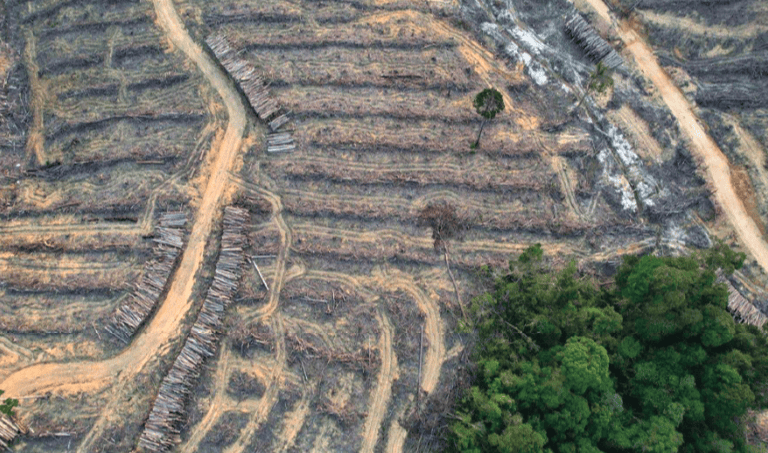
The data presented by WALHI reveals a staggering disconnect between Indonesia’s international climate commitments and its domestic actions. Despite the "FoLU Net Sink 2030" target, which aims to make the forestry and land-use sector a net carbon sink, the government is moving forward with plans to open 20 million hectares of land for food and energy projects. WALHI’s analysis shows that 26 million hectares of Indonesia’s remaining natural forests are currently under threat from official state-sanctioned permits, including Forest Utilization Business Permits (PBPH), Mining Business Permit Areas (WIUP), and Land Cultivation Rights (HGU).
In 2025, deforestation rates surged to 283,803 hectares, a significant increase from 217,000 hectares in 2024. This spike is directly correlated with the absence of permit evaluations and the push for economic expansion. Historical data from Global Forest Watch further illustrates the scale of the loss: between 2001 and 2024, Indonesia lost 32 million hectares of tree cover, equivalent to a 20% decrease since 2000. This loss resulted in the emission of approximately 23 gigatons of CO2 equivalent. The human cost was starkly illustrated by the floods in Sumatra at the end of last year, where logs from deforested upstream areas were swept into settlements, claiming thousands of lives.
The Paradox of the Energy Transition and False Solutions
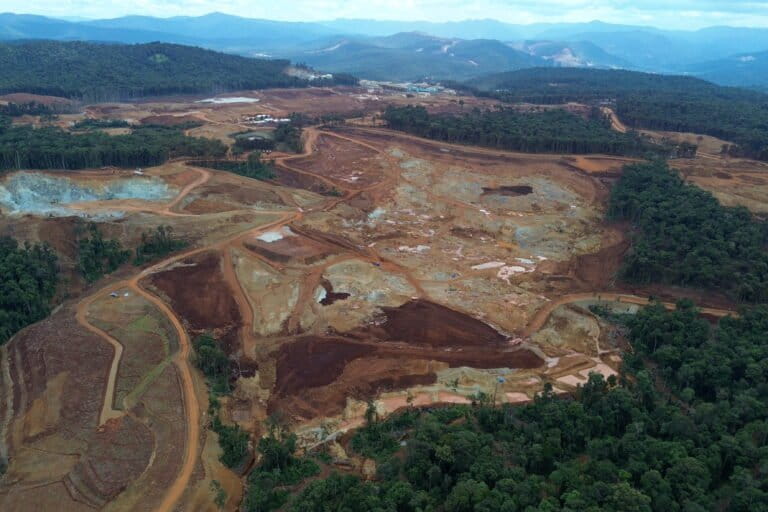
The WALHI report also offers a scathing critique of Indonesia’s "green" narrative. Uli Arta Siagian pointed out that the current energy transition is a paradox that ignores social justice. While electric vehicles (EVs) are marketed as climate solutions for urban centers, their production leaves a trail of destruction at the source. Nickel mining in Sulawesi and North Maluku has led to massive water pollution and the clearing of natural forests. Similarly, geothermal projects in regions like Poco Leok in East Nusa Tenggara and Mount Gede Pangrango in West Java have sparked intense conflicts with indigenous peoples whose land rights are frequently bypassed.
Furthermore, the target for the renewable energy mix in 2025 was actually revised downward from 23% to a range of 17–19%, while the nation’s reliance on coal remains high. WALHI identifies several "false solutions" currently being promoted to extend the life of coal-fired power plants (PLTU), including:
- Coal Co-firing: Burning biomass alongside coal.
- Carbon Capture and Storage (CCS/CCUS): Technologies that WALHI argues are unproven at scale and serve as a pretext for continued fossil fuel use.
- Coal Gasification: Converting coal into gas.
The proliferation of "captive" coal plants in industrial zones—specifically those dedicated to nickel downstreaming—has created "ecological sacrifice zones" where the health of local residents and the integrity of coastal ecosystems are traded for industrial output. At the international level, such as the COP30 summit in Brazil, WALHI asserts that Indonesia acts more as a "carbon shopkeeper" selling offsets rather than a genuine climate leader.
Militarization and the Rise of State Capitalism
A significant portion of the 2026 report focuses on the increasing involvement of the military and police in development projects, particularly those designated as National Strategic Projects (PSN). Boy Even Sembiring, WALHI’s National Executive Director, noted that the current administration has discarded its rhetorical mask, revealing a foundation of development built on the militarization of civil space and the state-led control of natural assets.
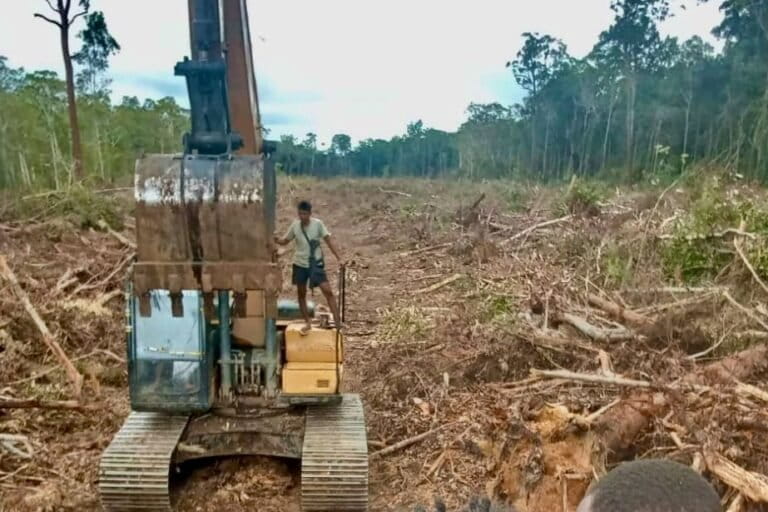
The report highlights the "soldiers entering the forest" phenomenon. Unlike the "soldiers entering the village" programs of the past, which focused on public infrastructure like bridges, the modern iteration involves the Forestry Area Orderly Task Force (Satgas PKH). This task force, according to WALHI, is not used for ecological restoration but for the takeover of resources. A key example cited is the emergence of entities like PT Agrinas, a state-owned enterprise (BUMN) that consolidates land under military control.
Sembiring argued that this represents a return to the "state capitalism" of the New Order era but with a more dangerous integration. While the previous regime utilized cronies outside the formal government, the current structure sees capital owners directly entering the "inner circle" of the palace. This fusion of political and economic power is most evident in large-scale food projects, which WALHI describes as the "privatization of food" rather than "food estates," as the primary beneficiaries are a handful of conglomerates.
Human Rights Violations and the Path Forward
The systematic prioritization of investment over people has led to an escalation of violence against environmental defenders. WALHI recorded that over the last decade, 1,131 citizens have become victims of criminalization or violence related to environmental advocacy. In 2025 alone, 36 individuals were victimized across nine specific cases of criminalization. These threats are not limited to criminal charges; they also include civil lawsuits (SLAPP suits) and physical intimidation.
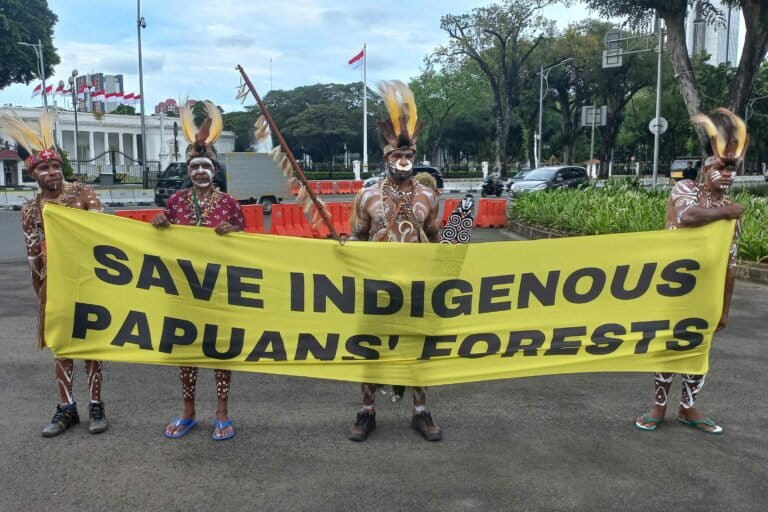
The report concludes with a call for a radical paradigm shift. WALHI demands:
- A Comprehensive Audit: A full review of all pro-investment regulations that compromise environmental protections.
- Demilitarization: An end to the use of security forces in managing natural resources and land disputes.
- Ecological Justice: Shifting the national focus from GDP growth to an economy that respects ecological limits and human rights.
Boy Even Sembiring stressed that the survival of the Indonesian state depends on the recognition of two fundamental entities: human rights and the "rights of nature." He called for a massive consolidation of civil society to reclaim the narrative of development and remind the government that true progress cannot be built on the ruins of the ecosystem. As the nation moves toward 2045, WALHI warns that without a change in direction, the "Golden Indonesia" vision will instead be a legacy of debt, environmental collapse, and social disenfranchisement for future generations.