Nila Kartika Wati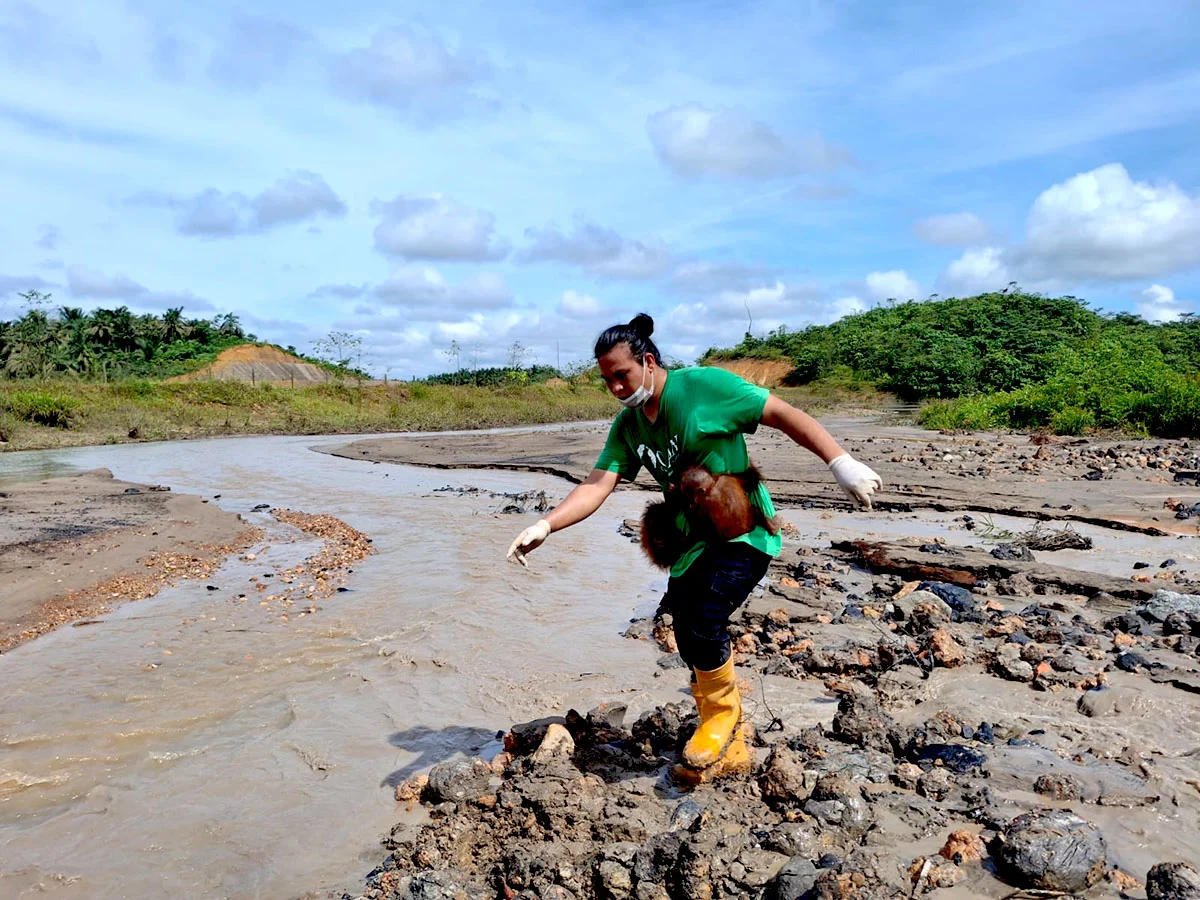
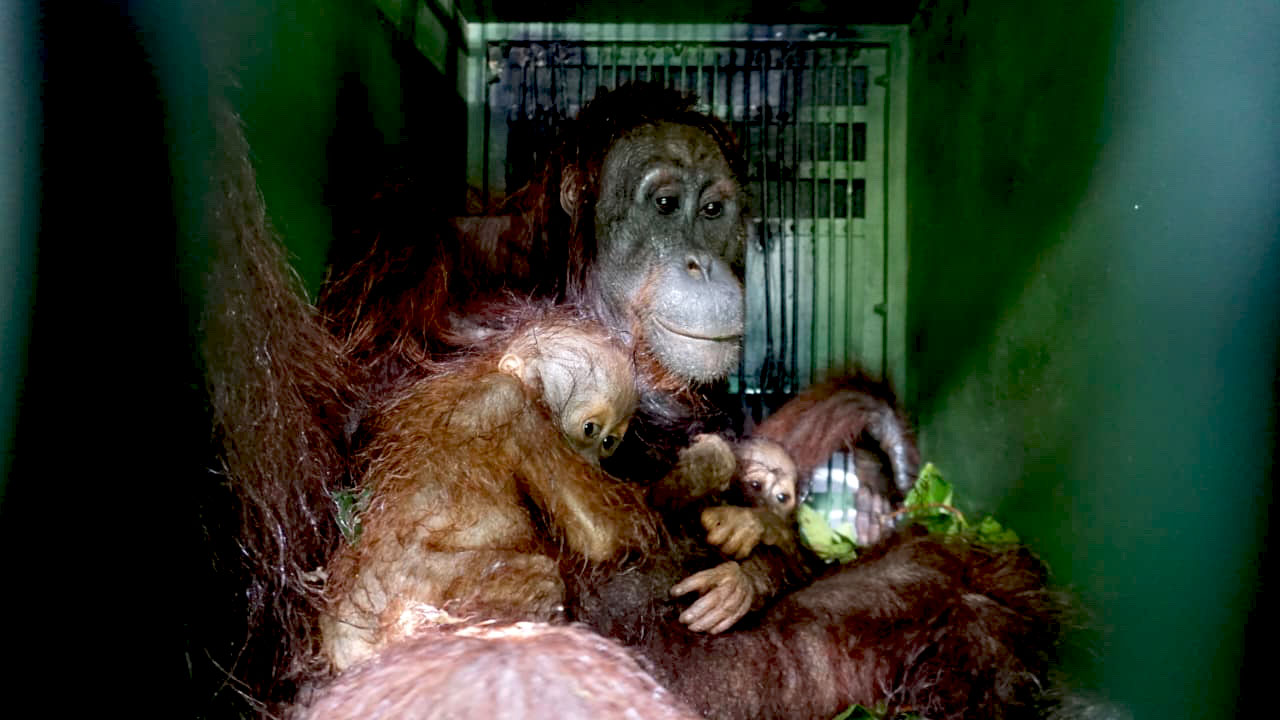
In a significant but sobering event for global biodiversity conservation, a female Bornean orangutan and her rare twin infants were successfully rescued and translocated from a severely fragmented forest patch in Bengalon District, East Kutai Regency, East Kalimantan. The rescue operation, conducted in mid-February 2026, underscores the escalating tension between industrial expansion and the survival of critically endangered species in one of Indonesia’s most vital ecological landscapes. The mother, estimated to be between 15 and 20 years old and later named Jane, was discovered alongside her two offspring, Andrianto and Parlin, in a precarious sliver of greenery hemmed in by the encroaching borders of industrial oil palm plantations and massive open-pit coal mining operations.
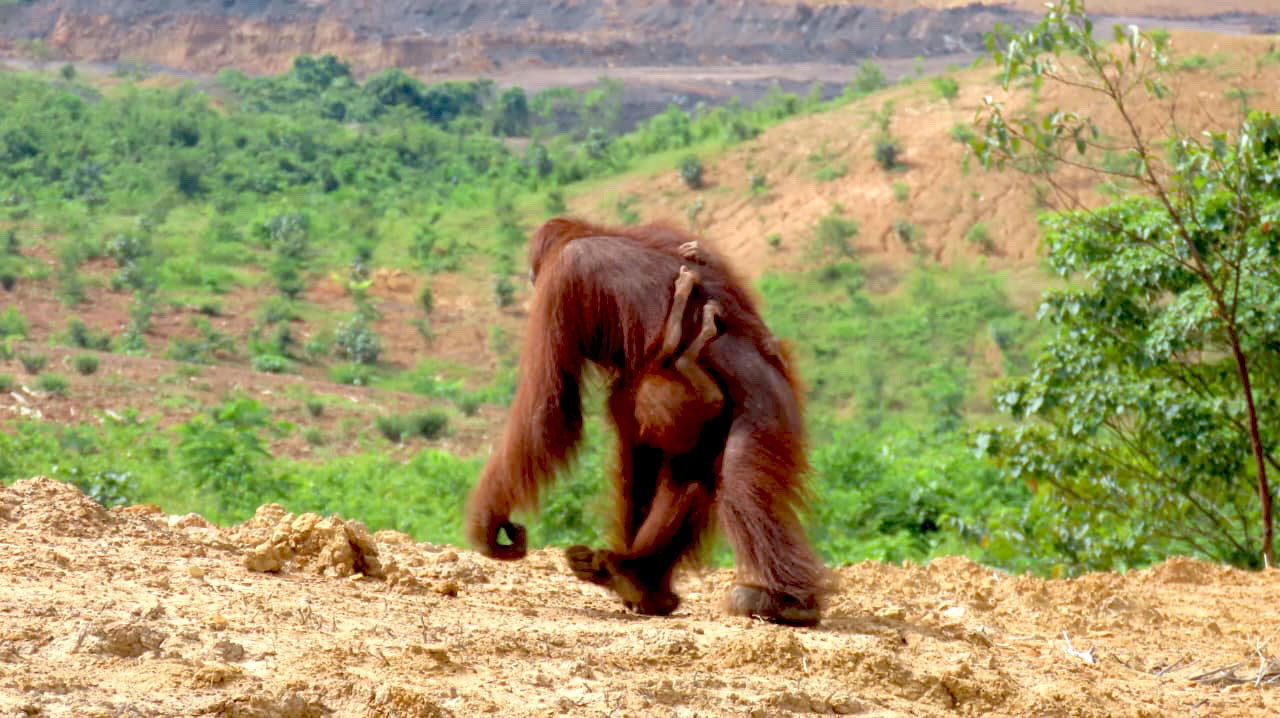
The discovery of the trio sent ripples through the conservation community, not only because of the immediate threat to their lives but because of the biological rarity of the event. Orangutans typically give birth to a single infant every seven to nine years, making the birth and survival of twins in the wild an extraordinary occurrence. However, the joy of this biological milestone was quickly overshadowed by the reality of their surroundings: a landscape so degraded that the arboreal primates were forced to descend to the ground—a behavior usually indicative of extreme stress or a total lack of canopy connectivity.
Chronology of the Rescue and Translocation Operation
The rescue mission began on Saturday, February 14, 2026, following reports of an orangutan sighting in a narrow forest corridor in Bengalon. A joint team comprising the East Kalimantan Natural Resources Conservation Agency (BKSDA) and the Conservation Action Network (CAN) was immediately dispatched to the site. Upon arrival, the team confirmed that the mother and her two infants were trapped in a "pocket" of forest that offered no escape routes to larger, more stable forest blocks.
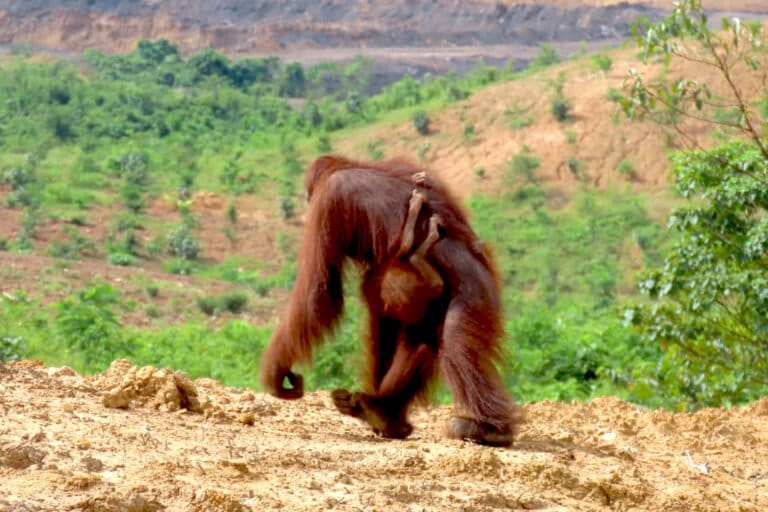
M. Ari Wibawanto, Head of BKSDA East Kalimantan, stated that the decision to intervene was made based on the imminent risk of starvation and potential human-wildlife conflict. "The habitat was completely fragmented. To the left and right, there were active development projects. We decided to conduct a rescue with our partners because the long-term survival of the mother and her twins in that specific location was impossible," Wibawanto explained during a press briefing in early March.
The operation was executed with precision to minimize trauma to the animals. On the afternoon of their discovery, the team conducted intensive observations to identify the location of the orangutans’ nests. The actual evacuation took place the following morning, Sunday, February 15, 2026. Experts waited for the mother to descend from the canopy—a move necessitated by the lack of continuous branches—before administering a mild sedative via a blowpipe.
Paulinus Kristanto, Director and Founder of CAN, noted a poignant moment during the sedation process. As Jane began to succumb to the anesthesia, she did not struggle or react with aggression. Instead, she gently lowered her twins to the ground before losing consciousness. "It was as if she understood that she and her children were being moved to a safer place," Kristanto remarked. The infants, estimated to be between 1.5 and 3 years old, remained remarkably calm throughout the process, showing no signs of distress as their mother was secured in a transport crate.
Medical Assessment and Immediate Relocation
Following the evacuation, a medical team performed a comprehensive health check on the three primates. Despite the scarcity of resources in their previous location, all three were found to be in relatively good physical condition. Jane showed no signs of injury or chronic illness, and her maternal instincts remained sharp, ensuring that Andrianto and Parlin were well-nourished.
"The mother still possesses the necessary wild traits and physical strength to thrive in a natural environment," Wibawanto confirmed. Because of the critical bond between the mother and the twins, and the biological vulnerability of the infants, the BKSDA decided against moving them to a rehabilitation center, which is usually reserved for orphaned or injured individuals. Instead, a direct translocation was planned to keep the family unit intact.
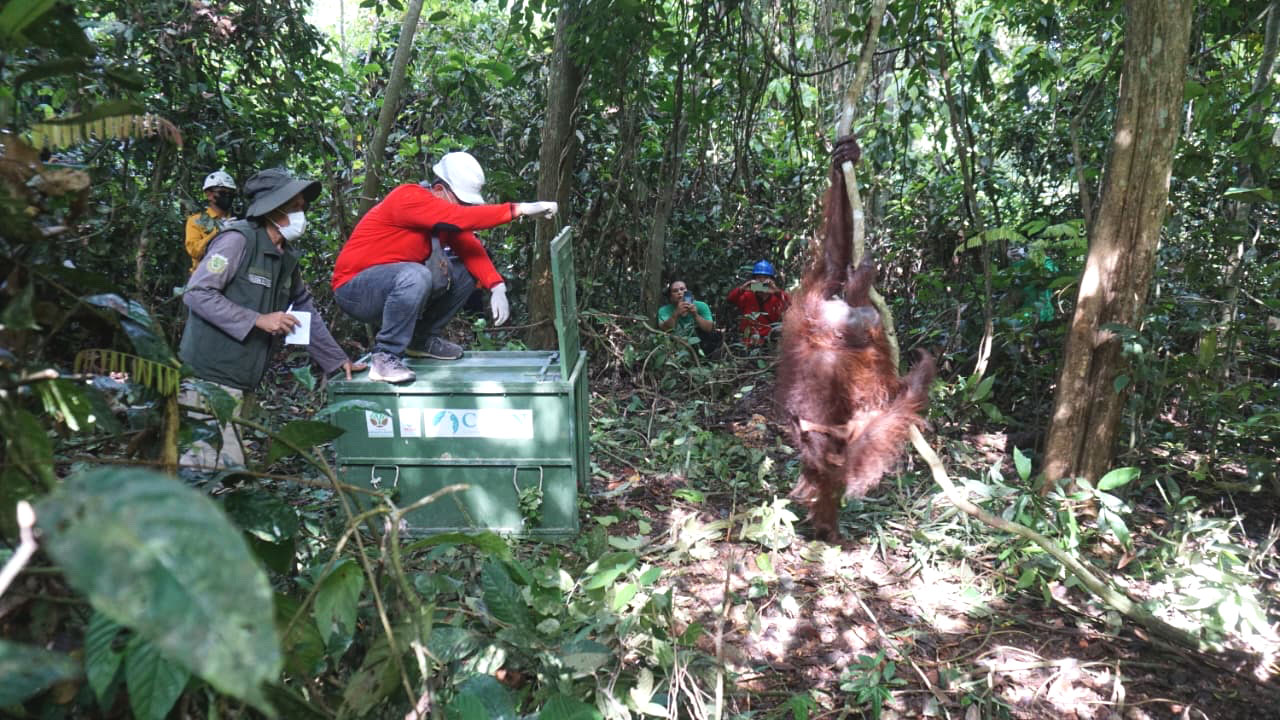
On the same day as the rescue, the family was transported to a High Conservation Value (HCV) area within the same landscape in Bengalon District. The relocation site, roughly a 30-minute drive from the rescue point, was chosen for its superior food availability and more robust forest structure. Wibawanto emphasized that the proximity of the release site was a strategic choice: "We could not release them too far away, as we had to consider the safety of the mother and the physical limits of the infants during transport."
The Biological Significance of Orangutan Twins
The birth of twins in the genus Pongo is a rare phenomenon that fascinates primatologists. Arif Rifki, a specialist in endangered species conservation at Yayasan Konservasi Alam Nusantara (YKAN), noted that while twin births have been recorded both in the wild and in captivity, the survival rate of both infants in a natural setting is historically low.
The energetic demands on a mother orangutan are immense. Carrying two growing infants through the canopy, defending them from predators, and finding enough high-calorie fruit to produce milk for two requires a high-quality habitat. In a fragmented forest, these demands become nearly impossible to meet. The fact that Jane managed to keep both Andrianto and Parlin healthy in a degraded forest patch is a testament to her resilience, but it also highlights the "extinction debt" facing the species—where individuals survive in the short term but cannot sustain a population due to habitat loss.
Habitat Fragmentation: A Silent Killer in East Kalimantan
The rescue of Jane and her twins serves as a microcosm of the broader environmental crisis in East Kalimantan. The region is part of the Kutai landscape, an ecological corridor stretching from the Mahakam River to the Kelay River in Berau Regency. Historically, this area has been one of the strongholds for the Northeast Bornean orangutan (Pongo pygmaeus morio), a subspecies known for its ability to survive in slightly more seasonal and degraded forests compared to its cousins in Central or West Kalimantan.
However, the rapid expansion of extractive industries has carved this landscape into a mosaic of "forest islands." Yaya Rayadin, an orangutan researcher from the Faculty of Forestry at Mulawarman University, explained that the proliferation of coal mines, Industrial Forest Plantations (HTI), and oil palm estates has created a landscape of "trapped" populations.
"This fragmentation is unavoidable under the current development model," Rayadin said. "Orangutans are arboreal; they live in the trees. When the canopy is broken, they are forced to walk on the ground to find food or mates. This exposes them to ground predators, parasites, and, most dangerously, human conflict."
Rayadin pointed to recent viral videos of orangutans scavenging in trash heaps near mining settlements as a sign of desperate food insecurity. "Relocation is a last-resort option. Ideally, these animals should be moved to even larger, more secure landscapes like the Keraitan block, but the immediate priority was simply getting them out of the ‘death trap’ they were in."
Analysis of Implications and the Minimum Viable Population
The successful translocation of Jane and her twins is a tactical victory for conservation, but experts warn it is not a strategic one. Arif Rifki of YKAN highlighted the concept of the Minimum Viable Population (MVP). Scientific research suggests that for a population of Bornean orangutans to be genetically and demographically stable over the long term, a minimum of 100 individuals must exist in a single, connected habitat. For true long-term resilience, that number should ideally be 500.
"We need rapid and comprehensive assessments to determine if the pockets where orangutans like Jane are found can still support an MVP," Rifki argued. "If we are simply moving individuals from one small pocket to another slightly larger pocket, we are only delaying the inevitable. We must focus on creating wildlife corridors that reconnect these fragments."
The economic implications are equally complex. East Kalimantan is a central hub for Indonesia’s energy and agricultural exports. The challenge for the provincial government and the BKSDA is to balance the "economic engine" with the survival of a species that is a global icon of biodiversity. The "High Conservation Value" (HCV) approach used in the Jane case—where companies are required to set aside portions of their concessions for conservation—is one tool, but its effectiveness depends on whether these HCV areas are connected to one another or remain isolated "zoos" in the middle of plantations.
Conclusion: A Call for Landscape-Level Governance
The story of Jane, Andrianto, and Parlin ended with a successful release, but their future remains tethered to the land-use decisions made in the coming years. As the trio explores their new home in the Bengalon HCV area, conservationists are calling for a shift from "reactive rescue" to "proactive landscape management."
The BKSDA has signaled that while translocation saved these three individuals, the sheer number of orangutans remaining in small forest pockets across East Kutai is unknown. Without a regional plan to establish permanent wildlife corridors—strips of forest that allow animals to travel between larger protected areas—more rescues will be necessary, and not all will have a happy ending.
"Translocation is an admission that the habitat has failed," M. Ari Wibawanto concluded. "Our goal for the future must be to ensure that the economy can move forward without destroying the very space these magnificent creatures need to survive. The birth of twins is a gift from nature; it is our responsibility to ensure they have a forest to grow up in."
As industrial activity continues to reshape the face of Kalimantan, the fate of Jane’s twins will serve as a benchmark for the success or failure of Indonesian conservation in the 21st century. For now, Andrianto and Parlin are back in the trees, away from the dust of the mines and the monoculture of the palms, a small victory in a much larger struggle for the soul of the Bornean rainforest.