Bambang Pamungkas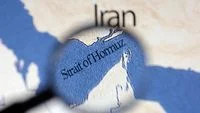
Jakarta, CNBC Indonesia – Iran’s unilateral imposition of a de facto blockade on the Strait of Hormuz, initiated on February 28 in apparent retaliation for the United States-Israel conflict, has plunged the global economy into one of its most severe energy crises in decades. This unprecedented disruption, impeding the transit of approximately 20 million barrels of oil daily, has prompted stark warnings from experts about an impending global recession, as benchmark crude prices surge past US$100 per barrel and nearly 2,000 vessels remain stranded in a perilous maritime standoff. The situation underscores the extreme vulnerability of global energy markets to geopolitical flashpoints and challenges the established norms of international maritime law.
The Strategic Nexus: Understanding the Strait of Hormuz
The Strait of Hormuz is not merely a shipping lane; it is a critical artery of global commerce and energy supply, often dubbed the "world’s most important oil chokepoint." This narrow waterway, situated between Iran to the north and Oman and the United Arab Emirates to the south, connects the Persian Gulf with the Arabian Sea and beyond. Geographically, it is incredibly constricted, with the width of the shipping lane itself only about two miles (3.2 kilometers) in either direction, separated by a two-mile buffer zone. This geographical constraint makes it inherently susceptible to disruption, even under normal circumstances.
Economically, its importance cannot be overstated. Roughly one-fifth of the world’s total petroleum liquids consumption, or approximately 20-30% of all seaborne-traded oil, passes through the Strait daily. This includes crude oil, refined petroleum products, and a significant portion of the world’s liquefied natural gas (LNG). Key oil and gas exporters—Saudi Arabia, Iraq, the UAE, Kuwait, Qatar, and Iran itself—are entirely or heavily reliant on the Strait for their exports. Consequently, a substantial portion of global energy demand, particularly from major Asian economies such as China, India, Japan, and South Korea, is met via this route. Any prolonged interruption here reverberates across industries, from transportation and manufacturing to food production and consumer goods, elevating costs and dampening economic activity worldwide.
The Strait has a long history of geopolitical sensitivity and occasional confrontation. During the "Tanker Wars" of the 1980s Iran-Iraq War, both sides attacked oil tankers, highlighting the fragility of shipping in the region. More recently, incidents involving drone attacks, vessel seizures, and heightened naval patrols have kept the international community on edge. These historical precedents serve as a stark reminder of the region’s volatility and the potential for any escalation to quickly spiral into a global crisis.
Chronology of Escalation and Blockade Implementation
The current crisis began with a decisive shift in Iran’s regional strategy. On February 28, following the commencement of what Tehran describes as a "war" initiated by the United States and Israel, Iran declared its intention to exert greater control over the Strait. This move was framed as a direct response to the perceived aggression and a means of leverage in the broader geopolitical struggle.
Initial reports from early March indicated a significant slowdown in traffic. Shipping manifests showed vessels being denied passage or experiencing severe, unexplained delays, leading to growing alarm within the maritime industry. By mid-March, the accumulation of vessels near the Strait’s entry and exit points became undeniable, prompting urgent calls from shipping companies and energy market analysts for clarity and resolution.
On Thursday, March 26, Iranian media outlets reported that the nation’s parliament was actively working to legislate a new law that would impose a transit toll on all vessels traversing the Strait of Hormuz. A key official, whose identity was not disclosed by Al Jazeera, stated: "According to this plan, Iran must collect fees to ensure the security of ships that pass through the Strait of Hormuz." The official further elaborated, justifying the measure by drawing parallels to land corridors where "when goods pass through a country, duties are paid. The Strait of Hormuz is also a corridor. We ensure its security, and it is reasonable for ships and tankers to pay duties to us." This statement signaled a formalization of Iran’s control and a direct challenge to the international legal principle of freedom of navigation through international straits.
Further cementing this stance, on Sunday, March 29, Iranian lawmaker Alaeddin Boroujerdi confirmed to the UK-based Farsi-language satellite TV channel, Iran International, that Iran had already begun collecting tolls. He revealed that "some vessels" had been charged US$2 million, approximately 33 billion Indonesian Rupiah, for passage. Boroujerdi explicitly linked these charges to the ongoing conflict, stating, "Now, because the war has costs, of course, we have to do this and collect transit fees from ships that pass through the Strait of Hormuz." This confirmation transformed a legislative proposal into an active, albeit contested, policy.
As of the latest reports, the consequences of this policy are severe. Arsenio Dominguez, Secretary-General of the International Maritime Organization (IMO), told Al Jazeera that nearly 2,000 vessels are currently waiting on both sides of the Strait, unable to proceed. Maritime intelligence service Windward provided further analysis, noting that this extensive buildup suggests "many operators have chosen to maintain positions outside Hormuz rather than immediately commit to long-distance rerouting." This highlights the scale of the disruption and the difficult choices faced by the global shipping industry.
Economic Fallout and Recessionary Threats
The most immediate and tangible impact of the Hormuz blockade has been the dramatic surge in global oil prices. Prior to the February 28 escalation, international crude benchmarks were hovering around US$70-75 per barrel. Within weeks, the price surged by approximately 40%, climbing above US$100 per barrel. This sharp increase is reminiscent of previous energy crises, though its speed and scale are particularly alarming. For context, historical oil price spikes—such as those during the 1973 OPEC embargo, the 1979 Iranian Revolution, or the 2008 financial crisis—have consistently correlated with significant global economic slowdowns.
This sudden escalation in energy costs acts as a potent inflationary force across the global economy. Higher crude prices translate directly into increased fuel costs for transportation (shipping, trucking, air freight), which in turn drives up the cost of goods. Manufacturing industries, heavily reliant on energy for production, face substantially higher input costs. This inflationary pressure erodes consumer purchasing power, forcing households to allocate more of their income to essential energy needs and less to discretionary spending, thereby dampening overall economic activity.
The warnings of a potential global recession are not merely speculative. Leading economists and international financial institutions are now factoring a prolonged Hormuz disruption into their growth forecasts. A sustained period of oil prices above US$100, especially coupled with other geopolitical uncertainties, typically leads to a contraction in global GDP. Countries, particularly those in Asia with high energy import dependency, have been forced to implement drastic measures. Reports indicate widespread fuel rationing for consumers and significant cuts in industrial production across the continent. Factories operating on thin margins are finding it economically unviable to continue at previous capacities, leading to layoffs and further economic stagnation. The ripple effect extends to global supply chains, as delays and increased costs for raw materials and finished goods disrupt just-in-time manufacturing and international trade networks.
Iran’s Demands and Justifications
At the core of Iran’s strategy lies a fundamental demand: international recognition of its asserted right to exercise authority over the Strait of Hormuz. This claim directly challenges the established principles of international maritime law, specifically the 1982 United Nations Convention on the Law of the Sea (UNCLOS), which guarantees the right of "transit passage" through international straits for all vessels. By seeking to impose tolls and control access, Iran is attempting to redefine the legal status of the Strait from an international waterway to one under its national jurisdiction. This reassertion of sovereignty, if recognized, would grant Iran unprecedented leverage over global energy flows and maritime trade.
The proposed toll system, which has already seen implementation on certain vessels, is justified by Tehran on several grounds. Primarily, Iran argues that it bears the responsibility and cost of ensuring the security of the Strait, particularly in the current volatile regional environment. They contend that providing such security services, including monitoring, patrolling, and potentially search-and-rescue operations, warrants financial compensation from the vessels that benefit from this security. As the Iranian official quoted by Al Jazeera articulated, "when goods pass through a country, duties are paid," suggesting that the Strait should be treated similarly to a territorial passage rather than an international one.
Furthermore, Iranian officials, like MP Alaeddin Boroujerdi, have explicitly linked the tolls to the "costs" of the ongoing US-Israel conflict. This suggests that the revenue generated from these fees is intended to bolster Iran’s financial resources, potentially to offset the economic impact of international sanctions or to fund its regional activities. This dual justification—security provision and war financing—underscores the complex motivations behind Iran’s actions, blending legal arguments with pragmatic economic and strategic objectives.
International Reactions and Diplomatic Efforts
The international community’s response to the Hormuz blockade has been one of profound concern and escalating diplomatic pressure. Affected nations, particularly the major energy consumers in Asia like China, India, Japan, and South Korea, have been at the forefront of lobbying efforts. Their national economies are heavily reliant on the uninterrupted flow of Gulf oil and gas, and the current disruption threatens their energy security and economic stability. Diplomatic channels are reportedly buzzing with bilateral and multilateral appeals to Tehran, urging a swift and peaceful resolution and a return to freedom of navigation. These nations are likely offering various diplomatic incentives or warnings of economic repercussions should the blockade persist.
The International Maritime Organization (IMO), the specialized agency of the United Nations responsible for the safety and security of shipping and the prevention of marine and atmospheric pollution by ships, has voiced grave concerns. Secretary-General Arsenio Dominguez’s statement about nearly 2,000 ships awaiting passage underscores the humanitarian and logistical nightmare unfolding at the Strait. The IMO’s mandate compels it to advocate for adherence to international maritime law, including the principle of freedom of navigation, and to work towards ensuring safe passage for all vessels.
While not explicitly detailed in the source, it is highly probable that global powers, including the United States and European Union members, have condemned Iran’s actions as a violation of international law and a direct threat to global trade and energy security. The US, which traditionally maintains a significant naval presence in the Persian Gulf, would likely view any sustained blockade or imposition of tolls as an unacceptable infringement on international maritime rights. Historical precedents suggest that such actions could lead to calls for international intervention, potentially including naval escorts or other measures to ensure freedom of navigation, although such steps would carry significant risks of military escalation. The United Nations Security Council would almost certainly be engaged in discussions, exploring diplomatic avenues and potential resolutions to de-escalate the crisis. Concurrently, international energy agencies like the International Energy Agency (IEA) and the U.S. Energy Information Administration (EIA) would be closely monitoring global oil supply, urging member states to consider utilizing strategic petroleum reserves to mitigate immediate supply shocks.
Maritime Logistics Under Strain
The sheer scale of the vessel accumulation at the Strait’s entry and exit points presents an unprecedented challenge for global maritime logistics. With nearly 2,000 ships currently stalled, the types of vessels affected span the entire spectrum of maritime trade: Very Large Crude Carriers (VLCCs) and Suezmax tankers laden with millions of barrels of oil, specialized LNG carriers transporting super-cooled natural gas, container ships carrying manufactured goods, and bulk carriers transporting commodities.
For shipping companies, the operational challenges are immense. Demurrage costs—penalties paid for delays beyond the agreed loading or unloading time—are skyrocketing, adding significant financial strain. Crew welfare becomes a paramount concern as thousands of seafarers find themselves stranded indefinitely in a high-tension zone. Vessel schedules are in disarray, leading to a cascading effect of delays across global shipping networks and disrupting just-in-time supply chains.
The alternative routes, while technically available, are economically and logistically punitive. Rerouting vessels around the Cape of Good Hope, for instance, adds thousands of nautical miles and weeks to transit times between the Middle East and Europe or the Americas. This significantly increases fuel consumption, operational costs, and insurance premiums, which are already experiencing a sharp rise due to the heightened war risk in the region. For a VLCC, an additional two weeks of transit can add millions of dollars to a single voyage. While some pipeline alternatives exist, such as Saudi Arabia’s East-West Pipeline (Petroline), their capacity is limited and cannot fully compensate for the volume of oil and gas typically transiting Hormuz. The strategic petroleum reserves maintained by various nations offer only short-term relief and are not a sustainable solution for a prolonged blockade.
Broader Geopolitical and Energy Security Implications
The Strait of Hormuz crisis transcends a mere energy disruption; it represents a critical test of international law, economic resilience, and diplomatic resolve, with far-reaching geopolitical and energy security implications.
Regionally, the crisis significantly heightens tensions in the Persian Gulf. The risk of miscalculation or an unintended military confrontation between Iran and other regional or international actors is elevated. This situation could further destabilize an already volatile region, impacting existing alliances and rivalries, potentially drawing in more actors and escalating conflicts elsewhere.
Globally, the blockade will undoubtedly accelerate the drive for energy independence and diversification among major consuming nations. Countries that have historically relied heavily on Middle Eastern oil and gas will likely intensify investments in alternative energy sources, domestic production, and the development of new energy infrastructure, such as LNG terminals and diversified pipeline networks. This could lead to a long-term shift in the global energy architecture, reducing the strategic importance of the Persian Gulf over time, but at a significant cost and over many years.
Iran’s actions also set a dangerous precedent for the control of other critical maritime chokepoints around the world, such as the Suez Canal, the Panama Canal, the Bab el-Mandeb Strait, or the Malacca Strait. If Iran successfully establishes a precedent for asserting unilateral control and imposing tolls on an international strait, it could inspire other nations to do the same, leading to a fragmentation of international maritime law and severe disruptions to global trade.
Finally, the debate over Iran’s right to control the Strait directly challenges the established norms of freedom of navigation, a cornerstone of international law that has underpinned global trade and maritime security for centuries. The outcome of this standoff will have profound implications for the future interpretation and enforcement of international maritime law.
Outlook and Potential Scenarios
The immediate future of the Strait of Hormuz remains uncertain, with several potential scenarios emerging. The most desirable outcome is a negotiated resolution, driven by intensified diplomatic efforts from affected nations and international bodies. This could involve a package of concessions, potentially including guarantees of security for Iran, a lifting of some sanctions, or other diplomatic solutions, in exchange for the full reopening of the Strait and adherence to international maritime law.
However, a prolonged standoff is also a distinct possibility. Should diplomatic efforts fail, the blockade could continue indefinitely, leading to a deeper global recession, sustained high energy prices, and continued disruption to global supply chains. This scenario would force countries to implement more severe rationing measures and further accelerate their search for alternative energy sources and trade routes.
The most dangerous scenario involves escalation, where the economic pressure or a perceived threat could lead to military action. This could range from attempts to enforce freedom of navigation by naval powers to broader regional conflicts, further destabilizing the Middle East and sending shockwaves through global markets.
Regardless of the immediate resolution, the crisis will undoubtedly lead to long-term shifts. Companies and governments will likely reassess their supply chain vulnerabilities, invest in greater redundancy, and push harder for energy transition technologies. The strategic importance of the Strait of Hormuz, while still immense, may gradually diminish as the world adapts to a more fractured and volatile energy landscape.
The Strait of Hormuz crisis transcends a mere energy disruption, evolving into a critical test of international law, economic resilience, and diplomatic resolve. The choices made by Iran and the international community in the coming weeks and months will undoubtedly shape the trajectory of global energy security and geopolitical stability for years to come, marking a significant chapter in the ongoing narrative of a world grappling with intertwined economic and strategic challenges.