Nila Kartika Wati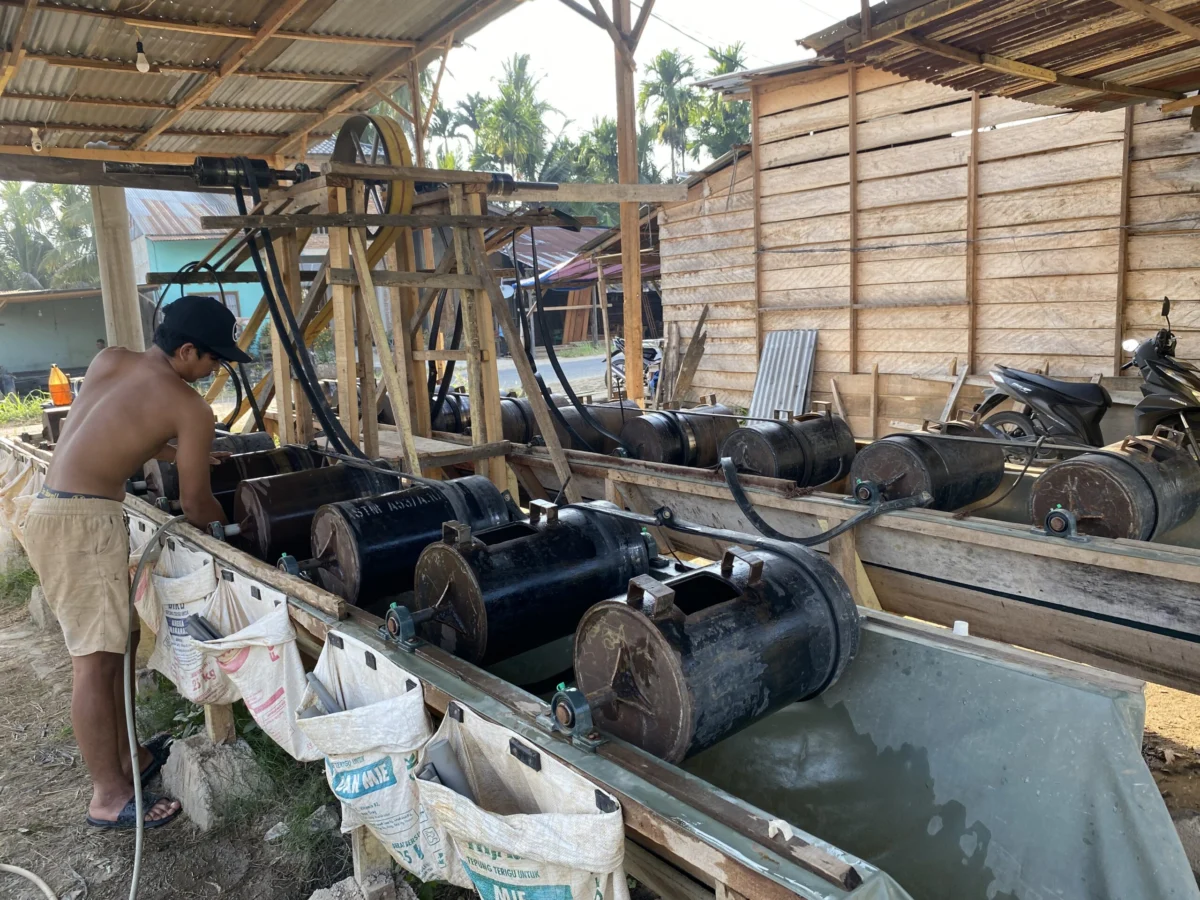
Yudi Saputra paused for a moment before entering the Huta Bargot forest in Mandailing Natal (Madina), North Sumatra, on a humid afternoon in mid-March 2026. He sharpened his hearing, scanning for the rhythmic crunch of patrol boots or the distant roar of security vehicles. Once satisfied that the silence was genuine, Yudi ventured deeper into the jungle toward an illegal gold mining site nestled within the landscape of the Batang Gadis National Park (TNBG). "If we run into the authorities, it’s over for us," he whispered, his voice barely audible over the rustle of the canopy.
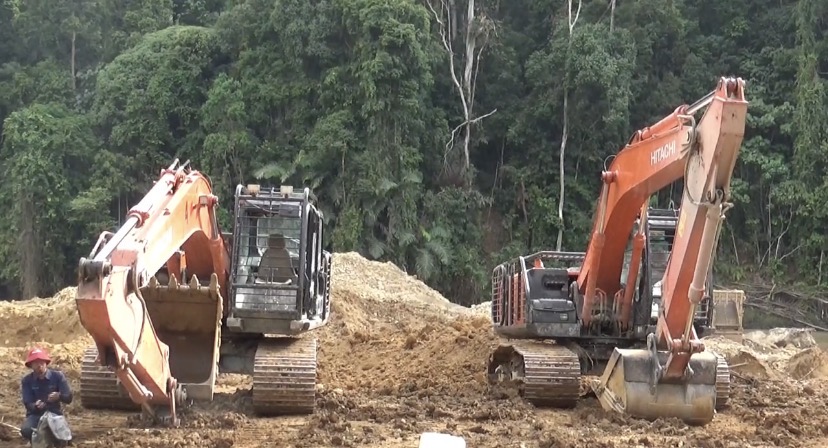
His caution is well-founded. In recent weeks, a joint force of the Indonesian National Police (Polri) and the Indonesian National Armed Forces (TNI) has intensified operations across the region. In early March, police seized dozens of heavy machinery units and detained several individuals involved in illegal gold mining (locally known as PETI) across the border of Madina and South Tapanuli. Two individuals have since been named suspects. Shortly thereafter, the TNI conducted its own raids, confiscating over a dozen excavators from illegal sites along the Batang Natal River. Despite these high-pressure crackdowns, the illegal trade refuses to die. Instead, it has evolved into a high-stakes game of cat-and-mouse where the ultimate wager is often human life.
A Chronology of Tragedy and Enforcement
The dangers of the trade were underscored on Wednesday, March 18, 2026, when a landslide struck an illegal mining site in Tanoman, Simanguntong Village, Batang Natal District. The disaster claimed the lives of two miners, identified as Martaon and Amri, while a third, Kholidin, remains in critical condition. Wahyu Siregar, the District Head of Batang Natal, confirmed the fatalities and noted that the Madina Resort Police are currently investigating the incident.
This tragedy is part of a grim timeline of accidents that have plagued the region for years. In 2022, a similar incident saw 12 women buried alive in a collapsed mine. Yet, for many locals, the threat of a cave-in is secondary to the threat of starvation.
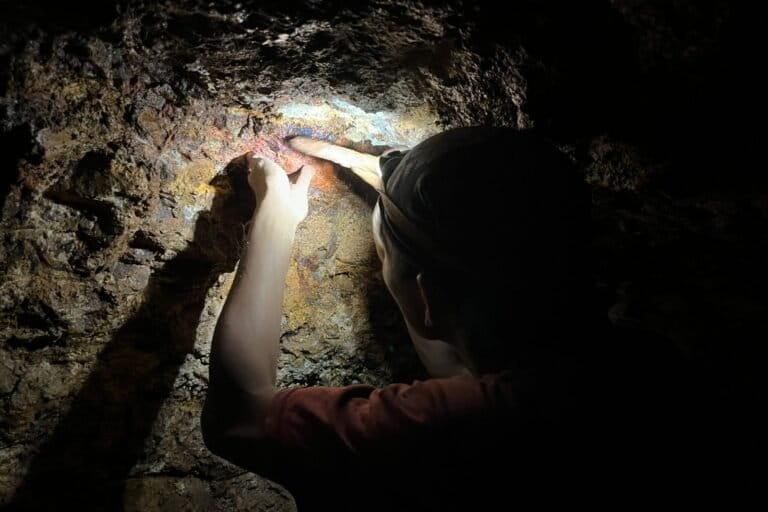
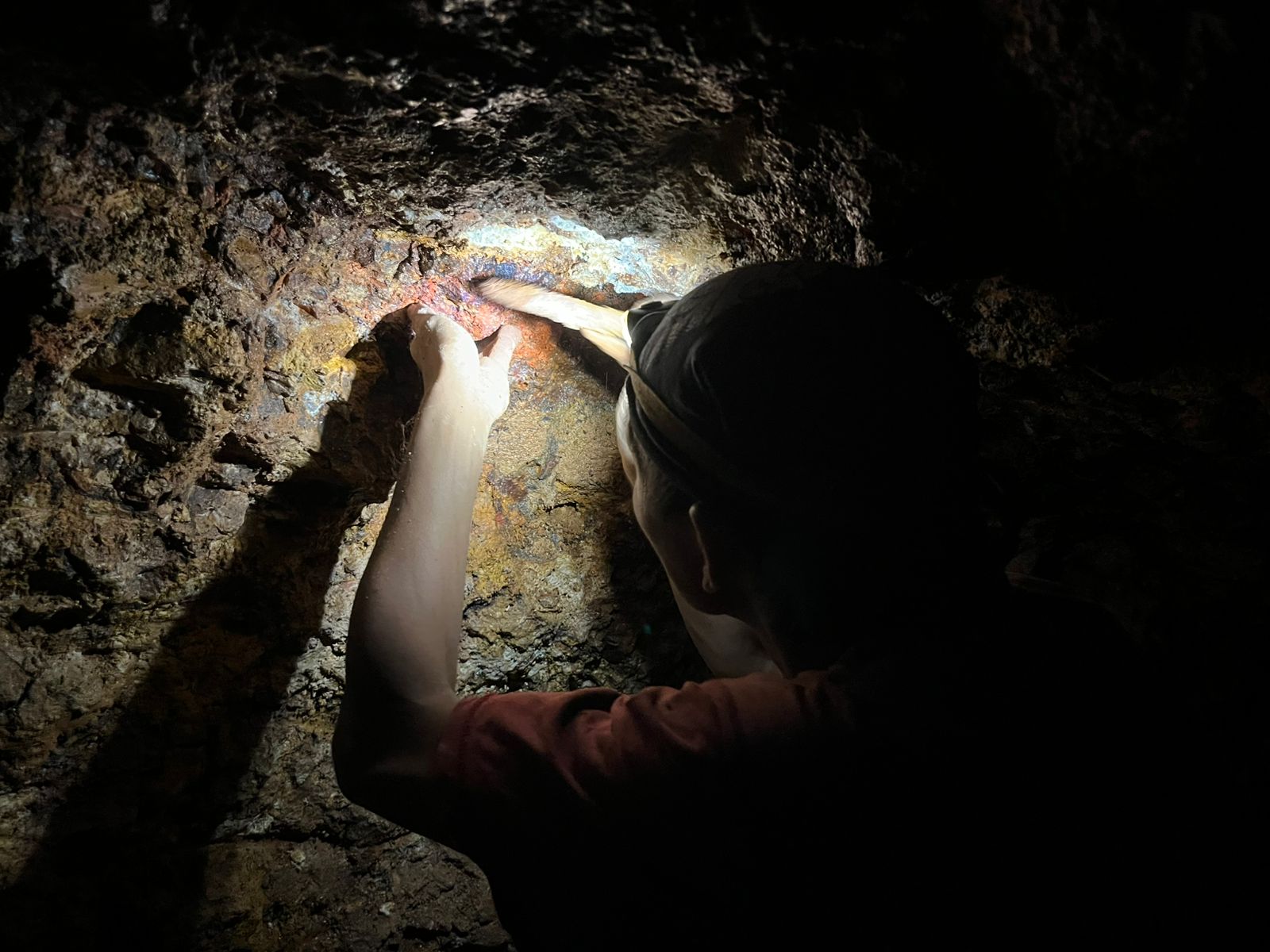
For five years, Yudi Saputra has followed the same grueling routine: trekking four to five hours through dense jungle, crossing rivers, and scaling ridges to reach remote extraction points. Once there, he descends into narrow, damp, and pitch-black shafts that can reach depths of 300 meters. Over his career, Yudi has excavated ten such holes, following what miners call "storing paths"—veins of rock rich in gold ore.
"If you can’t read the stone, you’re just working yourself to death for nothing," Yudi explained. "Or worse, you end up buried under it." Yudi works as part of a six-man team funded by a "bohir" (financier). His role involves the technical task of chiseling the rock, following the yellow-gold "storing" lines that snake through the earth like veins. To determine if a site is worth the months of digging, miners first test surface rock "crusts" using a glundung (milling machine). If the test yields gold, the project proceeds; if not, they move on.
The Economics of the "Bohir" System
The persistence of illegal mining in Madina is not merely a symptom of poverty but a structured business model driven by influential financiers. Salim, a local financier, admitted that his involvement began as a gamble. After obtaining 35 grams of gold from a single bag of ore provided by a relative, he was hooked. He eventually opened his own pit in the Huta Bargot production forest.
The financial arrangement is a sophisticated profit-sharing system. For every ten bags of ore extracted, five go to the financier (Salim), four are divided among the six miners, and one is given to the landowner. Additionally, the landowner receives an initial "entry fee" of approximately Rp2,000,000. Salim also provides a modest bi-weekly allowance of Rp200,000 per miner to support their families while the men spend weeks living at the site.
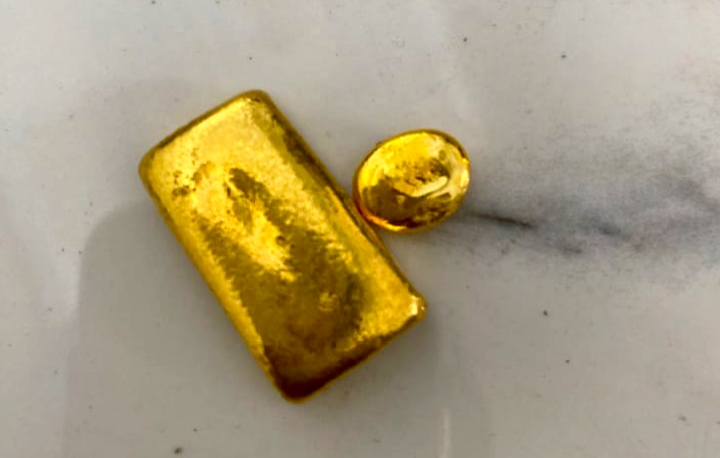
In a good week, Salim can net between 10 to 30 grams of gold. When a pit is no longer productive, Salim employs a dangerous but "efficient" method of closure: improvised explosive devices. "I admit, not many have the conscience to close the holes manually. Blasting them shut is faster, though it leaves the landscape scarred," he said.
The Processing and Laundering Cycle
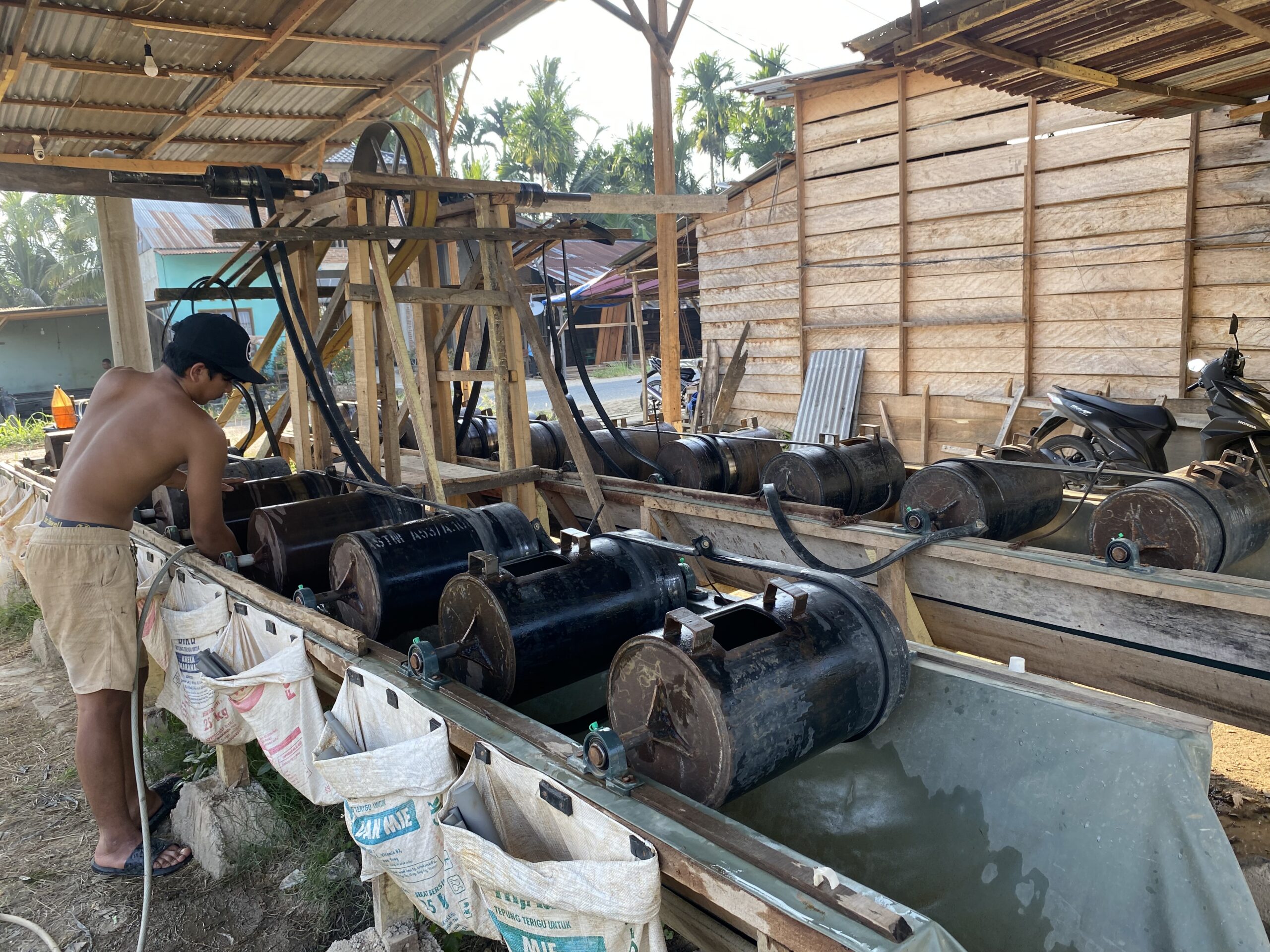
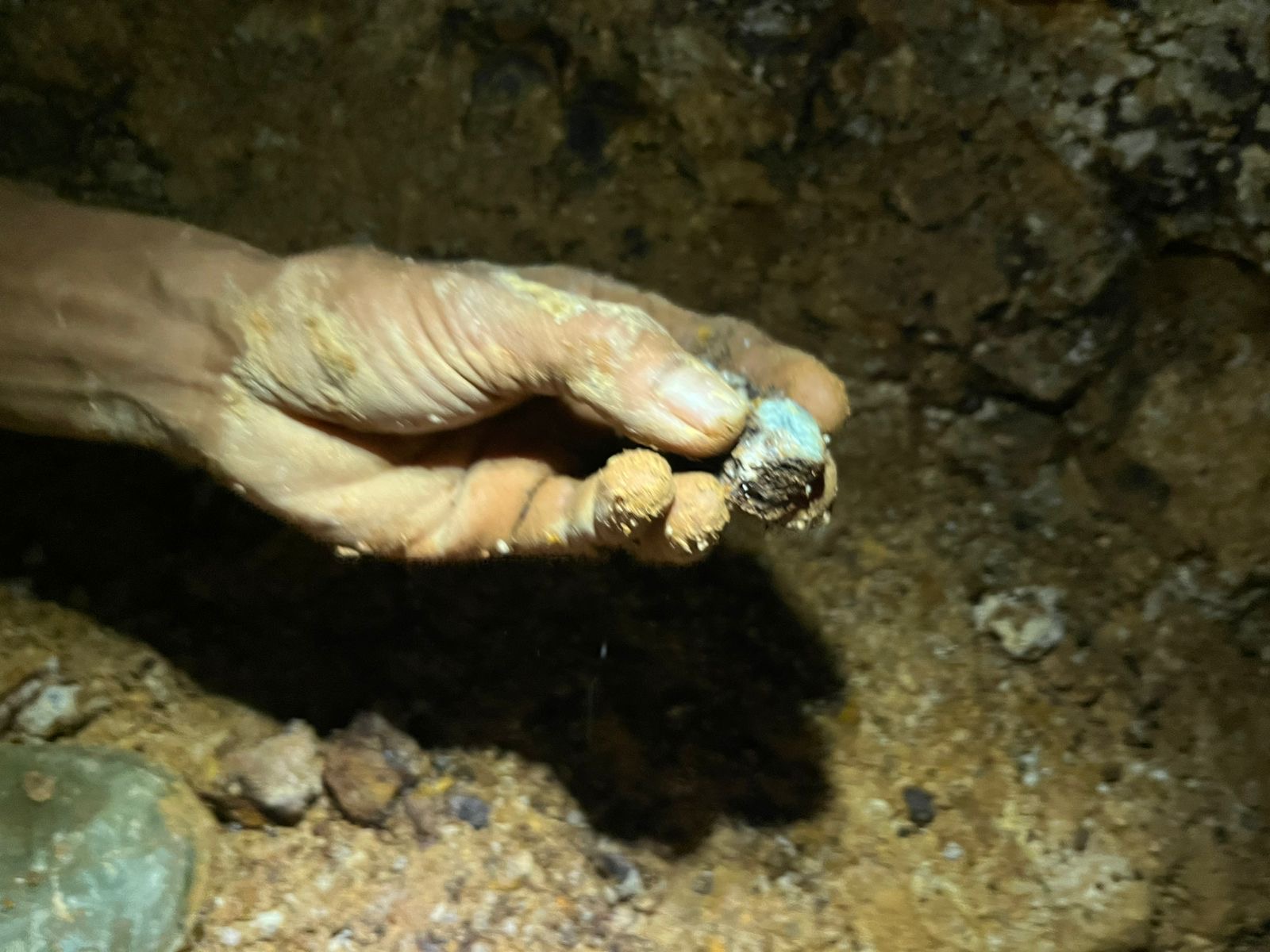
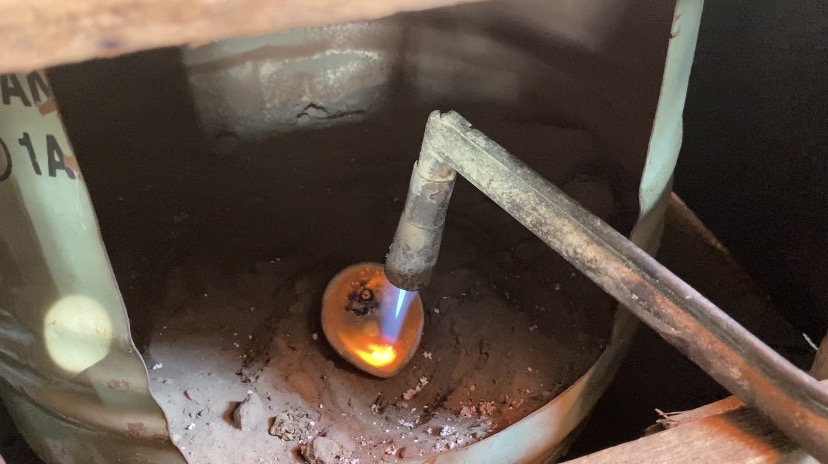
The journey from raw ore to a polished product involves a toxic and clandestine supply chain. In Panyabungan Village, the air is often thick with the sound of glundung machines. Saipul Nahdi, an operator of these milling machines, explained the process: the ore is crushed into a fine powder and placed into a drum (trommel) with water and mercury. The drum is rotated for four hours, allowing the mercury to bind with the gold.
"After the rotation, we filter it through a cloth. The mercury passes through, and the gold amalgam remains," Saipul said. He charges Rp20,000 per bag for his services but makes his real profit from reprocessing the "tailings" or waste sludge, which still contains traces of gold and silver.
Once the gold is extracted, it enters a shadow market. "Lea" (a pseudonym), a prominent collector in Madina, has operated for over a decade. She manages a network of eight agents who scour villages to buy gold from miners. In a single week, her network can collect at least one kilogram of gold. Despite the legal risks, the skyrocketing price of gold—currently reaching Rp3 million per gram—makes the business too lucrative to abandon.
Lea’s operation highlights a critical flaw in the oversight system: gold laundering. Much of this "dirty" gold is sold to local jewelry shops. These shops melt the gold down and craft it into rings, necklaces, and bracelets. By issuing a formal receipt with the shop’s logo, the illegal ore is instantly transformed into a legal asset. "With a piece of paper, gold from an unauthorized mine becomes legitimate. The police likely know this, but whether they act is another story," remarked Agam Sutiro, an activist from For Madina.
Environmental Catastrophe and Institutional Overlap
The environmental toll of this industry is staggering. According to data from For Madina, illegal mining has decimated large swaths of production and protected forests. In the Tantom District alone, over 10 hectares of forest have been destroyed. In Batang Natal, the damage covers nearly 14 hectares, with Aek Baru Village suffering the most significant loss.
The destruction isn’t limited to the trees. The use of heavy machinery and the dumping of mercury-laden tailings have led to severe river sedimentation and chemical pollution. This environmental degradation occurs in the shadow of a long-standing land dispute. Dony Saputra, Director of the Sumatra Rainforest Institute (SRI), pointed out that the conflict is exacerbated by the overlapping boundaries of the PT Sorik Mas Mining (SMM) concession and the Batang Gadis National Park (TNBG).
Historically, SMM held a massive 201,700-hectare concession granted in 1998, which was later reduced. When TNBG was established in 2004, it covered 108,000 hectares, much of which overlapped with SMM’s territory. Following a judicial review in 2008, the national park’s size was reduced to 74,279 hectares in 2012. This "open access" status, where neither the corporation nor the park authorities exercise full control, has allowed illegal miners to flourish.
The National Impact: A Trillion-Rupiah Leakage
The scale of the illegal gold trade in Madina is a microcosm of a national crisis. Brigjen Sonny Irawan, Deputy Chief of the North Sumatra Police, emphasized that PETI activities are a direct violation of Article 158 of Law No. 9 of 2009 concerning Mineral and Coal Mining. He estimated that in Madina alone, the daily loss to the state exceeds Rp1 billion, based purely on the volume of gold produced and current market prices.
However, the national figures are even more staggering. A 2026 report by the Center for Financial Transaction Reports and Analysis (PPATK) revealed that the total turnover of illicit funds from illegal mining in Indonesia has reached nearly Rp1,000 trillion—roughly one-third of the national budget (APBN).
"This is the ‘Resource Curse’ in action," said Agam Sutiro, referencing the economic theory that regions with abundant natural resources often experience less economic growth and worse development outcomes than regions with fewer resources. "The wealth is being drained by a handful of financiers and corrupt actors, while the local population is left with poisoned rivers and collapsing hillsides."
Conclusion: A Cycle of Poverty and Lawlessness
As the sun set over the Huta Bargot forest, Yudi Saputra continued to swing his hammer in the depths of the earth. He is unaware of the trillion-rupiah figures discussed in Jakarta or the policy debates regarding national park boundaries. For him, the gold is a lifeline, however frayed it may be.
The situation in Mandailing Natal demonstrates that law enforcement alone cannot solve the problem of illegal mining. While raids may temporarily halt operations, the underlying drivers—poverty, the high global price of gold, and a sophisticated laundering system—ensure that the pits will eventually be reopened. Without a comprehensive strategy that includes economic alternatives for miners, stricter oversight of jewelry shops, and the resolution of land tenure conflicts, the "dark glitter" of Madina will continue to claim lives and landscapes alike. For now, the cat-and-mouse game continues, and the forest continues to bleed.