Nila Kartika Wati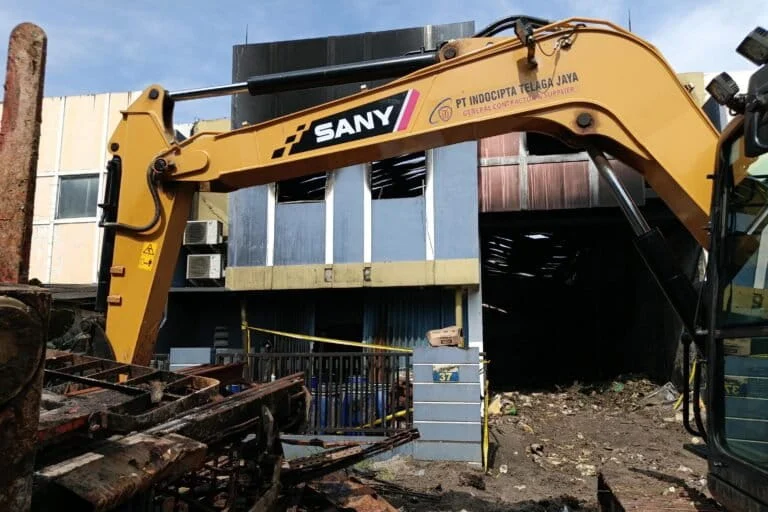
The Indonesian Ministry of Environment and the Bureau of Environmental Impact Control are currently prioritizing scientific verification as the foundation for legal proceedings against PT Biotek Saranatama following a massive pesticide warehouse fire that contaminated the Cisadane River. Hanif Faisol Nurofiq, the Minister of Environment and Head of the Environmental Impact Control Agency (BPLH), confirmed on Monday, March 16, 2026, that the government is awaiting comprehensive laboratory results from IPB University (Institut Pertanian Bogor) to determine the exact concentration of hazardous substances released into the ecosystem. This data is essential for calculating environmental damages and ensuring that the subsequent lawsuit stands on a rigorous scientific basis.
The contamination incident, which has sparked significant public concern in Tangerang and surrounding regions, began when a storage facility owned by PT Biotek Saranatama in the Taman Tekno BSD industrial complex caught fire. The resulting runoff, containing high concentrations of chemical pesticides, flowed into the Jaletreng Stream, a tributary that feeds directly into the Cisadane River. The Minister emphasized that the government cannot move forward with a formal demand for compensation until the laboratory at IPB completes its analysis of the water and sediment samples.
Scientific Verification and the Calculation of Environmental Damages
The reliance on IPB University’s laboratory is a strategic move to ensure that the legal challenge is immune to procedural disputes regarding the severity of the pollution. According to Minister Hanif, the laboratory is specifically testing for the concentration of various pesticide active ingredients that have permeated the river system. Once these concentrations are established, the Ministry of Environment (KLH) will apply a standardized formula to calculate the total economic and ecological loss. This calculation involves multiplying the volume and concentration of the pollutants by the established environmental damage tariffs as dictated by current national norms.
“Every action we take has a scientific basis,” Hanif told reporters in Jakarta. “The calculation of damages cannot be reduced or altered unless there is a valid, alternative methodology that can be cross-referenced. We are currently matching methodologies to ensure we use the most accurate model possible for assessing the degradation of the Cisadane ecosystem.”
This methodology mirrors the government’s recent legal strategy in Sumatra, where several corporations were sued for ecological disasters, resulting in total compensation demands reaching Rp4.8 trillion. Hanif noted that in some of those cases, companies opted for mediation and began settling their liabilities even before the court proceedings reached a final verdict. However, he clarified that while civil settlements are possible, the pursuit of criminal charges remains a priority under the explicit instructions of President Prabowo Subianto, who has called for a zero-tolerance policy toward corporate environmental crimes.
Chronology of the Contamination and Current River Conditions
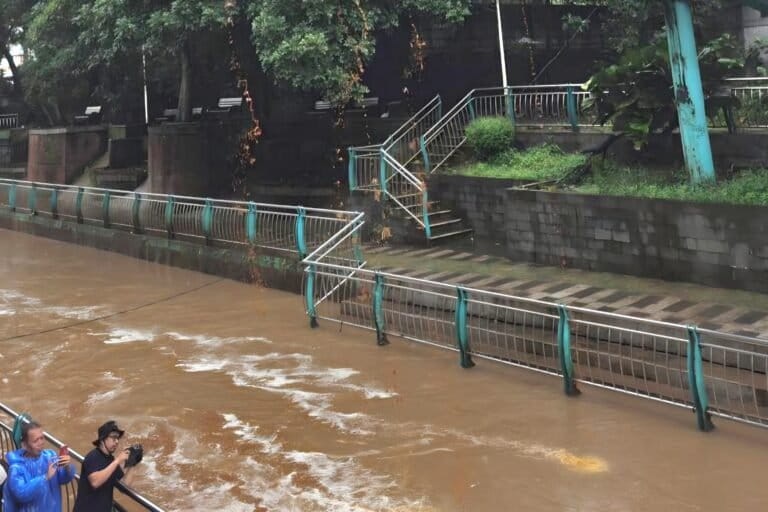
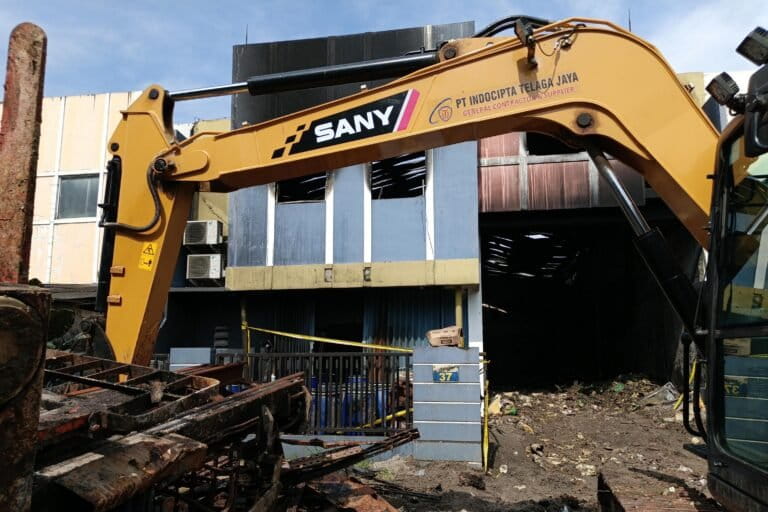
The crisis began in mid-February 2026 when a fire razed the PT Biotek Saranatama warehouse in Setu, South Tangerang. Despite efforts by local fire departments to contain the blaze, the water used to extinguish the fire mixed with thousands of liters of stored pesticides, creating a toxic slurry that bypassed drainage systems and entered the natural waterways. Within days of the fire, residents living along the Jaletreng and Cisadane rivers reported a pungent chemical odor and a sudden, massive die-off of fish.
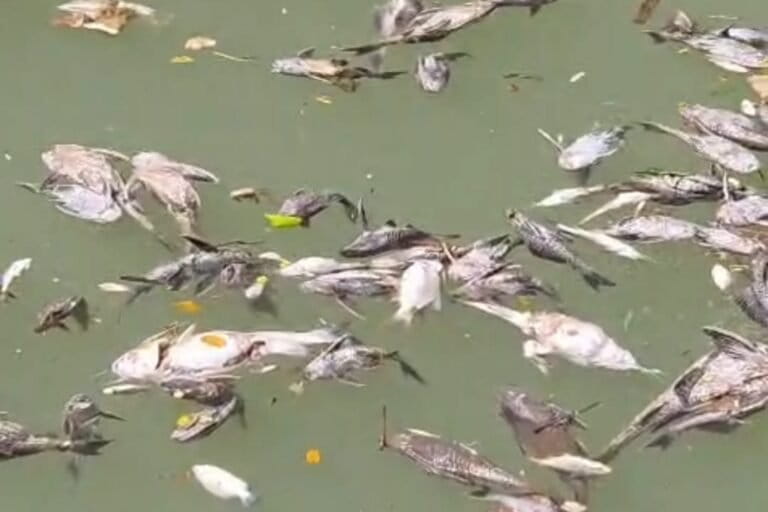
Visual evidence from the site showed thousands of dead fish floating on the surface of the Jaletreng Stream, a primary indicator of acute toxicity. While the fire has long been extinguished, the ecological impact remains a persistent threat. Minister Hanif stated that the Ministry is not yet ready to declare the Cisadane River safe or the contamination fully resolved. Monitoring teams have established six distinct sampling points along the river to track the movement of the chemical plume and the settling of toxins into the riverbed.
“We cannot yet declare that the issue of pesticide sedimentation is completely finished,” Hanif remarked. He revealed that the Ministry has committed to a long-term monitoring schedule, which includes monthly sediment checks to ensure that no residual pesticides remain trapped in the river’s floor. A second phase of comprehensive sampling is scheduled for early April 2026 to track the effectiveness of natural dilution and any mitigation efforts.
As a precautionary measure, the government has issued a stern warning to residents living along the Cisadane, particularly those who rely on the river for subsistence fishing. The Minister advised the public to refrain from consuming any fish caught in the affected areas until further notice. “My advice is for people to look for fish elsewhere for the time being,” he added, citing the high risk of bioaccumulation of toxic chemicals in aquatic life.
Legal Perspectives: Strict Liability and Corporate Responsibility
The legal community and environmental advocates are closely watching the government’s handling of the PT Biotek Saranatama case. Marsya Handayalni, a researcher at the Indonesia Center for Environmental Law (ICEL), argued that the incident constitutes a clear-cut case of environmental pollution that warrants immediate and firm legal action. According to Handayalni, the company bears "absolute responsibility" under Indonesian law.
She pointed to Article 88 of Law No. 32/2009 on Environmental Protection and Management (PPLH), which enshrines the principle of strict liability. This principle dictates that any entity whose activities involve hazardous and toxic substances (B3) or produce B3 waste is strictly liable for any resulting environmental damage, regardless of whether negligence or intent can be proven.
“Using the strict liability principle is significantly more advantageous for the government,” Handayalni explained. “It removes the burden of proving fault, which is often the most difficult hurdle in environmental litigation. Furthermore, under Government Regulation (PP) No. 74/2001 regarding the Management of Hazardous and Toxic Substances, the company should ideally provide immediate compensation to affected parties.”
Handayalni emphasized that while criminal law requires proof of negligence or intent, civil action under strict liability allows for a faster route to securing funds for environmental restoration. The goal, she argued, should be to ensure that the company, not the taxpayers or the ecosystem, bears the full cost of the disaster.
Demands for Faster Enforcement and the Eco-Enzyme Controversy
Despite the government’s focus on scientific data, some civil society organizations have criticized the pace of the investigation. The Indonesian Forum for the Environment (Walhi) has urged the Ministry to adopt the "precautionary principle" rather than waiting indefinitely for laboratory results. Wahyu Eka Setiawan, a National Campaigner for Walhi, argued that the visible evidence of mass fish kills and the chemical odor are sufficient grounds to initiate the legal process.
“The contamination of the Jaletreng and Cisadane rivers should not be viewed merely as an industrial accident,” Setiawan stated. “It is a result of corporate negligence that has escalated into an environmental crime. The release of hazardous substances has violated the living space of thousands of citizens and devastated a vital ecosystem.”
Setiawan also raised concerns regarding the use of "eco-enzymes" to treat the pesticide contamination in the river. He characterized this approach as a "hasty mitigation tactic" lacking a strong scientific foundation for large-scale river restoration. Walhi expressed concern that focusing on such technical mitigations might inadvertently obscure the primary responsibility of the corporation.
“The state appears to be moving slowly and taking a compromise-heavy approach toward the polluter,” Setiawan said. “The focus must remain on holding the corporation accountable, not just on technical fixes that don’t address the root of the problem.”
Walhi has officially submitted three primary demands to the government:
- Immediate Criminal Prosecution: The government must pursue criminal charges against the directors and management of PT Biotek Saranatama under the PPLH Law.
- Ecological Restoration: The Ministry must force the company to fund and execute a comprehensive ecological restoration plan, rather than just paying a financial fine.
- Administrative Sanctions: The government should immediately freeze or revoke the company’s environmental permits to prevent further risks.
Broader Implications: The Polluter Pays Principle and Transparency
The Cisadane case is seen as a litmus test for the "Polluter Pays Principle" in Indonesia. This international environmental law standard holds that those who produce pollution should bear the costs of managing it to prevent damage to human health or the environment. Setiawan argued that for this principle to be effective, the government must conduct an independent environmental audit to assess the full scale of the damage, including the loss of biodiversity and the long-term impact on public health.
Furthermore, advocates are calling for the implementation of an "environmental bond" system. This would involve the seizure or freezing of corporate assets to ensure that the funds for restoration do not disappear if the company faces financial instability or attempts to evade its responsibilities.
“History shows that many companies in Indonesia escape full accountability or pay only a fraction of the actual damage they cause,” Setiawan noted. He called for the formation of an integrated law enforcement team involving academics, civil society, and independent auditors to ensure transparency and prevent overlaps in authority.
As the Cisadane River continues to carry the remnants of the pesticide spill, the eyes of the public remain on the Ministry of Environment. The forthcoming laboratory results from IPB will likely determine whether the government will successfully set a new precedent for corporate accountability or if the case will join a long list of unresolved environmental grievances in the country. For now, the river remains under watch, and the communities along its banks wait for a definitive resolution that ensures both justice and the restoration of their primary water source.