Tyo Susilo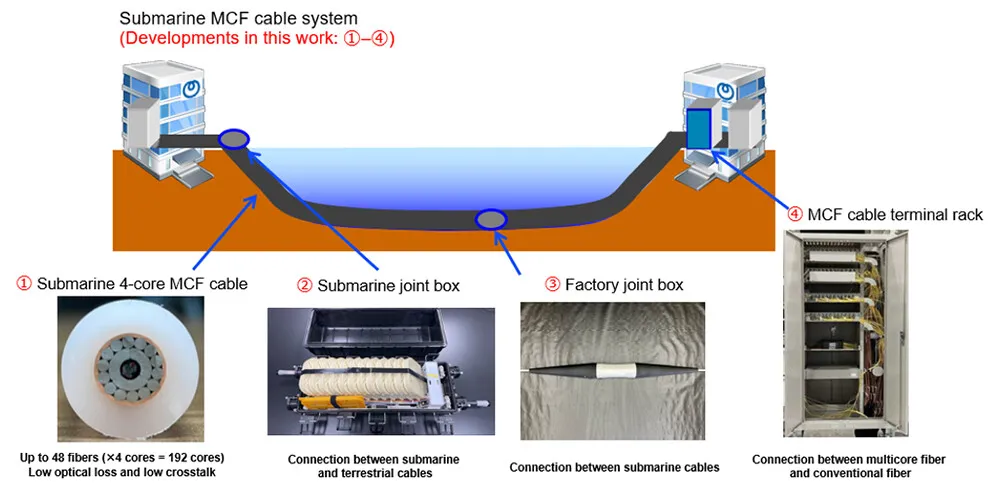
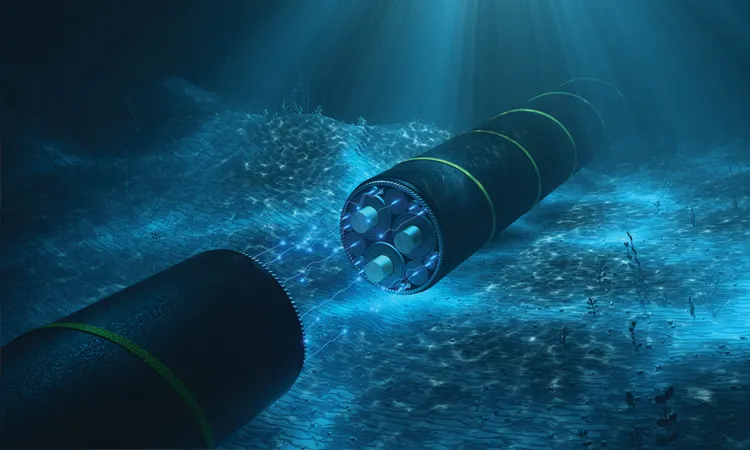
TOKYO – Nippon Telegraph and Telephone (NTT), Japan’s largest telecommunications company, has announced a significant breakthrough in undersea communication infrastructure with the successful development of a new generation of fiber optic cable, dubbed Multicore Optical Fiber (MCF). This innovative technology embeds four optical cores within a single cable of the same thickness and diameter as conventional single-core cables, promising to quadruple the internet traffic capacity without requiring a complete overhaul of existing underwater networks.
The advancement comes at a critical juncture as global data consumption continues its exponential ascent. The rapid proliferation of 5G mobile networks, the burgeoning field of artificial intelligence (AI), and the ever-expanding reliance on cloud services are collectively placing unprecedented demands on internet bandwidth. In response to this escalating need, NTT has opted for an efficiency-driven approach by enhancing the capacity of established infrastructure rather than embarking on the costly and time-consuming endeavor of building entirely new systems from the ground up.
The Science Behind Multicore Optical Fiber (MCF)
At the heart of NTT’s innovation lies the principle of spatial multiplexing. Unlike traditional optical fibers, which transmit data along a single light path, MCF utilizes four distinct optical paths within a single cable. This means that multiple signals can be transmitted simultaneously without interference, akin to having four lanes of traffic on a single road. While conventional fiber optic cables might contain numerous individual fibers, the MCF technology effectively multiplies the data-carrying potential without increasing the physical footprint of the cable. This elegant solution addresses the core challenge of expanding bandwidth in a constrained physical environment.
The development process for MCF has been a multi-year endeavor, building upon decades of research in optical physics and materials science. NTT’s researchers have meticulously engineered the internal structure of the fiber to ensure that the light signals traveling through each of the four cores remain isolated and do not degrade one another. This requires precise control over the refractive index profile and the physical arrangement of the cores within the cable. The successful demonstration of transmitting data at four times the capacity of conventional single-core fibers marks a pivotal moment in this research trajectory.
Addressing the Growing Global Data Demand
The implications of this development are far-reaching, particularly for the global submarine cable network, which forms the backbone of international internet connectivity. Submarine cables are responsible for transmitting over 95% of intercontinental data traffic. As demand for high-definition streaming, real-time gaming, remote collaboration tools, and increasingly complex AI applications grows, the capacity of these existing cables is becoming a significant bottleneck.
Estimates suggest that global data traffic is projected to grow at a compound annual growth rate (CAGR) of over 20% in the coming years. For instance, Cisco’s Visual Networking Index has consistently highlighted this upward trend, forecasting a substantial increase in the volume of data traversing the internet. This surge is driven by a confluence of factors, including the increasing number of connected devices (Internet of Things), the migration of more services to the cloud, and the evolving nature of digital content itself, which is becoming richer and more data-intensive.
Traditional methods of increasing capacity often involve laying more cables, a process that is both prohibitively expensive and environmentally disruptive. The cost of laying a single transoceanic cable can run into hundreds of millions of dollars, and the logistical challenges are immense, involving specialized ships, complex routing, and extensive permitting processes. NTT’s MCF offers a more sustainable and cost-effective alternative by maximizing the utilization of existing seabed infrastructure.
Compatibility and Integration: A Key Advantage
A crucial aspect of NTT’s MCF technology is its inherent compatibility with existing fiber optic infrastructure. Recognizing that a revolutionary technology will only achieve widespread adoption if it can seamlessly integrate with current systems, NTT has invested heavily in developing a suite of supporting components. These include specialized connectors and terminal equipment designed to ensure smooth integration with existing subsea cable landing stations and terrestrial networks. This foresight significantly reduces the barriers to entry for network operators worldwide.
The timeline for this technological rollout is strategically planned. NTT is targeting the widespread deployment of MCF technology by 2029. This phased approach allows for rigorous testing, pilot projects, and the gradual scaling up of manufacturing and deployment capabilities. Initial deployments are likely to focus on high-demand routes where capacity is already strained, providing early proof of concept and generating valuable operational data.

Broader Economic and Environmental Implications
The potential for MCF to reduce installation costs and time is substantial. By increasing the data-carrying capacity of each cable laid, fewer cables will be needed to meet future bandwidth demands. This translates directly into reduced capital expenditure for telecommunications companies and a smaller environmental footprint associated with cable manufacturing and deployment. The deep-sea environment is fragile, and minimizing the physical intrusion of new cable systems is a critical consideration for environmental sustainability.
Furthermore, the enhanced efficiency of the internet backbone could foster innovation across various sectors. Businesses will benefit from more reliable and faster connectivity, enabling them to develop and deploy new digital services. The accessibility of high-bandwidth internet in remote or underserved regions could also be improved, bridging the digital divide and promoting economic development on a global scale.
Industry Reactions and Future Outlook
While specific statements from competing telecommunications companies have not yet been widely published, the announcement from NTT is expected to generate significant interest and potentially spur similar research and development efforts from other major players in the global telecommunications industry. Companies like SubCom, Alcatel Submarine Networks, and NEC, which are heavily involved in the manufacturing and deployment of submarine cables, will undoubtedly be assessing the implications of MCF for their future product lines and strategic partnerships.
Industry analysts anticipate that the successful implementation of MCF could fundamentally alter the landscape of submarine cable deployment. The focus may shift from merely increasing the number of cables to optimizing the capacity of each cable through advanced technologies like spatial multiplexing. This could lead to a more efficient and sustainable evolution of the global digital infrastructure.
The journey from laboratory breakthrough to widespread commercial deployment is often complex, involving rigorous testing under real-world conditions, regulatory approvals, and market acceptance. However, NTT’s track record in telecommunications innovation, coupled with the compelling advantages offered by MCF, suggests a strong potential for this technology to redefine the future of undersea internet connectivity. The world’s growing appetite for data is being met with an equally ambitious technological solution, promising a faster, more efficient, and more connected future.