Nila Kartika Wati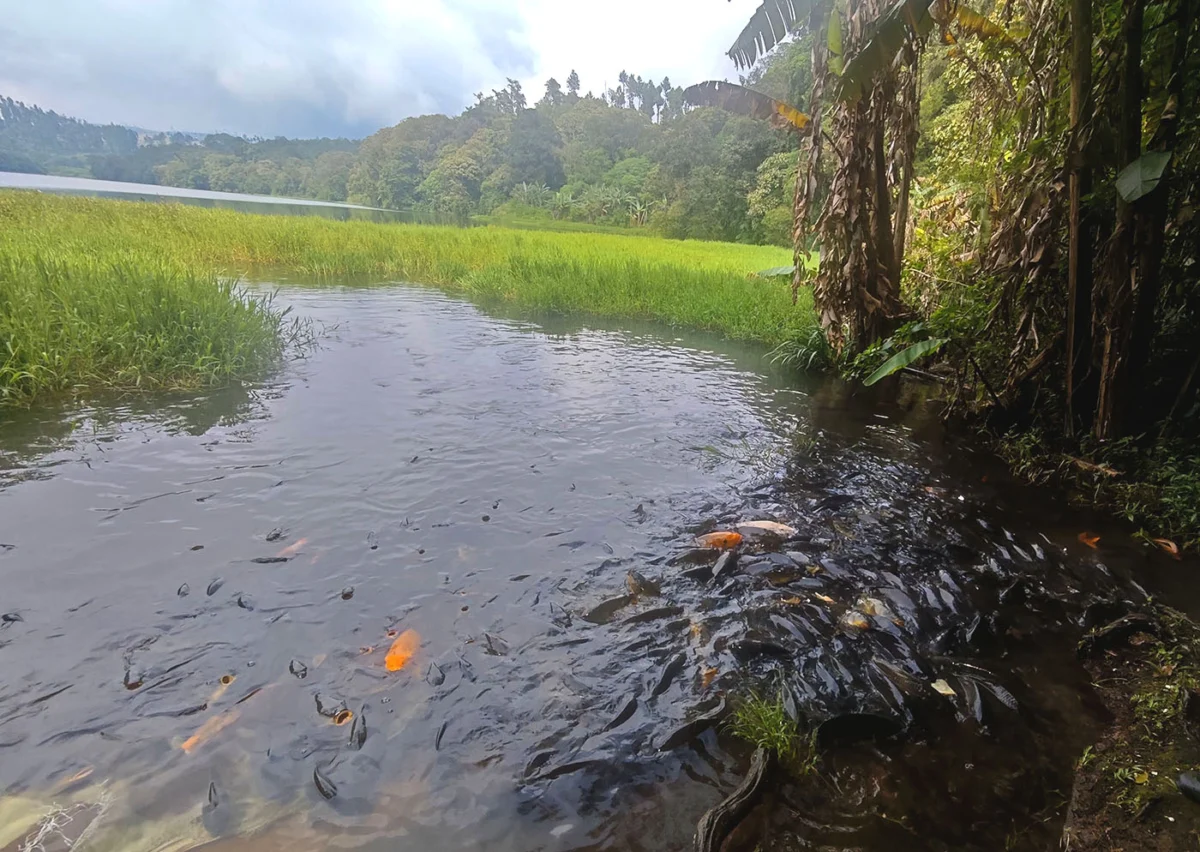
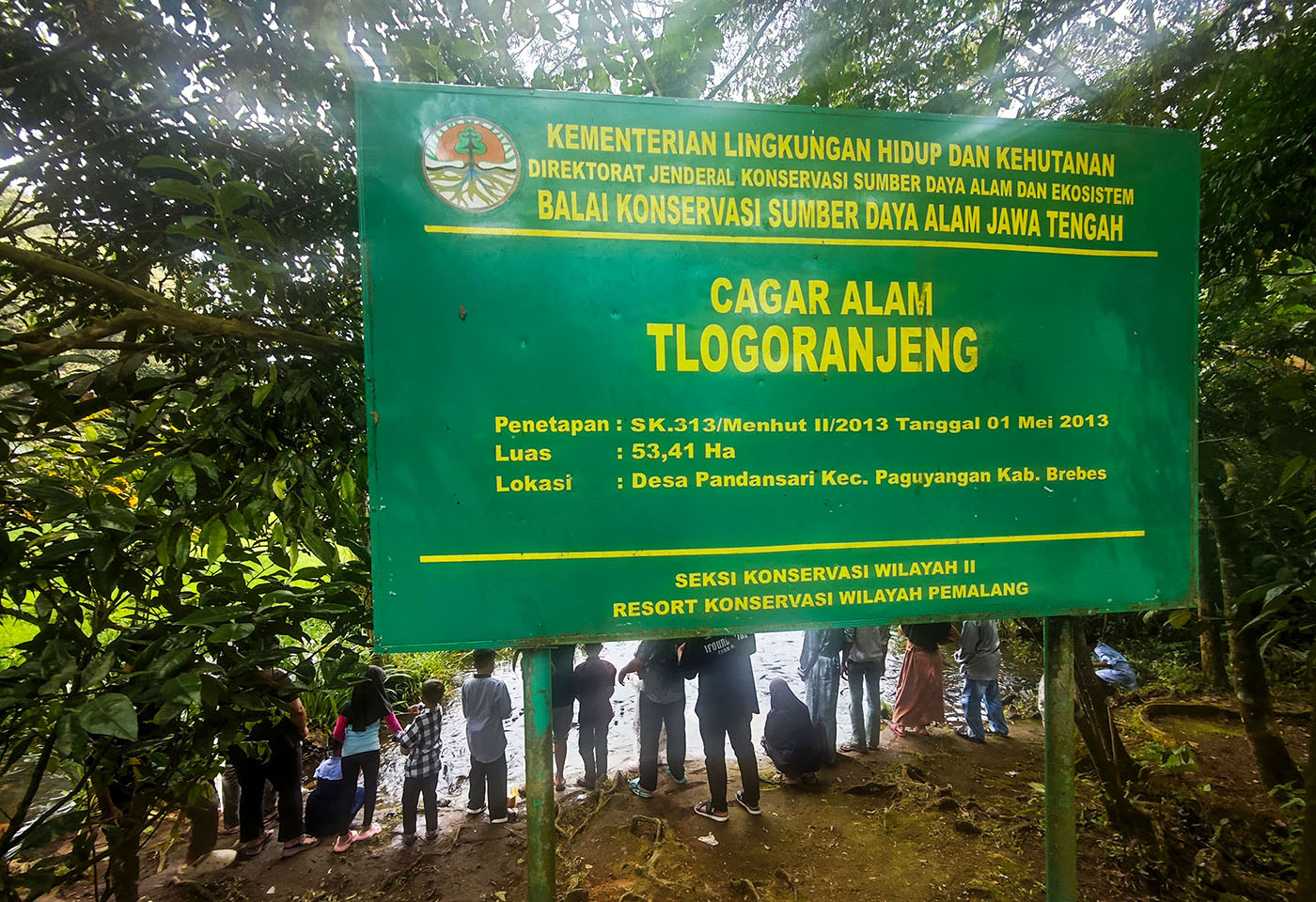
On the mist-shrouded western slopes of Mount Slamet, a unique intersection of spiritual belief and environmental conservation unfolds daily at Telaga Ranjeng. Located within the dense forest of Pandansari Village, Paguyangan District, Brebes Regency, Central Java, this 53.41-hectare nature reserve serves as a testament to how traditional taboos can effectively safeguard fragile ecosystems. As of late March 2026, the lake continues to draw visitors who come not to fish, but to witness a phenomenon that has baffled and enchanted locals for generations: thousands of tame fish that no one dares to consume.
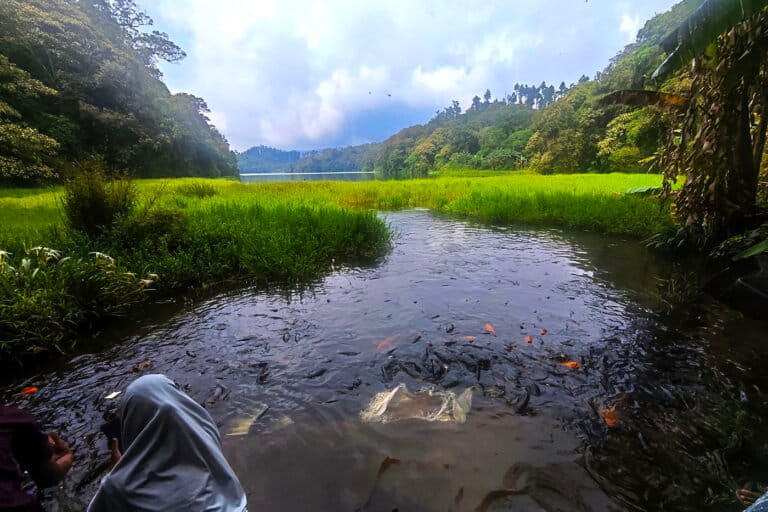
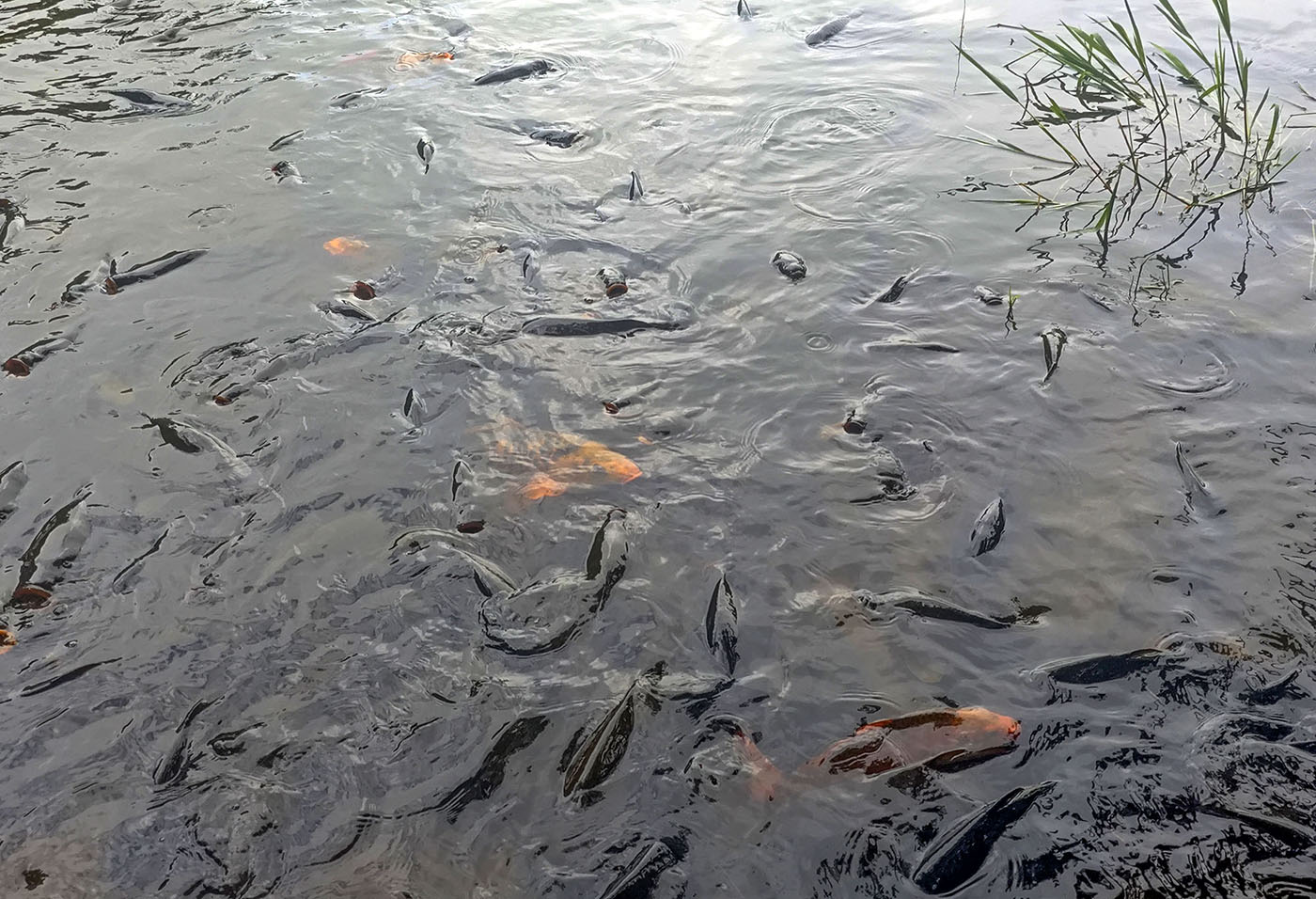
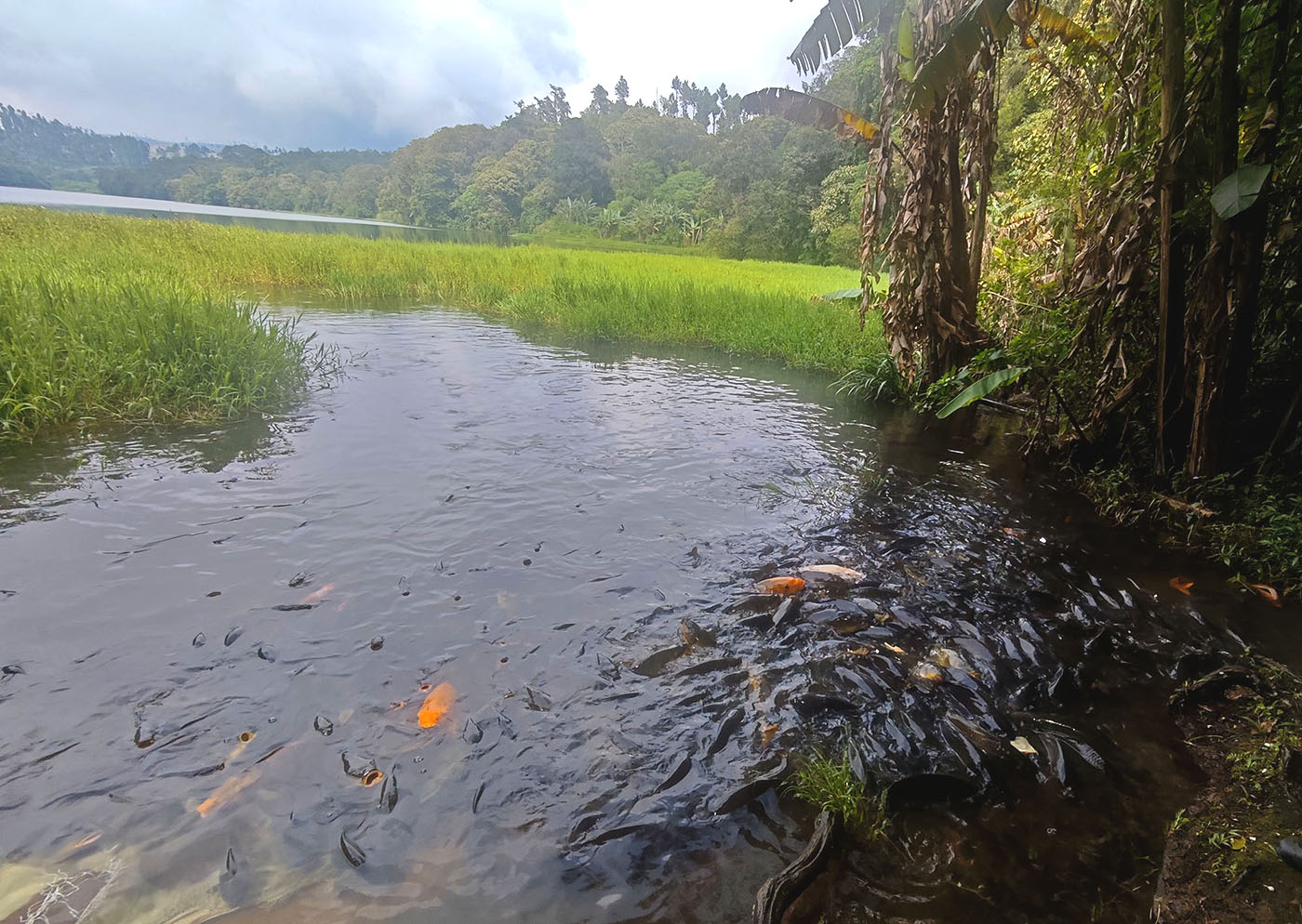
On Saturday, March 21, 2026, the shores of Telaga Ranjeng—also known as Tlogoranjeng—were lined with visitors observing the aquatic life. Among the most prominent species visible were thousands of orange and gold-hued common carp (Cyprinus carpio), locally known as ikan mas. These fish swarmed the edges of the lake, appearing remarkably unafraid of human presence, a direct result of the long-standing prohibition against harming or capturing them.
Afan Maulana, a 21-year-old visitor from nearby Banyumas, noted a change in the lake’s visual composition. While the carp currently dominate the surface, the lake’s historical reputation was built on its massive population of local catfish. "Telaga Ranjeng is famous for its catfish that must not be taken; they are only to be seen," Maulana remarked, questioning why the iridescent shark catfish (Pangasius hypophthalmus Sauvage), traditionally the lake’s hallmark, seemed less visible during his visit.
The Power of the "Pamali": A Self-Enforcing Conservation Model
The sanctity of Telaga Ranjeng is maintained through a deeply ingrained cultural mechanism known as pamali—a sacred taboo. For the residents of Pandansari Village, the prohibition against taking fish from the lake is not merely a suggestion but a spiritual law with tangible consequences.
Sirin, a 55-year-old local resident, explains that the ban has been passed down through oral tradition for centuries. "There have been many incidents where those who dared to take the fish experienced unfortunate events," Sirin said. Whether these stories are viewed as supernatural warnings or psychological deterrents, their effect on the environment is undeniable. The community acts as the primary guardian of the lake, ensuring that neither locals nor outsiders disturb the delicate balance of the water.
This "myth-based conservation" is a subject of significant interest for sociologists and environmentalists alike. Research conducted by Nugraha and Novianto from PGRI University Yogyakarta highlights that these myths are not "backward" beliefs but are instead sophisticated forms of local wisdom. Their study, "Values of Local Wisdom in the Environmental Preservation of Telaga Ranjeng," argues that the attachment of mystical consequences to environmental degradation serves as a highly effective, low-cost conservation strategy. According to the researchers, these values are instilled from childhood, creating a generational cycle of stewardship that modern legal frameworks often struggle to replicate.
The Scientific and Administrative Framework of the Nature Reserve
While the myths provide a spiritual shield, the Indonesian government provides the legal one. Telaga Ranjeng is officially designated as a Cagar Alam (Nature Reserve), the highest level of protection for a natural area in Indonesia. Managed by the Pemalang Region II Conservation Section (SKW) under the Central Java Natural Resources Conservation Agency (BKSDA), the area is strictly regulated.
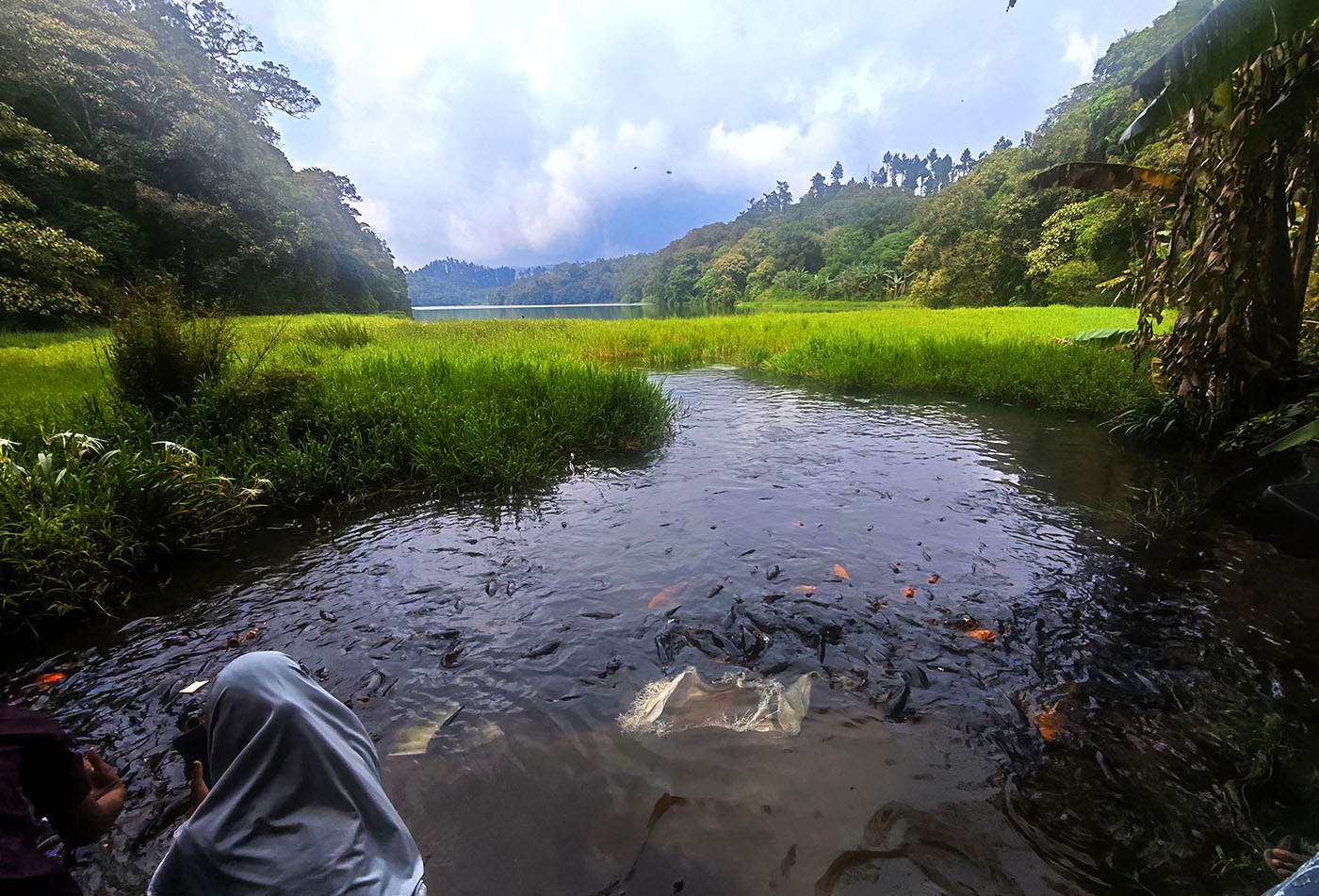
Jamal, a member of the Manggala Agni (the forest fire control brigade) and a long-time guardian of the site, has monitored the lake for 15 years. Speaking on March 28, 2026, Jamal noted that despite its status as a restricted nature reserve, the public’s curiosity remains high. "Even though it is a Nature Reserve, many people want to see and understand this area," he said. Jamal’s primary task is to ensure that human curiosity does not translate into ecological damage.
He also addressed the fluctuating fish populations that Maulana had observed. According to Jamal, the ecosystem of Telaga Ranjeng is characterized by unique periodic shifts. Between 2017 and 2019, the lake experienced a mysterious "disappearance" where almost no fish were visible at the surface. "Sometimes the catfish do not appear for a long time, but it does not mean they are extinct," Jamal explained. "Then, they will suddenly reappear alongside the carp, or sometimes only the catfish will show themselves. It is a natural cycle we are still observing."
Ecological Profile: A High-Altitude Hydrological Hub
Situated at an altitude of approximately 1,600 meters above sea level (m asl), Telaga Ranjeng plays a critical role in the regional hydrology. Unlike many lakes that serve as the headwaters for major rivers, Telaga Ranjeng is essentially a closed catchment area. It relies on a combination of heavy rainfall—typical for the slopes of Mount Slamet—and underground springs.
The water quality remains pristine because the surrounding forest acts as a natural filter. Research by Prameswari and Sudarmono from the National Research and Innovation Agency (BRIN) emphasizes that the lake is a vital source of clean water for the surrounding communities. This provides a pragmatic motivation for the villagers of Pandansari to protect the area: to poison the fish or pollute the water would be to jeopardize their own drinking supply.
The BRIN study also detailed the impressive floral diversity surrounding the lake. The forest structure is characterized by high-density vegetation with several dominant species. Researchers use the Importance Value Index (IVI or INP) to measure the health and dominance of plant species. In Telaga Ranjeng, the three most significant species are:
- Brucea javanica (Lada Pahit): Holding an INP of 27.50%, this shrub is vital for soil stability.
- Antidesma tetrandrum: With an INP of 24.66%, this species contributes significantly to the forest canopy.
- Phoebe grandis: Recorded at 20.80%, this tree is a staple of the high-altitude Javanese forest.
The presence of these species indicates a stable, climax forest ecosystem. The "sacred" status of the forest prevents illegal logging, which in turn prevents erosion and ensures that the lake does not suffer from siltation, a common fate for many other lakes in Java.
Official Responses and Educational Potential
Ilmi Budi Martani, the Head of SKW II Pemalang BKSDA Central Java, views the synergy between the government and the local community as a model for other regions. "The most interesting aspect is that the local community has an inherent wisdom that forbids catching fish. This is incredibly supportive of our formal conservation efforts," Martani stated during a site visit in late March.
The BKSDA has increasingly utilized Telaga Ranjeng for research and educational purposes. By allowing limited access for students and scientists, the agency hopes to document the lake’s unique biodiversity before climate change alters the high-altitude conditions. However, Martani emphasized that the "Nature Reserve" status remains paramount; tourism is a secondary byproduct that must be strictly managed to prevent the "hidden gem" syndrome, where over-exposure leads to environmental degradation.
Challenges and Broader Implications
The story of Telaga Ranjeng is more than just a local curiosity; it represents a broader global dialogue on the role of "Sacred Natural Sites" (SNS) in biodiversity conservation. In many parts of the world, formal protected areas are failing due to a lack of funding or local opposition. Telaga Ranjeng succeeds because the protection is "bottom-up"—the community believes in the protection as a matter of cultural identity.
However, challenges remain. The introduction of non-native species, such as the common carp (Cyprinus carpio), which now dominates the lake, can sometimes disrupt native populations like the local catfish. While the carp are protected by the same "no-catch" rule, their proliferation changes the nutrient dynamics of the lake. Furthermore, as younger generations become more connected to global digital culture, the fear of the "pamali" may diminish.
To counter this, the Pandansari village government and BKSDA are working to frame local wisdom not just as "superstition," but as "environmental ethics." By teaching the youth that the "curse" is a metaphor for the real-life disaster of ecological collapse, they are modernizing the ancient taboo.
Conclusion: A Living Legacy
As the sun sets over the western slopes of Mount Slamet, the ripples on the surface of Telaga Ranjeng subside, and the thousands of fish retreat into the dark, cool depths. For now, the ecosystem remains intact. The balance of air, soil, and water is held together by a fragile yet resilient thread of human belief.
The case of Telaga Ranjeng proves that when a community sees itself as part of the environment—rather than an owner of it—nature flourishes. The "untouchable" fish of Brebes continue to swim freely, serving as silent witnesses to a successful partnership between ancient tradition and modern science. In an era of rapid environmental decline, the lessons from this small lake in Central Java offer a profound insight: sometimes, the best way to save a forest is to believe it is sacred.
References:
Nugraha, A. H. A., & Novianto, V. (2022). Nilai kearifan lokal pada pelestarian lingkungan telaga ranjeng kabupaten brebes. Jurnal Sosialita: Jurnal Kajian Sosial dan Pendidikan, 17(1).
Prameswari, D., & Sudarmono. (2011). Struktur dan Komposisi Vegetasi di Cagar Alam Telaga Ranjeng dan Implikasi Konservasinya. Jurnal Penelitian Sosial dan Ekonomi Kehutanan, 8(2), 189-196.