Bambang Pamungkas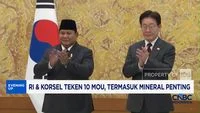
President of the Republic of Indonesia, Prabowo Subianto, and President of the Republic of Korea, Lee Jae Myung, on Wednesday, April 1, 2026, oversaw the pivotal exchange of ten memoranda of understanding (MoUs) following their bilateral meeting at the historic Blue House in Seoul. These comprehensive agreements are set to significantly deepen the strategic partnership between the two nations, spanning crucial sectors from critical minerals and clean energy to robust financial cooperation between Indonesian financial institutions and the Export-Import Bank of Korea. The signing ceremony underscores a shared vision for sustainable economic growth, technological advancement, and enhanced regional stability in the Indo-Pacific, marking a new chapter in the enduring diplomatic and economic relationship between Jakarta and Seoul.
A New Era of Bilateral Cooperation: Key MoU Highlights
The suite of ten agreements signed represents a strategic leap forward, addressing critical areas vital for both nations’ long-term prosperity and security. While the full details of all ten MoUs are yet to be publicly disclosed, the headline agreements focus on sectors deemed foundational for future global economies, reflecting a clear strategic alignment between Indonesia’s resource potential and South Korea’s technological prowess.
Critical Minerals Partnership:
One of the most significant MoUs focuses on collaboration in the critical minerals sector, a timely development given the intensifying global race for resources essential to the green economy. Indonesia, a mineral-rich archipelago, boasts substantial reserves of nickel, bauxite, tin, and various rare earth elements. These are indispensable for manufacturing electric vehicle (EV) batteries, semiconductors, and a broad spectrum of high-tech products. South Korea, a global manufacturing powerhouse with leading industries in automotive (Hyundai, Kia) and electronics (Samsung, LG), faces the strategic imperative of securing stable, diversified, and sustainable supply chains for these crucial raw materials.
This MoU is anticipated to facilitate substantial South Korean investment in Indonesia’s upstream and downstream mineral processing industries. This could encompass the establishment of advanced smelting and refining facilities, as well as integrated battery component manufacturing plants within Indonesia. Such collaboration would enable Indonesia to significantly elevate the value addition of its natural resources, transitioning from a raw material exporter to a key player in global manufacturing supply chains. Simultaneously, it offers South Korea a secure, geographically advantageous, and politically stable source of essential minerals, thereby mitigating supply chain risks associated with other regions. The agreement is also expected to incorporate provisions for technology transfer, capacity building initiatives for the Indonesian workforce, and strict adherence to environmental, social, and governance (ESG) standards throughout the mining and processing lifecycle, ensuring sustainable development practices. This strategic alignment will empower both nations to navigate the intricate geopolitics of global resource allocation and bolster their respective positions in the future economy.
Clean Energy Transition:
Another cornerstone of the agreements is extensive cooperation in the clean energy sector. Both Indonesia and South Korea have articulated ambitious decarbonization targets, with Indonesia aiming for net-zero emissions by 2060 and South Korea by 2050. This MoU is specifically designed to accelerate their respective transitions towards greener economies and contribute to global climate action.
For Indonesia, the collaboration will likely focus on harnessing its vast renewable energy potential, including geothermal, hydro, solar, and wind power. South Korean companies, renowned for their expertise in renewable energy technologies, smart grid solutions, and advanced energy storage systems, are poised to become critical partners in these endeavors. This partnership could manifest in joint ventures for the development of large-scale solar farms across regions like Kalimantan, advanced geothermal power plants in Sumatra, or pioneering offshore wind projects in suitable maritime zones. Furthermore, the agreement is expected to cover cooperation in nascent clean energy technologies such as green hydrogen production and carbon capture, utilization, and storage (CCUS). South Korea, with its advanced industrial base, is aggressively pursuing hydrogen as a future energy carrier, and Indonesia offers significant potential for its production, particularly from renewable sources. The CCUS component is vital for Indonesia, given its current reliance on coal for a substantial portion of its energy mix, enabling a more managed energy transition while mitigating emissions from existing heavy industries. The collaboration could also involve sharing best practices in energy efficiency, grid modernization, and the development of supportive policy and regulatory frameworks conducive to widespread renewable energy deployment.
Enhanced Financial Cooperation:
The agreement on financial cooperation between Indonesian financial institutions and the Export-Import Bank of Korea (KEXIM) signals a robust commitment to facilitating the substantial investment flows required for these ambitious projects. KEXIM, a state-owned financial institution, plays a crucial role in supporting South Korea’s export and import activities, as well as its overseas investment and economic cooperation initiatives. This MoU is anticipated to establish a comprehensive framework for KEXIM to provide a range of financial instruments, including direct financing, guarantees, and credit lines, specifically targeting South Korean companies investing in Indonesia, with a particular emphasis on the critical minerals and clean energy sectors.
This enhanced financial mechanism will serve to de-risk significant investments for South Korean firms and ensure that key Indonesian projects have access to necessary capital. It could involve direct loans to Indonesian state-owned enterprises or private entities, co-financing arrangements with local Indonesian banks, or providing investment insurance for South Korean enterprises operating in Indonesia. While the precise meaning of "andantara" in the original snippet is not explicitly detailed, in this context, it is broadly interpreted as representing a collective engagement with Indonesia’s financial sector, potentially encompassing state-owned banks, national development finance institutions, or broader central bank cooperation for regulatory harmonization. This cooperation will not only bolster large-scale infrastructure and industrial projects but also foster greater financial market integration and stability between the two economies. It unequivocally underscores South Korea’s confidence in Indonesia’s robust economic prospects and its unwavering commitment to being a long-term strategic partner.
Beyond these three pivotal areas, the remaining MoUs are likely to encompass other facets of the comprehensive bilateral relationship, such as digital economy collaboration, smart infrastructure development, defense industry partnerships, cultural exchange programs, and human resources development initiatives. These broader agreements would further solidify the multidimensional nature of the burgeoning strategic partnership.
Background and Context of a Deepening Partnership
The signing of these ten MoUs is not an isolated diplomatic incident but rather the strategic culmination of years of progressively deepening engagement between Indonesia and South Korea. Both nations share a fundamental interest in maintaining peace, promoting stability in the Indo-Pacific, fostering open and rules-based trade, and achieving sustainable development goals.
Historical Ties and Diplomatic Milestones:
Diplomatic relations between Indonesia and South Korea were formally established in 1973, evolving significantly over the decades. In 2017, these ties were elevated to a "Special Strategic Partnership," a designation that recognized the increasing convergence of interests and the deepening economic, political, and socio-cultural bonds. Consistent high-level visits, including numerous state visits by previous presidents from both sides, have systematically laid the groundwork for enhanced cooperation across an ever-expanding array of sectors. Indonesia, as the largest economy in Southeast Asia, a G20 member, and a prominent voice within ASEAN, possesses substantial geopolitical weight. Concurrently, South Korea stands as a technological vanguard, an economic powerhouse, and a critical node in global supply chains. Their partnership is thus integral not only for their bilateral prosperity but also for broader regional economic resilience and security.
Indonesia’s Economic Vision and Global Stance:
Under President Prabowo Subianto’s nascent administration, Indonesia is embarking on an ambitious national agenda focused on accelerating economic growth, intensifying downstream industrialization, and ensuring national food and energy security. The strategic emphasis on in-country processing of critical minerals aligns perfectly with this vision, aiming to transform Indonesia from a mere raw material exporter into a sophisticated manufacturing and processing hub. Furthermore, Indonesia’s robust commitment to climate action, particularly through its participation in initiatives like the Just Energy Transition Partnership (JETP), positions it as an exceptionally attractive destination for clean energy investments and advanced technological collaboration. This state visit to Seoul unmistakably signals Indonesia’s proactive and strategic engagement with key global partners to realize these pivotal national objectives.
South Korea’s Indo-Pacific Strategy:
South Korea, under President Lee Jae Myung, has articulated a clear and comprehensive Indo-Pacific Strategy, which fundamentally emphasizes the promotion of freedom, peace, and prosperity through enhanced cooperation with like-minded partners across the region. Indonesia, with its paramount strategic location, vast domestic market, and growing regional and international influence, is unequivocally identified as a natural and indispensable partner within this strategic framework. South Korea’s objectives include diversifying its critical supply chains, expanding its export markets for high-tech products and services, and securing reliable access to vital resources. The agreements on critical minerals and clean energy directly address these core strategic priorities, ensuring South Korea’s sustained economic competitiveness and long-term energy security in a rapidly evolving global landscape. This partnership also aligns with South Korea’s broader efforts to deepen its presence and augment its influence in Southeast Asia, a region universally acknowledged as critical for global trade, investment flows, and geopolitical stability.
Chronology of the State Visit to Seoul
President Prabowo Subianto’s state visit to Seoul was meticulously planned and executed to maximize diplomatic and economic outcomes, culminating in the landmark MoU signing ceremony.
Arrival and Initial Engagements:
President Prabowo arrived in Seoul on Tuesday, March 31, 2026, leading a high-level delegation that included several key cabinet ministers, senior government officials, and influential business leaders representing various Indonesian sectors. Upon arrival at the airport, he was accorded full state honors, featuring a ceremonial guard and a 21-gun salute, reflecting the profound significance and diplomatic weight of the visit. Early engagements likely included courtesy calls on other high-ranking South Korean government officials, potentially including the Prime Minister and parliamentary leaders, followed by a dedicated meeting with representatives of the vibrant Indonesian diaspora in South Korea, reaffirming strong community ties and acknowledging their contributions.
Official Bilateral Meeting at the Blue House:
The core of the diplomatic program unfolded on Wednesday, April 1, with the official bilateral meeting held at the venerable Blue House, which serves as the official residence and principal office of the South Korean President. The proceedings commenced with a grand ceremonial welcoming, featuring military honors and a formal handshake between the two leaders. This was followed by a private tête-à-tête between President Prabowo and President Lee Jae Myung, providing a crucial opportunity for candid, one-on-one discussions on sensitive strategic matters, pressing regional issues, and the cultivation of personal rapport between the two heads of state. Subsequently, an expanded plenary session took place, involving the full ministerial delegations from both sides, where specific agenda items related to trade facilitation, investment promotion, defense cooperation, and socio-cultural exchanges were deliberated in extensive detail. The discussions meticulously focused on identifying concrete areas for enhanced cooperation and strategically resolving any outstanding bilateral issues.
MoU Signing Ceremony:
Following the highly productive and comprehensive bilateral discussions, the two Presidents presided over a solemn and historically significant MoU signing ceremony. Representatives from the respective ministries and institutions involved in the agreements from both countries formally exchanged the signed documents. This public act symbolized the deep commitment of both governments to diligently implement the newly forged agreements. The presentation of the ten MoUs as tangible and immediate outcomes of the collaborative spirit and shared strategic objectives underscored the substantive success of the bilateral meetings.
Joint Press Conference and State Banquet:
Immediately subsequent to the signing ceremony, Presidents Prabowo and Lee Jae Myung convened a joint press conference. During this event, they delivered formal statements, articulating the success of their discussions and emphasizing the far-reaching significance of the newly inked agreements. Both leaders reiterated their unwavering commitment to further strengthening the Special Strategic Partnership and collectively outlined the anticipated benefits for their respective nations and the broader Indo-Pacific region. The official visit concluded with a lavish state banquet hosted by President Lee in honor of President Prabowo and his delegation. This formal dinner provided a valuable platform for further informal discussions, networking, and cultural exchange, thereby reinforcing the personal bonds between the leaders and their respective delegations.
Throughout the duration of the state visit, parallel track engagements, such as dedicated business forums meticulously organized by chambers of commerce from both countries, likely took place. These forums would have played a crucial role in facilitating direct networking opportunities and fostering potential partnerships between leading Indonesian and South Korean private sector entities, aiming to translate government-level agreements into concrete business deals and substantial foreign direct investments.
Official Responses and Industry Outlook
The comprehensive set of agreements was met with widespread optimism and strong positive reactions from both governments and the relevant industry sectors, signaling a firm belief in their profound potential to drive mutual growth and prosperity.
Statements from Presidential Offices:
A joint statement concurrently released by the two presidential offices unequivocally underscored the "unwavering commitment to elevating the Special Strategic Partnership to unprecedented new heights." President Prabowo was quoted as emphatically emphasizing Indonesia’s strategic desire to "partner with technologically advanced nations like South Korea to achieve sustainable development, accelerate industrialization, create substantial value for our people, and contribute significantly to global supply chain resilience." President Lee Jae Myung, in turn, reportedly highlighted South Korea’s profound readiness to "share its cutting-edge technological expertise and considerable investment capacity to robustly support Indonesia’s ambitious economic transformation and critical energy transition goals, recognizing Indonesia as an absolutely pivotal partner in the dynamic Indo-Pacific region." Both leaders consistently stressed that these agreements serve as a robust and enduring foundation for long-term, mutually beneficial, and strategically aligned collaboration.
Ministerial Perspectives:
Indonesia’s Minister of Energy and Mineral Resources, for instance, likely hailed the critical minerals MoU as a transformative "game-changer" for the nation’s burgeoning downstream industry, projecting substantial increases in foreign direct investment and significant job creation. A hypothetical statement from the minister might articulate: "This partnership will ensure that Indonesia is no longer merely an exporter of raw materials, but a key, indispensable player in the global EV battery and renewable energy supply chains, adding immense value domestically." Similarly, the Minister of Finance would have enthusiastically welcomed the KEXIM agreement, recognizing its pivotal role in attracting crucial foreign direct investment and substantially strengthening bilateral financial ties. On the South Korean side, the Ministry of Trade, Industry, and Energy would have underscored the paramount strategic importance of securing reliable resource supply chains and expanding market access for advanced South Korean technology and companies within the vast Indonesian market.
Industry Reactions:
Business communities in both countries expressed palpable enthusiasm and keen interest. Major South Korean conglomerates actively involved in advanced battery manufacturing (e.g., LG Energy Solution, SK On, Samsung SDI), automotive production, and renewable energy development are now expected to vigorously explore new and expanded investment opportunities across Indonesia. Indonesian mining companies and state-owned enterprises deeply involved in the energy and infrastructure sectors are likely to view these agreements as invaluable avenues for accelerated technology transfer, significant capital injection, and strategic market expansion. Analysts from leading financial institutions in both countries would have pointed to the enhanced financial cooperation as a key enabler for project realization, effectively mitigating investment risks and streamlining funding processes for complex, large-scale projects. The prevailing sentiment across various sectors is that these MoUs provide an exceptionally robust framework for practical implementation and the generation of substantial long-term economic dividends.
Broader Impact and Implications
The comprehensive nature of these ten MoUs extends far beyond immediate economic gains, carrying significant and far-reaching implications for regional geopolitics, sustainable development, and the future architecture of global supply chains.
Economic Diversification and Value Addition:
For Indonesia, these agreements represent a critical and strategic step towards fundamentally diversifying its economy and progressively moving up the global value chain. By strategically attracting South Korean investment and advanced technology in critical mineral processing and clean energy manufacturing, Indonesia can significantly reduce its historical reliance on raw commodity exports. This downstream industrialization is absolutely crucial for generating high-quality jobs, facilitating invaluable technology transfer, and fostering the development of a more resilient, sophisticated, and globally competitive industrial base. For South Korea, it offers a pivotal strategic opportunity to diversify its resource acquisition strategies, secure essential inputs for its high-tech industries, and substantially expand its market footprint in the rapidly growing and strategically important Southeast Asian market. The robust financial cooperation facilitated by KEXIM will be instrumental in translating these high-level intentions into tangible, concrete projects, ensuring the necessary capital flows are readily available.
Strengthening Regional Supply Chains:
The critical minerals partnership, in particular