Tata Titiana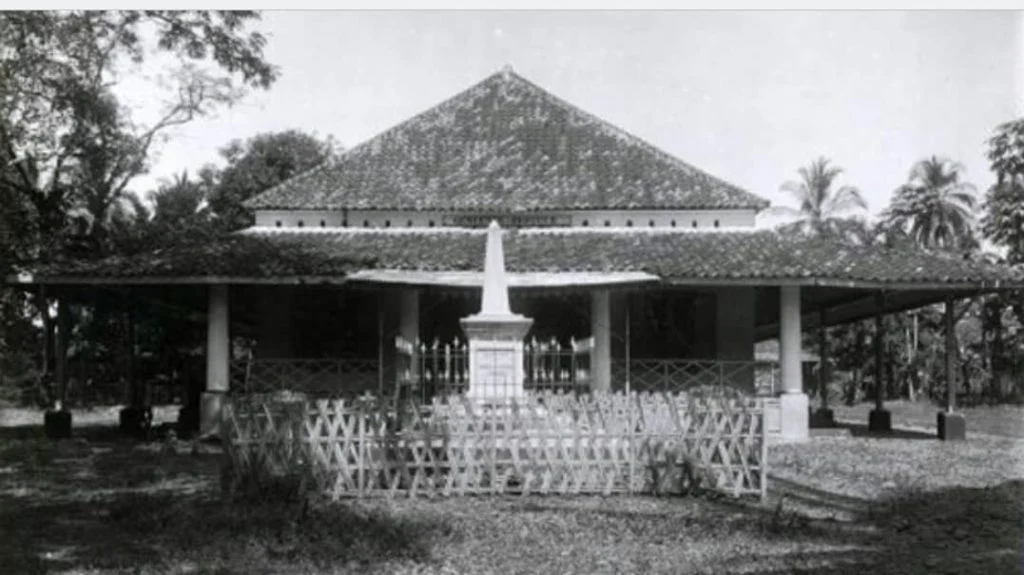
Depok, a municipality in West Java province, holds a history far richer and more complex than its current administrative status might suggest. Established as a city on April 27, 1999, Depok was once an administrative district within the Bogor Regency. However, a lesser-known chapter of its past reveals that Depok once existed as a sovereign entity, complete with its own president. This unique historical trajectory, stretching back over three centuries, offers a compelling glimpse into the evolution of land ownership, governance, and the formation of communities in colonial Indonesia.
The origins of Depok as a distinct entity trace back to the late 17th century, when Cornelis Chastelein, a wealthy Dutch merchant, acquired a substantial tract of land measuring 12.44 square kilometers in the Depok area. The purchase price was a considerable Rp 2.4 million, a significant sum for the era. Crucially, this land was classified as "partikelir," meaning it was private property and outside the direct administrative control of the Dutch East Indies government. This legal distinction set the stage for Depok’s unusual development. By the 18th century, Depok functioned as an administrative region with its own "gemeente bestuur," or civilian government, with Chastelein himself serving as its inaugural ruler and founder.
Initially, the land that Chastelein purchased was largely undeveloped wilderness. Through the labor of his enslaved individuals, who hailed from various ethnic groups across the archipelago, Chastelein began the arduous task of clearing the dense forest to establish arable land. The scope of this private estate was remarkably extensive, encompassing not only the present-day Depok region but also extending to Pasar Minggu in South Jakarta and even Gambir in Central Jakarta. The first inhabitants of this burgeoning territory were the enslaved people owned by Chastelein.
A pivotal moment in Depok’s history occurred with Cornelis Chastelein’s will. A devout Catholic, Chastelein was known for his benevolent treatment of his enslaved people. In his will, dated June 28, 1714, he bequeathed his land, homes, livestock, and farming implements to his enslaved individuals. Furthermore, he granted them their freedom upon his death. To preempt any potential disputes over inheritance and governance, he designated Jarong van Bali to lead and organize the newly freed community.
Following Chastelein’s death and the eventual passing of Jarong van Bali, the emancipated population faced the prospect of power struggles. To ensure a stable and equitable system of leadership, they collectively agreed to establish a democratic process for selecting a leader. This led to the implementation of a system where a president would be elected every three years. There was no vice president; instead, the president was assisted by a secretary in carrying out his duties. This unique form of self-governance was formalized with the establishment of the "Het Gemeente Bestuur van Het Particuliere Land Depok" (The Municipal Government of the Private Land of Depok) in 1913, with the framework for its governance developed by a Batavia-based lawyer.

The first president of this unique "nation" was Gerrit Jonathans, who assumed office in 1913. His presidency marked the formal inauguration of Depok’s self-governing era. Subsequent presidents, chosen through democratic elections, served three-year terms. These included Martinus Laurens (1921), Leonardus Leander (1930), and Johannes Matjis Jonathans, who served in 1952 and became the final president. Despite the existence of these leaders and their terms, detailed records of their administrations and specific achievements remain scarce, leaving a gap in the historical narrative of this period.
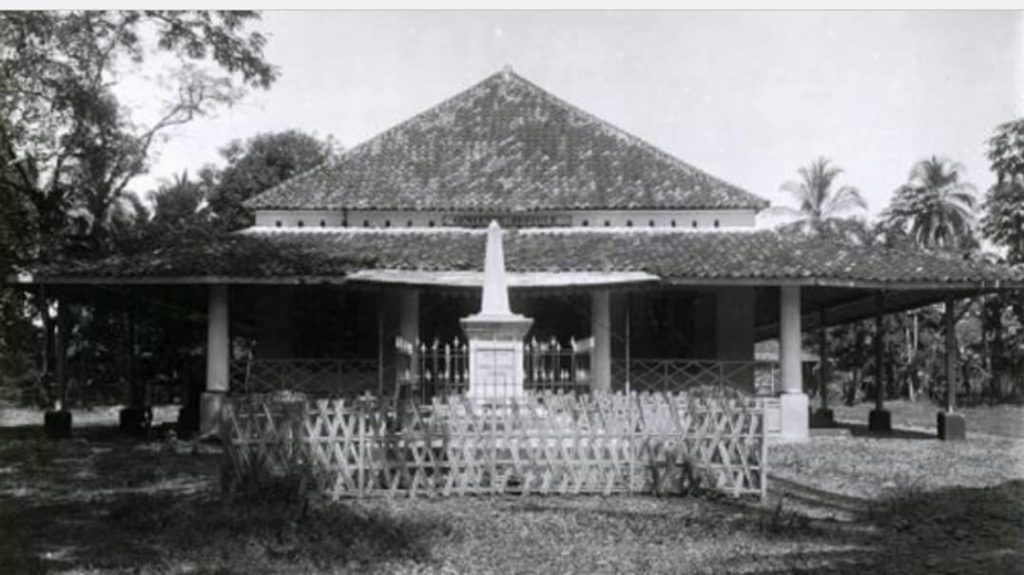
The administrative center of this self-governing entity was located at the Kilometer 0 point, a location still marked by the Depok Monolith (Tugu Depok). Adjacent to this landmark stood the former government building, which today houses the Harapan Hospital. The establishment of a formal governmental structure, even on a private estate, signifies a remarkable degree of autonomy and organizational foresight among the freed population.
The transition of Depok from a private, self-governing domain to its integration into the Indonesian republic occurred in 1952. The final president, Matijs Jonathans, officially handed over the privately held land to the Indonesian government through a deed of transfer. This act marked the end of Depok’s unique status as a distinct entity with its own leadership.
While Depok as a municipality is a relatively young administrative division, celebrating its 22nd anniversary in 2021, its history as a cohesive entity with its own governance structure extends far beyond this recent establishment. Viewed through the lens of its existence as a private, self-ruling territory prior to its incorporation into West Java and Indonesia, Depok’s history spans over three centuries. It is a narrative of a community that achieved a form of self-determination and governance decades before Indonesia itself gained full independence from colonial rule.
The story of Depok is a testament to the complex tapestry of historical land ownership and social organization in the Dutch East Indies. The concept of "partikelir" land allowed for the creation of distinct administrative and social units that operated outside the direct purview of the colonial government. Chastelein’s enlightened approach to his enslaved people, granting them freedom and land, laid the foundation for a unique experiment in self-governance. The establishment of a democratically elected presidency, however short-lived in its historical context, demonstrates a sophisticated understanding of political organization and a desire for collective decision-making.
The broader implications of Depok’s history are significant. It highlights that the colonial period was not a monolithic experience of oppression, but rather a complex era with instances of varied interactions between colonial powers, private landowners, and indigenous populations. The existence of a self-governing "nation" within the Dutch East Indies, albeit on a private estate, challenges simplistic narratives of colonial rule and underscores the agency that various communities possessed in shaping their own destinies.
Furthermore, Depok’s journey from a privately owned tract of land to a self-governing entity and eventually a modern municipality offers valuable insights into urban development and administrative evolution in Indonesia. The enduring legacy of its past is visible in its geographical markers and the collective memory of its inhabitants, reminding us that even seemingly ordinary cities can possess extraordinary histories.
The establishment of Depok as a city in 1999 was the culmination of a long process of administrative adjustments. Prior to its elevation to city status, it was part of the Bogor Regency. This administrative evolution is a common thread in the development of many urban centers in Indonesia, reflecting population growth, economic development, and the need for more localized governance. However, Depok’s unique historical antecedent as a quasi-independent entity adds a distinctive layer to its civic identity.
The legacy of Cornelis Chastelein is deeply intertwined with the identity of Depok. His will not only shaped the social fabric of the early community but also created the conditions for its eventual self-governance. The principles of land ownership and the eventual emancipation and self-determination of his enslaved people represent a remarkable, albeit rare, example of progressive action within the colonial context.
The "presidency" of Depok, while not comparable to modern nation-state presidencies, represented a significant form of localized leadership. The fact that leaders were elected democratically and served fixed terms indicates a commitment to principles of representation and accountability. This system, even within the confines of a private estate, can be seen as an early precursor to democratic governance in the region.
The eventual handover of Depok to the Indonesian government in 1952 was a crucial step in its integration into the national framework. This act symbolized the end of private land ownership as a basis for distinct governance and the embrace of a unified national administration. It marked the transition from a unique, historically situated entity to a part of the broader Indonesian national project.
In conclusion, Depok’s historical narrative is a captivating study in contrasts. It was a private domain that functioned as a nation, a community of freed individuals who established their own governance, and a territory that predates modern Indonesian independence in terms of its administrative autonomy. This rich and often overlooked history offers a compelling perspective on the complexities of Indonesia’s past and the enduring evolution of its urban landscapes. The story of Depok serves as a reminder that beneath the surface of contemporary administrative divisions often lie layers of historical significance waiting to be uncovered and appreciated.