Nila Kartika Wati
The Indonesian House of Representatives (DPR) is currently navigating a pivotal legislative juncture as it moves forward with the revision of Law No. 41 of 1999 concerning Forestry. This legislative overhaul has drawn intense scrutiny and active participation from a broad coalition of civil society organizations, which argue that the reform must fundamentally shift toward ensuring forest protection and the safeguarding of community interests. For decades, advocates contend, forestry law enforcement in Indonesia has been characterized by a systemic imbalance, frequently targeting small-scale local actors while failing to hold large-scale corporate entities and organized environmental criminals accountable.
During a recent discussion hosted by the Civil Society Coalition for Forestry Law Advocacy in Jakarta, legal experts and environmental activists highlighted the urgent need for a paradigm shift in how the state manages and protects its vast forest resources. The primary concern remains that the existing legal framework and its subsequent enforcement have prioritized "formal offenses" over "material offenses," leading to a situation where the most significant drivers of deforestation remain untouched by the law.
The Disparity in Law Enforcement: Formal vs. Material Offenses
Henri Subagyo, a senior researcher at the Indonesian Centre for Environmental Law (ICEL), pointed out a glaring irony in the current state of Indonesian forestry management. He noted that law enforcement agencies are often remarkably efficient at pursuing "formal offenses"—prosecuting local villagers for carrying traditional tools like machetes or transporting small amounts of timber without administrative paperwork. Conversely, "material offenses," which involve the actual, large-scale destruction of forest ecosystems that can be seen via satellite imagery or drone surveillance, rarely result in successful prosecutions of the masterminds involved.
"It is extraordinary that we can fly drones and witness vast tracts of barren, deforested land with our own eyes, yet there are often no suspects identified or prosecuted for these crimes," Subagyo remarked. This gap between visible environmental destruction and legal accountability suggests a failure to target organized forestry crime, which often operates through complex corporate shells and political influence.
To substantiate these claims, ICEL conducted a comprehensive study of court decisions between 2019 and 2024 regarding the application of Law No. 18 of 2013 on the Prevention and Eradication of Forest Destruction (P3H). The findings were stark: out of the cases analyzed, only six corporations were subjected to legal action. In contrast, the vast majority of defendants—totaling 54 individuals—were ordinary citizens or small-scale local actors. This data reinforces the narrative that the "legal sword" of forestry regulation is sharp for the poor but blunt for the powerful.
Structural Failures and the Monitoring Crisis
The push for legislative reform is also driven by a recognized failure in the state’s ability to monitor and protect forest areas. Mardi Minangsari, representing the Perkumpulan Kaoem Telapak, emphasized that the current monitoring system is suffering from a "structural failure." One of the most significant hurdles is the severe shortage of forest rangers (Polisi Hutan).

Currently, the ratio of personnel to land area is critically low. In many regions, a single forest ranger is responsible for patrolling approximately 18,000 hectares of land. This figure stands in stark contrast to the ideal standard of one ranger for every 500 to 1,000 hectares. "How can we possibly expect effective oversight when the personnel are spread so thin?" Minangsari questioned.
The lack of an early warning system further exacerbates the problem. Without proactive monitoring, the state is forced into a reactive mode, dealing with the aftermath of destruction rather than preventing it. A prime example of this failure is the Tesso Nilo National Park in Riau. Once a lush, protected area, it is estimated that only 40% of its original forest cover remains. The gradual process of encroachment and degradation in Tesso Nilo occurred over years, yet it failed to trigger an effective state intervention until the damage was largely irreversible.
Furthermore, the Kesatuan Pengelolaan Hutan (KPH), or Forest Management Units, which were designed to be the "spearhead" of forest management at the site level, have been rendered largely ineffective. Despite being on the front lines, these units often lack the legal authority to execute enforcement actions and are frequently hamstrung by inadequate funding and purely administrative mandates.
A Chronology of Indonesian Forestry Legislation
To understand the gravity of the current revision, it is essential to look at the evolution of forestry laws in Indonesia, which have often fluctuated between conservation goals and economic exploitation:
- Law No. 5 of 1967 (Basic Forestry Law): Established during the early New Order era, this law centralized forest management and paved the way for large-scale logging concessions, often ignoring the rights of indigenous communities.
- Law No. 41 of 1999 (Forestry Law): Enacted during the Reformasi era, this law attempted to balance economic use with conservation but maintained the state’s dominant control over "State Forests," leading to ongoing land tenure conflicts.
- Constitutional Court Decision No. 35/PUU-X/2012: A landmark ruling that declared indigenous forests (Hutan Adat) should not be classified as "State Forests." This was a major victory for indigenous rights, though implementation has remained slow.
- Law No. 18 of 2013 (P3H Law): Designed to combat organized forest crime, this law has been criticized for being used primarily against local and indigenous people living within or near forest borders.
- Law No. 11 of 2020 / Law No. 6 of 2023 (Job Creation Law/Omnibus Law): This controversial legislation significantly amended various forestry regulations, streamlining business permits and shifting many criminal sanctions toward administrative fines.
The Impact of the Omnibus Law and the Erosion of Indigenous Rights
A central theme in the current advocacy for the Forestry Law revision is the need to rectify the "weakening" of environmental safeguards caused by the Omnibus Law (Undang-Undang Cipta Kerja). Critics argue that the Job Creation Law prioritized ease of doing business and infrastructure development at the expense of forest integrity and community rights.
One of the most significant setbacks has been the sidelining of the "Hutan Adat" (indigenous forest) discourse. While the Constitutional Court Decision 35/2012 clearly separated indigenous forests from state-owned forests, the Omnibus Law largely ignored this distinction in its push for centralized permit processing. "The issue of indigenous forests was virtually absent from the discussions surrounding the Job Creation Law," Henri Subagyo noted.
Moreover, the Omnibus Law has led to a perceived regression in transparency and public participation. Information regarding forest concessions, permit data, and boundary maps—which were previously accessible to the public—have increasingly been categorized as "exempted information." This lack of transparency makes it difficult for civil society to monitor corporate compliance and hold the government accountable.
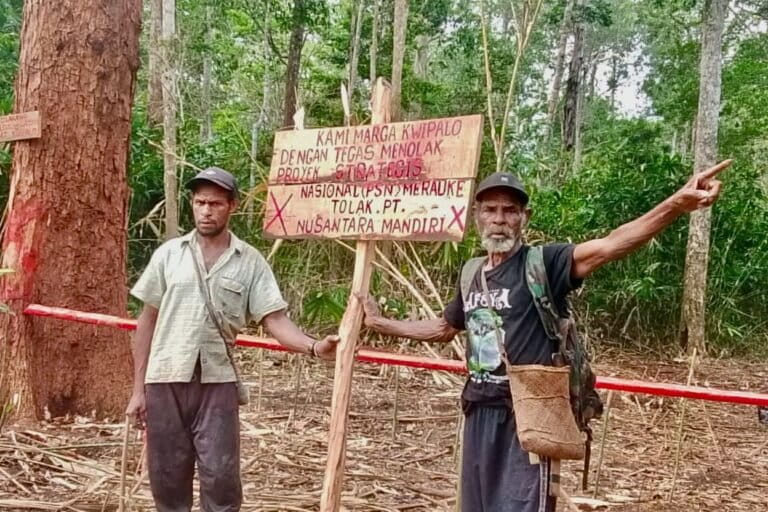
The shift from criminal penalties to administrative fines for corporations has also been a point of contention. Under the current regime, corporations found in violation of forestry regulations often face only monetary fines. Activists argue that for large companies, these fines are merely viewed as a "cost of doing business" or a "component of extraction costs" rather than a deterrent. If the profit from illegal clearing exceeds the administrative fine, there is no economic incentive for compliance.
Toward a "Multidoor" Legal Approach and Public Participation
As the DPR deliberates on the revision of Law No. 41 of 1999, civil society groups are proposing a more integrated and robust legal framework. They advocate for a "multidoor" approach to law enforcement. This strategy involves utilizing multiple legal instruments simultaneously—such as the Law on Environmental Protection and Management, the Anti-Corruption Law, and the Money Laundering Law—to dismantle the financial structures of forestry mafias.
By treating large-scale illegal logging and land clearing as financial and organized crimes, rather than simple administrative breaches, the state could more effectively target the "beneficial owners" who profit from environmental destruction behind the scenes.
In addition to stronger enforcement, the coalition is calling for:
- Strengthened Public Participation: Legalizing the role of independent monitors and ensuring that the public has the right to file administrative lawsuits against forest designations or permits without facing convoluted procedures.
- Constitutional Compliance: Explicitly incorporating all Constitutional Court rulings, particularly regarding the recognition of indigenous forests and the protection of subsistence practices by local communities, to prevent the ongoing criminalization of the poor.
- Decentralized Oversight: Empowering local Forest Management Units (KPH) with actual enforcement authority and sufficient budgetary support to manage forests at the "tapak" or site level.
- Transparency of Data: Mandating that all forestry maps, permits, and environmental impact assessments be made public through a centralized, easily accessible digital platform.
Implications for Indonesia’s Climate Goals
The outcome of the Forestry Law revision will have profound implications not only for Indonesia’s internal social stability but also for its international commitments. Indonesia has pledged to achieve a "FOLU Net Sink 2030" (Forestry and Other Land Use), where the forestry sector becomes a net carbon sink by the end of the decade. This goal is essential for Indonesia’s contributions to the Paris Agreement.
However, experts warn that without a fundamental change in the legal architecture—one that empowers local communities to act as guardians of the forest rather than treating them as criminals—the state will likely fail to meet its climate targets. Deforestation remains the largest contributor to Indonesia’s greenhouse gas emissions, and the current revision of the Forestry Law represents perhaps the last significant legislative opportunity to align national law with environmental reality.
The ongoing discussions in the DPR will determine whether the new Forestry Law becomes a tool for genuine conservation and social justice or remains a mechanism for facilitating resource extraction at the expense of the nation’s ecological future. As the Civil Society Coalition continues its advocacy, the focus remains on ensuring that the law serves the many, not just the few.