Nila Kartika Wati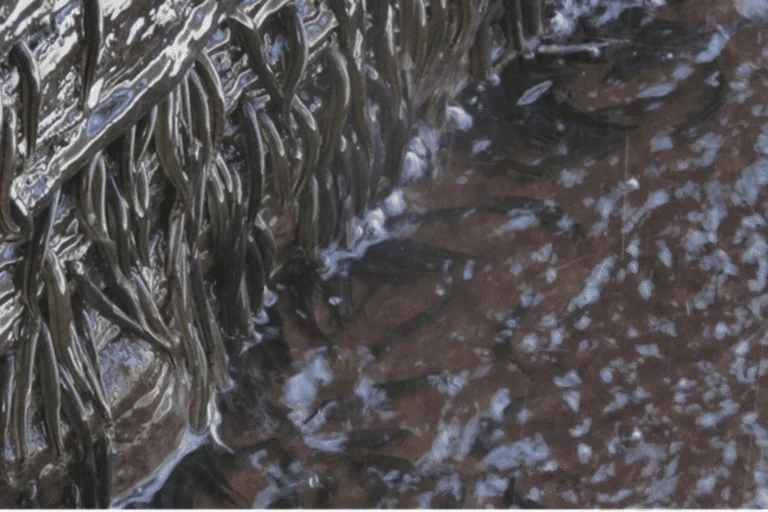
The traditional understanding of fish migration has long been defined by horizontal movement—vast schools of fish traversing rivers or oceans to reach spawning grounds or richer feeding territories. However, a groundbreaking study published in the prestigious journal Scientific Reports has upended this conventional wisdom by documenting a remarkable feat of vertical migration in the heart of the Democratic Republic of Congo (DRC). Researchers have formally identified the shellear fish, scientifically known as Parakneria thysi, as a species capable of scaling the sheer, 15-meter vertical face of the Luvilombo Falls. This discovery marks the first time such "climbing" behavior has been formally documented in a fish species on the African continent, revealing an extraordinary evolutionary adaptation that challenges our perception of aquatic biomechanics.
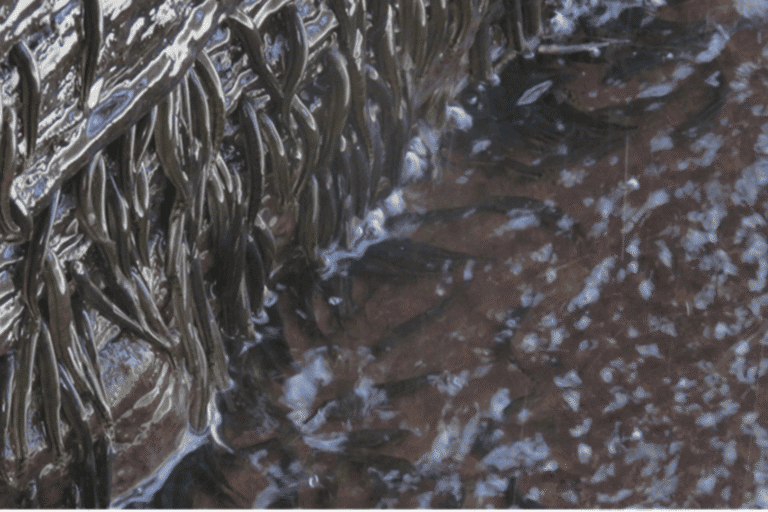
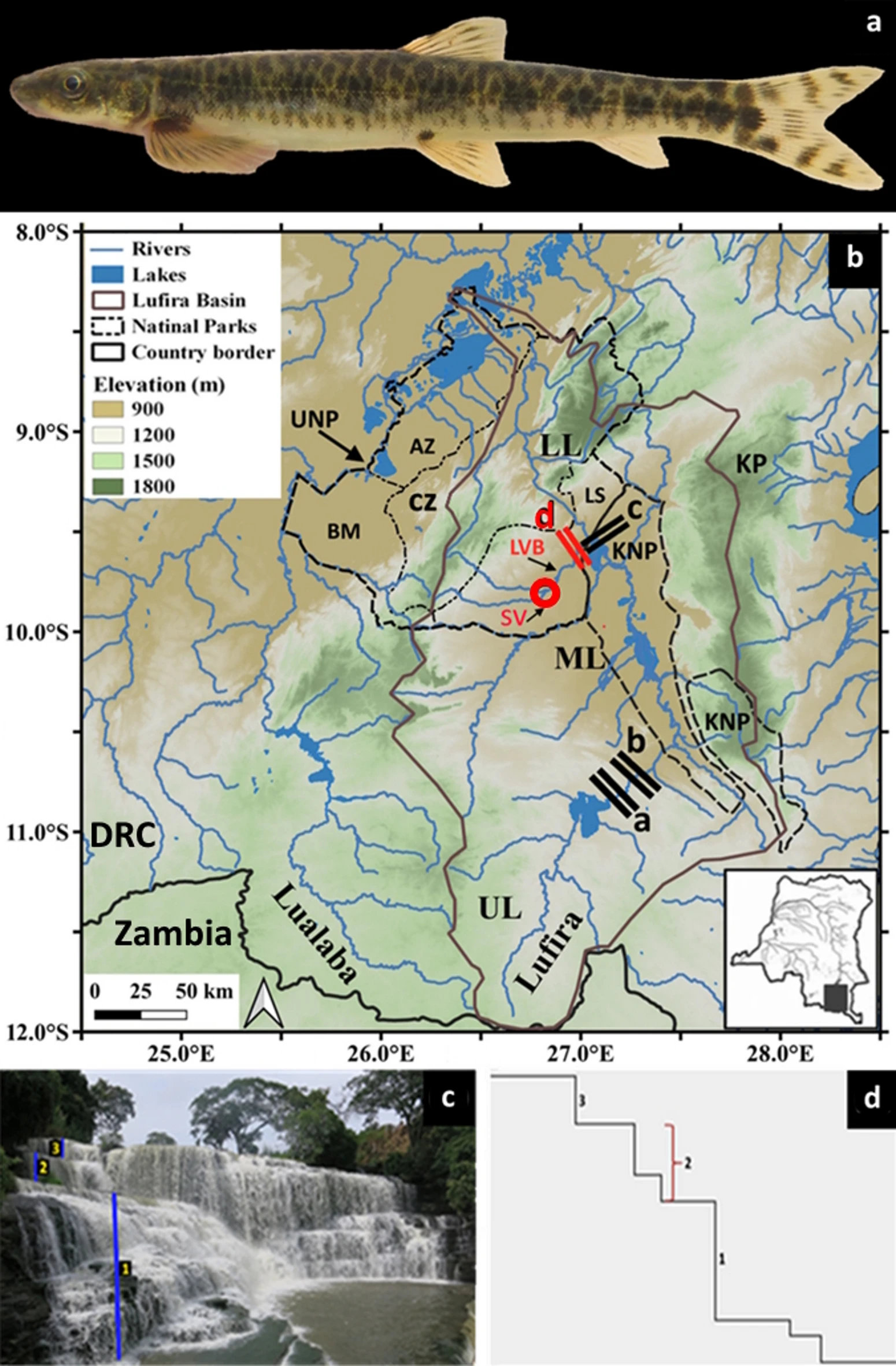
The Luvilombo Falls, located within the complex ecosystem of the lower Lufira drainage basin in the Upemba National Park, presents a formidable barrier to most aquatic life. Standing at approximately 15.5 meters (50 feet) high, the waterfall features a near-vertical incline and a relentless downward force of water. Despite these obstacles, thousands of shellear fish have been observed by scientists from the Université de Lubumbashi and the Royal Museum for Central Africa (RMCA) as they navigate the rock faces behind the curtain of falling water. This arduous journey, which can take the tiny creatures up to 10 hours to complete, represents a triumph of biological engineering over the laws of gravity and fluid dynamics.
Anatomy of an Aquatic Mountaineer
The shellear fish is an unassuming creature in appearance, averaging only about 5 centimeters in length—roughly the size of a standard french fry. Yet, beneath its modest exterior lies a highly specialized anatomical toolkit designed for vertical ascent. To understand how a creature with no limbs can scale a vertical wall of wet stone, the research team employed advanced Micro-CT (Computed Tomography) scanning to peer inside the fish’s skeletal and muscular structures.
The findings revealed that the Parakneria thysi possesses modified pectoral fins that serve as the primary engine for its climb. The leading edges of these fins are equipped with specialized micro-hooks. These structures function similarly to Velcro, allowing the fish to achieve a mechanical grip on the biofilm and irregularities of the rock surface, even when slick with spray and algae. This "grip-and-release" mechanism is essential for maintaining a position on the vertical plane against the constant weight of descending water.
Supporting these fins is a robust pectoral girdle, a skeletal framework significantly more developed than that of its non-climbing relatives. This girdle provides the necessary leverage for the fish’s large muscle groups to execute "power bursts"—rapid, lateral undulations that propel the fish upward in short, controlled increments. Furthermore, the fish utilizes its pelvic fins as stabilizers. During the grueling 10-hour ascent, the shellear fish often pauses to rest in small crevices or depressions in the rock face; during these intervals, the pelvic fins act as a secondary support system, preventing the fish from being swept back down into the depths.
The Physics of Age and Size
One of the most intriguing aspects of the study is the demographic profile of the climbing fish. The researchers noted that the ability to reach the summit of Luvilombo Falls is almost exclusively reserved for juvenile members of the species, specifically those under 5 centimeters in length. This observation highlights a critical intersection between biology and physics known as the square-cube law.
As an organism grows in size, its weight (volume) increases at a much faster rate than its muscle strength or the surface area of its gripping fins. For the shellear fish, reaching adulthood brings a "weight penalty" that exceeds the capacity of its specialized fins to maintain vertical adhesion. While adult fish may attempt the climb, their increased body mass makes them too heavy to sustain the 10-hour vertical journey against gravity. Consequently, the migration to the upper reaches of the river is a rite of passage for the young, ensuring that the next generation can colonize the nutrient-rich and predator-scarce waters above the falls.
Chronology of the Discovery and Research
The path to this discovery began with field observations in the rugged terrain of the Upemba National Park, one of the oldest protected areas in the DRC. Local communities had long been aware of the small fish congregating near the falls, but their unique behavior remained undocumented by the global scientific community.
In the mid-2020s, a collaborative team led by P. Kiwele Mutambala and L. Ngoy Kalumba from the Université de Lubumbashi, alongside experts from the Royal Museum for Central Africa in Tervuren, Belgium, initiated a systematic survey of the Lufira River’s tributaries. Their goal was to map the biodiversity of the Congo Basin, a region that remains one of the least explored biological frontiers on Earth.
During expeditions to the Luvilombo Falls, the team witnessed the mass migration event. They observed thousands of individuals clinging to the "splash zone"—the area of the rock face kept moist by the waterfall’s mist but not submerged under the full force of the main torrent. Over several seasons, the researchers collected specimens, recorded the duration of the climbs, and mapped the three distinct stages of the waterfall’s ascent. The subsequent laboratory analysis, including the pivotal CT scans, confirmed that the behavior was not a fluke of the current but a deliberate, anatomically supported migratory strategy.
Broader Ecological Context: Why Climb?
The question of why a fish would evolve such an energy-intensive and dangerous behavior is central to evolutionary biology. In the context of the Congo Basin, waterfalls often serve as natural filters. By ascending the Luvilombo Falls, the Parakneria thysi gains access to the upper Luvilombo River, an environment that may offer several advantages:
- Predator Avoidance: Many larger predatory fish species are unable to navigate the waterfall, leaving the upper reaches as a safe haven for the small shellear fish.
- Resource Competition: The hulu (upstream) areas often contain different food sources or lower competition for the algae and small invertebrates that make up the shellear’s diet.
- Spawning Grounds: Migrating to headwaters is a common strategy for many fish to ensure their eggs are deposited in well-oxygenated, shallow waters away from the high-density populations of the lower river.
While climbing fish have been documented in other parts of the world—such as the climbing gobies of Hawaii or certain loaches in the Himalayas—this is a landmark finding for Africa. It suggests that the continent’s vast and ancient river systems have fostered unique evolutionary paths that are only now being understood.
Conservation and the Threat of Infrastructure
The discovery of the shellear fish’s vertical migration comes at a critical time for conservation in Central Africa. The Democratic Republic of Congo is currently exploring numerous hydroelectric and irrigation projects to support its growing population and economy. While these projects are vital for development, the study warns that they pose an existential threat to migratory species like the Parakneria thysi.
Migratory fish are statistically more vulnerable to extinction than their stationary counterparts. Their life cycles depend on "connectivity"—the ability to move freely between different parts of a river system. The construction of a dam, or even the diversion of water for irrigation that reduces the flow over a waterfall, can permanently sever these migratory corridors.
"If the water stops flowing over the Luvilombo Falls, the ‘ladder’ that these fish use to survive simply disappears," the research team noted in their report. Without the ability to reach the upper reaches, the population would be compressed into the lower river, leading to overcompetition, increased predation, and a potential collapse of the species’ genetic diversity. The researchers emphasize that environmental impact assessments for future infrastructure in the Congo Basin must account for these "micro-migrators" that are often overlooked in favor of larger, more charismatic megafauna.
Scientific Implications and Future Research
The documentation of Parakneria thysi’s climbing ability opens new doors for biomechanical research. Engineers and roboticists are increasingly looking to nature for inspiration in designing robots capable of navigating treacherous, wet environments. The "Velcro" mechanism of the shellear’s fins and its "power burst" undulation could provide insights into creating more efficient climbing mechanisms for search-and-rescue or industrial inspection drones.
Furthermore, this study highlights the urgent need for continued investment in African ichthyology. The Congo Basin is a hotspot of "dark diversity"—species that are known to exist but whose behaviors, ecological roles, and conservation needs remain a mystery. The collaboration between Congolese and Belgian institutions serves as a model for international scientific partnership, combining local field expertise with advanced technological analysis.
As the scientific community digests these findings, the shellear fish stands as a symbol of resilience and specialized evolution. In the heart of one of the world’s most challenging environments, a fish the size of a potato fry continues to defy gravity, one rock at a time, reminding us that the natural world still holds secrets that are as breathtaking as they are small. The preservation of the Luvilombo Falls is no longer just a matter of maintaining a scenic landmark; it is now recognized as the preservation of an extraordinary biological highway, essential for the survival of Africa’s newly discovered "Spiderman of the river."