Nila Kartika Wati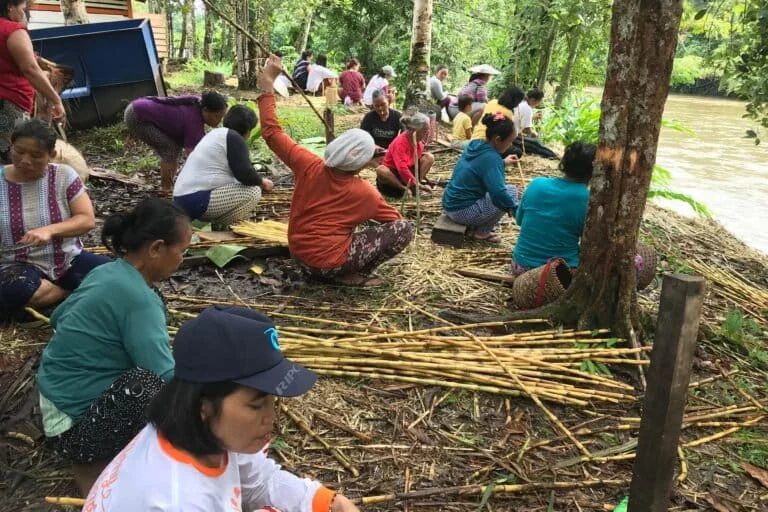
The Indonesian Ministry of Forestry has embarked on a high-stakes mission to overhaul the legal recognition of customary forests, aiming to condense a decade’s worth of administrative progress into a fraction of the time. Minister of Forestry Raja Juli Antoni recently articulated a vision for a "new pattern" of governance that seeks to establish legal certainty for indigenous territories with unprecedented speed. Speaking on the sidelines of a policy briefing, the Minister emphasized that the first year of the current administration would be dedicated to identifying and refining these new operational patterns, with the expectation that the second year would see a significant surge in the formalization of customary forest rights. This ambitious agenda comes at a critical juncture for the Prabowo Subianto-Gibran Rakabuming Raka administration, which has set a target to recognize 95 units of customary forest covering approximately 1.4 million hectares over its five-year term. However, as environmentalists and legal scholars point out, the road to achieving these targets is paved with deep-seated structural, legal, and social obstacles that have historically stymied the progress of indigenous land rights in Indonesia.
To understand the magnitude of the challenge, one must look at the historical data provided by the Ministry of Forestry. Over the last eight years, the government managed to formalize only 160 units of customary forest, totaling 333,687 hectares. This averages out to approximately 20 units per year. When juxtaposed with the current administration’s target of 95 units over five years, the math reveals a striking consistency: the target remains roughly 19 to 20 units per year. This has led critics and indigenous advocates to question the substance of the promised "acceleration." If the frequency of recognition remains the same, the only variable shifting is the total land area, which suggests a focus on larger territories—likely in regions like Papua or Kalimantan—rather than a fundamental change in the efficiency of the recognition process itself.
The slow realization of customary forest recognition over the past decade indicates a profound structural issue within the national policy framework. Central to this bottleneck is the requirement for local governments to issue Regional Regulations (Perda) or Decree of the Regent/Mayor (SK Bupati) to validate the existence of an indigenous community as a legal subject before their forest can be recognized as a legal object. According to legal expert Zakaria (2024), this two-tier requirement is notoriously difficult to fulfill. It places the burden of proof on marginalized communities and subjects their ancestral rights to the whims of local political cycles and the technical capacity of regional bureaucracies. Without a shift in this "conditional recognition" model, any attempt to find a "new pattern" may result in a superficial adjustment that fails to address the core legislative friction.
A deeper analysis of the obstacles reveals a multifaceted crisis of implementation. Research by Kartodihardjo et al. (2013) highlights that indigenous communities often find it impossible to meet the rigorous administrative procedures mandated by the implementing regulations of the landmark Constitutional Court Decision No. 35/PUU-X/2012 (MK 35). This decision famously ruled that customary forests are not state forests, yet the subsequent regulatory framework has been criticized for being overly complex and lacking standardized procedures for validation and verification. Arizona, Malik, and Ishimura (2017) further noted that the absence of a clear, uniform benchmark for what constitutes a "valid" indigenous community leads to inconsistent outcomes across different provinces, often leaving communities in a state of legal limbo for years.
The issue is compounded by a lack of cohesive leadership and the persistence of "ego-sectoralism" among various ministries. Fauzi and Siscawati (2014) observed that while the Ministry of Environment and Forestry (KLHK) holds the primary mandate, the involvement of the Ministry of Home Affairs, the Ministry of Agrarian Affairs and Spatial Planning, and local governments creates a fragmented landscape. This fragmentation often results in overlapping regulations and a lack of accountability. Wibowo et al. (2016) argued that without a centralized coordinating body with the authority to override departmental silos, the implementation of MK 35 will remain sluggish. Furthermore, scholars like Safitri, Berliana, and Suwito (2015) have urged the Ministry to utilize its discretionary powers more effectively to bypass administrative deadlocks, a recommendation that has largely gone unheeded until the recent promises of the new Minister.
Beyond the administrative hurdles lies the problem of "social space"—a term used by legal sociologist Soetandyo Wignjosoebroto to describe the extra-legal forces that dictate how laws are applied. In Indonesia, this social space is often defined by a lack of political will and a latent fear among the ruling elite that granting indigenous communities full autonomy over their lands would lead to a loss of state control over valuable natural resources. This perspective is rooted in a colonial-era legal positivism that views state law as superior to customary (adat) law. As Simarmata (2008) points out, this "superiority complex" in the legal system forces indigenous communities to "prove" their existence through modern legal lenses, often disregarding their actual lived realities and ethnographic histories.
The verification process itself has come under fire for being investigative rather than supportive. Indira Simbolon, an indigenous peoples specialist, has characterized the technical verification stage as an interrogation of "suspected" parties rather than a process of understanding community needs. There is a pervasive bias among bureaucrats who doubt the authenticity of indigenous groups if they do not fit a stereotypical image of "traditional" or "primitive" people. This outdated view fails to account for the dynamic nature of indigenous cultures and their legitimate aspirations for economic development and modern integration.
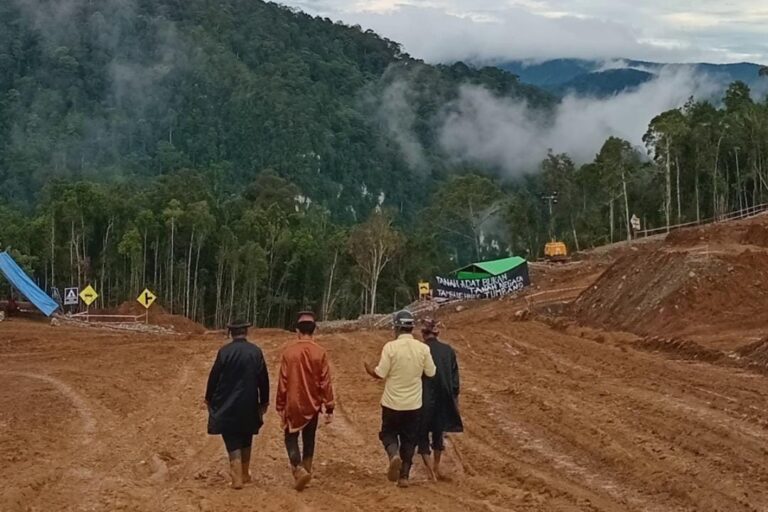
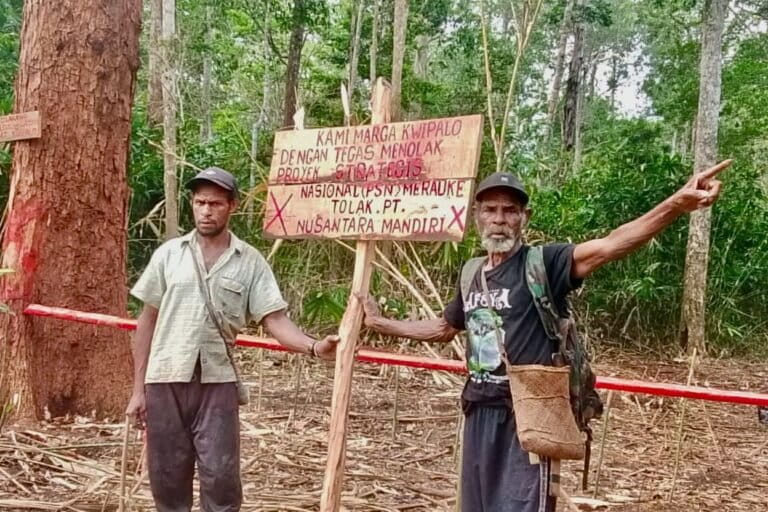
The economic stakes are equally high. While the government aims to recognize 1.4 million hectares of customary forest, large-scale industrial projects—often categorized as National Strategic Projects (PSN)—continue to expand into these very territories. In regions like Halmahera, mining operations have already encroached on ancestral lands, leading to direct confrontations between residents and corporations. The Job Creation Law (Law No. 6/2023) has further complicated the landscape by prioritizing ease of investment and land acquisition for the private sector, often at the expense of communal land rights. Advocates argue that the government’s push for customary forest recognition must not be a mere "facade" to manage social conflict while the state continues to distribute the bulk of forest resources to corporate entities.
Looking ahead, the path to genuine acceleration requires more than just a change in "patterns"; it requires a fundamental legislative shift. Many experts agree that the most significant barrier is Article 67, paragraph (2) of the Forestry Law (Law No. 41/1999), which maintains the conditional status of indigenous rights. The Alliance of Indigenous Peoples of the Archipelago (AMAN) has long challenged this article, arguing it violates the principle of self-determination as recognized by the United Nations Declaration on the Rights of Indigenous Peoples (UNDRIP). Although the Constitutional Court previously rejected challenges to this article on the grounds of preventing separatism, there is a growing legal argument that the Fourth Paragraph of the Preamble to the 1945 Constitution—which mandates the realization of justice for all—should take precedence.
The current momentum for a revision of the Forestry Law presents a golden opportunity for the Prabowo-Gibran administration. By introducing a dedicated chapter on customary forests that simplifies recognition and removes the "conditional" hurdles of Article 67, the government could truly revolutionize the sector. This would involve moving away from the "investigative" model of verification toward a "rights-based" approach that respects the ethnographic data and self-identification of the communities themselves.
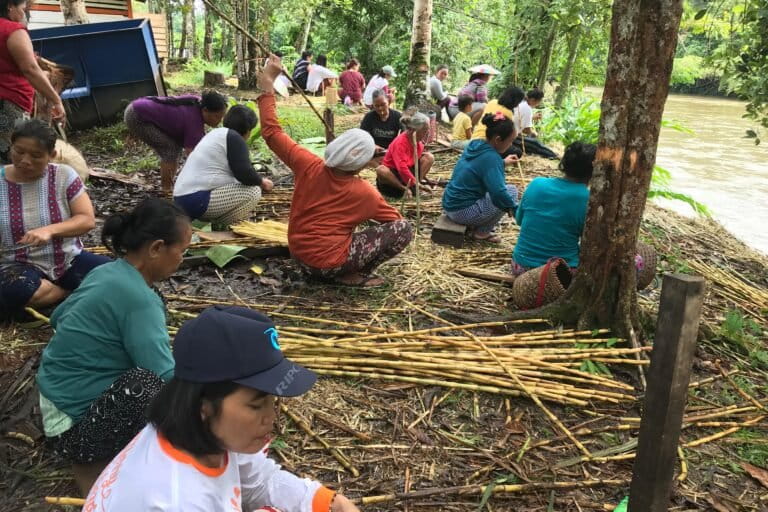
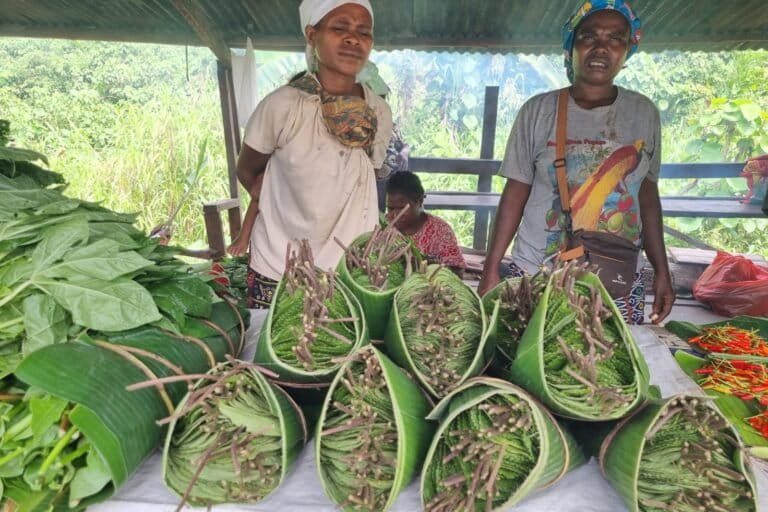
Furthermore, the integration of customary forests into the national economy must be handled with care. As Kartodihardjo (2018) suggests, the focus should not only be on the legal certificate but also on providing communities with access to infrastructure and small-scale economic development. Customary forests are not just conservation zones; they are living landscapes where indigenous women, for example, manage non-timber forest products such as sugar and medicinal plants, contributing to local food security and resilience.
In conclusion, Minister Raja Juli Antoni’s ambition to accelerate the recognition of customary forests is a welcome signal of political intent, but its success will be measured by the government’s willingness to confront structural inequities. To reach the 1.4 million-hectare target, the administration must harmonize conflicting regulations, empower local governments with standardized tools, and, most importantly, respect the constitutional right of indigenous peoples to maintain their way of life. Without these systemic changes, the "new pattern" risks being a continuation of the old, leaving millions of indigenous Indonesians waiting for a justice that remains just out of reach. The coming years will determine whether the state views indigenous communities as partners in forest stewardship or as obstacles to be managed in the pursuit of industrial growth.