Azin Asro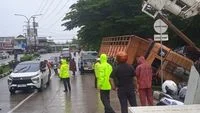
The National Transportation Safety Committee (KNKT) has issued a stern warning regarding the persistent and disproportionately high rate of truck accidents caused by brake failure in Indonesia, characterizing the phenomenon as an avoidable crisis that stems from systemic negligence. Speaking at the Gaikindo Indonesia International Commercial Vehicle Expo (GIICOMVEC) 2026 held at JIExpo Kemayoran, Jakarta, Ahmad Wildan, a Senior Investigator at the KNKT, described the frequency of these incidents as "ridiculous" when compared to international safety standards. The committee highlighted that while developed nations have virtually eliminated brake failure as a primary cause of road fatalities, Indonesia continues to record thousands of such cases annually, pointing toward a critical breakdown in both driver competency and corporate maintenance protocols.
During a discussion panel hosted by Hino Motors Sales Indonesia (HMSI) on April 9, 2026, Wildan presented data that underscored a staggering disparity in road safety outcomes. According to the KNKT, the United States typically records approximately one major truck accident due to brake failure per year, while Japan reports such an occurrence roughly once every five years. In stark contrast, Indonesia faces an estimated 5,000 incidents related to brake malfunctions annually. This statistical chasm suggests that the issue is not merely a technical inevitability of heavy-duty transport but a localized failure of the Indonesian logistics ecosystem to adhere to fundamental safety and engineering principles.
The Dual Catalysts of Brake Failure
The KNKT identifies two primary triggers for the "rem blong" or brake failure phenomenon that plagues Indonesian highways. The first is human error, specifically the improper use of transmission systems while navigating steep descents. Many drivers, often due to a lack of formal training or a misunderstanding of vehicle physics, fail to utilize engine braking or exhaust brakes effectively. By relying solely on the service brakes during long downhill stretches, the kinetic energy is converted into excessive heat, leading to a condition known as "brake fade." In this state, the friction material of the brake pads loses its effectiveness, or the brake fluid boils, rendering the pedal useless despite the mechanical components remaining intact.
The second cause is a direct mechanical malfunction or a failure in the pneumatic and hydraulic systems. This involves leaks in air hoses, compromised seals, or the failure of the air compressor to maintain the necessary pressure for the braking system to actuate. Wildan noted that in the context of Indonesia’s transport industry, these mechanical failures are rarely "accidental" in the traditional sense; rather, they are the predictable outcomes of deferred maintenance and the use of substandard replacement parts. When these two factors—driver ignorance and mechanical frailty—intersect on Indonesia’s challenging terrain, the results are frequently catastrophic.
Economic Pressures and Maintenance Negligence
A significant portion of the KNKT’s investigation focused on the economic motivations behind the high accident rate. The committee revealed a disturbing trend in the logistics sector where fleet owners prioritize short-term "efficiency" over long-term safety. Wildan shared insights from consultations with large-scale fleet operators, noting that some companies have slashed their maintenance budgets by more than 60 percent. In one cited instance, a company reduced its annual maintenance expenditure from IDR 3 billion to less than IDR 1 billion.
This aggressive cost-cutting often involves skipping scheduled inspections, extending the life of consumables like brake linings far beyond their safe limits, and bypassing the replacement of critical valves and hoses. Furthermore, the drive for fuel efficiency often inadvertently encourages dangerous driving habits. Drivers may attempt to coast in neutral or high gears to save fuel, inadvertently placing the entire burden of deceleration on the braking system rather than using the engine’s natural resistance. The KNKT argues that the "savings" generated by these practices are illusory, as a single major accident can result in the total loss of cargo, the vehicle, and, most tragically, human lives, alongside significant legal liabilities.
The Over-Dimension Over-Load (ODOL) Factor
While not the sole cause, the prevalence of Over-Dimension and Over-Load (ODOL) trucks in Indonesia exacerbates the strain on braking systems. When a truck is loaded beyond its manufacturer-specified Gross Vehicle Weight (GVW), the braking system is forced to dissipate significantly more energy than it was designed to handle. On the mountainous routes that connect Indonesia’s industrial hubs, such as the Cipularang toll road or the trans-Sumatra highway, an overloaded truck’s brakes can reach critical temperatures in a matter of minutes.
The KNKT’s findings suggest that the mechanical margin for error is virtually non-existent for ODOL vehicles. Even a minor oversight in maintenance or a slight delay in downshifting by the driver can lead to a total loss of control. The committee has called for stricter enforcement of weight limits at weigh stations and more rigorous "KIR" (periodic vehicle testing) procedures to ensure that only roadworthy and legally loaded vehicles are permitted to operate.

Industry Response and the Role of Driver Training
In response to the KNKT’s critiques, manufacturers like Hino Motors Sales Indonesia have doubled down on driver education initiatives. At the GIICOMVEC 2026 forum, industry stakeholders emphasized that modern trucks are equipped with sophisticated safety technology, such as Anti-lock Braking Systems (ABS) and advanced retarders, but these systems cannot compensate for fundamental misuse.
"We have seen that when we train drivers to understand torque, RPM ranges, and the specific mechanics of air-over-hydraulic systems, the accident rate within those specific fleets drops significantly," Wildan stated. The training focuses on teaching drivers the "reflex" of proper gear selection. Instead of reacting to a descent by braking, drivers are taught to anticipate the grade and engage the appropriate lower gear and auxiliary braking systems before the descent begins. This proactive approach keeps the service brakes cool and available for emergency stops rather than using them for routine speed control.
Chronology of a Crisis: The GDC Depok Incident
The urgency of the KNKT’s message is underscored by recent events, such as the accident in Grand Depok City (GDC), Depok, in early 2026. In that incident, a heavy-duty truck suffered a total brake failure while navigating a relatively moderate slope, eventually crashing into road separators and causing significant traffic disruption and property damage. Preliminary investigations into the GDC crash mirrored the KNKT’s broader findings: the vehicle had a history of skipped maintenance intervals, and the driver lacked the certification required for operating heavy-duty articulated vehicles.
Such incidents serve as a recurring "wake-up call" for the Ministry of Transportation and the National Police. The timeline of truck accidents in Indonesia over the last decade shows a plateau in safety improvements, despite advancements in vehicle technology. The persistence of "rem blong" suggests that the root causes are cultural and structural rather than purely technological.
Analysis of Implications and Future Outlook
The implications of the KNKT’s report are far-reaching. For the Indonesian government, the high rate of truck accidents represents a significant drag on national logistics efficiency and a public health crisis. Road accidents involving heavy vehicles often result in multiple fatalities and long-term closures of vital economic arteries.
From a regulatory perspective, the KNKT recommends a shift toward "Safety Management Systems" (SMS) within trucking companies. This would move the industry away from a reactive model—fixing trucks only after they break—to a predictive model where safety is integrated into the business’s core KPIs. There is also a growing call for the digitalization of maintenance records to prevent companies from falsifying service histories during inspections.
Furthermore, the KNKT’s comparison with Japan and the United States highlights the necessity of a more robust professional licensing system for commercial drivers. In those jurisdictions, obtaining a commercial driver’s license (CDL) involves rigorous theoretical and practical testing that ensures a deep understanding of vehicle mechanics. In Indonesia, the process is often criticized for being less stringent, allowing inexperienced operators to take the wheel of complex, high-tonnage machines.
As Indonesia continues to expand its infrastructure and bolster its position as a regional manufacturing hub, the safety of its logistics network will remain a critical metric. The KNKT’s blunt assessment at GIICOMVEC 2026 serves as a definitive roadmap for what must change: the industry must stop viewing maintenance as an optional expense and start viewing it as a non-negotiable foundation of operational viability. Without a fundamental shift in how drivers are trained and how fleets are managed, the "ridiculous" cycle of preventable accidents is likely to continue, claiming more lives on Indonesia’s roads.