Hadi Wijaya
The decision to opt for a childfree lifestyle, defined as a voluntary choice not to have children, is increasingly becoming a focal point of sociological and psychological discourse in Indonesia. Nuzulia Rahma Tristinarum, a prominent family psychologist and practitioner, notes that the motivations behind such a significant life decision are often complex, stemming from both conscious deliberations and deeply rooted unconscious experiences. Speaking in an interview with Republika, Tristinarum—affectionately known as Lia—explained that the choice to remain childfree is rarely a spontaneous reaction but rather the culmination of personal history, environmental influences, and evolving social values.
According to Lia, who also serves as a counselor, trainer, and author, these underlying factors often manifest as a specific perception of the world and one’s role within it. "The background can involve experiences that create a unique internal perception, leading to a decision that might emerge without the individual even fully realizing the source of that conviction," she stated. This psychological framework suggests that for many, the childfree choice is a protective mechanism or a rational response to perceived future hardships.
The Impact of Early Childhood Trauma and Adverse Experiences
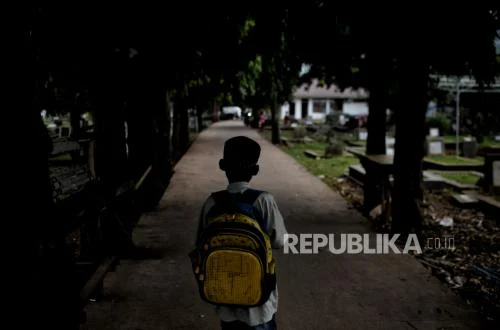
One of the most significant drivers identified by psychological experts is the presence of past trauma. Lia highlighted cases where individuals were neglected or experienced abuse during their formative years. In one specific scenario, a child left primarily in the care of an abusive nanny—experiencing frequent yelling, physical punishment, and emotional coldness—may grow up viewing parenthood through a lens of fear and inadequacy.
"Through such events, a child may develop a perception questioning the purpose of bringing a life into the world if that life is only to be neglected," Lia explained. This internal dialogue often evolves into a firm stance: "It is better not to have children than to be unable to fulfill the responsibility of caring for them." For these individuals, choosing to be childfree is not an act of selfishness, but rather an act of profound responsibility toward the hypothetical well-being of a soul they feel they cannot adequately protect. This "laceration of the heart," as Lia describes it, involves deep-seated anger and trauma that shapes an individual’s reproductive trajectory long before they reach adulthood.
The Economic Reality and the Sandwich Generation Phenomenon
Beyond the psychological realm, economic readiness—or the lack thereof—serves as a primary catalyst for the childfree movement. In the current global economic climate, characterized by rising inflation and the soaring cost of education and healthcare, many young adults feel that financial stability is an unattainable prerequisite for parenthood.
Lia observed that this is particularly prevalent among individuals who belong to the "sandwich generation"—those who are simultaneously supporting their aging parents while trying to build their own financial foundations. "A person who is the sole breadwinner for their parents may decide against having children because they feel financially overextended," she noted. This sentiment is shared by both men and women. Men, in particular, often cite the heavy burden of being the primary provider as a reason for their hesitation. The fear of failing to provide a high quality of life for a child leads many to conclude that the most ethical choice is to abstain from procreation entirely.
Shifting Cultural Values and Environmental Influences
The decision to remain childfree is also heavily influenced by shifting cultural paradigms and the immediate social environment. As Indonesia undergoes rapid urbanization and modernization, traditional collectivist values—which often view children as a source of "fortune" or a "safety net" for old age—are being challenged by individualistic pursuits and career-oriented goals.
Environmental influence, including the circles in which an individual moves, plays a critical role. Exposure to peer groups or digital communities that normalize the childfree lifestyle can validate an individual’s existing inclinations. Lia pointed out that "values" held by an individual, combined with these external pressures, create a framework where having children is no longer seen as the default "next step" in a marriage. Some couples enter marriage with the explicit agreement to remain childfree, viewing the union as a partnership centered on companionship rather than procreation. This is often a strategic choice to avoid the pitfalls of "unplanned" parenting while maintaining the intimacy of a committed relationship.
Addressing the Myth of Aesthetic Preservation
A recurring theme in the childfree debate is the desire to maintain physical appearance or "stay young." Some proponents of the lifestyle suggest that the absence of the physical and emotional stress of parenting contributes to a more youthful appearance. However, Lia offered a more nuanced, fact-based perspective on this claim.
While some literature suggests that people choose to be childfree to avoid the physical changes associated with pregnancy and aging, Lia argued that youthfulness is a product of multiple variables. "It is inaccurate to claim that being childfree is the sole cause of staying young," she said. Factors such as hormonal balance, genetics, and lifestyle choices—including diet, exercise, and stress management—play far more significant roles in the aging process. While the reduced stress of not raising children might contribute to better sleep or more time for self-care, it is not a biological guarantee of aesthetic preservation.
A Chronology of the Childfree Discourse in Indonesia
The visibility of the childfree movement in Indonesia has followed a distinct timeline, moving from a taboo subject to a mainstream national conversation.
- Pre-2020: The Silent Minority. Before the turn of the decade, childfree individuals in Indonesia largely kept their choices private to avoid social stigma and familial pressure.
- 2021-2022: The Social Media Catalyst. The discourse began to gain traction on platforms like Twitter (now X) and Instagram. Influencers and public figures began to share their personal choices, sparking heated debates between traditionalists and those advocating for bodily autonomy.
- Early 2023: The Peak of Public Awareness. In February 2023, the topic reached a fever pitch following viral comments from Indonesian influencers living abroad. This prompted national media outlets, religious organizations, and psychological experts like Nuzulia Rahma Tristinarum to weigh in on the phenomenon.
- Present Day: Policy and Demographic Concern. The government, through agencies like the National Population and Family Planning Board (BKKBN), has begun to monitor the trend as birth rates in certain urban sectors show a slight decline, mirroring trends seen in neighboring countries like Singapore and Thailand.
Supporting Data and Demographic Context
While Indonesia’s overall Total Fertility Rate (TFR) remains relatively healthy compared to East Asian nations, there is a clear downward trend. According to data from the Indonesian Central Bureau of Statistics (BPS), the TFR has dropped significantly over the last few decades, from approximately 5.6 in the 1970s to around 2.1 in recent years.
While not all of this decline is attributed to the childfree choice—contraception access and delayed marriage play large roles—a 2022 survey indicated an increasing percentage of urban millennials and Gen Z individuals expressing a preference for "delaying" or "foregoing" children. In Jakarta and other metropolitan hubs, the rising cost of living is cited by over 60% of young couples as their primary concern regarding family planning.
Expert Reactions and Societal Implications
The rise of the childfree lifestyle has elicited a variety of responses from different sectors of Indonesian society. Religious leaders often emphasize the traditional role of the family in procreation, while human rights advocates argue for the importance of reproductive agency.
From a psychological standpoint, Lia suggests that the "trend" aspect cannot be ignored. Some individuals may choose to be childfree simply because it is currently a "trending" topic, sharing values and experiences with a wider community. However, she cautions that such a decision should be made with deep self-reflection rather than social imitation.
The implications for the future of Indonesia are profound. A significant increase in the childfree population could lead to:
- Demographic Imbalance: A shrinking workforce and an aging population, similar to the "silver tsunami" facing Japan and South Korea.
- Economic Shifts: A change in consumer behavior, with more discretionary income spent on travel, luxury goods, and pets rather than child-related industries.
- Social Support Challenges: A need for new social structures to care for the elderly, as the traditional model of children caring for parents becomes less universal.
Conclusion
The decision to be childfree, as outlined by Nuzulia Rahma Tristinarum, is a multifaceted issue that intersects with psychology, economics, and evolving social norms. Whether driven by the scars of past trauma, the cold reality of financial constraints, or a conscious shift in personal values, it represents a significant departure from traditional Indonesian family structures. As the conversation continues to evolve, it remains essential for society to approach the topic with a balance of psychological empathy and factual analysis, recognizing that the choice to parent—or not—is one of the most consequential decisions an individual can make.