Nila Kartika Wati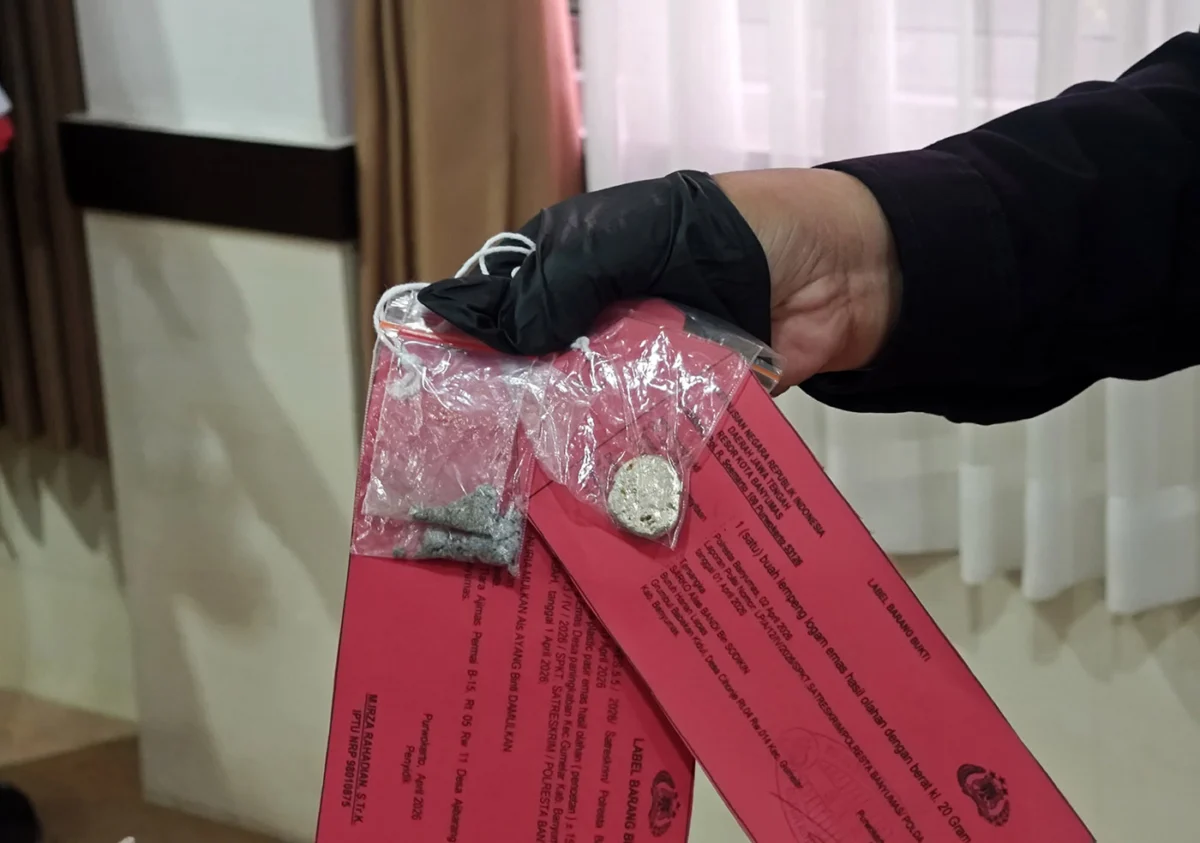
The Banyumas City Police (Polresta Banyumas) have successfully uncovered and dismantled a large-scale illegal gold mining network operating within the Gumelar District of Banyumas Regency, Central Java. This enforcement action, led by the Criminal Investigation Unit (Satreskrim), followed persistent reports from local community members concerned about the clandestine activities and the potential for long-term ecological damage. On Tuesday, March 31, 2026, tactical teams moved into the village of Paningkaban, where they discovered an active mining site characterized by high-risk extraction methods and a total lack of regulatory oversight.
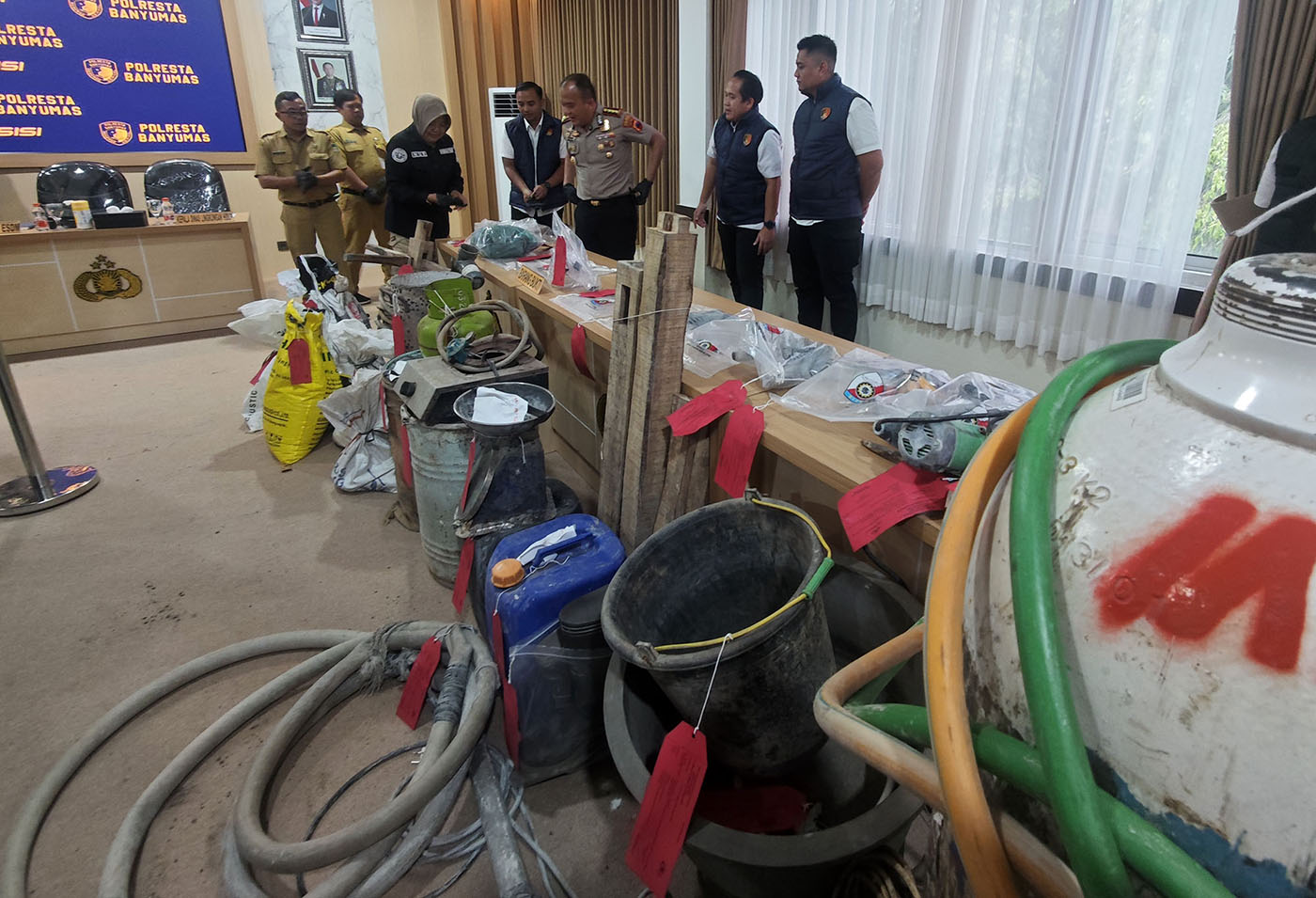
During the raid, police officers caught several individuals in the act of processing and extracting ore. The scale of the operation was significant, involving deep-shaft mining and chemical processing on-site. Senior Commissioner Petrus P. Silalahi, Chief of Polresta Banyumas, detailed the findings during a press briefing held on Monday, April 6, 2026. He noted that at the primary site in Paningkaban, the team found three workers specialized in material processing and five others tasked with the dangerous job of excavation. These workers were operating in narrow shafts measuring approximately 80 by 80 centimeters, reaching depths of up to 55 meters—a practice commonly referred to as "rat hole" mining, which poses extreme risks to the life and safety of the miners.
The investigation quickly expanded beyond Paningkaban to the neighboring village of Cihonje. Law enforcement officials were alarmed to discover the sheer volume of abandoned infrastructure left behind by the syndicates. According to Commissioner Silalahi, a total of 68 mining holes were identified across the two villages. Many of these shafts were left open and unsecured after the miners failed to find sufficient gold deposits, creating a landscape of "hidden traps" that pose a lethal threat to residents, livestock, and the structural integrity of the surrounding land.
Identification of Suspects and Operational Hierarchy
Following the field operation and subsequent interrogations, Polresta Banyumas officially named three primary suspects: SRO (51), NM (50), and SBN (56). These individuals are alleged to be the masterminds, financiers, and managers of the illegal mining activities in Paningkaban and Cihonje. The police have categorized them as "pemodal" (investors) and "pengelola" (managers), highlighting that they did not merely work the mines but orchestrated the entire logistical and financial framework of the operation.
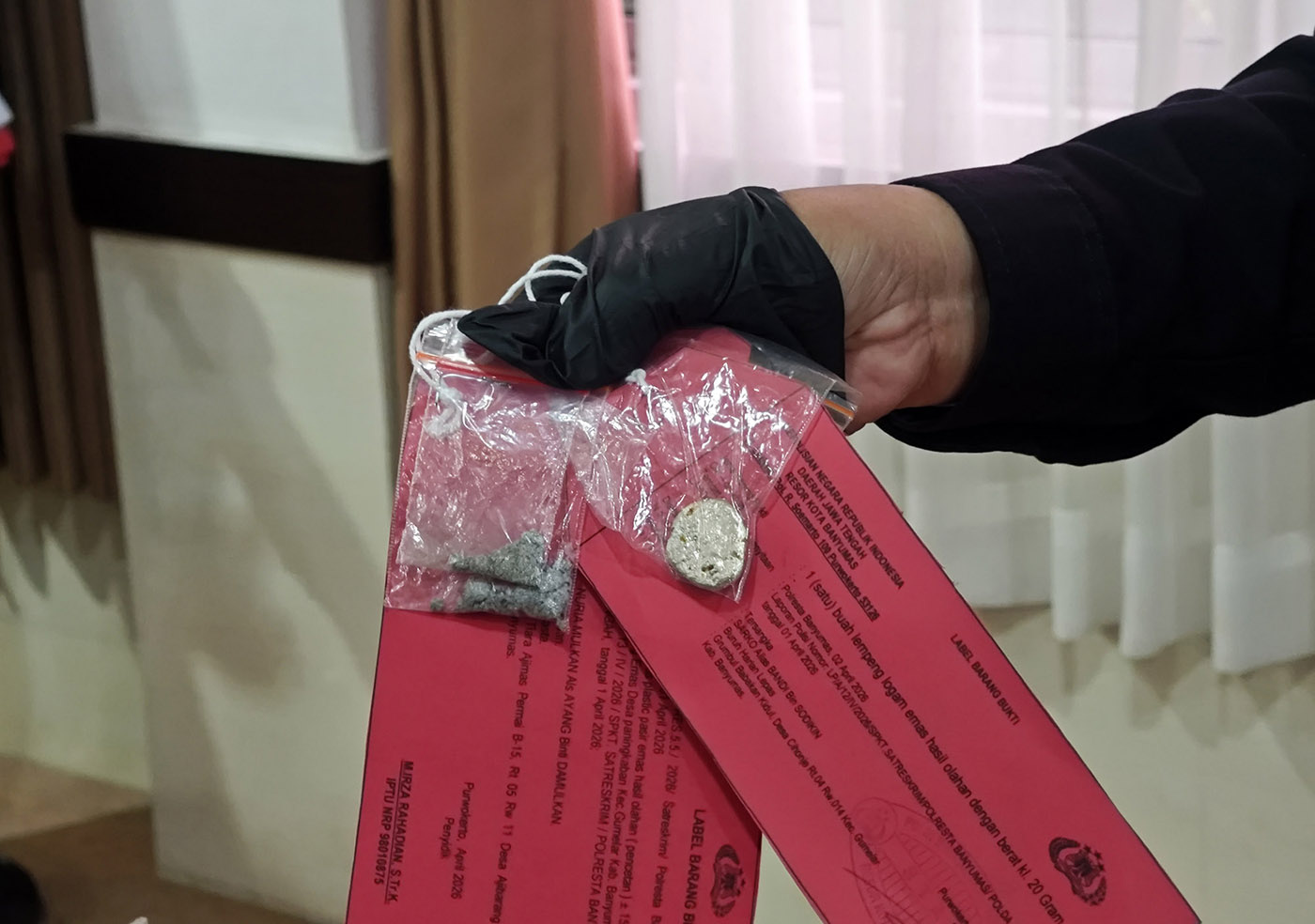
The investigation revealed a long history of illicit activity, particularly in the case of SRO. A resident of Paningkaban, SRO began his involvement in the gold trade as a manual laborer in 2012. After five years of learning the trade and identifying potential geological veins, he transitioned into an independent operator in 2017, opening a mine on his own private land. Despite initial failures and low yields, SRO persisted, eventually striking a viable gold vein and expanding his operations by opening multiple active shafts.
The second suspect, NM, entered the Gumelar mining scene in 2017 after receiving intelligence regarding the high gold content in the region’s soil. Unlike SRO, who operated primarily on his own land, NM adopted a nomadic approach, moving from one location to another to evade detection and maximize extraction from various plots. In January 2025, NM formed a strategic partnership with SBN, who provided a 3,386-square-meter plot of land in Grumbul Igir Salak, Paningkaban. This partnership allowed for a more structured operation, which officially commenced in March 2025, employing eight workers divided into specialized teams for digging and processing.
The Economic Structure of Illegal Mining
One of the most revealing aspects of the investigation was the discovery of a sophisticated and highly structured profit-sharing system utilized by the suspects. This system ensured that all stakeholders—from the landowner to the manual laborer—were incentivized to maintain the secrecy of the operation. The revenue generated from the refined gold was typically distributed as follows:
- Investors (30%): This portion was allocated to the individuals who provided the initial capital for equipment, chemicals (such as mercury or cyanide), and daily logistical needs.
- Landowners (30%): This significant cut was paid to local residents like SBN who allowed their property to be excavated, effectively turning private land into unregulated industrial zones.
- Operational Costs (20%): This fund covered the maintenance of machinery, fuel for generators, and the purchase of processing materials.
- Worker Wages (20%): This final portion was divided among the laborers, who bore the brunt of the physical labor and health risks.
This structured approach explains why illegal mining often finds a foothold in rural communities. The high percentage offered to landowners and the promise of wages for local laborers often outweigh the perceived risks of environmental degradation or legal repercussions, creating a "shadow economy" that competes with legitimate agricultural or industrial sectors.
Regulatory and Legal Void
The primary legal issue surrounding the Gumelar mines is the absolute lack of permits. Roni Hidayat, the Head of the Banyumas Integrated One-Stop Service and Investment Office (DPMPTSP), confirmed that there has never been a single mining permit (IUP) issued for gold extraction in the Banyumas Regency. He emphasized that gold mining is classified as a "high-risk" business activity under Indonesian law, requiring rigorous environmental impact assessments (AMDAL) and technical approvals from the central and provincial governments.
"There have been no applications, and certainly no permits granted," Hidayat stated. "We have not even had a formal consultation from parties interested in pursuing a legal gold mining venture in this region."
This sentiment was echoed by Heru Subekti, Head of the Geology, Minerals, and Coal Section at the Slamet Selatan branch of the Central Java Energy and Mineral Resources (ESDM) Office. Subekti noted that while there were some inquiries years ago, none progressed to the stage of a legal permit. He clarified that any gold mining currently taking place in Banyumas is, by definition, illegal and a violation of Law No. 3 of 2020 (the Mining Law), which carries heavy criminal penalties and fines.
Environmental Crisis and Mercury Contamination
Perhaps the most alarming revelation following the police action is the confirmed environmental impact on the region’s water sources. Widodo Sugiri, Head of the Banyumas Environmental Office (DLH), disclosed that his department had suspected illegal mining activities long before the police raid due to deteriorating water quality in local rivers.
"We conducted water sampling in the Tajum River and found mercury levels that significantly exceed the safe threshold for human health and the environment," Sugiri revealed. Mercury is commonly used by illegal miners in a process called amalgamation to separate gold from ore. This toxic heavy metal is often discharged directly into the soil and waterways, where it enters the food chain.
The presence of mercury in the Tajum River is a public health ticking time bomb. Mercury is a potent neurotoxin that can cause irreversible damage to the nervous system, kidneys, and developing fetuses. The DLH has called for immediate follow-up research and laboratory testing to determine the extent of the bioaccumulation in local fish populations and the potential impact on residents who rely on the river for irrigation and daily needs.
The Challenge of Reclamation and Future Implications
The dismantling of the mining operation is only the first step in a long process of recovery. Commissioner Silalahi pointed out that the 68 abandoned mining shafts represent a significant liability for the regional government. "It is our collective duty to reclaim this area. These holes cannot be left as they are; they must be filled and the land stabilized to prevent accidents and further erosion," he said.
However, reclamation is a costly and technically difficult endeavor. Under Indonesian law, the responsibility for reclamation usually falls on the permit holder. In the case of illegal mining, the burden often shifts to the state, as the perpetrators rarely have the resources or the intent to restore the land.
The case in Gumelar serves as a microcosm of the broader challenges facing Indonesia in managing artisanal and small-scale gold mining (ASGM). While the police action provides a temporary reprieve, the underlying drivers—high gold prices and a lack of alternative economic opportunities—remain. Experts suggest that a purely punitive approach may not be enough. There is a growing call for the government to either facilitate the formalization of small-scale mining through "People’s Mining Areas" (WPR) or provide robust economic alternatives that do not involve environmental destruction.
For now, the three suspects remain in custody, facing charges that could result in years of imprisonment and billions of rupiah in fines. The Tajum River remains a site of concern, and the residents of Paningkaban and Cihonje are left to grapple with the literal and figurative holes left behind by a decade of unregulated greed. The Polresta Banyumas has vowed to continue monitoring the region to ensure that these "rat holes" do not reopen, signaling a zero-tolerance policy toward activities that sacrifice the region’s ecological future for short-term illicit gain.