Nila Kartika Wati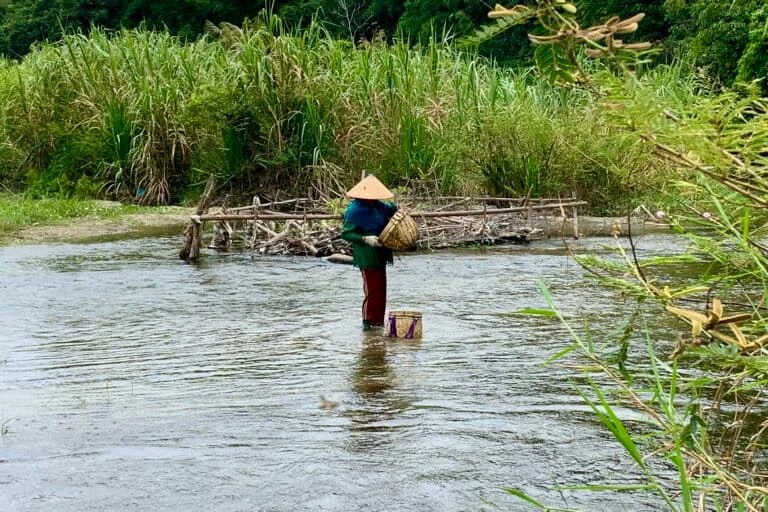
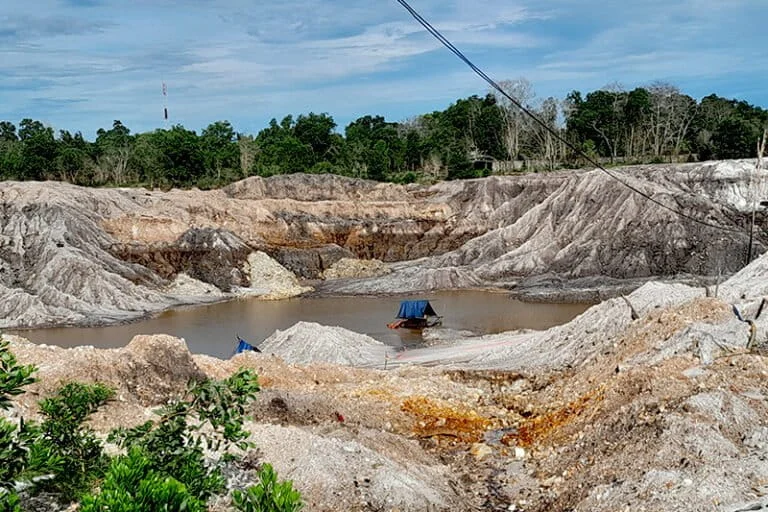
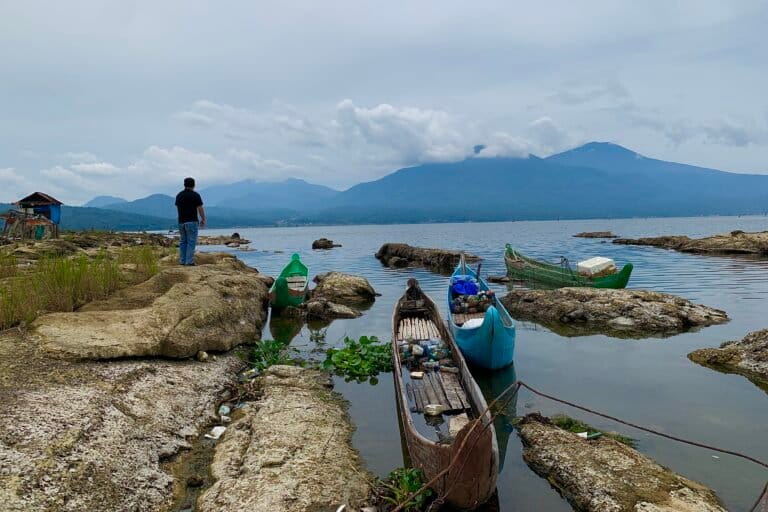
The tranquil landscape of Lake Kerinci in Jambi Province, Indonesia, has long been the lifeblood of local communities, providing water for vast rice paddies and a bounty of fish for local markets. However, since the beginning of 2026, this vital ecosystem has undergone a dramatic and distressing transformation. The water level of Lake Kerinci, the largest lake in the region, has receded to unprecedented lows, exposing massive boulders and turning once-fertile riverbeds into dry, cracked earth. While the government and private developers champion the Kerinci Merangin Hidro (KMH) hydroelectric plant as a cornerstone of Indonesia’s green energy transition, the residents of Pulau Pandan and Karang Pandan see only the erosion of their traditional way of life.
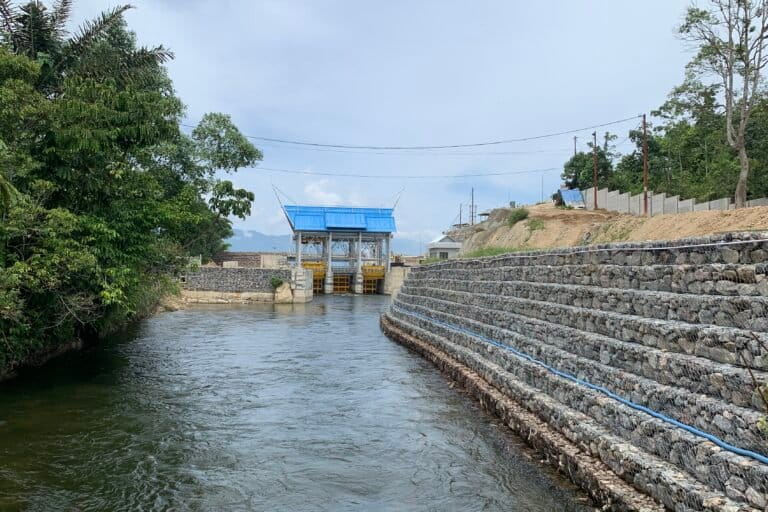
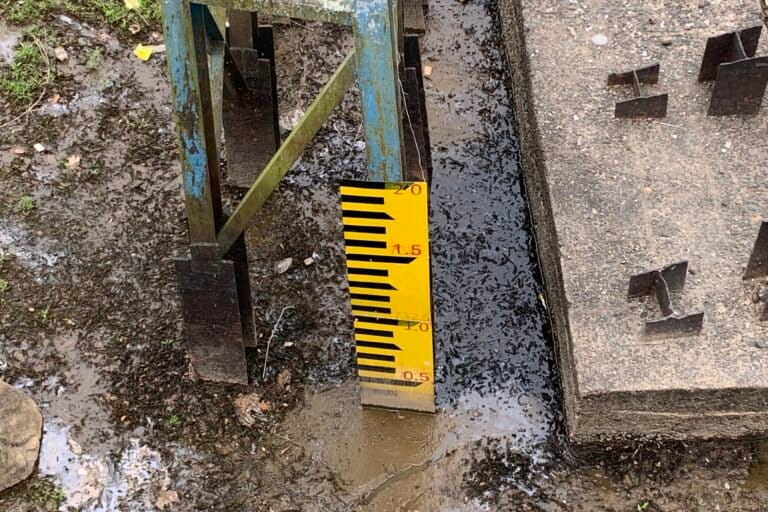
For Mat Dong, a 51-year-old farmer from Pulau Pandan Village, the crisis is visible in every handful of dust from his abandoned fields. Standing on a suspension bridge overlooking the Batang Merangin River, he points to a water level that barely covers a span of a hand. The river, which serves as the primary outlet for Lake Kerinci, has been heavily modified to feed the turbines of the KMH project. Since the conclusion of the 2025 harvest, Mat Dong’s fields have remained fallow, overtaken by weeds because the natural irrigation systems no longer function. The narrative of progress, it seems, has failed to account for the survival of those living in the shadow of the dam.
The Kerinci Merangin Hidro Project: A Megaproject Profile
The Kerinci Merangin Hidro (KMH) hydroelectric plant is a massive undertaking with a planned capacity of 350 Megawatts (MW). Managed by PT Kerinci Merangin Hidro, a subsidiary of the Kalla Group—the business empire of former Indonesian Vice President Jusuf Kalla—the project carries a staggering investment value of approximately Rp 13.4 trillion (USD 850 million). The facility is designed to operate four turbines, each generating 87.5 MW, with a projected annual output of 1,280 gigawatt-hours.
The project is a key component of the ambitious 35,000 MW national power program initiated during President Joko Widodo’s administration. Although initial plans for the plant date back to 2012, construction was delayed for over 15 years due to design revisions. Originally conceived as a 150 MW plant, the capacity was more than doubled after surveys by the state electricity company, PLN, indicated higher potential. Significant construction finally resumed in 2019, involving the excavation of an 11-kilometer tunnel and the installation of massive infrastructure. By April 2025, the plant was nearing its operational target, requiring a consistent flow of 59.4 cubic meters of water per second from the Batang Merangin River.
A Chronology of Escalating Conflict and Environmental Change
The relationship between the project developers and the local population has been fraught with tension since 2019. The chronology of the conflict reveals a pattern of environmental concerns and social grievances that have remained largely unaddressed:
- 2019–2020: Construction begins. Residents near the tunnel excavation sites report structural damage and cracks in their homes caused by heavy vibrations from blasting and drilling.
- June 2021: Large-scale protests erupt over land compensation. Local villagers block access roads to the project site, demanding fairer valuations for their seized property.
- July 2021: The Depati Rencong Telang Indigenous Community of Pulau Sangkar Village confronts project managers, alleging that the company has encroached upon ancestral "ulayat" lands without proper consent or compensation.
- May 2023: A group of residents files a lawsuit against the company at the Sungai Penuh District Court, seeking Rp 3.2 billion in damages for noise pollution and physical damage to property. The legal proceedings eventually stall.
- August 2024: A group of women from local villages leads a blockade against the dredging of the river, correctly predicting that deepening the riverbed would cause the lake levels to drop.
- August 2025: Tensions boil over into violence. Hundreds of residents from Karang Pandan and Pulau Pandan block roads to stop the construction of a massive sluice gate. Police respond with tear gas, leading to multiple injuries and reports of respiratory distress among the protesters.
- January 2026: During the turbine testing phase (January 1–16), the water level of Lake Kerinci drops drastically. This event goes viral on social media as residents document the appearance of "islands" of rock that were previously submerged for decades.
The Ecological Toll: Deforestation and Sedimentation
While the company attributes the receding water levels to seasonal weather patterns, environmental experts point to a more complex and systemic failure of watershed management. Data from the Indonesian Meteorological, Climatological, and Geophysical Agency (BMKG) in Kerinci noted low rainfall in early 2026, but observers argue that this does not explain the severity of the water loss.
Analysis by KKI Warsi, a prominent regional environmental NGO, highlights the critical loss of forest cover in the Kerinci Watershed (DAS). In 2025 alone, approximately 1,745 hectares of forest were lost. Currently, only 22,480 hectares of forest remain, representing just 23% of the 97,000-hectare watershed area. This level of deforestation has compromised the "sponge effect" of the land, which normally absorbs rainwater and releases it slowly into the lake.
Rudi Syaf, a representative from KKI Warsi, explains that the lack of forest cover has led to extreme sedimentation. Between 3.2 and 4.2 million tons of soil are eroded into the river systems annually, particularly through the Batang Merao River, which flows into Lake Kerinci. This siltation makes the lake shallower, reducing its storage capacity and leading to erratic hydrological cycles. Consequently, the region now suffers from a "double-edged sword" of disasters: massive flooding during the rainy season (as seen in 2024) and extreme desiccation during dry spells.
Socio-Economic Devastation for Farmers and Fishermen
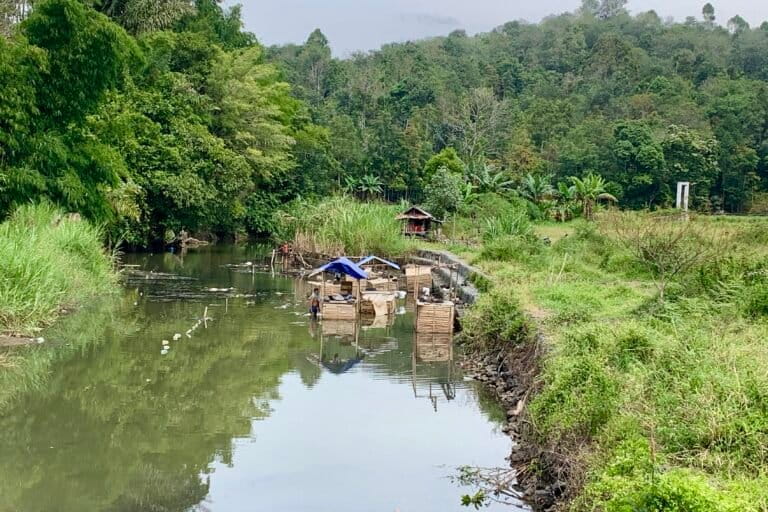
The impact on local livelihoods is profound. In Pulau Pandan, the traditional "kincir" (bamboo water wheels) that have irrigated rice paddies for generations are now motionless, stranded several meters above the current water line. Amrin, a 54-year-old farmer, reports that while the company provided water tanks and pipes, the supply is insufficient to maintain the saturation required for rice cultivation. His yield has already dropped from 2.5 tons to less than a ton, and he fears the next season will be a total loss.
The fishing community is facing a similar existential threat. Bustami, a 36-year-old fisherman, describes a lake that is no longer recognizable. Where he once caught large, valuable fish near the shore, he now finds only mudflats. The endemic species of the Batang Merangin—such as the Semah and Medik fish—are disappearing as their spawning grounds dry up. Even the "kupuk" (river clams), a staple for the local economy, have vanished from the parched riverbeds.
The company offered a compensation package of Rp 5 million (approx. USD 320) per family, but many residents, including Mat Dong, have rejected it. "That money is nothing compared to the long-term loss of our economy," he says. "Our children and grandchildren cannot eat Rp 5 million for the rest of their lives if the fields are dead."
Energy Policy and the Question of Surplus
The Walhi Jambi environmental group has raised significant questions regarding the necessity of the KMH project. According to data from Trend Asia and PLN’s own records, the Sumatra power grid is currently experiencing a 40% energy surplus. As of late 2024, the total generating capacity in the South Sumatra, Jambi, and Bengkulu (S2JB) region reached 3,203 MW, while peak demand was only 1,563 MW.
Oscar Anugerah, Executive Director of Walhi Jambi, argues that building large-scale hydroelectric plants without retiring existing coal-fired (PLTU) plants is a financial and environmental mistake. Under "Take-or-Pay" (TOP) contracts, the state utility PLN is often required to pay private power producers for electricity even if it is not used. This creates a massive financial burden on the state while providing little benefit to local communities who bear the ecological cost.
"If the government were serious about a green transition, they would prioritize community-based renewable energy that does not destroy local ecosystems," Anugerah stated. "Instead, we see a transition that is hijacked by corporate interests, where the state is held hostage by contracts that favor big business over the environment."
Corporate Response and Future Outlook
When approached for comment, Aslori Ilham, the spokesperson for PT Kerinci Merangin Hidro, did not provide a direct response to recent inquiries. However, in previous statements to local media, he has maintained that the water level fluctuations are primarily due to weather and high sedimentation rather than the plant’s operations. He also noted that the project draws water from multiple sources, not just Lake Kerinci, to minimize the impact.
Despite these assurances, the visual evidence at the lake and the empty nets of the fishermen tell a different story. As the PLTA Kerinci prepares for full operation, the local community remains in a state of high alert. The "islands" of rock appearing in the center of Lake Kerinci serve as a stark monument to a development model that many feel has prioritized regional power grids over the very people who have guarded these waters for centuries.
The situation in Kerinci is a microcosm of the global challenge of the energy transition: how to generate clean power without sacrificing the ecological and social foundations of the regions that host these projects. For the people of Pulau Pandan, the answer remains elusive as they watch their life-sustaining lake retreat further into the mud, leaving behind a legacy of cracked earth and broken promises.