
 Lina Irawan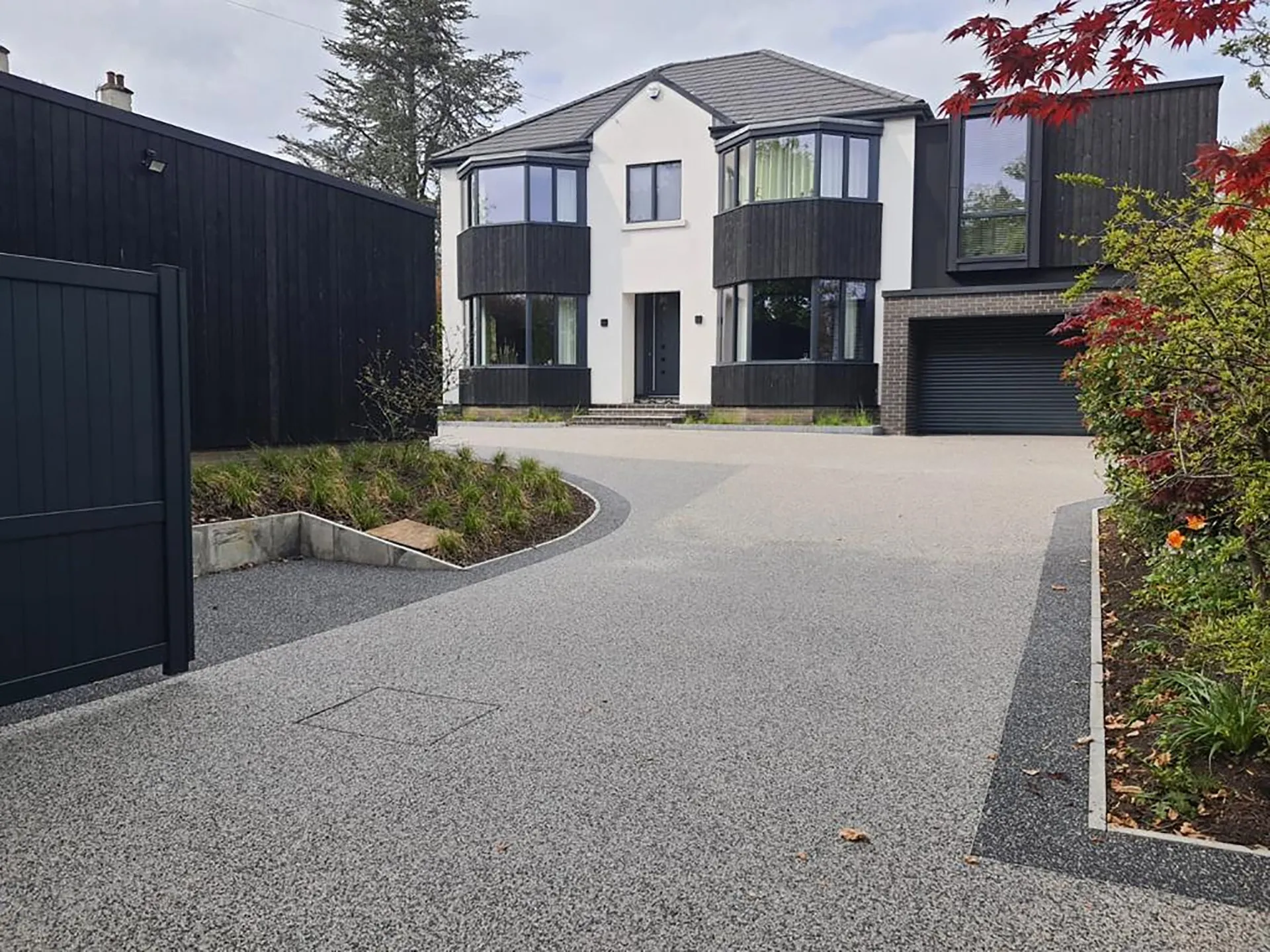
InteriorDesign.ID – The meticulous application of driveway zoning principles is crucial for delineating precise maneuvering boundaries from the public asphalt to a home’s private parking area, or carport. This systematic approach transcends mere aesthetics, rooted in critical calculations involving a vehicle’s turning radius, necessary clearance from property fences, and the precise width required for tire trajectories. The primary objective is to facilitate seamless vehicle entry and exit with a single, smooth steering maneuver, eliminating the daily frustration of repetitive forward-and-backward adjustments to align a vehicle. Beyond convenience, a precisely engineered driveway zoning system safeguards vehicle body panels from potential scrapes against fence rails and protects bumper ends from accidental impacts with canopy support pillars, often obscured by blind spots. This article delves into the technical specifications and maneuverability details essential for designing a front-of-house area that combines optimal functionality with enhanced safety and aesthetic appeal.
The Strategic Imperative: Why Driveway Zoning is More Than Just a Paved Slab
For far too long, many homeowners have viewed the carport or driveway as little more than a residual patch of land in front of the terrace, simply covered with cement. This simplistic mindset often transforms what should be a convenient home feature into a daily source of stress and potential damage. Without a carefully calculated layout, parking a vehicle can become a constant source of anxiety, particularly during challenging conditions such as heavy rain at night or when navigating a tight space.
The dynamic nature of a car’s movement, especially during a turn, is often underestimated. When the steering wheel is turned, the front and rear axles traverse different arcs. The front wheels inherently swing wider than the rear, creating a distinct path known as the "swept path." Neglecting this critical swept path of the vehicle body can lead to daily scrapes against pillars, walls, or other fixed structures. To mitigate these issues, the front area of a residential property must be thoughtfully segmented into three specific functional zones, each with distinct design considerations.
Deconstructing the Driveway: The Three Essential Zones
Effective driveway design hinges on understanding and meticulously planning three distinct zones that govern a vehicle’s transition from the public thoroughfare to its final resting place.
1. The Approach Zone: Bridging Public and Private Space

This initial area serves as the critical transition point where a vehicle’s wheels move from the public asphalt road onto the property’s boundary line. The width of the residential street or lane significantly dictates the shape and necessary dimensions of this approach zone. For instance, a narrow street (typically under 5 meters wide) necessitates a sharper turning angle for the vehicle. Consequently, the gate opening must be wider to accommodate the increased body swing required for entry. Conversely, on a generously wide street, the driver has ample space to straighten the steering wheel before the tires even reach the garage floor, allowing for a less extreme gate opening. Planning this zone involves assessing the sightlines, potential traffic flow, and the precise angle a vehicle will likely take to initiate its turn onto the property. Consideration for pedestrian pathways and utilities also falls within this zone’s design parameters.
2. The Turning Zone: Navigating Maximum Steering Angles
The turning zone represents the most critical segment of the driveway, where the steering wheel is fully engaged, and the vehicle body consumes the widest possible footprint. This is the area where the outer front bumper is most susceptible to colliding with canopy supports, and the middle section of the car body risks scraping against inner fence rails or adjacent walls. Therefore, it is imperative to avoid constructing any permanent, immovable objects along this critical path. Structural elements such as roof support pillars, decorative concrete planters, or utility meter boxes (e.g., for water or electricity) must be strategically placed well beyond the maximum swept path of the vehicle’s body. Detailed calculations of the vehicle’s turning radius and overhangs are paramount in this zone to ensure unobstructed movement.
3. The Resting Zone: The Vehicle’s Final Destination
The resting zone marks the final position where the vehicle comes to a complete stop after the engine is turned off. Crucially, adequate clearance must be provided on all four sides of the vehicle to allow passengers to open doors freely and safely. A minimum clearance of 80 cm should be allocated on the driver’s side to ensure comfortable door opening, while at least 60 cm should be provided for passenger doors. Furthermore, a safe distance of at least 50 cm should be maintained between the rear bumper and a closed gate or fence line. This buffer prevents the gate’s metal plating from scratching the car’s paintwork if it is closed quickly or with force. This zone also encompasses considerations for pedestrian access around the parked vehicle, storage of items, and potential charging stations for electric vehicles.
Calculating Turning Radii for Diverse Vehicle Classes
Effective driveway zoning fundamentally relies on accurate data regarding the dimensions of the vehicles that will utilize the space. Different classes of vehicles possess varying turning radii, necessitating tailored driveway designs. The turning radius is typically measured from the smallest circle traced by the outer front tire when the steering wheel is fully turned. It’s important to note that manufacturer specifications often quote "kerb-to-kerb" turning radius, which refers to the tire’s path, not the "wall-to-wall" measurement that accounts for the vehicle’s entire body. The actual front overhang of a car extends significantly beyond the axle line, making the "wall-to-wall" measurement the more relevant figure for design purposes.
For illustrative purposes, here are approximate kerb-to-kerb turning radii for common vehicle classes, along with considerations for body overhang:

- Compact Cars (e.g., Honda Jazz, Toyota Yaris): Kerb-to-kerb radius typically 4.7 – 5.2 meters. Body overhang might add 0.5 – 0.8 meters to the effective turning footprint.
- Sedans (e.g., Toyota Camry, Honda Accord): Kerb-to-kerb radius typically 5.5 – 6.0 meters. Body overhang might add 0.8 – 1.0 meters.
- Mid-size SUVs (e.g., Honda CR-V, Toyota RAV4): Kerb-to-kerb radius typically 5.8 – 6.5 meters. Body overhang might add 0.9 – 1.2 meters.
- Large SUVs/Minivans (e.g., Toyota Fortuner, Honda Odyssey): Kerb-to-kerb radius typically 6.2 – 7.0 meters. Body overhang might add 1.0 – 1.5 meters.
- Pickup Trucks (e.g., Ford Ranger, Toyota Hilux): Kerb-to-kerb radius typically 6.5 – 7.5 meters. Body overhang (especially front) can be substantial, adding 1.2 – 1.8 meters.
These figures highlight the critical need to consider the entire vehicle footprint, not just the tire path, when designing turning zones and clearances.
Practical Verification: The Manual Swept Path Test
Before any permanent construction, such as pouring concrete foundations for paving, a simple yet effective manual test can be performed to accurately determine the vehicle’s swept path. This eliminates guesswork and provides concrete data for design.
Procedure:
- Prepare the Vehicle: Lightly wet all four tires of your car with a soapy water solution.
- Position the Vehicle: Park the car parallel to the public road asphalt, precisely at the starting point where you would normally begin to turn into your driveway.
- Execute the Maneuver: Turn the steering wheel fully towards the desired entry direction (e.g., fully left for a left turn into the driveway). Slowly and carefully drive the car forward, creeping into the carport area.
- Mark the Path: The soapy water will leave a clear, dark track on the asphalt or existing paving. Use chalk to trace the outer edge of the front tire’s track and the inner edge of the rear tire’s track.
- Add Safety Margin: From the chalk line representing the outermost front tire path, add an additional safety margin of at least 40 cm towards the outside of the turn. This additional 40 cm accounts for the actual body overhang and ensures sufficient clearance for the vehicle’s widest point.
This marked "swept path" defines the absolute minimum area required for safe maneuvering. This specific area must remain free of any permanent structures, such as pillars, walls, or even large decorative elements, to prevent accidental collisions.
Driveway Design Scenarios: Adapting to Road Widths
The width of the public road fronting a property is a primary determinant of driveway design, influencing gate width, setback, and the required turning space.
-
Wide, Open Roads (Over 6 Meters Wide):

- Maneuverability: This ideal scenario allows vehicles ample space to initiate turns from the opposite side of the road, ensuring the front bumper clears the property line fence.
- Gate Width: A gate width of 3 to 3.5 meters (for a sliding gate) is often more than sufficient.
- Entry: Vehicles can typically turn directly into the parking space with minimal effort.
- Design Implication: Focus can be shifted to aesthetic integration and seamless transitions.
-
Standard Cluster Roads (4-5 Meters Wide):
- Maneuverability: Common in medium-density residential areas, these roads necessitate a somewhat tighter turning maneuver.
- Gate Width: Expanding the gate opening to approximately 4.5 meters is highly recommended.
- Gate Type: Folding gates are particularly advantageous here, as their folded panels occupy less lateral space compared to traditional swing gates, preserving crucial maneuvering clearance.
- Design Implication: Careful planning of the turning zone is critical, potentially requiring minor setbacks for landscape elements near the gate.
-
Narrow Lanes/Alleys (3-4 Meters Wide):
- Maneuverability: These constricted environments often only allow for a single vehicle width, forcing highly constrained turns.
- Gate Width: A minimum front wall opening of 5 meters is essential. In some cases, forgoing a tall gate entirely and leaving the garage facade exposed might be a practical solution.
- House Setback: Crucially, the front wall of the living room or an adjacent structure may need to be recessed deeper into the property to provide the necessary swing space for the vehicle’s front end, as external road space is insufficient for the full turning arc.
- Design Implication: This scenario demands the most creative and often compromise-heavy design, prioritizing functionality over traditional aesthetic elements like elaborate front gates.
Strategic Placement of Canopy Support Columns: Preventing Collisions
A frequent design flaw in driveways, especially those with limited space, is the placement of canopy support columns directly at the outermost corner of the driveway’s asphalt boundary. These pillars often fall precisely within the blind spot of a driver’s mirror, especially when they are intently turning the steering wheel. The unfortunate consequence is frequent dents and scratches to vehicle body panels, or, in severe cases, the entire lightweight steel roof structure being dislodged due to a forceful impact.
Conventional four-legged canopy structures can severely restrict a vehicle’s turning radius, forcing drivers to perform multi-point turns (forward-reverse maneuvers) simply to avoid scraping against the front pillars.
Optimal Solutions for Canopy Support:
-
Cantilevered Canopies (Floating Roofs):
- Design Principle: The entire structural load of the canopy is designed to hang, relying purely on anchor points and tension from the main facade wall of the house.
- Benefit: Eliminating ground-level pillars in the driveway provides an unobstructed maneuvering space, allowing for free and clear vehicle turns.
- Structural Consideration: This option requires robust structural engineering, typically involving thick WF 150 profile beams or similar heavy-duty steel elements for secure wall anchorage. The integrity of the existing wall must also be assessed.
-
Recessed Support Pillars:

- Design Principle: If the main house wall’s structural integrity is insufficient to support a cantilevered design, the front support pillars can be recessed deeper into the property.
- Placement: Position these columns approximately 1.5 to 2 meters back from the outer edge of the property’s fence line.
- Benefit: This strategic placement ensures the pillars align with the middle section of the car body during a turn, rather than obstructing the critical front bumper swing area. This significantly reduces the risk of collisions.
Ensuring Traction: The Importance of Driveway Surface Grip
Even the most meticulously planned driveway zoning system becomes ineffective if the surface material lacks adequate grip. A vehicle’s heavy tires require a robust, high-traction surface, especially when the steering wheel is turned sharply.
-
Risks of Smooth Surfaces: Smooth, glossy tiled surfaces can cause tires to slip during sharp turns. This not only poses a significant safety hazard, particularly in wet conditions, but also accelerates tire wear and can put undue stress on the vehicle’s hydraulic steering components over time. Furthermore, a slippery surface is dangerous for pedestrians, especially during rain or when wet.
-
Optimal Surface Solutions:
- Broom Finish Concrete: A durable and practical solution is brushed concrete. A high-quality K-250 concrete mix, applied with a coarse broom finish while the cement is still wet, provides excellent, long-lasting traction.
- Grooved Patterns: Incorporating linear control joints or "tali air" (water channels) with a depth of 1-2 cm in a grid pattern serves multiple purposes: it manages water runoff from car washing and provides additional "teeth" for tire grip, preventing skidding.
- Pavers: Interlocking concrete pavers can also provide good grip if chosen with a textured surface. Permeable pavers offer an added environmental benefit by allowing water to seep into the ground.
- Natural Stone/Gravel: While aesthetically pleasing, natural stone or loose gravel surfaces require careful consideration for stability and maintenance. Larger, angular stones can offer better grip than smooth, rounded ones, but loose materials can shift and create uneven surfaces over time.
Ramp Elevation and Drainage: Preventing Damage and Managing Water
The transition ramp from the public road to the private driveway requires careful engineering to prevent vehicle undercarriage damage.
- Safe Ramp Inclination: The maximum safe inclination for a ramp should not exceed 15 percent. This means for every meter of horizontal distance, the vertical rise of the ramp should be no more than 15 centimeters. An excessively steep or abrupt ramp can cause the vehicle’s exhaust pipe, chassis, or front bumper to scrape the ground.
- Gradual Elevation Changes: If there’s a significant elevation difference between the public road and the garage floor, a longer, more gradual ramp is essential. Forcing a short, steep incline will inevitably lead to undercarriage damage.
- Curved Transitions: Creating a smooth, rounded transition at the juncture of the public road asphalt and the base of the ramp is crucial. This "blunted" edge mitigates the abrupt impact on the vehicle’s tires and suspension, prolonging the life of the car’s undercarriage components.
Effective Drainage and Strategic Lighting
Beyond structural and surface considerations, proper water management and adequate lighting are vital for a functional and safe driveway.

- Driveway Slope for Drainage: A common misconception is that a driveway should be perfectly level. In reality, a slight slope of 1-2 percent towards the outer boundary or drainage system is necessary. This prevents rainwater and car wash runoff from pooling, especially near entry points where it can become a slipping hazard or cause prolonged dampness.
- Trench Drains: Installing a linear trench drain with a durable metal grate cover directly at the interface between the driveway and the public road is highly effective. This channel prevents dirty water from the driveway (e.g., from car washing or oil spills) from flowing into the public street or storm drains, and conversely, it stops debris from the street from entering the private property. Avoid relying on buried PVC pipes for drainage, as they are notoriously difficult to clean when clogged with leaves and debris.
- Strategic Lighting: Adequate visibility is paramount for safe nighttime maneuvering. Simply installing a single central ceiling light in a carport often creates deep shadows under the vehicle, obscuring potential obstacles or the ground beneath the tires.
- Perimeter Lighting: Incorporate ground-level or low-mounted lights along the perimeter of the driveway, especially in turning zones. These can be bollard lights, recessed path lights, or wall-mounted fixtures that illuminate the edges and any potential obstructions.
- Task Lighting: Consider specific task lighting near entry points, such as gate controls or pedestrian access, to enhance safety and convenience.
- Motion Sensors: Integrating motion-activated lighting can add an extra layer of security and convenience, illuminating the area only when needed.
Broader Implications and Expert Perspectives
The comprehensive approach to driveway zoning, as outlined, extends far beyond mere convenience. It significantly impacts safety, reduces long-term maintenance costs, and enhances property value. From an urban planning perspective, well-designed driveways contribute to safer pedestrian environments by minimizing vehicle encroachment onto sidewalks and promoting efficient traffic flow on residential streets. Architects and landscape designers emphasize that integrating these technical considerations with aesthetic design creates a cohesive and functional outdoor space that complements the home’s overall design.
By adhering to these detailed guidelines, homeowners can transform a potentially stressful and hazardous area into a seamlessly functional and aesthetically pleasing gateway to their residence, ensuring safety, convenience, and durability for years to come. Investing in professional design and execution for driveway zoning is not an extravagance but a prudent decision that pays dividends in comfort, safety, and property appreciation.








