Azin Asro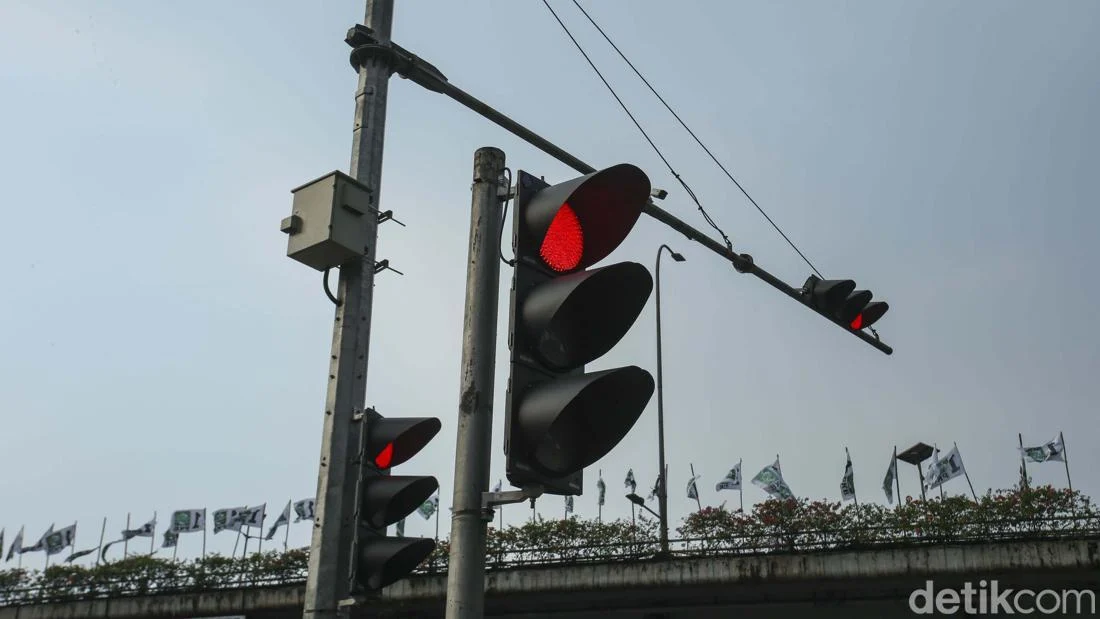
The Malaysian government, through the Road Transport Department (Jabatan Pengangkutan Jalan or JPJ), has announced a significant intensification of enforcement measures targeting motorists who disregard traffic signals and pedestrian priority zones. In a move designed to curb a rising trend of road accidents and fatalities, authorities have clarified that running red lights and failing to stop at designated pedestrian crossings are now classified as high-priority offenses that could lead to the immediate revocation of driving licenses. This policy shift comes amidst growing public outcry over a series of viral incidents where pedestrians, including young students in school zones, were endangered or injured by negligent drivers.
Director of the Johor State Road Transport Department, Zulkarnain Yasin, recently emphasized that the legal framework governing these violations allows for comprehensive investigations and severe punitive actions. Under existing regulations, enforcement officers are empowered to summon vehicle owners or drivers to provide formal explanations or information regarding recorded violations. If a driver is found guilty of ignoring a red light or a pedestrian crossing, the legal consequences are substantial. While administrative fines—often referred to as compounds—typically hover around 300 Ringgit (approximately IDR 1.3 million), the escalation of these cases to the judicial system can see fines skyrocket to 2,000 Ringgit (approximately IDR 8.6 million). Beyond the financial burden, the impact on a driver’s record is permanent, affecting their long-term eligibility to operate a motor vehicle in the country.
The KEJARA Demerit System and License Revocation
Central to Malaysia’s strategy for road safety is the demerit point system, known locally as the KEJARA system (Sistem Pemberian Mata Demerit Kesalahan Jalan Raya). This system is designed to identify and penalize habitual offenders. According to Zulkarnain, running a traffic light is considered a major offense that carries significant demerit points. For private vehicle drivers, a single instance of running a red light can result in the deduction of points that quickly accumulate toward a critical threshold.
The JPJ has warned that any driver who accumulates 20 demerit points faces the risk of having their driving license suspended or entirely revoked. The system is structured to provide warnings at lower point thresholds, but persistent disregard for traffic laws leads to mandatory disqualification. For probationary license holders (P-plate drivers), the tolerance is even lower; reaching the 20-point limit can result in the immediate cancellation of their license, requiring them to undergo the entire testing and licensing process from the beginning after a specified ban period. This tiered approach aims to remove high-risk individuals from the road before they cause fatal accidents.
Chronology of Recent High-Profile Incidents
The recent push for stricter enforcement was catalyzed by several harrowing incidents captured on dashcam and surveillance footage, which subsequently went viral on social media. These events highlighted a blatant lack of compliance with traffic signals, particularly in areas where vulnerable road users are most active.
In early 2024, a significant incident occurred in Taman Universiti, Johor, near a local primary school. A young boy attempting to cross the street at a clearly marked zebra crossing was struck by a vehicle that failed to decelerate or stop. The footage showed the vehicle maintaining its speed despite the presence of children and the school zone signage. This incident sparked a nationwide debate regarding the safety of school-going children and the effectiveness of existing traffic calming measures.
Shortly after the Taman Universiti accident, another video emerged involving a group of students crossing a zebra crossing during a red light phase. Despite the pedestrian signal being green and the traffic light being red, a motorist drove through the crossing, narrowly missing several students. This "near-miss" underscored a dangerous trend of drivers treating red lights as "suggestions" rather than mandatory stops.
Furthermore, earlier this month, a female pedestrian was struck by a motorcyclist who ignored a red light at a major intersection. The victim sustained serious injuries, and the motorcyclist was found to have multiple prior traffic violations. These chronological events have provided the JPJ with the necessary public mandate to enforce the maximum penalties allowed under the Road Transport Act 1987.
Legal Framework: The Road Transport Act 1987
The enforcement actions cited by Zulkarnain Yasin are grounded in the Road Transport Act 1987, specifically sections relating to the failure to comply with traffic signs and signals. Section 79 of the Act mandates that every driver must conform to the indications given by traffic signs and signals lawfully placed on or near a road.
When a violation is captured—whether by automated enforcement systems (AES), dashcams provided by the public, or direct observation by officers—the JPJ issues a notice under Section 114. This section requires the registered owner of the vehicle to disclose the identity of the driver at the time of the offense. Failure to provide this information is itself a punishable offense. This legal mechanism ensures that drivers cannot hide behind the anonymity of a vehicle registration to escape demerit points and fines.
Analysis of Road Safety Data in Malaysia
The emphasis on traffic light and pedestrian crossing compliance is supported by sobering statistics regarding road safety in Malaysia. Historically, Malaysia has had one of the highest road fatality rates per 100,000 inhabitants in the ASEAN region. While infrastructure has improved, driver behavior remains a significant variable in accident rates.
Data from the Malaysian Institute of Road Safety Research (MIROS) suggests that human error contributes to over 80% of road accidents. Within this category, "speeding" and "running red lights" are the top two causes of urban collisions. Pedestrians are among the most vulnerable groups; they account for approximately 7% to 10% of total road fatalities annually. By focusing on zebra crossings and school zones, the JPJ is targeting the specific locations where these fatalities are most likely to occur.
The government’s "Malaysia Road Safety Plan 2022-2030" aims to reduce the number of road deaths by 50% by the end of the decade. The strict enforcement of traffic light compliance is a cornerstone of this plan. Authorities believe that by creating a credible deterrent through high fines and the threat of license loss, they can shift the driving culture from one of convenience to one of safety and compliance.
Official Responses and Public Reaction
The announcement by the Johor JPJ has received mixed but largely positive reactions from the public and advocacy groups. Road safety activists have long called for "zero tolerance" toward school zone violations. Organizations such as the Alliance for a Safe Community have lauded the move, stating that the psychological impact of losing a driving license is a much stronger deterrent than a 300 Ringgit fine, which some affluent drivers may view as merely a "fee" for speeding.
However, some transport associations have raised concerns regarding the consistency of enforcement. There are calls for the JPJ to ensure that traffic lights and zebra crossing markings are well-maintained and clearly visible, arguing that poor infrastructure can sometimes lead to unintentional violations. In response, the Ministry of Transport has pledged to work alongside local councils to upgrade lighting and signage in high-risk "black spot" areas.
Zulkarnain Yasin reiterated that the department is not merely interested in collecting fines but in saving lives. "Our goal is education through enforcement," he stated. "When a driver knows that running a red light could end their ability to drive to work or support their family, they will think twice. We are prioritizing the lives of pedestrians and children over the convenience of a few seconds saved at a traffic light."
Broader Implications and Future Outlook
The implications of this crackdown extend beyond individual drivers. For the logistics and e-hailing industries, the strict demerit system poses a significant operational risk. Companies are now being encouraged to monitor their drivers’ behavior more closely, as a suspended license for a delivery rider or driver results in a loss of manpower and potential liability for the company.
Furthermore, the JPJ is increasingly utilizing "crowdsourced enforcement." The public is encouraged to submit dashcam footage of violations through the MyJPJ app or official social media channels. This digital transformation of enforcement means that drivers are effectively being monitored not just by police, but by every other motorist on the road.
As Malaysia moves toward 2025, the integration of Artificial Intelligence (AI) in traffic cameras is expected to further enhance the detection of red-light runners. These systems can automatically cross-reference license plates with the KEJARA database, issuing summonses in near real-time.
In conclusion, the message from the Malaysian authorities is clear: the era of lenient traffic enforcement is ending. By linking traffic light violations directly to the privilege of holding a driving license, the JPJ is taking a decisive stand against the culture of negligence on the road. For motorists, the choice is simple: adhere to the signals and respect pedestrian rights, or face the permanent loss of driving privileges and heavy financial penalties. The ultimate success of these measures will be measured not by the number of summonses issued, but by the reduction of tragedies at the nation’s intersections and school crossings.