Nasution Nanang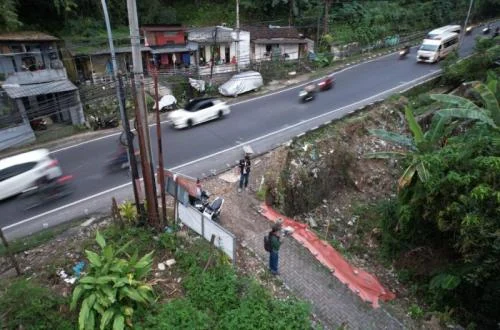
JAKARTA – The Ministry of Public Works (Kementerian Pekerjaan Umum, or Kementerian PU) has significantly accelerated disaster management efforts across Sumatra, with a vast majority of critical infrastructure now restored to full functionality following recent widespread floods and landslides. Minister Dody Hanggodo confirmed that national roads and bridges, vital arteries for inter-provincial connectivity and economic activity, experienced no significant long-term disruptions, underscoring the swift and effective response mechanisms deployed by the ministry. This rapid recovery highlights Indonesia’s evolving capabilities in disaster response and infrastructure resilience.
"National roads and bridges faced no substantial issues. While landslides did occur, we managed to clear them and restore functionality in less than 24 hours," stated Minister Hanggodo in Jakarta on Sunday, reflecting on the ministry’s prompt actions. This efficiency is crucial in mitigating the immediate economic and social impacts of natural disasters, ensuring that supply chains remain unbroken and communities are not isolated. The swift clearance of debris and repair of minor damages prevented potential bottlenecks that could have severely hampered relief efforts and daily life across the affected regions.
Detailed data released by the ministry illustrates the comprehensive nature of the recovery. A total of 107 national road sections and 43 national bridges that were impacted by the recent events have been fully restored and are now 100 percent functional. This achievement is particularly commendable given the scale and geographical spread of the natural disasters across Sumatra, a vast island characterized by diverse topography and a susceptibility to hydro-meteorological hazards. The national infrastructure network, being the backbone of the island’s logistics and transportation, received priority attention to ensure minimal disruption to the wider economy and public services.
Beyond the national network, significant progress has also been made at the regional level. Of the 2,421 local road sections affected, 2,277 (or 94 percent) have been reopened for traffic. Similarly, 792 out of 1,181 local bridges (67 percent) are now operational again. These local infrastructures are crucial for connecting smaller towns and villages, enabling access to markets, schools, and healthcare facilities. The recovery of these local links is often more challenging due to their dispersed nature, varying maintenance standards, and sometimes difficult terrain, making the reported progress a testament to coordinated efforts with regional administrations. The remaining percentage of local roads and bridges are currently undergoing intensive repair and reconstruction, with target completion dates set to further improve connectivity for isolated communities.
Chronology of Recent Events and Initial Impacts
The recent wave of disasters across Sumatra commenced several weeks prior to Minister Hanggodo’s statement, triggered by unusually intense and prolonged heavy rainfall. This meteorological phenomenon, exacerbated by seasonal weather patterns and potentially influenced by climate change, led to widespread flooding in low-lying areas and numerous landslides in hilly and mountainous regions. Provinces such as Aceh, North Sumatra, West Sumatra, and Riau bore the brunt of these events, experiencing significant disruption to daily life.
Initially, the heavy downpours caused rivers to overflow their banks, inundating residential areas, agricultural lands, and critical infrastructure. Roads became impassable due to rising water levels, mud, and debris, while bridges were damaged or swept away by powerful currents. Landslides, particularly in areas with unstable soil and steep slopes, cut off entire communities, destroying homes and agricultural plots. The immediate aftermath saw thousands displaced, seeking refuge in temporary shelters, and essential services like electricity and clean water supply severely disrupted. Local disaster management agencies (BPBDs) were the first responders, initiating evacuations and providing immediate relief, but the scale of the damage quickly necessitated a broader, national response, with Kementerian PU playing a pivotal role in infrastructure recovery. The initial days were marked by urgent search and rescue operations, provision of basic necessities, and rapid damage assessments to prioritize restoration efforts.
Focus on Aceh: A Region Facing Unique Challenges
Despite the broader success in infrastructure recovery, the government remains acutely focused on provinces that have faced the most severe and persistent challenges. Aceh Province, located at the northern tip of Sumatra, stands out as a particularly vulnerable region, contending with persistently high rainfall and extensive mud deposits that continually impede recovery efforts. Minister Hanggodo underscored the unique difficulties faced in Aceh, stating, "The main problem in Aceh is mud, and it continues to rain even today. Under these conditions, our work must be accelerated." The combination of ongoing precipitation and heavy sedimentation presents a complex operational environment, requiring innovative and adaptive strategies for both immediate cleanup and long-term mitigation.
The geographical characteristics of Aceh, with its mountainous interior and extensive coastal plains, make it susceptible to both flash floods and large-scale landslides. The recent events have highlighted the fragility of certain areas, where deforestation and unsustainable land-use practices may have exacerbated the natural risks. The continuous ingress of mud and debris into waterways and onto roads not only complicates repair work but also poses ongoing threats to public safety and the environment. This necessitates a multi-faceted approach, integrating engineering solutions with ecological considerations to ensure sustainable recovery.
Proactive Mitigation and the ‘Build Back Better’ Principle
Looking beyond immediate repairs, Kementerian PU is prioritizing anticipatory measures to prevent future disasters and enhance regional resilience. A key initiative involves accelerating sediment control projects, including the construction of sabo dams. These specialized structures are engineered to capture and retain sediment, debris, and logs carried by rivers, particularly from upstream areas prone to erosion and landslides. Minister Hanggodo specifically cited concerns regarding the national road leading towards Gayo Lues, where significant amounts of timber debris were observed. "I saw a lot of wood along the national road towards Gayo Lues. I fear this will flow down to Tamiang. So, Kementerian PU has started working on the sabo dams, even though it wasn’t originally scheduled to begin yet," he explained. This proactive approach, initiating mitigation efforts ahead of their planned schedule, demonstrates a strategic shift towards pre-emptive disaster risk reduction rather than solely reactive response.
Sabo dams are critical components of a comprehensive flood and sediment control strategy, particularly in volcanic and mountainous regions. They help stabilize riverbeds, reduce the velocity of water flow, and prevent the accumulation of large volumes of sediment downstream, thereby protecting communities and infrastructure. The ‘build back better’ principle, a cornerstone of Kementerian PU’s strategy, is evident in these efforts. It entails not merely restoring damaged infrastructure to its previous state but rebuilding it to be more resilient, durable, and resistant to future hazards. This involves using stronger materials, improved engineering designs, and incorporating lessons learned from past disasters to create infrastructure that can withstand the increasing intensity and frequency of extreme weather events attributed to climate change. This long-term vision aims to minimize future damages, protect lives, and ensure the continuity of essential services, fostering sustainable development across vulnerable regions.
Inter-Agency Coordination and Community Engagement
Effective disaster management hinges on robust coordination among various stakeholders. Kementerian PU has intensified its collaboration with local governments and the Meteorology, Climatology, and Geophysics Agency (BMKG). This partnership is crucial for several key initiatives, including weather modification efforts aimed at reducing rainfall intensity in critically affected areas, thereby alleviating flood risks and facilitating recovery operations. BMKG’s expertise in weather forecasting and climate analysis provides invaluable data for strategic planning and early warning systems, allowing for proactive measures and timely evacuation orders.
Beyond weather management, Kementerian PU is also actively engaged in accelerating community cleanup programs, particularly through labor-intensive initiatives (program padat karya) in heavily impacted areas such as Pidie Jaya and Aceh Tamiang. These programs serve a dual purpose: they facilitate the swift removal of mud and debris from residential areas and public spaces, and simultaneously provide temporary employment opportunities for local residents whose livelihoods may have been disrupted by the disaster. This approach not only speeds up the recovery process but also injects much-needed economic activity into affected communities, fostering a sense of ownership and collective responsibility in the rebuilding process. The involvement of the Indonesian Army (TNI AD) has also been instrumental, particularly in providing logistical support, deploying heavy equipment, and constructing temporary bridges in remote areas, demonstrating a holistic, national effort in disaster response.
Restoring Essential Services: Water and Agriculture
The recovery of essential public services is paramount for the return to normalcy. Significant progress has been reported in the restoration of drinking water supply systems. Out of 176 affected Drinking Water Supply Systems (SPAM), 165 units (94 percent) have been brought back online, ensuring access to clean water for a vast majority of affected communities. This rapid restoration prevents secondary health crises often associated with contaminated water sources following floods.
Furthermore, efforts to restore raw water sources are also underway. The construction of deep boreholes has reached 70 units (27 percent completion), while shallow boreholes have seen a higher completion rate of 34 units (86 percent). These diverse approaches ensure a resilient water supply network, catering to different geological conditions and community needs. The disparity in completion rates between deep and shallow boreholes reflects the differing complexities and timeframes involved in their construction, with deep boreholes requiring more extensive drilling and infrastructure.
In parallel, Kementerian PU is working closely with the Ministry of Agriculture to support the recovery of the vital agricultural sector, which often bears the brunt of flood and landslide damage. This collaboration focuses on accelerating the clearing of agricultural lands, particularly rice paddies, from thick layers of mud and debris. Equally important is the restoration of damaged irrigation networks, which are indispensable for crop cultivation. By ensuring that irrigation canals are functional, the ministries aim to help farmers quickly resume their planting cycles, thereby safeguarding food security and restoring rural livelihoods. This coordinated effort recognizes the interdependencies between infrastructure and economic sectors, aiming for a comprehensive recovery that supports both physical and socio-economic well-being.
Ensuring Connectivity and Logistics for Remote Areas
Recognizing that comprehensive recovery extends to even the most remote areas, Kementerian PU has emphasized diligent field monitoring. Minister Hanggodo issued a directive to Project Implementation Units (PPK) to conduct frequent checks in isolated communities, ensuring that infrastructure needs, particularly for emergency connectivity, are promptly addressed. "I have instructed the PPK to frequently check remote areas. This way, if any place needs a bridge, we can immediately handle it in cooperation with TNI AD so that logistics are not disrupted," he reiterated. This proactive monitoring ensures that no community is left behind, and that essential goods, medical supplies, and aid can reach those in need without undue delay.
The deployment of temporary bridges, often constructed with the assistance of the Indonesian Army, is a critical component of this strategy. These provisional structures quickly re-establish vital links across rivers or ravines where permanent bridges have been damaged or destroyed. Their rapid deployment is crucial for maintaining the flow of logistics, enabling humanitarian aid, and facilitating the movement of people and goods, thereby preventing further isolation and economic hardship for affected populations. This strategic focus on maintaining logistical integrity underscores the government’s commitment to a truly inclusive and equitable disaster response, ensuring that the benefits of recovery reach all corners of the affected regions.
Broader Implications and Future Outlook
The recent disaster response in Sumatra, spearheaded by Kementerian PU, carries significant broader implications for Indonesia’s national disaster management framework. The rapid restoration of critical infrastructure demonstrates an improved capacity for emergency response and coordination, reflecting years of investment in disaster preparedness and resilience building. However, the recurring nature of these events, particularly in provinces like Aceh, underscores the ongoing challenges posed by climate change and environmental degradation. The increasing frequency and intensity of extreme weather events necessitate a paradigm shift towards more proactive, integrated, and sustainable disaster risk reduction strategies.
Economically, the swift recovery of roads and bridges minimizes disruption to trade and commerce, mitigating potential losses for local businesses and agricultural producers. Socially, the restoration of essential services like water and the reopening of local roads contribute significantly to the psychological well-being of affected communities, fostering a sense of normalcy and hope. The "build back better" principle, applied through initiatives like sabo dam construction, is not just about physical infrastructure; it’s about building more resilient communities, capable of withstanding future shocks. This involves not only robust engineering but also community education, early warning systems, and sustainable land-use planning.
Looking ahead, Indonesia faces the imperative of sustained investment in disaster preparedness, climate change adaptation, and environmental conservation. The lessons learned from Sumatra’s recovery efforts will undoubtedly inform national policies, emphasizing the need for robust infrastructure, advanced monitoring systems, and strong inter-agency collaboration. The commitment to accelerate disaster management through the principle of "build back better" ensures that infrastructure is not only more resilient but also supports the sustainable socio-economic recovery of communities, paving the way for a safer and more prosperous future for all.