Azin Asro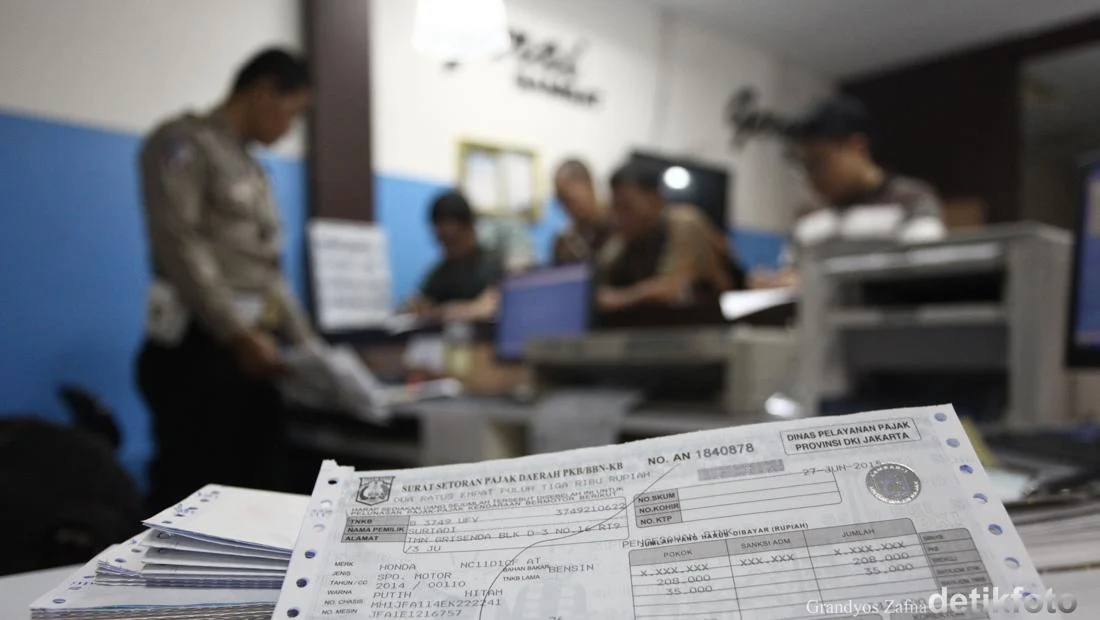
The Indonesian National Police Traffic Corps (Korlantas Polri), in collaboration with various regional governments, has officially implemented a strategic policy allowing owners of second-hand vehicles to renew their annual vehicle registration (STNK) without providing the original owner’s identity card (KTP). This move, which marks a significant shift in administrative requirements, is designed to streamline tax collection and improve the accuracy of the national vehicle database. While the policy provides immediate relief to millions of motorists, authorities have clarified that this is a transitional measure leading up to a mandatory nationwide title transfer (Balik Nama) deadline in 2027.
Brigadier General Wibowo, Director of Registration and Identification (Dirregident) at Korlantas Polri, emphasized that the current flexibility is a temporary solution to encourage tax compliance among those who have purchased used vehicles but have not yet processed a legal change of ownership. According to Wibowo, the policy will remain in effect through 2026, serving as a grace period for the public. By 2027, the government intends to enforce a strict requirement where every vehicle must be registered under the name of its actual current owner, effectively ending the practice of using a previous owner’s documentation for tax purposes.
The Strategic Shift in Vehicle Administration
For decades, one of the primary hurdles for second-hand vehicle owners in Indonesia has been the requirement to present the original owner’s KTP when paying the annual Motor Vehicle Tax (Pajak Kendaraan Bermotor or PKB). This often led to a "grey market" of administrative shortcuts, where buyers would have to track down former owners or rely on unauthorized intermediaries to bypass the system. The new policy aims to eliminate these hurdles, making it easier for the government to collect revenue while simultaneously cleaning up its data.
The initiative is part of a broader national effort to synchronize vehicle data with the Electronic Traffic Law Enforcement (ETLE) system. When a vehicle is involved in a traffic violation caught by camera, the citation is currently sent to the address listed on the STNK. If the vehicle has changed hands but the title has not been transferred, the previous owner receives the fine, leading to legal disputes and administrative confusion. By facilitating easier tax payments now and mandating title transfers by 2027, Korlantas Polri aims to ensure that every vehicle on Indonesian roads is accurately linked to its current operator.
Implementation in West Java: A Pioneer in Ease of Service
West Java has emerged as the first province to formally implement this relaxation of rules. Under the leadership of the regional government and the West Java Regional Revenue Agency (Bapenda), a circular was issued (Number: 47/KU.03.02/Bapenda) specifically addressing the "Annual Motor Vehicle Tax Payment Without the First Owner’s KTP."
The circular stipulates that individuals or entities that currently possess or control a motor vehicle—whether for private or corporate use—can fulfill their annual tax obligations by presenting only the original STNK and the KTP of the person currently in possession of the vehicle. This policy became effective on April 6, 2024. The West Java government views this as a vital step in improving public service quality and fostering a culture of tax compliance. By removing the "KTP obstacle," the province hopes to recover billions of rupiah in potential tax revenue from "floating" vehicles—those that are active on the road but have lapsed tax status due to administrative difficulties.
Jakarta Follows Suit with Formal Transition Requirements
Following the lead of West Java, the Provincial Government of DKI Jakarta, through its Regional Revenue Agency (Bapenda DKI), has also adopted this flexible approach. However, Jakarta has introduced a specific administrative layer to ensure the 2027 deadline is respected. To renew an STNK without the original owner’s KTP in the capital, the current owner must sign a formal statement of intent.
This statement letter acts as a legal commitment that the owner will complete the full title transfer (Balik Nama) process no later than 2027. Bapenda DKI officials noted that this policy resulted from intensive coordination with Korlantas Polri to ensure that while the public receives convenience today, the long-term goal of data integrity is not sacrificed. It is important to note that this relaxation applies only to the annual STNK validation (the one-year tax payment) and does not apply to the five-year registration renewal, which involves the replacement of physical license plates (TNKB). For the five-year renewal, a full title transfer or the original owner’s documentation remains mandatory.
The 2027 Deadline and the "Data Cleansing" Initiative
The year 2027 is set to be a landmark for Indonesian vehicle administration. Brigadier General Wibowo has been clear that the current leniency is a bridge toward a more rigid and accurate system. The 2027 mandate aligns with the implementation of Article 74 of Law Number 22 of 2009 concerning Traffic and Road Transport. This article allows authorities to delete vehicle data from the registry if the owner fails to renew the registration for two consecutive years after the five-year STNK expires.
If a vehicle’s data is deleted, it can no longer be legally re-registered, effectively turning the vehicle into "scrap" with no legal road-going status. The current policy of allowing tax payments without the original owner’s KTP is designed to prevent vehicles from falling into this "data deletion" trap while giving owners three years to save for the costs associated with a full title transfer.
Economic and Administrative Implications
The enrichment of this policy has several significant implications for the Indonesian economy and public administration:
- Revenue Optimization: Regional governments rely heavily on Motor Vehicle Tax (PKB) and Vehicle Title Transfer Fees (BBNKB) to fund infrastructure and public services. By making it easier to pay the annual tax, provinces expect a surge in collections from second-hand vehicle owners who previously avoided the Samsat (One-stop Integrated Funding System) offices due to the KTP requirement.
- Market Stability for Used Vehicles: The used car and motorcycle market is a massive sector in Indonesia. This policy provides temporary stability for buyers, as they no longer face immediate administrative roadblocks after purchase. However, the 2027 deadline will likely encourage more buyers to negotiate for title transfer costs at the point of sale.
- Enhanced Law Enforcement: With the proliferation of ETLE cameras across major cities, accurate ownership data is no longer a luxury but a necessity for the police. The transition to mandatory title transfers by 2027 will significantly reduce the number of wrongly sent traffic tickets and improve the efficacy of the "electronic ticketing" system.
- Digital Integration: This policy is expected to be integrated into digital platforms like the SIGNAL (Samsat Digital Nasional) app. As the government moves toward a paperless system, having the current owner’s data correctly linked to their National Identity Number (NIK) is essential for seamless digital payments.
Public Reaction and Expert Analysis
The public reaction to the announcement has been largely positive, particularly among the middle-to-lower-income brackets who frequently purchase second-hand motorcycles. Many motorists expressed relief that they no longer have to pay "service fees" to middlemen or hunt down former owners who may have moved or passed away.
However, some consumer advocates have pointed out that while the annual tax is easier to pay now, the cost of a full title transfer (Balik Nama) remains a significant financial burden for many. Experts suggest that for the 2027 mandate to be successful, the government may need to consider "BBNKB Zero" programs—periods where the title transfer fee is waived entirely—to incentivize the millions of vehicle owners to finalize their documentation before the deadline.
Automotive analyst and industry observers note that the 2024-2026 window is a crucial testing ground. "The government is using a ‘carrot and stick’ approach," says an industry consultant. "The ‘carrot’ is the ease of paying taxes without the old KTP right now. The ‘stick’ is the 2027 deadline and the threat of permanent data deletion. It is a logical progression toward a modern, transparent vehicle registry system found in developed nations."
Chronology of the Policy Rollout
- Early 2024: Korlantas Polri begins internal discussions on the "Data Cleansing" initiative to support ETLE and improve tax compliance.
- March 2024: Brigadier General Wibowo announces the national plan to allow temporary KTP exemptions for annual STNK renewals.
- April 6, 2024: West Java becomes the first province to officially issue a governor-level circular (SE Bapenda) implementing the policy.
- April 20, 2024: DKI Jakarta announces its adoption of the policy, adding the requirement of a signed commitment letter for 2027 title transfers.
- 2024–2026: Implementation phase where other provinces are expected to follow suit and announce their specific technical guidelines.
- December 31, 2026: End of the transitional grace period.
- January 1, 2027: Full enforcement of the mandatory title transfer policy for all motor vehicles nationwide.
Conclusion: A Path Toward Modern Governance
The decision to allow STNK renewals without the original owner’s KTP is a pragmatic response to a long-standing bureaucratic bottleneck. By prioritizing tax collection and data accuracy over rigid documentation requirements in the short term, the Indonesian government is paving the way for a more efficient administrative future.
As the policy expands from West Java and Jakarta to other provinces, vehicle owners are urged to take advantage of this period to ensure their taxes are up to date. However, the ultimate message from Korlantas Polri remains clear: the era of "borrowing" identities for vehicle registration is coming to an end. The three-year window until 2027 serves as a final call for the public to formalize their vehicle ownership, ensuring that the Indonesian "Samsat" system becomes a truly accurate reflection of the millions of vehicles traversing the archipelago’s roads. Through this balanced approach of leniency and eventual strict enforcement, Indonesia moves one step closer to an integrated, digital, and transparent traffic management system.