Azin Asro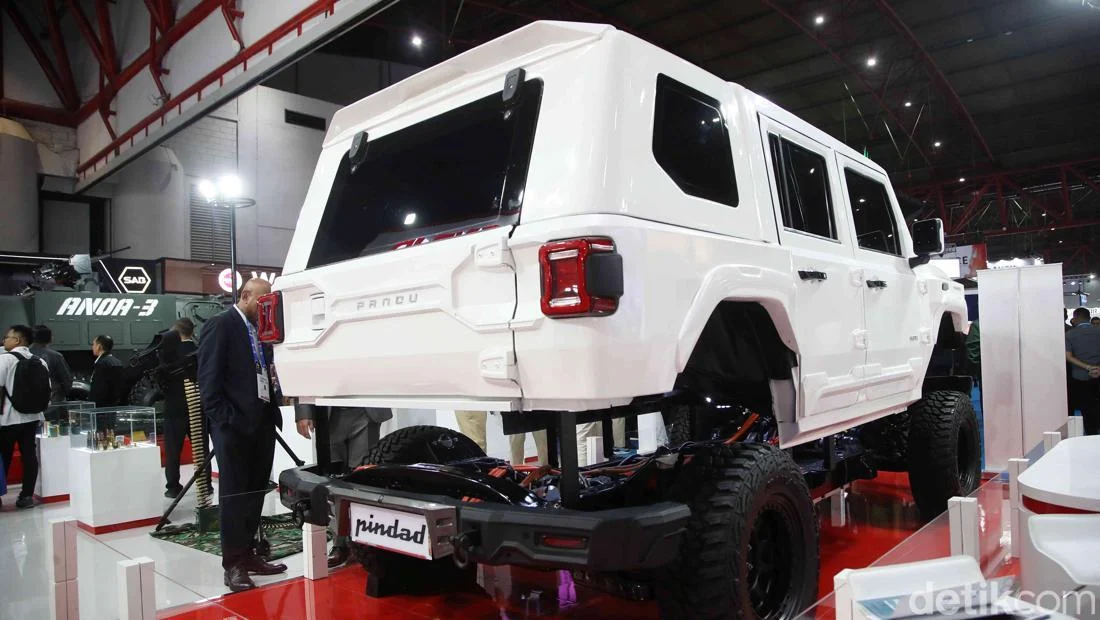
The Coordinating Minister for Economic Affairs, Airlangga Hartarto, has formally announced the Indonesian government’s commitment to establishing a sovereign national car industry, designating the state-owned defense manufacturer PT Pindad as the primary production vehicle for this ambitious project. Speaking during a high-level engagement at Pantai Indah Kapuk (PIK) 2 in Tangerang, Banten, Airlangga confirmed that the production of these domestic vehicles will be centered at PT Pindad’s facility in Karawang, West Java. While a specific commencement date for assembly lines has yet to be finalized, the government is already looking toward scaling the infrastructure to accommodate a multi-product lineup, ranging from conventional utility vehicles to advanced electric sedans.
This announcement marks a significant pivot for PT Pindad, an entity traditionally recognized for its prowess in military hardware, tactical vehicles, and weaponry. The transition into the commercial automotive sector is seen as a cornerstone of President Prabowo Subianto’s broader economic vision, which emphasizes industrial self-sufficiency and the "hilirisasi" or downstreaming of Indonesia’s vast natural resources. Airlangga emphasized that the Karawang facility’s capacity would be increased incrementally to ensure that the national car project meets both quality standards and the projected market demand.
The Evolution of PT Pindad from Defense to Commercial Automotive
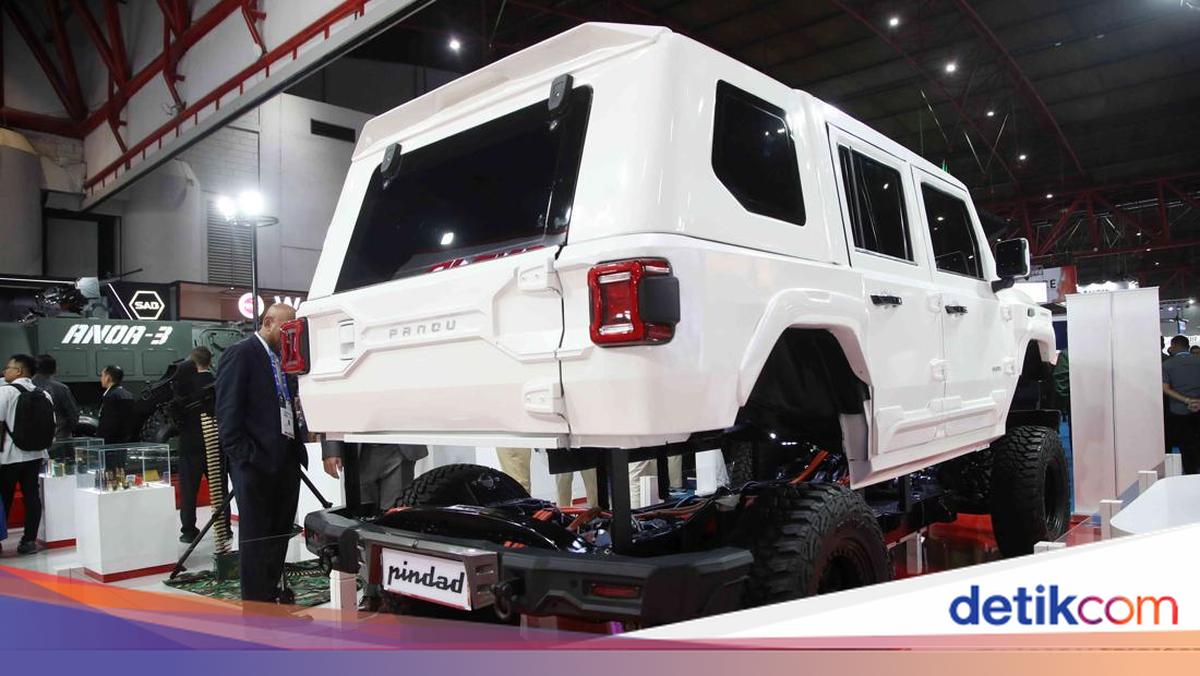
PT Pindad’s entry into the national car arena is not a sudden development but rather an evolution of its recent successes in tactical vehicle design. The "Maung," a 4×4 light tactical vehicle originally designed for the Indonesian National Armed Forces (TNI), served as the technological precursor for this move. The vehicle gained immense public attention when a modified version, the "Maung Garuda" or the Garuda Limousine, was utilized as the official presidential vehicle during President Prabowo’s inauguration.
The success of the Maung has provided the government with a proof-of-concept that domestic engineering can compete at a high level. By leveraging Pindad’s existing engineering expertise and expanding its Karawang footprint, the government aims to bridge the gap between military-grade durability and commercial-grade comfort and efficiency. Airlangga noted that the upcoming production line would not be limited to a single model. Instead, PT Pindad is being positioned to produce a diverse portfolio of vehicles, including the highly anticipated electric sedan that President Prabowo has championed as a symbol of Indonesia’s technological maturity.
Strategic Meetings and the Role of Danantara
The acceleration of the national car project was further solidified during recent high-level discussions involving Tedi Bharata, the Deputy Head of the State-Owned Enterprises (BUMN) Management Agency (BP BUMN), and Sigit P. Santosa, who serves as both the Chief Technology Officer of the Daya Anagata Nusantara Investment Agency (BPI Danantara) and the President Director of PT Pindad. These meetings focused on the strategic integration of state resources to expedite the development of a national automotive ecosystem.
The involvement of BPI Danantara is particularly noteworthy. As a newly established entity designed to manage sovereign wealth and strategic investments, Danantara’s oversight suggests that the national car project will be treated as a high-priority national investment rather than a standard commercial venture. According to official statements from the Ministry of BUMN, the development of the national car is intended to be a catalyst for innovation, creating a ripple effect across the domestic supply chain, from raw material processing to component manufacturing.
Chronology of the Ambition: From Vision to 2028 Targets
The timeline for Indonesia’s national car has been shaped by President Prabowo Subianto’s long-standing advocacy for domestic industrialization. During his recent visit to the Military Academy in Magelang, Central Java, the President reiterated his desire to see Indonesian-made vehicles become the standard for government officials and eventually the general public.
- October 2024: The "Maung Garuda" makes its debut at the presidential inauguration, signaling a shift toward using domestic vehicles for state functions.
- November 2024: President Prabowo announces at various forums that Indonesia is preparing for the mass production of electric sedans.
- Late 2024: Coordinating Minister Airlangga Hartarto confirms the Karawang plant as the production hub and discusses the expansion of PT Pindad’s commercial capabilities.
- 2025–2027: This period is expected to be dedicated to research, development, and the scaling of the Karawang manufacturing facility, including the establishment of supply chains for electric vehicle (EV) batteries.
- 2028: The target year set by President Prabowo for the commencement of large-scale mass production of electric sedans.
The President has expressed immense pride in the country’s current ability to produce electric buses and trucks, viewing the sedan market as the final frontier in achieving total automotive sovereignty. The 2028 target is viewed by analysts as an aggressive but necessary goal to ensure Indonesia captures a significant share of the regional EV market.
Karawang as the Strategic Automotive Hub
The choice of Karawang for PT Pindad’s production facility is no coincidence. Karawang is already the beating heart of Indonesia’s automotive industry, hosting major manufacturing plants for global giants such as Toyota, Honda, and Mitsubishi. By situating the national car production in this region, PT Pindad can tap into an existing ecosystem of skilled labor, specialized component suppliers, and logistical infrastructure.
The expansion of the Pindad plant in Karawang is expected to stimulate local economic growth significantly. The government’s plan involves not just the assembly of vehicles but the fostering of a "local content" (TKDN) requirement that exceeds 80%. This would necessitate the development of local SMEs capable of producing precision parts, glass, tires, and electronics, thereby reducing the nation’s reliance on imported automotive kits.
The Electric Vehicle Pivot and Downstreaming Policy
A central pillar of the national car project is the focus on electric vehicles (EVs). Indonesia holds the world’s largest reserves of nickel, a critical component for EV batteries. The government’s "hilirisasi" policy, which bans the export of raw nickel ore in favor of domestic processing, is designed to make Indonesia a global hub for battery production.
The national car project is the logical conclusion of this policy. By producing EVs domestically, Indonesia can utilize its own battery supply chain, significantly lowering the cost of production and providing a competitive edge over foreign manufacturers. Airlangga Hartarto mentioned that the electric sedan would be a flagship product, representing the synergy between Indonesia’s natural resource wealth and its burgeoning technological capabilities.
Supporting data suggests that the global transition to EVs provides a unique window of opportunity. Unlike the internal combustion engine (ICE) market, where established global brands have a century-long head start, the EV market is still evolving. This "leveling of the playing field" allows a new entrant like PT Pindad to establish a foothold through innovation and state support.
Socio-Economic Impact and Workforce Development
The implications of a successful national car program extend far beyond the automotive sector. Economists predict that the project could create tens of thousands of jobs, ranging from high-tech engineering and software development to assembly line labor and sales.
Furthermore, the project is intended to inspire a new generation of Indonesian innovators. By involving local universities and research institutions in the R&D process, the government aims to create a sustainable pipeline of talent. The "innovation of the nation’s children," as cited by BUMN officials, is a key metric of success for this initiative. The goal is to move Indonesia away from being a mere consumer of foreign technology to becoming a creator of intellectual property.
Challenges and Market Competition
Despite the optimism, the path to a viable national car is fraught with challenges. Indonesia has attempted national car projects in the past, most notably the "Timor" project in the 1990s and the "Esemka" project in more recent years, both of which faced significant hurdles in achieving long-term commercial sustainability.
To avoid the pitfalls of previous attempts, the current administration is focusing on:
- Infrastructure: Expanding the network of Electric Vehicle Charging Stations (SPKLU) across the archipelago to ensure consumer confidence in EVs.
- Quality Control: Ensuring that Pindad’s commercial vehicles meet international safety and performance standards to allow for potential export to ASEAN markets.
- Market Penetration: Competing with established Japanese and Chinese brands that currently dominate the Indonesian market. The government may introduce fiscal incentives, such as tax breaks for domestic car buyers, to encourage the adoption of the national brand.
A Vision for Industrial Sovereignty
The move to produce a national car under the Pindad banner is a definitive statement of Indonesia’s industrial ambitions. It represents a shift from a commodity-based economy to a value-added manufacturing economy. As President Prabowo Subianto has frequently stated, the ability of a nation to produce its own complex machinery is a hallmark of its standing on the global stage.
With the Karawang facility poised for expansion and the strategic 2028 target for electric sedans firmly in place, the Indonesian government is signaling to the world that it is no longer content with being an assembly hub for foreign brands. Through PT Pindad, Indonesia is attempting to drive its own future, fueled by domestic resources and engineered by its own people. The success of this venture will be a litmus test for the country’s ability to navigate the complexities of the 21st-century global economy while maintaining its national identity and economic sovereignty.