Nasution Nanang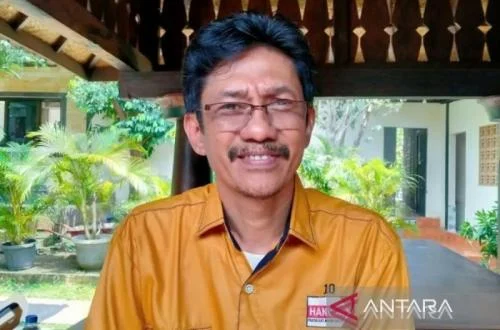
REPUBLIKA.CO.ID, MATARAM – The Regional Leadership Council (DPD) of the People’s Conscience Party (Hanura) for West Nusa Tenggara (NTB) has vehemently refuted claims of a mass defection of its cadres in Bima City to the Indonesian Solidarity Party (PSI). Ahmad Dahlan, Chairman of Hanura NTB DPD, categorically stated that Mohammad Casman, the individual who has publicly presented himself as the Chairman of the Hanura Bima City Branch Leadership Council (DPC), has not been affiliated with the party since July 2025. This decisive clarification aims to dispel what the party labels as baseless rumors and political maneuvering designed to create unwarranted public discourse.
The controversy centers around Casman’s assertions regarding an exodus of approximately 2,500 Hanura cadres from Bima City, a claim that, if true, would represent a significant shift in local political dynamics. However, Hanura NTB maintains that Casman’s statements lack any legitimate basis, given his official disassociation from the party structure. This dispute underscores the intricate and often volatile nature of party politics at the regional level in Indonesia, where internal leadership struggles and membership allegiance can dramatically influence electoral outcomes.
The Heart of the Dispute: A Chairman’s Dismissal
Ahmad Dahlan elaborated on the reasons behind Casman’s disaffiliation, highlighting a prolonged period of inactivity and a lack of engagement in party affairs. According to Dahlan, Casman failed to fulfill his responsibilities, particularly his obligation to organize the Hanura Bima City Branch Deliberation (Muscab). This crucial internal party event is vital for electing new leadership, formulating regional strategies, and ensuring the democratic functioning of the party at the local level. Casman’s alleged disregard for this fundamental requirement led to a severe leadership vacuum and hindered Hanura’s operational capacity in Bima City.
Consequently, the Hanura NTB DPD was compelled to intervene to safeguard the party’s interests and ensure its continued presence in the region. The leadership of Hanura Bima City was officially taken over, and a new Muscab was convened. During this Muscab, held in October 2025, Amiruddin H. Muchtar was legitimately elected and subsequently installed as the new Chairman of the Hanura Bima City DPC for the 2025-2030 term. This formal transition of power, according to Ahmad Dahlan, solidified the party’s legitimate leadership in Bima City, rendering any claims made by Casman regarding the party’s affairs or membership as entirely unfounded.
Chronology of Disaffiliation and Succession
The timeline of events, as presented by Hanura NTB, is critical to understanding the current dispute. The seeds of the current disagreement were sown with Casman’s alleged prolonged inactivity within the Hanura Bima City DPC. While specific dates for the start of his perceived negligence were not provided, Ahmad Dahlan indicated a sustained period during which Casman reportedly failed to mobilize party activities or organize the mandated Muscab.
The official process of Casman’s disaffiliation from Hanura began to formalize in July 2025. It was at this point that the party officially ceased to recognize him as a member or representative. This decision was a direct consequence of his perceived non-performance and failure to adhere to party regulations. Following this, the Hanura NTB DPD took proactive steps to stabilize the party’s structure in Bima City.
The culmination of these efforts was the Muscab held in October 2025. This internal party congress served as the platform for the democratic election of new leadership. During this event, Amiruddin H. Muchtar was elected to lead the Hanura Bima City DPC for the next five years. His appointment marked a new chapter for the party in the city, signaling a renewed commitment to internal consolidation and electoral preparation. This established chronology places Casman’s subsequent public claims of mass defections well after his official separation from Hanura, undermining the credibility of his statements from the party’s perspective.
The Alleged Mass Exodus: A Contested Claim
The core of the sensational narrative pushed by Mohammad Casman is the purported defection of 2,500 Hanura cadres from Bima City to the Indonesian Solidarity Party (PSI). This figure, if accurate, would represent a substantial loss for Hanura and a significant gain for PSI, particularly in a city with a population of approximately 150,000-160,000 people. In local politics, where electoral margins can be razor-thin, the allegiance of even a few hundred active cadres can make a tangible difference. A shift of 2,500 would be a seismic event, potentially reshaping the political landscape.
However, Ahmad Dahlan unequivocally dismissed Casman’s declaration as mere "issue-mongering." He contended that Casman’s statements were a deliberate attempt to create a false narrative and mislead the public, particularly given his current non-status within Hanura. Dahlan emphasized that the legitimate Hanura Bima City DPC, now under the leadership of Amiruddin H. Muchtar, has been actively engaged in strengthening its cadre base and organizational structure. This includes establishing a new secretariat office and meticulously building out the party’s foundational structure at the grassroots level. Such efforts, according to Dahlan, contradict any notion of mass desertion.
Furthermore, Dahlan revealed that under Casman’s previous tenure, the Hanura Bima City DPC had experienced a period he described as "mati suri" or "dormancy." This term vividly illustrates a state of near-total inactivity, where the party lacked serious organizational management at both the ranting (sub-district) and cabang (district) levels. This alleged paralysis meant that Hanura Bima City did not participate in the 2024 legislative elections (Pileg), a significant setback for any political party aspiring for representation. This historical context provides a crucial backdrop, suggesting that any claims of mass active cadres under Casman’s leadership might be exaggerated, given the party’s reported state of disarray during that period.
Rebuilding Efforts and Future Aspirations for Hanura Bima City
With Amiruddin H. Muchtar now at the helm, Hanura NTB is signaling a determined effort to revitalize its presence and influence in Bima City. The focus is squarely on internal consolidation, cadre development, and strategic planning for future electoral contests. The establishment of a dedicated secretariat office is a tangible step towards creating a functional and accessible party hub, essential for coordinating activities and engaging with the local populace.
Amiruddin’s leadership is tasked with the challenging but critical mission of rebuilding trust, re-energizing existing members, and attracting new supporters. This involves not only formal organizational work but also outreach programs and community engagement initiatives to demonstrate Hanura’s commitment to the people of Bima City. The party aims to overcome the legacy of "dormancy" and project an image of dynamism and responsiveness.
Looking ahead, Hanura NTB has set ambitious targets for the 2029 legislative elections in Bima City. Having reportedly secured only one seat in the 2024 Pileg (though the Bima City DPC itself was inactive, this likely refers to overall Hanura performance in the wider Bima electoral district or previous cycles), the party is now striving for a significant increase in its representation. This target underscores the importance of Bima City in Hanura’s broader electoral strategy for NTB and highlights the internal confidence that the new leadership can deliver improved results. Achieving this goal would not only validate the recent leadership changes but also solidify Hanura’s standing as a relevant political force in the region.
Broader Political Context: Dynamics of Party Loyalty and Defection in Indonesia
The dispute in Bima City is not an isolated incident but rather reflects broader patterns within Indonesia’s dynamic multi-party system. Party loyalty, while often strong, can be fluid, particularly in the lead-up to and aftermath of general and local elections. Cadres may seek new political homes for various reasons: disillusionment with existing leadership, perceived lack of opportunity for advancement, ideological shifts, or the allure of parties demonstrating stronger electoral prospects.
Indonesia’s political landscape is characterized by a significant number of parties, ranging from established giants to newer, often youth-oriented movements like PSI. This competitive environment naturally fosters internal party disputes and external recruitment drives. The concept of "jumping ship" (loncat pagar) is a recognized phenomenon, especially among local politicians and cadres who are pragmatic about their electoral future.
Furthermore, the strength and effectiveness of local party branches are paramount to national electoral success. A strong DPC, with active leadership and a robust cadre network, can significantly contribute to a party’s vote share. Conversely, a "dormant" branch, as described for Hanura Bima City under Casman, can severely undermine a party’s overall performance. This makes internal party democracy, accountability of local leaders, and effective cadre management critical for all political parties in Indonesia.
The Role of PSI in the Narrative
The Indonesian Solidarity Party (PSI) finds itself inadvertently drawn into this internal Hanura dispute. PSI, often positioned as a party appealing to younger voters and advocating for progressive values, has experienced a period of growth and increased visibility in recent years. Like any political party, PSI generally welcomes new members and seeks to expand its base.
However, in this specific instance, PSI has not officially confirmed or denied Casman’s claims of a mass defection from Hanura. Mainstream journalistic practice dictates that a party like PSI would typically issue a statement if such a significant influx of members were genuinely occurring and officially recognized. The absence of such a corroborating statement from PSI lends further weight to Hanura NTB’s assertion that the claims are unfounded. It is plausible that individuals, including former Hanura members, may individually join PSI, but a "mass defection" implies a coordinated, large-scale movement, which would likely be publicly acknowledged by the receiving party if it were legitimate. For PSI, being associated with a contested internal dispute from another party could be a double-edged sword, potentially signaling growth but also raising questions about the circumstances of such recruitment.
Implications for Regional Politics and Electoral Strategies
The Hanura Bima City leadership dispute and the subsequent denial of mass defections carry several implications for regional politics in NTB. First, for Hanura, successfully navigating this internal challenge is crucial for its image and credibility. By swiftly addressing the issue and consolidating its legitimate leadership, the party aims to project stability and strength. Failure to do so could lead to lingering doubts among voters and potential candidates, hindering its 2029 electoral aspirations.
Second, the incident highlights the ongoing competition for political talent and grassroots support among various parties. While Hanura seeks to rebuild, other parties will undoubtedly be observing the situation, potentially looking to capitalize on any perceived weakness or disarray.
Third, the episode serves as a reminder of the importance of robust internal party mechanisms, including regular Muscabs and transparent leadership transitions. Such processes are vital for maintaining party cohesion, preventing internal dissent from escalating into public disputes, and ensuring that legitimate representatives are at the helm.
Ultimately, the Hanura NTB’s firm denial and the detailed explanation of Casman’s disaffiliation are a strategic move to control the narrative. By directly challenging the claims of mass defection, Hanura aims to protect its brand, reassure its existing members, and reaffirm its commitment to a strong and unified presence in Bima City as it gears up for the 2029 electoral cycle. The path ahead for Hanura Bima City, under Amiruddin H. Muchtar, will involve not only organizational strengthening but also a concerted effort to demonstrate resilience and renewed vigor in the face of internal and external political pressures.