Nasution Nanang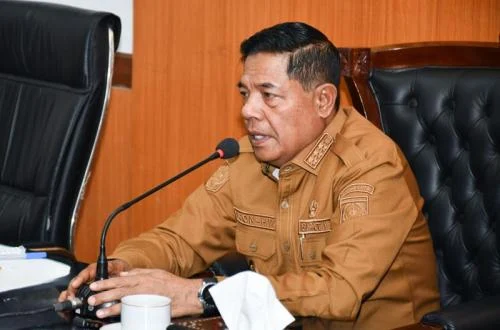
The Kabupaten Lombok Timur, located in Nusa Tenggara Barat, has garnered significant national attention by securing a nomination for the esteemed Entrepreneur Government award in 2026. This recognition specifically highlights its exceptional performance and achievements in implementing innovative strategies for creative financing, a testament to the local government’s proactive approach to regional development and financial sustainability. The nomination underscores a comprehensive suite of reforms and initiatives that have demonstrably boosted local revenue streams and enhanced public service delivery across the regency.
The "Entrepreneur Government" concept, increasingly embraced by progressive regional administrations, signifies a shift from traditional bureaucratic models to a more dynamic, results-oriented governance style. It emphasizes innovation, efficiency, and a focus on generating economic value and public benefit, much like a private enterprise, while still upholding public accountability. For Lombok Timur, a region known for its burgeoning tourism sector and agricultural base, this nomination is not merely an accolade but a validation of years of strategic planning and diligent execution aimed at fostering economic resilience and improving the quality of life for its citizens. The assessment for this prestigious award is rigorous, scrutinizing various aspects of local governance, including financial management, service innovation, public-private partnerships, and the overall impact on local economic growth and community welfare.
Bupati Lombok Timur, Haerul Warisin, recently elaborated on the regency’s pioneering efforts to boost its Local Own-Source Revenue (Pendapatan Asli Daerah – PAD) during a crucial discussion with the Director General of Regional Financial Development at the Ministry of Home Affairs, A. Fatoni. The Bupati meticulously outlined the multi-pronged approach that has propelled Lombok Timur into this coveted position, focusing on the optimal utilization of Badan Usaha Milik Daerah (BUMD or Regional Owned Enterprises), astute management of regional assets (Barang Milik Daerah – BMD), leveraging Corporate Social Responsibility (CSR) initiatives, and the transformative implementation of Badan Layanan Umum Daerah (BLUD or Regional Public Service Agencies). These pillars collectively form the backbone of Lombok Timur’s innovative financial ecosystem, designed to create a self-sustaining and robust local economy.
A New Paradigm in Local Revenue Generation: The Road to Rp 556 Billion PAD
Under Bupati Warisin’s visionary leadership, Lombok Timur has demonstrated remarkable growth in its PAD, reaching an impressive Rp 556 billion in 2025. This significant achievement is attributed to a confluence of factors, prominently including the adoption of integrated services, the widespread implementation of dynamic QRIS payment systems, and strategic collaborations with e-commerce platforms. The regency’s ambitious targets for 2026 further illustrate its commitment to digital transformation and financial transparency: a projected 100 percent cashless tax collection, 100 percent digitally active villages, 95 percent of taxpayers utilizing digital channels, and the establishment of a real-time monitoring dashboard ensuring at least 100 percent realization of revenue targets. These goals are not merely aspirational but are underpinned by a clear roadmap for digital adoption and operational efficiency, setting a benchmark for other regions across Indonesia.
The journey to this financial milestone began several years ago with a clear mandate to diversify revenue streams beyond traditional transfers from the central government. Recognizing the untapped potential within its own administrative boundaries, the Lombok Timur government initiated a series of reforms in the early 2020s. This included a comprehensive audit of existing BUMDs and regional assets, followed by strategic restructuring and the introduction of performance-based metrics. The emphasis was placed on creating a virtuous cycle where improved public services would foster a more vibrant local economy, which in turn would generate higher tax revenues and greater financial autonomy for the regency. The introduction of digital payment solutions, for instance, dramatically reduced leakage and increased convenience for taxpayers, thereby improving compliance rates. The collaboration with e-commerce platforms also opened new avenues for local businesses, indirectly contributing to the regency’s economic prosperity and taxable base.
Optimalisasi BUMD: Balancing Profit and Public Service
Central to Lombok Timur’s entrepreneurial government model is the strategic optimization of its BUMDs. Bupati Warisin emphasized that these regional enterprises are not solely driven by profit motives but also play a critical role in providing essential public services that might otherwise be underserved by the private sector. This dual mandate ensures that BUMDs contribute to both the regency’s financial health and the welfare of its citizens.
Currently, Lombok Timur operates six distinct BUMDs, each meticulously tailored to specific business sectors. While the article does not specify each BUMD, it can be inferred that they encompass vital areas such as water utilities, ensuring access to clean and potable water for communities; the distribution of subsidized fertilizers, which is crucial for the regency’s agricultural sector; and the provision of financing for Micro, Small, and Medium Enterprises (UMKM), a lifeline for local entrepreneurs and a significant driver of grassroots economic activity. By stepping into these areas, the BUMDs address market failures and ensure equitable access to fundamental services and resources, fostering inclusive growth.
Data from similar regions in Indonesia indicates that well-managed BUMDs can contribute between 5-15% of a local government’s PAD. Lombok Timur’s focus on diversifying the roles of its BUMDs, moving beyond mere commercial ventures to encompass social and developmental objectives, provides a sustainable model. For instance, the BUMD responsible for water supply might not yield massive profits but ensures public health and productivity, reducing the burden on public healthcare systems. Similarly, supporting UMKMs through a BUMD not only generates loan interest but also cultivates local businesses that eventually pay taxes and create employment. Local business owners have lauded the accessibility of BUMD-provided financing, often citing it as a more flexible and understanding alternative to traditional banking institutions. "The BUMD financing scheme was instrumental in helping us expand our small craft business," commented Ibu Sari, a local artisan. "It’s not just about the money; it’s about the support and understanding of local needs."
Strategic Management of Regional Assets (BMD): Unlocking Latent Value
Beyond BUMDs, Lombok Timur has demonstrated a sophisticated approach to the management of its regional assets, or Barang Milik Daerah (BMD). This involves a comprehensive strategy covering the optimal use, strategic utilization, and careful transfer of these assets. The regency has undertaken significant initiatives, including the systematic renovation and arrangement of regional government offices (OPD), as well as the rehabilitation of crucial public facilities such as markets, parks, and community centers. These efforts not only improve the functionality and aesthetics of public spaces but also enhance the efficiency of government operations.
A particularly innovative aspect of Lombok Timur’s BMD management is the strategic operation of certain assets by third parties through a profit-sharing model. Under this arrangement, the region receives 40 percent of the generated revenue, while the managing party retains 60 percent. This model is applied to assets where private sector expertise or investment can unlock greater value or efficiency than direct government operation. For example, underutilized public spaces might be leased for commercial activities, or certain public facilities could be managed by private operators to improve service quality and generate additional revenue. This approach not only provides a consistent income stream for the regency but also leverages private sector efficiency and capital, reducing the financial and operational burden on the local government.
Economic analysts view this 40/60 profit-sharing model as a pragmatic solution for regions with limited capital and operational capacity. "It’s a smart way to maximize the economic utility of public assets without heavy upfront investment from the government," stated Dr. Budi Santoso, an economist specializing in regional development. "The 40% share, while seemingly smaller, represents pure passive income that can be reinvested into other public services or infrastructure projects, creating a multiplier effect for the local economy." This innovative approach to asset management exemplifies Lombok Timur’s entrepreneurial spirit, turning static assets into dynamic revenue generators.
Corporate Social Responsibility (CSR): A Catalyst for Community Development
The integration of Corporate Social Responsibility (CSR) initiatives into Lombok Timur’s revenue enhancement strategy is another key differentiator. While CSR traditionally involves voluntary contributions from corporations to societal and environmental causes, Lombok Timur has ingeniously woven it into its broader development framework. This involves encouraging and facilitating private sector companies operating within the regency to channel their CSR funds towards projects that align with the local government’s development priorities, effectively complementing public spending.
Such initiatives might include funding for community infrastructure projects, environmental conservation programs, educational scholarships, or health awareness campaigns. By strategically directing CSR investments, Lombok Timur ensures that private sector contributions directly support critical public needs, reducing the financial outlay from the public budget while fostering community well-being. This collaborative approach enhances the overall socio-economic fabric of the regency, creating a more conducive environment for investment and growth, which in turn broadens the tax base and strengthens the local economy. For example, a large hotel chain might invest in local waste management infrastructure as part of its CSR, reducing the regency’s sanitation costs and improving environmental conditions, which benefits both residents and tourists. These contributions, though not direct PAD, free up government funds that can then be reallocated to other essential services or development projects, effectively increasing the government’s fiscal capacity.
Transforming Healthcare Through BLUD: Efficiency and Quality
A significant strategic breakthrough highlighted by Bupati Warisin is the transformation of key healthcare facilities, including the Regional General Hospital (RSUD) and various Puskesmas (community health centers), into Badan Layanan Umum Daerah (BLUD). This mechanism grants these public service agencies greater financial and operational flexibility, moving away from rigid bureaucratic budget allocations. Under the BLUD model, these facilities can retain a portion of their generated revenues, allowing them to directly reinvest in improving services, procuring modern equipment, and enhancing staff capabilities without extensive bureaucratic hurdles.
This shift has profound implications for the quality and efficiency of healthcare delivery in Lombok Timur. Hospitals and health centers can now respond more dynamically to patient needs, acquire necessary medical supplies faster, and offer more competitive salaries to attract and retain skilled medical professionals. The result is a noticeable improvement in patient care, reduced wait times, and an overall more responsive healthcare system. For instance, a Puskesmas operating as a BLUD might use its retained earnings to purchase a new ultrasound machine, directly benefiting local patients who previously had to travel long distances for such services. This empowerment of frontline service providers is a cornerstone of the entrepreneurial government philosophy, fostering innovation and accountability at the operational level.
"The BLUD status has truly revolutionized how we operate," remarked Dr. Amir, Director of the Lombok Timur RSUD. "We now have the autonomy to make swift decisions regarding equipment upgrades and staff training, directly translating to better patient outcomes. Our financial performance has also improved, allowing us to be more self-sufficient." This direct impact on essential public services demonstrates the tangible benefits of Lombok Timur’s strategic reforms.
Public-Private Partnerships (KPBU): Innovative Solutions for Infrastructure
Recognizing the limitations of its own budget, particularly for large-scale infrastructure projects, the Lombok Timur government has actively pursued Public-Private Partnerships (Kerja Sama Pemerintah dan Badan Usaha – KPBU). A notable example is the collaboration for street lighting in areas that previously lacked adequate illumination. This scheme was specifically chosen to address the urgent need for better street lighting in accident-prone areas and to enhance public safety, where direct government funding alone would have been insufficient or too slow.
Under the KPBU model, private entities invest in, build, and often operate public infrastructure, with the government typically making availability payments or providing other forms of support over the project’s lifecycle. For street lighting, this could involve a private company installing and maintaining LED streetlights, leading to energy savings and reduced operational costs in the long run, while the government ensures the service is provided to citizens. This innovative financing mechanism allows Lombok Timur to accelerate infrastructure development, enhance public services, and stimulate private sector investment, all while mitigating the immediate financial burden on the regional budget. The implementation of KPBU for street lighting has led to a noticeable reduction in nighttime accidents and an increased sense of security among residents, according to local police reports and community feedback.
Broader Implications and Future Outlook
Lombok Timur’s nomination for the Entrepreneur Government award is a significant milestone that extends beyond local recognition. It positions the regency as a potential model for other regional governments across Indonesia grappling with similar challenges of revenue generation and service delivery. The comprehensive and integrated nature of its strategies—from BUMD optimization and asset management to digital transformation and public-private partnerships—offers a blueprint for sustainable regional development.
The long-term implications are substantial. Enhanced financial autonomy means less reliance on central government transfers, allowing Lombok Timur to tailor development initiatives more closely to local needs and priorities. The improved public services, particularly in healthcare and infrastructure, directly contribute to a higher quality of life for residents and a more attractive environment for investment. The digital transformation efforts are also fostering a more transparent and efficient government, reducing opportunities for corruption and increasing public trust.
However, challenges remain. Sustaining this momentum will require continuous innovation, robust monitoring, and adaptive governance to address evolving economic landscapes and community demands. Ensuring equitable distribution of benefits across all communities within the regency, particularly in remote areas, will also be crucial. Nevertheless, Lombok Timur’s journey towards becoming an "Entrepreneur Government" is a compelling narrative of proactive governance, strategic vision, and a commitment to unlocking its full potential for the benefit of its people. As the assessment for the 2026 award progresses, all eyes will be on Lombok Timur, observing its continued progress and its potential to inspire a new era of regional governance in Indonesia.