Azin Asro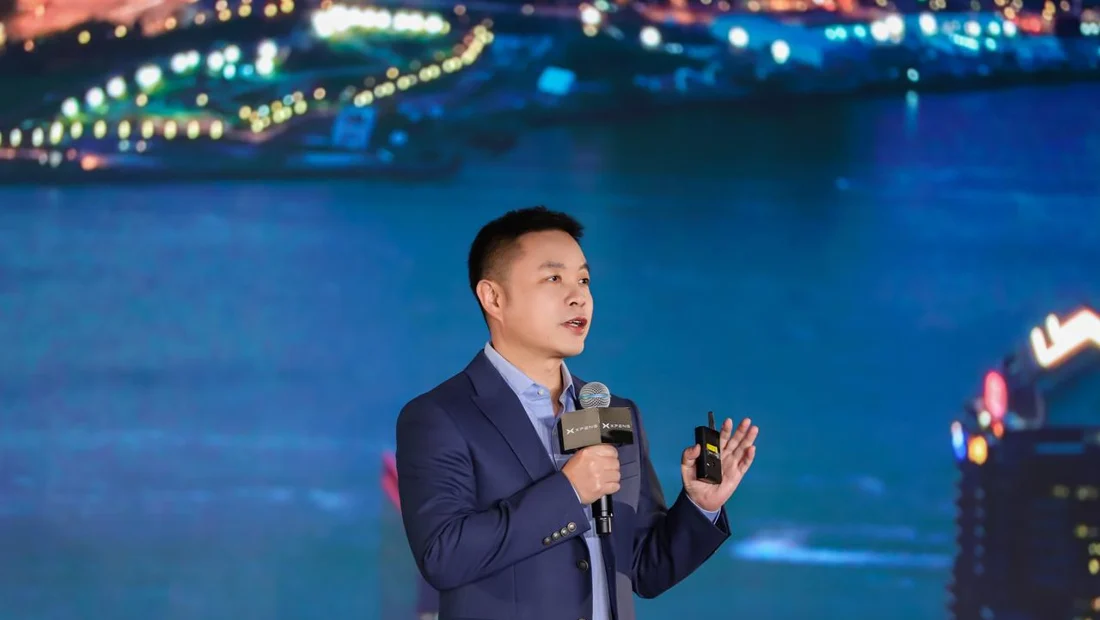
The landscape of the global automotive industry is on the verge of a seismic shift, according to He Xiaopeng, the Chairman and CEO of Xpeng Motors. In a recent high-profile appearance on China Central Television (CCTV), the visionary entrepreneur predicted that the current era of market fragmentation within China will eventually give way to a period of intense consolidation. He Xiaopeng anticipates that the Chinese automotive sector will eventually be dominated by just five massive manufacturers, each capable of generating annual revenues in the trillions of yuan and profits in the hundreds of billions. This trajectory would place these Chinese firms on a level playing field with established global titans such as Toyota, Volkswagen, and the Hyundai Motor Group, fundamentally altering the power dynamics of the international transport sector.
The remarks were made during a specialized dialogue program where He Xiaopeng was joined by William Li, the founder and CEO of Nio. The discussion centered on the current state of the New Energy Vehicle (NEV) market and the long-term strategic direction of Chinese manufacturing. Both leaders agreed that while the current market is characterized by rapid innovation and fierce competition, the endgame involves a much more concentrated field of players who possess the scale and technological depth to compete not just locally, but as dominant global entities.
The Scale of the Trillion-Yuan Ambition
To understand the magnitude of He Xiaopeng’s prediction, one must look at the financial and operational metrics required to reach a trillion-yuan revenue milestone. At current exchange rates, one trillion yuan is approximately equivalent to $140 billion USD. In the context of the global automotive industry, achieving this level of revenue typically requires a sales volume exceeding seven million units per year.
Currently, only a handful of global automotive conglomerates operate at this scale. Toyota Motor Corporation, the perennial leader in global sales, typically moves between 10 and 11 million vehicles annually. The Volkswagen Group follows closely, with the Hyundai Motor Group, Stellantis, and General Motors also occupying this elite tier. For a Chinese manufacturer to join this group, it would need to capture a significant portion of both the domestic Chinese market and international markets across Europe, Southeast Asia, and the Americas.
He Xiaopeng’s forecast implies that the survival of the fittest will result in five "national champions" that can leverage China’s manufacturing efficiencies and software-driven innovations to displace traditional legacy automakers. While he refrained from naming specific companies, current market data provides a clear picture of which firms are currently leading the race toward this trillion-yuan threshold.
The Current Leaders: Candidates for the Top Five
Based on the 2023 fiscal year data, several Chinese automotive groups are already demonstrating the growth trajectory necessary to meet He Xiaopeng’s criteria.
-
BYD (Build Your Dreams): BYD is currently the frontrunner in the transition to electric mobility. In 2023, the company reported a staggering revenue of 803.9 billion yuan. BYD’s success is attributed to its vertical integration, manufacturing its own batteries and semiconductors, which allows for aggressive pricing and rapid iteration. With its expansion into high-end luxury brands like Yangwang and its massive export push, BYD is the most likely candidate to cross the trillion-yuan revenue mark in the near future.
-
SAIC Motor: As a long-standing state-owned giant, SAIC Motor recorded revenues of 646.1 billion yuan last year. While much of its historical volume came from joint ventures with Volkswagen and General Motors, SAIC has found significant international success with the MG brand, particularly in Europe and Thailand. The company’s ability to transition its internal brands to electric and hybrid platforms will determine its long-term standing.
-
Geely Auto Group: Under the leadership of Li Shufu, Geely has become a global powerhouse through strategic acquisitions, including Volvo Cars, Polestar, and Lotus, as well as stakes in Mercedes-Benz. Geely reported 345.2 billion yuan in revenue in 2023. Its diverse portfolio and global supply chain make it a strong contender for the top five.
-
Chery Automobile: Chery has positioned itself as China’s leading vehicle exporter. In 2023, the company generated 300.2 billion yuan in revenue. By focusing on emerging markets in South America, the Middle East, and Russia, Chery has built a resilient revenue stream that is less dependent on the domestic Chinese price wars.
-
Great Wall Motor (GWM): Known for its dominance in the SUV and pickup truck segments through the Haval and Tank brands, GWM reported 222.8 billion yuan in revenue. GWM is currently pivoting toward electrification (GWM Ora) to ensure it remains relevant in a market that is rapidly moving away from pure internal combustion engines.
Addressing the Phenomenon of ‘Involution’
While the prospect of five global giants is an optimistic long-term view, He Xiaopeng also addressed the immediate challenges facing the industry, specifically the concept of "involution" (neijuan). In the Chinese economic context, involution refers to a state of hyper-competition where companies expend massive amounts of energy and capital to achieve diminishing returns, often resulting in "price wars" that hurt profitability across the board.
He Xiaopeng noted that the current market is oversaturated with players and product launches. He cited the 2024 Beijing Auto Show as an example (and projected similar trends for 2026), where approximately 150 new car models were launched or showcased simultaneously. According to the Xpeng CEO, this level of activity is not a sign of a healthy market but rather a symptom of a chaotic "elimination round."
"The industry will only enter a truly healthy phase when we no longer see 150 new cars being launched at a single show," He Xiaopeng remarked. He suggested that the current price wars, led by BYD and Tesla, are forcing smaller, less efficient players out of the market. This consolidation is a necessary precursor to the birth of the five giants he envisions. For Xpeng and Nio, the challenge is to survive this "meat grinder" phase by focusing on technological differentiation, such as Advanced Driver Assistance Systems (ADAS) and battery-swapping infrastructure.
Chronology of the Chinese Automotive Evolution
The path to the current state of the industry has been marked by several distinct phases:
- 2010–2015: The Subsidy Era. The Chinese government introduced massive subsidies to kickstart the NEV industry, leading to the birth of hundreds of "EV startups."
- 2016–2020: The Rise of the ‘New Forces’. Companies like Xpeng, Nio, and Li Auto emerged, focusing on software-defined vehicles and smart features, challenging the traditional manufacturing mindset.
- 2021–2023: The Mass Adoption Phase. NEV penetration in China surpassed 30%, and domestic brands began to outsell foreign joint ventures for the first time in decades.
- 2024–Present: The Global Expansion and Consolidation Phase. Facing a saturated domestic market and intense price competition, Chinese automakers are aggressively expanding into overseas markets while smaller brands face bankruptcy or acquisition.
Stakeholder Reactions and Market Analysis
Industry analysts have reacted to He Xiaopeng’s comments with a mix of agreement and caution. Financial analysts at firms like Goldman Sachs and Morgan Stanley have noted that the "Big Five" prediction aligns with historical trends in other mature industries, such as the US automotive market in the early 20th century or the global smartphone market today.
However, some experts warn of geopolitical headwinds. The European Union recently announced provisional tariffs on Chinese-made EVs, and the United States has implemented a 100% tariff on Chinese electric vehicles to protect its domestic industry. These trade barriers could make it difficult for Chinese firms to reach the 7-million-unit annual sales volume required to hit trillion-yuan revenue targets.
William Li of Nio, during the same CCTV program, emphasized that "coopetition"—a mix of cooperation and competition—would be vital. Nio and Xpeng, for instance, have begun discussing shared standards for charging and battery swapping to reduce infrastructure costs. "We are competing in the market, but we are also building the ecosystem together," Li noted.
Broader Implications for the Global Economy
If He Xiaopeng’s prediction comes to pass, the implications for the global economy are profound. The shift would mean that the center of gravity for automotive engineering and intellectual property would move from Stuttgart, Detroit, and Tokyo to Shenzhen, Shanghai, and Guangzhou.
Furthermore, the rise of these giants would accelerate the global transition to sustainable energy. Because the Chinese "Big Five" are likely to be leaders in electrification and autonomous driving, their scale would drive down the cost of green technology globally, making EVs more accessible in developing nations.
In conclusion, He Xiaopeng’s vision of a "Trillion-Yuan Top Five" serves as both a warning to legacy automakers and a roadmap for the Chinese industry. The road to that goal is paved with the remnants of smaller companies that will fail to survive the current "involution." For those that remain, the prize is a seat at the table of the world’s most influential industrial powers, redefining how the world moves in the 21st century. As the "elimination round" continues, all eyes will be on BYD, Geely, SAIC, and the "New Force" startups to see who will claim those five coveted spots.