Nila Kartika Wati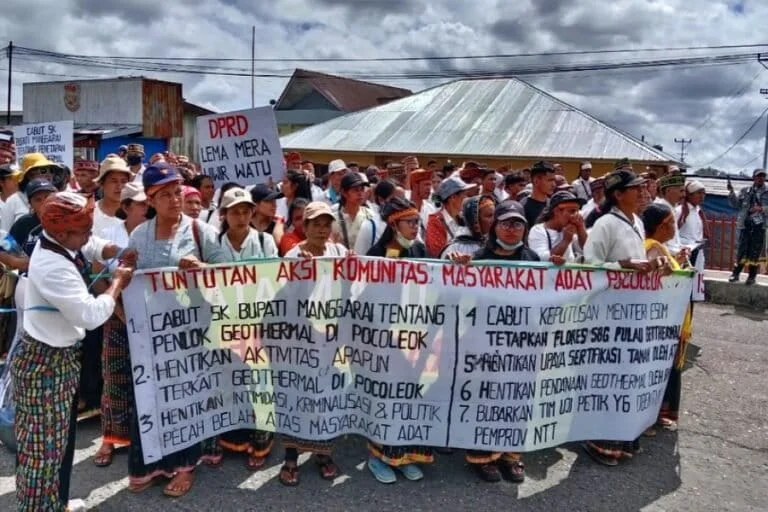
In a landmark decision that provides a significant boost to indigenous rights and freedom of speech in East Nusa Tenggara, the Kupang Administrative Court (PTUN Kupang) has ruled in favor of Agustinus Tuju, a member of the Poco Leok indigenous community, in his lawsuit against the Regent of Manggarai, Herybertus GL Nabit. The ruling, delivered on March 10, 2026, marks a critical juncture in the ongoing conflict between local communities and government-led energy infrastructure projects in the region. The court found that the Regent’s actions during a peaceful protest in 2025 constituted an "onrechtmatige overheidsdaad"—an unlawful act by a government official—specifically citing the use of intimidation and threatening language to suppress public expression.
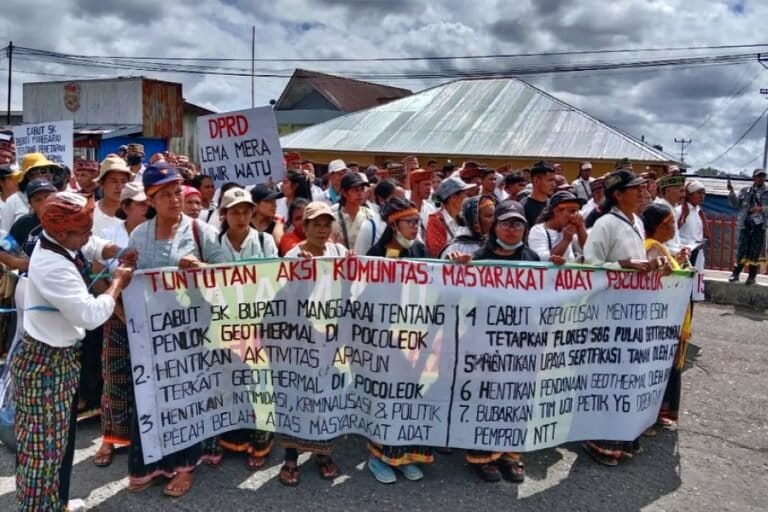
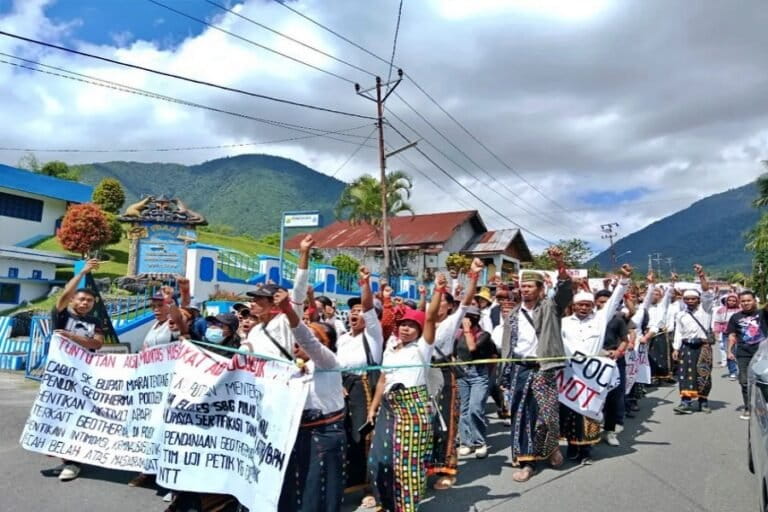
The legal battle originated from an incident on June 5, 2025, when Agustinus Tuju and members of the Poco Leok indigenous community, representing 10 traditional "gendang" (clans/villages), held a peaceful demonstration at the Manggarai Regent’s Office. The community was protesting the expansion of the Ulumbu Geothermal Power Plant (PLTP) into their ancestral lands. During the encounter, Tuju was subjected to verbal intimidation and threats by the Regent, which the court has now officially recognized as a violation of administrative law and the constitutional rights of citizens.
Judicial Recognition of Unlawful Intimidation
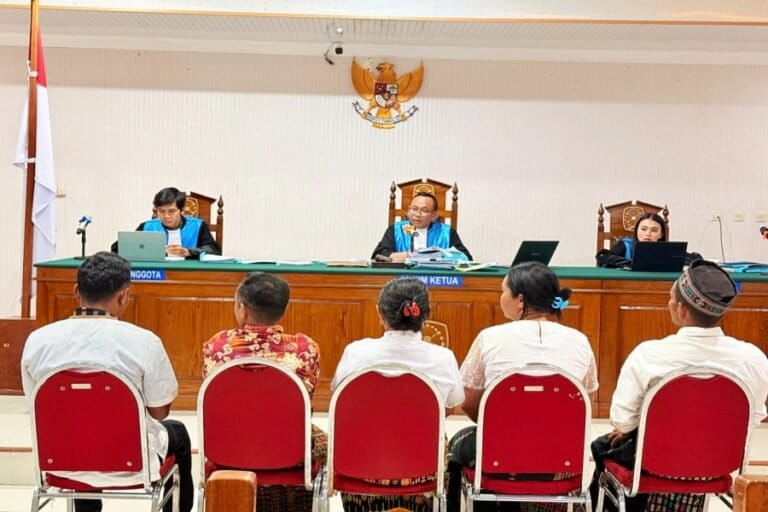
The bench, presided over by Chief Judge Muhammad Zainal Abidin alongside member judges Komang Alit Antara and Putu Carina, delivered the verdict through the PTUN Kupang Electronic Information System. In its decision, the court rejected all exceptions raised by the defendant, the Regent of Manggarai. While the judges only partially granted Tuju’s claims—declining to mandate a public apology in five media outlets or financial damages—the core of the victory lies in the legal declaration of the Regent’s misconduct.
The court stated that the administrative actions taken by the Regent, which involved obstructing the expression of opinions in public through intimidation and threatening words, were a breach of the law. This ruling underscores the obligation of public officials to uphold the General Principles of Good Government (AUPB), which include transparency, accountability, and respect for human rights.
Jimmy Z. Ginting, legal counsel for Agustinus Tuju, expressed deep appreciation for the court’s objectivity. Speaking after the verdict, Ginting emphasized that the decision serves as a stern reminder to all public officials, particularly the Regent of Manggarai, to respect the rights of citizens. "This ruling should serve as a memento for the Regent to honor the oath of office and the fundamental rights of the community, especially indigenous peoples, to speak freely without fear of reprisal," Ginting stated. He added that the victory should embolden other indigenous groups across Indonesia, affirming that defending ancestral territories is a legitimate and lawful endeavor.
The Roots of Conflict: The Poco Leok Geothermal Project
The tension in Poco Leok is inextricably linked to the Ulumbu Geothermal Power Plant expansion project, specifically Units V and VI. Located in the Satarmese District of Manggarai Regency, the project is part of Indonesia’s broader strategic push for a "Green Energy Transition." Flores has been designated by the Ministry of Energy and Mineral Resources as a "Geothermal Island," intended to serve as a hub for renewable energy production in eastern Indonesia.
However, the Poco Leok community, which comprises 10 traditional clans—including Gendang Mocok, Gendang Lungar, and others—has consistently opposed the project. Their resistance is rooted in several critical concerns:
- Threat to Ancestral Lands (Ulayat): The community views the geothermal drilling sites as a direct encroachment on land that has been held collectively for generations.
- Environmental Degradation: Residents fear that the drilling will disrupt local water tables, essential for their agricultural livelihoods, and increase the risk of landslides in the mountainous terrain.
- Cultural Disruption: The proposed sites are often located near sacred areas or within traditional settlements, threatening the social fabric of the Manggarai people.
- Lack of Meaningful Consent: Protesters have long argued that the government failed to follow the principle of Free, Prior, and Informed Consent (FPIC), instead opting for a top-down approach.
The lawsuit filed by Tuju was a reaction to the government’s perceived refusal to listen. On the day of the 2025 protest, the community had demanded that the Regent revoke the Location Determination Decree (SK Penetapan Lokasi) for the geothermal project. Instead of a dialogue, they were met with the hostility that led to this week’s court ruling.
International Scrutiny and the KfW Audit
The Poco Leok dispute has gained international attention, largely because of the involvement of the German Development Bank, Kreditanstalt für Wiederaufbau (KfW), which provides funding for the Ulumbu expansion. Following reports of human rights violations and community resistance, an independent audit was commissioned by the funding agency.
The audit’s findings were damning, revealing that the Poco Leok community had not received adequate or transparent information regarding the project’s impacts. The report recommended that the project developers avoid coercive tactics and improve their engagement strategies. Despite these recommendations, local advocacy groups, including the Indonesian Forum for the Environment (WALHI), have noted that the approach on the ground remained largely securitized, with security forces frequently deployed to oversee land surveys and suppress dissent.
The PTUN Kupang ruling aligns with these international concerns, reinforcing the idea that "energy transition" cannot be used as a justification for bypassing democratic norms or violating indigenous rights.
Analysis: The Burden of Public Office
The court’s decision highlights a growing judicial intolerance for "authoritarian" tendencies in local governance. In its considerations, the bench noted that a Regent has a legal duty to absorb aspirations, increase community participation, and follow up on public complaints. This is especially true when the official is issuing decrees that significantly impact the living space of the citizenry.
Maximilianus Herson Loi, Chairman of the Alliance of Indigenous Peoples of the Archipelago (AMAN) for the Nusa Bunga region, remarked that the ruling is a "harsh warning" to public officials. He criticized the tendency of leaders to become "baperan" (overly sensitive or emotional) when faced with criticism. "Public officials have a constitutional obligation to protect freedom of expression. Criticism should be viewed as a ‘lubricant’ to improve policies so they align with human rights standards," Loi explained.
He further emphasized that the government must move beyond mere "conflict management" and instead focus on "mindful participation." This involves recognizing indigenous land rights as the baseline for any developmental negotiation, rather than treating the community as an obstacle to be cleared.
Broader Implications for Indonesia’s Energy Policy
The victory for Agustinus Tuju is being celebrated by environmental and social justice organizations as a precedent for the entire country. Yuvensius Stefanus Nonga, Director of WALHI NTT, argued that the ruling proves the state cannot act "recklessly" to silence its people.
"This decision is a manifestation of legal protection for environmental defenders. It reinforces that the struggle to protect one’s living space is not a criminal act," Nonga stated. He pointed out that the conflict in Poco Leok reflects a structural flaw in Indonesia’s energy transition policy. While the global community pushes for a shift away from fossil fuels, the implementation in Indonesia often reproduces the same patterns of land grabbing and marginalization seen in the mining and palm oil sectors.
The "just transition" framework, which Indonesia has committed to under various international agreements, requires that the move to renewable energy be socially equitable. The Poco Leok case suggests that without judicial oversight, the transition may become "unjust," prioritizing infrastructure targets over the lives and cultures of indigenous populations.
Chronology of the Poco Leok Legal Struggle
To understand the weight of this ruling, one must look at the timeline of events that led to the March 2026 decision:
- December 2022 – Early 2023: The government intensifies plans for PLTP Ulumbu Units V and VI. Local communities begin expressing formal opposition.
- 2023-2024: Multiple instances of forced land surveys occur, often accompanied by police and military presence, leading to several clashes and the brief detention of activists.
- June 5, 2025: A massive protest is held at the Manggarai Regent’s Office. Agustinus Tuju is intimidated by Regent Herybertus GL Nabit during the event.
- Late 2025: Supported by the Poco Leok Advocacy Coalition, Tuju files a lawsuit at PTUN Kupang, seeking a declaration of an unlawful act.
- March 10, 2026: PTUN Kupang rules that the Regent’s intimidation was a violation of the law.
Conclusion: A Call for Reform
While the geothermal project in Poco Leok remains a point of contention, the PTUN Kupang ruling has shifted the power dynamic. It has provided the indigenous community with a legal shield against state-sponsored bullying and has validated their role as legitimate stakeholders in their own land.
For the Manggarai Regency and the central government, the message from the judiciary is clear: development must not come at the cost of dignity and the rule of law. The ruling calls for a total reassessment of how strategic projects are communicated and implemented. As Indonesia continues its journey toward a greener future, the Poco Leok case will stand as a reminder that the "power" in "power plant" must not be used to overpower the people.
The Poco Leok community continues to demand the total revocation of the geothermal location decree, arguing that no amount of "improved communication" can compensate for the potential loss of their ancestral heritage. For now, they celebrate a rare judicial win, one that affirms that in the eyes of the law, the voice of a single indigenous farmer holds weight against the might of a regional governor.