Azin Asro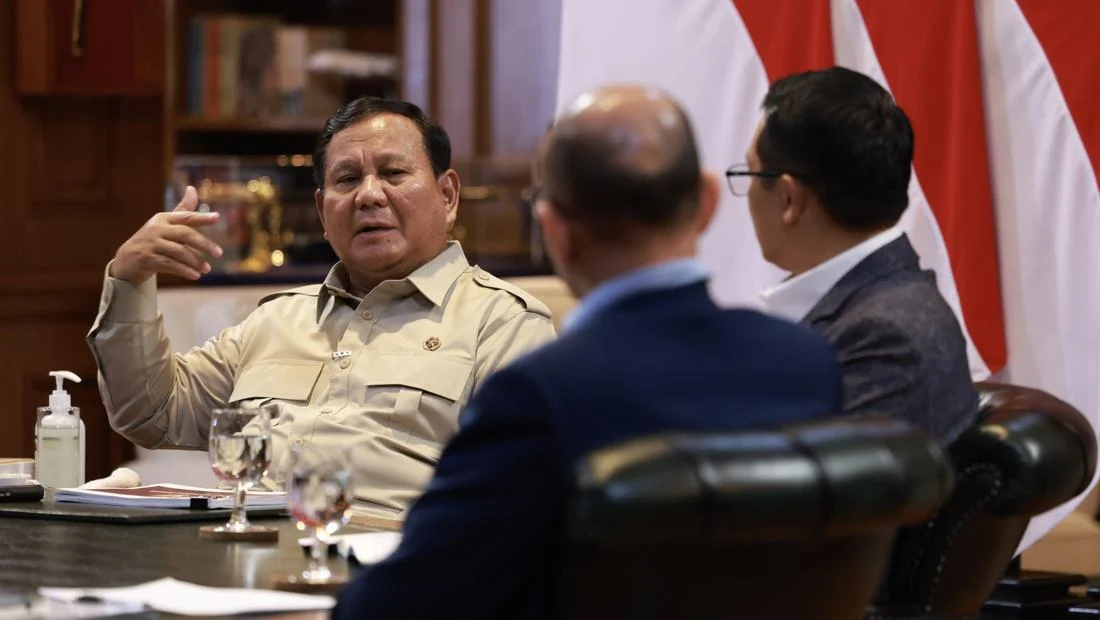
In a decisive move toward transforming the national energy landscape, President Prabowo Subianto has articulated a comprehensive vision for the total electrification of Indonesia’s transportation sector. The President’s roadmap envisions a future where all domestic vehicles—ranging from motorcycles and passenger cars to heavy-duty trucks and agricultural tractors—are powered by electricity. This policy direction is primarily driven by a dual-objective strategy: significantly reducing the financial burden on Indonesian households and terminating the nation’s long-standing dependence on expensive imported fossil fuels.
Speaking in a detailed interview titled "Presiden Prabowo Menjawab!!!" (President Prabowo Answers!!!) shared via his official communication channels, the Head of State emphasized that the transition to electric vehicles (EVs) is no longer a matter of environmental preference alone, but a fundamental economic necessity. The President revealed that the government is currently refining a massive conversion plan aimed at ensuring that internal combustion engine (ICE) vehicles are gradually phased out in favor of electric propulsion systems.
The Economic Rationale: Household Savings and Market Realities
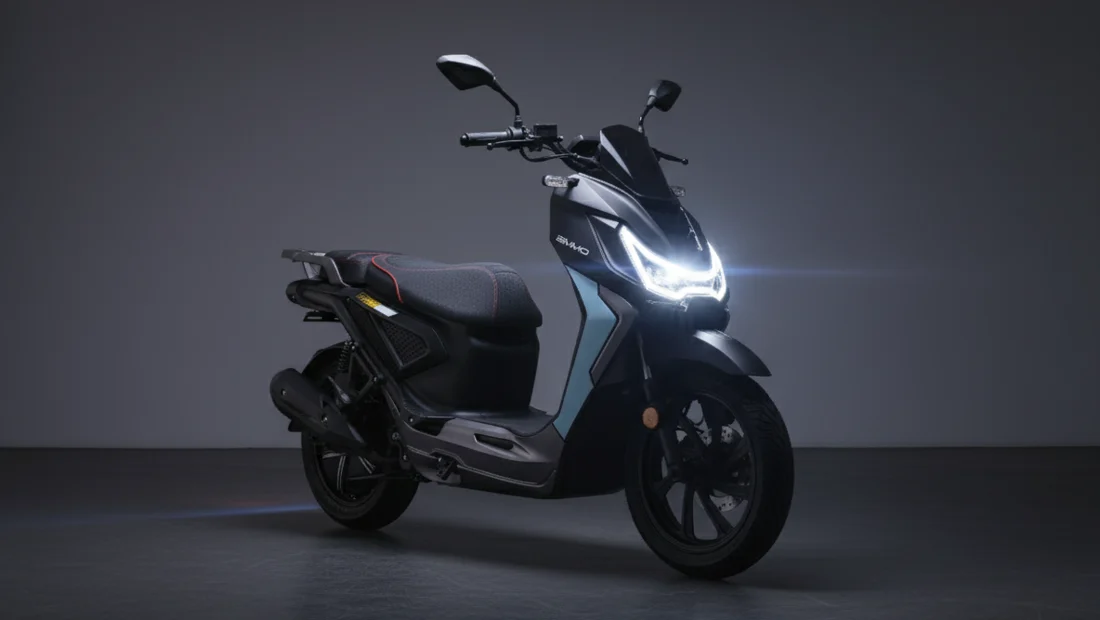
The cornerstone of President Prabowo’s electrification drive is the tangible economic benefit for the average Indonesian citizen. According to data cited by the President, transitioning from a conventional gasoline-powered motorcycle to an electric model can reduce a user’s daily transportation expenditure by approximately 20 percent. In a country where motorcycles are the primary mode of transport for the majority of the workforce, such savings are expected to have a significant multiplier effect on domestic consumption and poverty reduction.
Furthermore, the President addressed the disparity in fuel consumption between different socioeconomic classes. He articulated a clear "user-pays" philosophy regarding luxury vehicle owners. President Prabowo asserted that while the government will prioritize the transition to EVs for the general public and logistics sectors, those who choose to maintain high-performance, gasoline-powered luxury cars—such as Ferraris or Lamborghinis—must be prepared to pay full international market rates for fuel.
"For the wealthy who own a Lamborghini or a Ferrari, please, go ahead and use gasoline, but you must pay the world price, even if it reaches USD 200 per barrel," the President stated. This stance signals a potential shift in Indonesia’s subsidy policy, moving away from broad-based fuel subsidies that often disproportionately benefit higher-income groups, toward a targeted system that incentivizes the adoption of clean energy.
Energy Sovereignty and the Solar Transition
A critical component of the President’s vision is the decoupling of the national power grid from imported diesel. President Prabowo identified the current reliance on diesel-powered generators (PLTD) as a major fiscal drain, describing the cost of such electricity production as "too expensive." To rectify this, the administration is planning a rapid expansion of solar power capacity.
The President announced an ambitious target to develop 13 Gigawatts (GW) of solar energy in the near term. This shift is intended to ensure that the electricity used to charge the nation’s future fleet of EVs is generated domestically from renewable sources, rather than imported oil. "Very soon, we will no longer use diesel-solar for electricity," Prabowo noted, highlighting that energy independence is a non-negotiable pillar of his administration’s "Asta Cita" or eight primary goals.
Chronology of Indonesia’s EV Policy Development
The current administration’s push for electrification builds upon a foundation laid over the past several years. The trajectory of Indonesia’s EV policy can be traced through several key milestones:
- 2019: Presidential Regulation No. 55. This landmark regulation established the initial framework for the acceleration of the battery electric vehicle program for road transportation, providing the legal basis for incentives and infrastructure development.
- 2023: Introduction of Targeted Subsidies. The government introduced a Value Added Tax (VAT) incentive, reducing the tax from 11% to 1% for electric cars and buses that met local content requirements (TKDN). Simultaneously, a Rp 7 million subsidy was launched for the purchase of new electric motorcycles and the conversion of ICE motorcycles to electric.
- Late 2023: Import Duty Exemptions. To stimulate the market and encourage global manufacturers to set up local production, the government allowed for the duty-free import of Completely Built-Up (CBU) electric vehicles for a limited period, provided the manufacturers committed to building domestic factories.
- 2024: The Prabowo Transition. With the inauguration of President Prabowo, the focus has shifted from mere market stimulation to a broader "total conversion" mandate that includes heavy machinery and a stronger emphasis on renewable energy integration.
Supporting Data and Industrial Context
Indonesia is uniquely positioned to lead the regional EV revolution due to its vast natural resources. The country holds the world’s largest reserves of nickel, a critical component in the production of lithium-ion batteries. Under the "downstreaming" (hilirisasi) policy, the government has banned the export of raw nickel ore, forcing international companies to invest in domestic smelting and battery manufacturing facilities.
Data from the Association of Indonesia Automotive Industries (GAIKINDO) indicates a steady rise in EV adoption, though it remains a small fraction of total vehicle sales. In 2023, electric car sales reached approximately 17,000 units, a significant jump from previous years but still far below the millions of ICE vehicles sold annually. The Indonesian Motorcycle Industry Association (AISI) reports a similar trend in the two-wheeler segment.
To bridge this gap, the government is reportedly preparing a revised subsidy scheme for 2025. While the previous Rp 7 million subsidy for motorcycle conversions faced challenges regarding administrative complexity and public awareness, the new administration is considering a refined package estimated between Rp 5 million and Rp 6 million, specifically targeting the conversion of existing motorcycles to make the transition more affordable for lower-income households.
Implications for the National Grid and Infrastructure
The shift to a fully electric fleet presents significant logistical and technical challenges for the state-owned electricity company, PT PLN (Persero). To support millions of EVs, the national grid requires a massive expansion of Public Electric Vehicle Charging Stations (SPKLU) and Battery Swapping Stations (SPBKLU).
As of mid-2024, there are over 1,500 SPKLU units across the archipelago, but they are heavily concentrated in Java and Bali. President Prabowo’s plan necessitates a more equitable distribution of charging infrastructure, particularly in Sumatra, Kalimantan, and Sulawesi, where logistics trucks and agricultural tractors—key targets of the new electrification policy—operate.
Analysts suggest that the 13 GW solar target will be essential to prevent the EV transition from simply shifting the carbon footprint from the tailpipe to the coal-fired power plant. Currently, coal still accounts for a majority of Indonesia’s electricity generation. The success of Prabowo’s vision depends heavily on the speed at which the Ministry of Energy and Mineral Resources can integrate renewable sources into the national grid.
Official Responses and Stakeholder Perspectives
The President’s ambitious statements have prompted a variety of responses from industry stakeholders. While environmental groups have lauded the commitment to renewable energy, automotive manufacturers are calling for a clear and consistent long-term roadmap.
"A total conversion of all trucks and tractors to electric power is a massive undertaking that requires not just subsidies, but a complete overhaul of our supply chain and maintenance networks," noted an industry analyst from the Indonesian Transportation Society (MTI). "The technology for heavy-duty electric trucks is still evolving globally, and Indonesia will need to ensure that the infrastructure can support the high-voltage requirements of such vehicles."
Representatives from the Indonesian Battery Corporation (IBC) have expressed readiness to support the President’s vision, noting that domestic battery production is scheduled to scale up significantly by 2026. The ability to produce batteries locally is seen as the "silver bullet" that will bring the price of EVs down to parity with gasoline vehicles without the need for permanent government subsidies.
Conclusion: A Strategic Pivot Toward Energy Independence
President Prabowo Subianto’s vision for a fully electrified Indonesia represents a strategic pivot designed to insulate the national economy from the volatility of global oil markets. By leveraging the nation’s nickel wealth and its untapped solar potential, the administration seeks to create a self-sustaining energy ecosystem.
The roadmap is clear: convert the masses to electric motorcycles to save household income, transition the logistics and agricultural sectors to electric to lower food and transport costs, and remove the subsidy burden of luxury fuel consumption. While the path to 100% electrification is fraught with technical and financial hurdles, the President’s rhetoric suggests that the government views this transition as an existential necessity for Indonesia’s long-term economic sovereignty. As the administration moves to codify these plans into specific programs, the global automotive and energy sectors will be watching closely to see if Southeast Asia’s largest economy can successfully execute one of the world’s most ambitious green energy transitions.