Nasution Nanang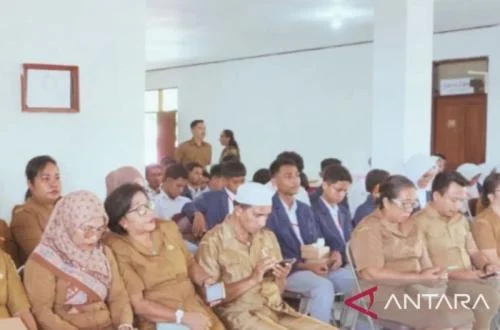
AMBON, MALUKU – In a significant move to cultivate a new generation of skilled professionals in the nation’s vital marine and fisheries sector, the Fisheries Training and Extension Center (BPPP) Ambon, an integral unit of the Ministry of Marine Affairs and Fisheries (KKP) of Indonesia, has forged a strategic partnership with SMK Negeri 3 Ambon. This collaboration, formalized through a comprehensive cooperation agreement, aims to elevate the competencies of young individuals, specifically vocational high school students, equipping them with the practical knowledge and advanced skills essential for thriving in the dynamic and increasingly complex marine and fisheries industry. The initiative underscores a concerted effort to bridge the gap between educational output and industry demands, thereby strengthening Indonesia’s human capital in a sector critical to its economic and food security aspirations.
The partnership represents a pivotal step in reinforcing vocational education and developing a cadre of highly competitive human resources primed to contribute meaningfully to the fisheries sector. Abubakar, the Head of BPPP KKP Ambon, articulated that this collaboration is a concrete manifestation of the government’s commitment to vocational training. He emphasized that the alliance meticulously integrates the academic realm with the practical exigencies of the fisheries industry, delivering an educational framework that transcends theoretical instruction by embedding highly relevant, hands-on practical experience. Speaking on Monday, March 30, 2020, in Ambon, Abubakar highlighted the strategic imperative of this synergy, stating, "This cooperation brings the world of education closer to the needs of the fisheries industry, presenting education that is not only theoretical but also highly practical and relevant to current market demands and future challenges."
The Genesis of a Strategic Partnership and its Formalization
The formalization of this groundbreaking cooperation agreement between BPPP Ambon and SMK Negeri 3 Ambon was marked by a signing ceremony held at the vocational high school premises. This event was graced by the presence of several key stakeholders, underscoring the broad support and multi-sectoral recognition of the initiative’s importance. Among the distinguished attendees were Hadi Purwanto, Director of CV. Cimetris Einirgering, a private sector entity whose involvement signals the industry’s vested interest in skilled labor development; Paulus Lewerissa, the Supervising Educator for SMK Negeri 3 Ambon, representing the educational oversight perspective; and representatives from the Maluku Provincial Education and Culture Office, signifying the provincial government’s endorsement and alignment with broader regional development goals. The collective presence of these diverse parties highlighted the collaborative spirit and comprehensive vision underpinning this educational venture, aiming for a holistic impact on both the students and the wider fisheries ecosystem in Maluku.
This collaboration is not merely an academic exercise; it is meticulously designed to immerse students in a comprehensive curriculum encompassing various facets of the fisheries sector. The training modules are structured to provide both breadth and depth, covering critical areas such as sustainable aquaculture practices, environmentally responsible fishing techniques, advanced post-harvest processing and value addition, and the crucial aspects of fisheries business management and entrepreneurship. Furthermore, students receive specialized instruction on the application of stringent quality standards and food safety protocols for fisheries products, an increasingly vital component in accessing domestic and international markets. The curriculum’s practical orientation is intended to equip students with a robust skillset that is directly applicable to real-world scenarios, preparing them for immediate entry into the workforce or for pursuing entrepreneurial ventures within the sector.
Statements from Key Stakeholders and Their Vision
Nurfiah Sopaheluwakan, the Head of SMK Negeri 3 Ambon, expressed profound enthusiasm for the partnership, viewing it as an unparalleled opportunity for her students to significantly enhance their competencies and readiness for the professional world. "The support from BPPP Ambon is an invaluable chance for our students to learn directly from practitioners and experts in the field," she remarked. Her statement underscores the school’s commitment to providing its students with the best possible foundation for future success, recognizing that direct engagement with industry professionals offers insights and practical skills that traditional classroom settings alone cannot replicate. This hands-on learning approach is expected to instill confidence, foster innovation, and cultivate a deep understanding of industry best practices among the students.
Hadi Purwanto, Director of CV. Cimetris Einirgering, a private sector representative present at the signing, further elaborated on the industry’s perspective. He emphasized the pressing need for a skilled and adaptable workforce in the fisheries sector, particularly one that understands modern techniques and sustainable practices. "From an industry standpoint, initiatives like this are crucial. We constantly seek individuals who not only possess technical skills but also a mindset geared towards innovation, efficiency, and environmental stewardship," Purwanto stated, highlighting the potential for graduates from this program to seamlessly integrate into and elevate the private sector. "This partnership provides a direct pipeline for talent, ensuring that new entrants into the workforce are already aligned with industry expectations and can contribute immediately."
The involvement of the Maluku Provincial Education and Culture Office also signifies the regional government’s strategic alignment with national development goals, particularly in leveraging the province’s rich maritime resources. A representative from the office, speaking on condition of anonymity, noted, "This initiative is perfectly aligned with our provincial strategy to enhance the quality of education and foster economic growth through our primary sectors. By investing in our youth’s skills in fisheries, we are not just preparing them for jobs; we are building the future backbone of Maluku’s economy."
Indonesia’s Maritime Ambition and the Role of Vocational Education
Indonesia, as the world’s largest archipelagic nation, possesses an immense marine and fisheries potential. The government’s vision of becoming a "Global Maritime Fulcrum" (Poros Maritim Dunia) places significant emphasis on maximizing this potential sustainably, securing food sovereignty, and enhancing the welfare of coastal communities. However, realizing this vision requires a robust human resource base equipped with modern skills and a commitment to sustainable practices. This is where vocational education, particularly through institutions like SMK Negeri 3 Ambon, plays a transformative role.
Vocational High Schools (SMK) in Indonesia are designed to produce graduates ready for immediate employment, entrepreneurship, or further specialized training. The collaboration between BPPP KKP Ambon and SMK Negeri 3 Ambon serves as a prime example of how vocational education can be made more relevant and impactful by directly linking it to industry needs and government development agendas. It addresses a critical challenge in the Indonesian labor market: the mismatch between the skills possessed by graduates and those required by industries. By incorporating practical training in aquaculture, sustainable fishing, and advanced processing, the program directly tackles this skills gap, producing graduates who are not just theoretically knowledgeable but also practically proficient.
Maluku’s Strategic Position and Fisheries Potential
Ambon, the capital of Maluku province, holds a strategically significant position in Eastern Indonesia. Known for its rich marine biodiversity and as a major fishing ground, the province’s economy is heavily reliant on the fisheries sector. Maluku is renowned for its abundant tuna, skipjack, and various demersal fish species, making it a crucial contributor to Indonesia’s national fish production. However, challenges such as unsustainable fishing practices, limited access to modern technology, and inadequate post-harvest handling infrastructure have historically hindered the sector’s full potential.
This partnership is particularly impactful in Maluku, where empowering local youth with advanced fisheries skills can lead to significant socio-economic improvements. By providing training in sustainable aquaculture, students learn methods that can reduce pressure on wild fish stocks while creating new economic opportunities. Environmentally friendly fishing techniques taught within the program aim to minimize bycatch and habitat destruction, aligning with global efforts for ocean conservation. Furthermore, training in processing and value addition can transform raw fish products into higher-value goods, increasing income for local communities and enhancing the competitiveness of Maluku’s fisheries products in broader markets.
Program Details and Curriculum Enhancement
The comprehensive training program offered through this collaboration extends beyond basic fishing techniques. It delves into advanced topics such as:
- Sustainable Aquaculture: Students learn about various aquaculture systems, including pond culture, cage culture, and mariculture, focusing on species suitable for Maluku’s conditions (e.g., grouper, snapper, shrimp). Emphasis is placed on responsible feed management, disease prevention, and minimizing environmental impact.
- Environmentally Friendly Fishing: The curriculum introduces students to selective fishing gear and methods that reduce bycatch of non-target species, minimize habitat damage, and promote responsible fishing practices in line with international standards. This includes understanding fishing quotas, seasonal closures, and marine protected areas.
- Fisheries Product Processing and Value Addition: This module covers techniques for preserving, processing, and packaging various fish products. It includes traditional methods as well as modern approaches like freezing, canning, smoking, and the creation of value-added products such as fish crackers, surimi, and fish oil, thereby extending shelf life and increasing market value.
- Fisheries Business Management and Entrepreneurship: Recognizing the potential for students to become entrepreneurs, this segment provides foundational knowledge in business planning, financial management, marketing strategies for fisheries products, and supply chain logistics. It aims to empower students to establish and manage their own sustainable fisheries enterprises.
- Quality Standards and Food Safety: A critical component for market access, this training focuses on national and international food safety regulations (e.g., HACCP principles), quality control measures, proper handling, and hygiene practices throughout the entire value chain, from catch to consumer.
Broader Implications: Economic, Social, and Environmental Impact
The long-term implications of this partnership are far-reaching, promising multi-faceted benefits for Ambon, Maluku, and potentially serving as a model for other regions in Indonesia.
- Economic Impact: By producing highly skilled graduates, the program is expected to boost productivity and efficiency in the local fisheries sector. Increased value addition through better processing techniques will translate into higher revenues for businesses and greater economic returns for the province. The promotion of entrepreneurship among youth can also lead to the creation of new small and medium-sized enterprises (SMEs), diversifying the local economy and generating employment opportunities.
- Social Impact: Empowering youth with marketable skills directly addresses issues of unemployment and underemployment, particularly among young people in coastal communities. This can lead to improved livelihoods, reduced rural-urban migration, and enhanced social stability. By providing a clear career pathway, the initiative instills hope and creates opportunities for a brighter future for Ambon’s youth. It also fosters a sense of ownership and pride in the local marine resources.
- Environmental Impact: The emphasis on sustainable aquaculture and environmentally friendly fishing methods is crucial for the long-term health of Maluku’s marine ecosystems. By training future generations in responsible practices, the program contributes to the conservation of fish stocks, protection of marine habitats, and the overall resilience of the ocean environment against challenges like climate change and overexploitation. This aligns perfectly with Indonesia’s commitments to sustainable development goals.
- Educational Impact: This collaboration exemplifies a best practice in industry-academia linkage within vocational education. It provides a blueprint for other BPPP units and vocational schools across the archipelago to develop relevant and impactful curricula that are directly responsive to regional economic drivers and national priorities. It also enhances the reputation and attractiveness of vocational education, encouraging more students to pursue careers in critical sectors.
Future Outlook and Sustainability
The success of this partnership hinges on continuous monitoring, evaluation, and adaptation. BPPP Ambon and SMK Negeri 3 Ambon are expected to establish mechanisms for regular review of the curriculum, incorporating feedback from industry partners and graduates. Future plans may include expanding the scope of training to include emerging technologies in marine science, such as remote sensing for fisheries management or advanced biotechnological applications in aquaculture. Developing alumni networks and career placement services will also be crucial to ensuring that graduates effectively transition into meaningful employment or entrepreneurial ventures.
Moreover, securing sustained funding and resource allocation, potentially through continued government support, private sector investment, and international aid, will be vital for the program’s longevity. The potential for this initiative to become a regional hub for fisheries vocational training, attracting students from neighboring islands and provinces, is also a promising prospect that could further amplify its impact.
In conclusion, the strategic partnership between BPPP KKP Ambon and SMK Negeri 3 Ambon represents a proactive and visionary approach to human resource development in Indonesia’s critical marine and fisheries sector. By focusing on practical, industry-relevant training, promoting sustainability, and fostering entrepreneurship among the youth, this collaboration is not just shaping the careers of individual students; it is laying the groundwork for a more resilient, prosperous, and sustainably managed fisheries industry in Ambon, Maluku, and by extension, contributing significantly to Indonesia’s overarching maritime ambitions. The commitment of governmental bodies, educational institutions, and the private sector ensures that this initiative is poised to deliver lasting positive change.