Nila Kartika Wati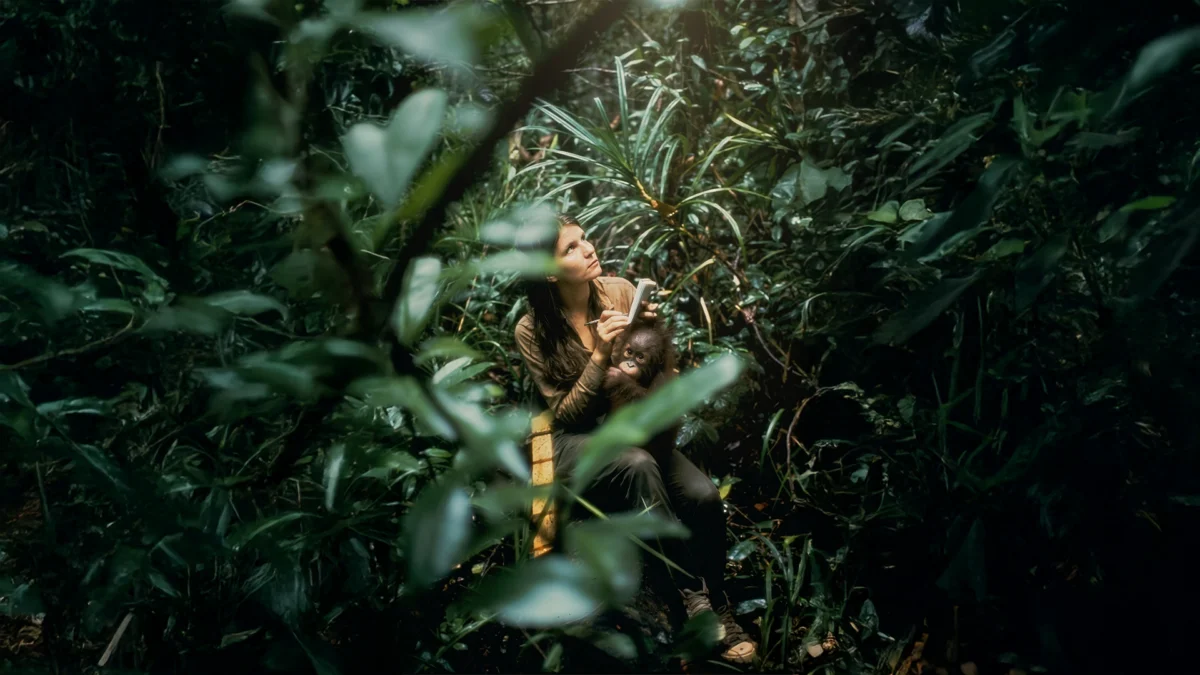
The global scientific community and conservationists worldwide are mourning the loss of Biruté Marija Filomena Galdikas, the preeminent authority on orangutans, who passed away on Tuesday, March 24, 2026. Galdikas, who was just weeks shy of her 80th birthday, breathed her last at 4:30 AM local time in Los Angeles, California. Her death marks the end of an era for primatology, as she was the last surviving member of the "Trimates," the trio of legendary female researchers handpicked by paleoanthropologist Louis Leakey to study great apes in their natural habitats.
Galdikas’s passing was confirmed by her son, Frederick Bohap Galdikas, who remained by her side during her final moments. Also present was Ruth Linsky, a doctoral student and close associate who had worked extensively under Galdikas’s mentorship. In a statement shared from Los Angeles, Linsky expressed the profound grief felt by those who worked with the professor at the Tanjung Puting National Park in Central Kalimantan, Indonesia. According to Robert Ferdinand Yappi, the field coordinator for Orangutan Foundation International (OFI) in Pangkalan Bun, Galdikas had been battling declining health for some time. Her last visit to her beloved research site in Indonesia was in November 2024, during which she continued to engage with local communities and oversee forest management projects despite her physical frailty. The cause of death was cited as complications arising from pneumonia.
A Legacy Rooted in the Rainforests of Borneo
Born in Germany in 1946 to Lithuanian parents and raised in Canada, Biruté Galdikas’s journey into the heart of the Indonesian jungle was anything but conventional. After earning her bachelor’s degrees in psychology and zoology and a master’s in anthropology from the University of California, Los Angeles (UCLA), she sought out Louis Leakey. Leakey, who had already sponsored Jane Goodall to study chimpanzees in Tanzania and Dian Fossey to study mountain gorillas in Rwanda, was initially skeptical of Galdikas’s resolve. However, her persistence eventually won him over, and in 1971, at the age of 25, she arrived in the Tanjung Puting Reserve in Central Kalimantan.
![Selamat Jalan Birute Galdikas, Ibu Orangutan Kalimantan [1]](https://indomgb.s3.amazonaws.com/wp-content/uploads/2026/03/31104604/Birute-768x512.jpeg)
At the time, very little was known about the "man of the forest." While Goodall and Fossey had made significant strides with African apes, the orangutan remained an enigma—a solitary, canopy-dwelling primate that was notoriously difficult to track. Galdikas established "Camp Leakey," named in honor of her mentor, and began what would become the longest continuous study of a single wild mammal species by a single principal investigator in scientific history.
Her early years in the field were defined by extreme hardship. Accompanied by her first husband, photographer Rod Brindamour, Galdikas navigated a landscape of peat swamps, biting insects, and tropical diseases. Living in a primitive hut with a thatched roof, she spent years following wild orangutans through the dense undergrowth, documenting their diet, social structures, and reproductive cycles. Her work revealed that orangutans share approximately 97% of their DNA with humans and play a critical role as "gardeners of the forest" by dispersing seeds across vast distances.
From Research to Radical Activism
As the decades passed, Galdikas’s role evolved from that of a detached observer to a fierce advocate for the survival of the species. By the 1980s, the rapid expansion of the palm oil industry, illegal logging, and the pet trade began to decimate the orangutan population. Recognizing that scientific papers alone would not save the species from extinction, Galdikas founded Orangutan Foundation International (OFI) in 1986.
Under her leadership, OFI became a global powerhouse for conservation, establishing branches in Australia, Canada, and the United Kingdom. In Indonesia, her work took on a deeply personal dimension. After her marriage to Brindamour ended, she married Bohap bin Jalan, a local Dayak man from the village of Pasir Panjang. This union further rooted her in the local culture and strengthened her ties to the community she sought to protect. Together, they worked to bridge the gap between international conservation goals and the socio-economic realities of the people living near the park.
![Selamat Jalan Birute Galdikas, Ibu Orangutan Kalimantan [1]](https://indomgb.s3.amazonaws.com/wp-content/uploads/2026/03/31104604/Birute.jpeg)
One of Galdikas’s most significant contributions was the establishment of the Orangutan Care Centre and Quarantine (OCCQ) in Pasir Panjang in 1998. This facility became a sanctuary for orphaned and displaced orangutans, many of whom had lost their mothers to poachers or habitat destruction. Galdikas pioneered rehabilitation techniques, teaching captive orangutans the skills they needed to survive in the wild—a process that often took years of dedicated effort.
The 1991 Great Ape Conference and Global Recognition
Galdikas’s influence reached a zenith in December 1991 when she organized the first-ever International Great Ape Conference. Held in Jakarta and Pangkalan Bun, the event was opened by President Soeharto and attended by 93 scientists from 13 countries, including her fellow Trimate, Jane Goodall. The conference culminated in the "Tanjung Puting Declaration," a landmark document that called for global cooperation to protect biodiversity and ensure the survival of great apes.
Her dedication did not go unnoticed by the Indonesian government. In 1997, she was awarded the Kalpataru, Indonesia’s highest honor for environmental leadership. She was the first person of non-Indonesian birth to receive the award, a testament to her lifelong commitment to the nation’s natural heritage. Internationally, she received numerous accolades, including the Tyler Prize for Environmental Achievement and the Officer of the Order of Canada.
Beyond her awards, Galdikas was a prolific educator. She served as a professor at Simon Fraser University in Canada and as a visiting professor at the National University (Unas) in Jakarta. She mentored generations of Indonesian primatologists, including prominent figures such as Jatna Supriatna and Endang Sukara, ensuring that her scientific legacy would continue through local expertise.
![Selamat Jalan Birute Galdikas, Ibu Orangutan Kalimantan [1]](https://indomgb.s3.amazonaws.com/wp-content/uploads/2026/03/31105606/2.-Birute-Galdikas-saat-mengunjungi-masyarakat-di-Kabupaten-Lamandau-Oktober-2024.-Ia-memberikan-buku-tentang-orangutan.jpeg)
A Maternal Bond with the "Kahiyu"
To the people of Central Kalimantan, Galdikas was more than a scientist; she was the "Mother of Orangutans." Her approach to conservation was characterized by a deep, almost maternal empathy for the animals. Fajar Dewanto, a long-time staff member at OFI, recalled that Galdikas strictly forbade the use of force or violence against the primates. "She treated them like humans," Dewanto noted.
This emotional connection often influenced her professional decisions. Unlike some conservationists who advocated for a hands-off approach, Galdikas was deeply involved in the post-release monitoring of rehabilitated orangutans. She insisted on being present for almost every release and maintained a rigorous system for tracking the animals’ health and integration into the wild. If a released orangutan fell ill, OFI staff were instructed to provide medical intervention, a policy that reflected her belief that every individual life was precious.
This "human-centric" approach to primatology occasionally drew criticism from more traditional scientific circles, but Galdikas remained steadfast. She argued that in the face of an extinction crisis, the line between researcher and protector must inevitably blur. Her 1995 autobiography, Reflections of Eden: My Years with the Orangutans of Borneo, detailed this philosophy, portraying the orangutan not just as a biological specimen, but as a sentient being with a complex emotional life.
Economic Transformation and the Future of Tanjung Puting
The impact of Galdikas’s work extended far beyond the forest canopy; it transformed the local economy of Central Kalimantan. Today, Tanjung Puting National Park is one of Indonesia’s premier ecotourism destinations. In 2025, the park recorded nearly 80,000 visitors, the majority of whom were international tourists drawn by the opportunity to see orangutans at the feeding platforms Galdikas helped establish.
![Selamat Jalan Birute Galdikas, Ibu Orangutan Kalimantan [1]](https://indomgb.s3.amazonaws.com/wp-content/uploads/2026/03/31110105/1.-Birute-Galdikas-selalu-terlibat-dalam-pelepasliaran-satwa.-Ini-adalah-foto-pelepasliaran-macan-dahan-di-Sungai-Buluh-kawasan-Taman-Nasional-Tanjung-Puting-TNTP-pada-2018.jpg)
This influx of tourism has generated billions of rupiah in revenue for the state and created a sustainable livelihood for thousands of local residents. Former loggers and miners have transitioned into roles as tour operators, guides, and boat captains. Fajar Dewanto highlighted this shift as one of Galdikas’s greatest achievements: "The community is now deeply involved in conservation because they see the economic benefit. Their behavior has changed because they have a stake in the forest’s survival."
However, Galdikas’s passing leaves a significant void. While the infrastructure of OFI and the management of the national park remain robust, her personal authority and global voice were instrumental in holding back the tide of industrial encroachment. As the palm oil industry continues to exert pressure on the borders of protected areas, the "Tanjung Puting model" of conservation-driven tourism faces ongoing challenges.
Chronology of a Lifelong Mission
- 1946: Born in Wiesbaden, Germany.
- 1966-1969: Completes undergraduate and master’s studies at UCLA.
- 1971: Arrives in Tanjung Puting, Indonesia, to begin orangutan research.
- 1978: Successfully defends her doctoral dissertation on orangutan adaptation.
- 1986: Establishes Orangutan Foundation International (OFI).
- 1989: Appointed Professor at Simon Fraser University.
- 1991: Organizes the first International Great Ape Conference in Jakarta.
- 1995: Publishes her memoir, Reflections of Eden.
- 1997: Receives the Kalpataru Award from the Indonesian government.
- 1998: Opens the Orangutan Care Centre and Quarantine (OCCQ).
- 2024: Conducts her final field visit to Lamandau and Kotawaringin Barat.
- 2026: Passes away in Los Angeles at the age of 79.
The End of an Era
Biruté Galdikas was the last of the "Trimates," following the death of Dian Fossey in 1985 and the ongoing retirement of Jane Goodall from active field research. Her life was a testament to the power of individual conviction in the face of overwhelming odds. She entered the jungle as a young scientist and left it as a global icon, having fundamentally changed how the world perceives the orangutan.
As news of her death spreads, tributes are pouring in from around the globe. Environmental organizations, world leaders, and the local communities of Kalimantan have expressed their gratitude for her nearly six decades of service. While the "Mother of Orangutans" is gone, her legacy lives on in the thousands of acres of forest she saved, the hundreds of orangutans she returned to the wild, and the movement of conservationists she inspired to carry the torch forward. The survival of the "Kahiyu" in the 21st century remains her most enduring monument.