Bambang Pamungkas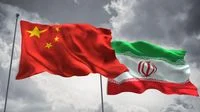
The geopolitical landscape has been irrevocably altered by a series of dramatic and interconnected events, plunging the world into an era of heightened instability. On February 28, 2026, a joint military operation by the United States and Israel against Iran ignited a full-scale conflict in the Middle East, leading to the reported assassination of Iran’s Supreme Leader, Ayatollah Ali Khamenei, along with several high-ranking Iranian officials. This unprecedented strike immediately triggered severe retaliatory actions from Tehran, including direct assaults on U.S. military installations across the Middle East and, critically, the closure of the Strait of Hormuz, a vital artery for global oil trade. Simultaneously, and underscoring the multi-faceted nature of modern warfare, the European Union announced it had been subjected to widespread cyberattacks attributed to state-sponsored actors from both China and Iran, leading to swift punitive sanctions against three companies implicated in these digital incursions. This confluence of physical and digital aggression signals a profound shift in international relations, with far-reaching implications for global security, economic stability, and the future of cybersecurity.
The Middle East Erupts: Assassination and Retaliation
The February 28, 2026, attack marked a perilous escalation in the long-simmering tensions between Iran and Western powers. While details surrounding the specific targets and methodologies of the joint U.S.-Israeli operation remain partially obscured by strategic ambiguity, reports confirmed the devastating impact on Iran’s leadership. The death of Ayatollah Ali Khamenei, who had served as Supreme Leader since 1989, represents an immense blow to Iran’s political and religious establishment, potentially triggering a power vacuum and profound internal instability. His demise, alongside other senior figures, is expected to send shockwaves through the country’s intricate web of political, military, and religious institutions, raising questions about succession and the future trajectory of Iran’s foreign and domestic policies.
In a swift and furious response, Iran launched a series of retaliatory missile and drone attacks targeting U.S. military bases throughout the Middle East. While specific casualty figures and damage assessments from these Iranian counter-strikes were not immediately fully disclosed by official U.S. sources, initial reports indicated significant damage and potential personnel losses, further fueling the cycle of aggression. These actions underscore Iran’s declared commitment to avenge the attack on its leadership and its capacity to project military power across the region, utilizing its extensive arsenal of ballistic missiles, cruise missiles, and unmanned aerial vehicles. The immediate aftermath saw a rapid increase in alert levels for all military forces in the region, with international observers expressing grave concerns about the potential for wider regional conflict involving an array of state and non-state actors.
Strait of Hormuz: A Global Economic Chokepoint Closed
Adding another layer of global crisis, Iran’s retaliation extended to the strategic closure of the Strait of Hormuz. This narrow waterway, situated between the Persian Gulf and the Gulf of Oman, is arguably the world’s most critical oil chokepoint, through which approximately one-fifth of global oil consumption, and a substantial portion of liquefied natural gas (LNG), passes daily. The closure, implemented through naval blockades and the credible threat of force against commercial shipping, immediately sent crude oil prices spiraling upwards. Benchmark Brent crude futures surged by an unprecedented 25% within hours of the announcement, breaching the $150 per barrel mark and threatening to trigger a global energy crisis.
The economic implications of such a closure are catastrophic. Global supply chains, already fragile from previous disruptions, face severe bottlenecks. Energy-dependent industries, from transportation and manufacturing to agriculture, are bracing for soaring operational costs, which will inevitably translate into higher consumer prices and inflationary pressures worldwide. Analysts from major financial institutions immediately began revising global growth forecasts downwards, with many predicting a significant risk of a global recession if the closure persists. This move by Iran, while a powerful statement of its resolve and a significant leverage point, simultaneously carries immense risks for the global economy, impacting nations far beyond the immediate conflict zone.
Chronology of Escalation: From Decades of Tension to Direct Conflict
The events of late February 2026 did not unfold in a vacuum but are the culmination of decades of complex geopolitical friction. Tensions between the United States and Iran have been a persistent feature of Middle Eastern politics since the 1979 Iranian Revolution, punctuated by disputes over Iran’s nuclear program, its regional influence, and its support for various proxy groups. The U.S. withdrawal from the Joint Comprehensive Plan of Action (JCPOA) in 2018 and the subsequent re-imposition of sanctions further exacerbated hostilities, leading to a series of tit-for-tat actions, including attacks on oil tankers, drone incidents, and cyber warfare.
Israel, for its part, has long viewed Iran as its primary existential threat, citing Tehran’s nuclear ambitions, its ballistic missile program, and its funding of militant groups like Hezbollah and Hamas. Israel has consistently advocated for a hardline approach against Iran and has reportedly conducted numerous covert operations against Iranian nuclear facilities and military assets in recent years.
While the immediate catalyst for the February 28, 2026, joint U.S.-Israeli strike remains subject to ongoing analysis, intelligence reports prior to the attack had indicated a heightened state of alert regarding Iran’s alleged acceleration of its nuclear enrichment activities and specific threats against U.S. and Israeli interests in the region. The decision to target the Supreme Leader directly represents an extreme departure from previous engagement strategies, signaling a profound shift in the rules of engagement and a clear intent to dismantle the core of Iran’s leadership structure. Iran’s swift and widespread retaliation, targeting multiple U.S. bases simultaneously, demonstrated its preparedness for such an eventuality and its doctrine of overwhelming response.
The Digital Battlefield: EU Under Cyber Siege
In a parallel and equally concerning development, the European Union revealed it had fallen victim to a series of sophisticated cyberattacks, attributing them to state-sponsored actors from China and Iran. This announcement, made amidst the escalating physical conflict in the Middle East, underscored the growing interconnectedness of geopolitical tensions and the digital realm, highlighting that modern warfare transcends traditional battlefields. The attacks targeted critical infrastructure and information networks across several EU member states, signifying a deliberate campaign to disrupt, spy, and sow discord.
The nature of these cyber incursions varied, ranging from espionage to direct disruption. The EU’s statement indicated a complex array of tactics, including advanced persistent threats (APTs), supply chain attacks, and sophisticated disinformation campaigns. These digital assaults not only aim to steal sensitive data and intellectual property but also to destabilize public trust, influence political processes, and potentially lay groundwork for future, more damaging attacks on essential services such.
EU Imposes Sanctions: Targeting State-Sponsored Cyber Threats
In response to these digital aggressions, the European Union formally imposed sanctions on March 22, 2026, against three companies identified as central to the cyber campaigns. Two Chinese entities, Integrity Technology Group and Anxun Information Technology, alongside the Iranian firm Emennet Pasargad, were added to the EU’s sanctions list. This decisive action reflects the EU’s commitment to protecting its digital sovereignty and its critical infrastructure from malicious state-sponsored activities.
Integrity Technology Group, a Chinese company, stands accused of orchestrating the hacking of over 65,000 devices across six EU member states. These breaches, according to Reuters, involved sophisticated malware deployment and network penetration, likely aimed at intelligence gathering and establishing persistent access to government and corporate networks. The scale and breadth of this operation suggest a highly organized and resourced effort.
Anxun Information Technology, another Chinese firm, was sanctioned for providing advanced hacking services specifically targeting vital infrastructure. The allegations suggest that Anxun offered "hacking-as-a-service" to state clients, enabling them to exploit vulnerabilities in critical systems such as energy grids, telecommunications networks, and financial institutions. The EU also took the significant step of sanctioning two founders of Anxun Information Technology individually, underscoring the intent to hold specific individuals accountable for their involvement in cybercrimes.
The Iranian company, Emennet Pasargad, faced sanctions for its alleged role in disinformation campaigns. Specifically, it was accused of breaching digital billboards during the Paris Olympics 2024, altering content to spread propaganda and manipulate public opinion. This incident highlights the evolving nature of information warfare, where digital manipulation extends beyond online platforms to physical public spaces, aiming to create real-world impact and psychological disruption.
The sanctions levied by the EU include asset freezes for the designated companies and individuals, prohibiting them from accessing financial resources within EU jurisdiction. Furthermore, individuals involved face travel bans, preventing them from entering or transiting through EU territories. Critically, all EU citizens and companies are now prohibited from providing any financial support or resources to these blacklisted entities, effectively isolating them from the vast EU market and financial system.
Chronology of Cyber Response: EU’s Path to Sanctions
The EU’s response to these cyberattacks followed a methodical process of detection, analysis, and coordinated action. Initial alerts were triggered by national cybersecurity agencies within member states, reporting unusual network activities and breaches targeting governmental, defense, and critical infrastructure entities. Cybersecurity experts, leveraging intelligence-sharing frameworks such like those within the EU Agency for Cybersecurity (ENISA), began to meticulously piece together the origins and methodologies of the attacks.
The attribution process, a notoriously complex aspect of cyber warfare, involved advanced forensic analysis, correlation of threat intelligence, and collaboration with international partners. The EU’s High Representative for Foreign Affairs and Security Policy, alongside the European Commission, played a pivotal role in consolidating evidence and building a robust case for sanctioning. The decision to name and sanction specific entities from China and Iran on March 22, 2026, signifies a high degree of confidence in the intelligence gathered, moving beyond general accusations to specific accountability. This also marks a hardening of the EU’s stance on cyber sovereignty, indicating a readiness to employ significant diplomatic and economic tools to deter state-sponsored cyber aggression.
Global Reactions and Denials
The dual crises have elicited strong reactions from across the globe. The United States and Israel have likely reiterated their justifications for the strike on Iran, framing it as a necessary measure to protect national security interests and prevent regional destabilization, while also calling for international efforts to restore stability to the Middle East.
Iran, on the other hand, has vociferously condemned the U.S.-Israeli action as an act of state terrorism and a blatant violation of international law. It has vowed further retaliation and called on its regional allies to stand united against what it perceives as Western aggression. Regarding the cyberattacks, Tehran has predictably denied any involvement, dismissing the EU’s sanctions as politically motivated and baseless accusations designed to divert attention from the Middle East conflict.
China has also issued a strong denial of the EU’s accusations regarding cyberattacks, expressing firm opposition to the sanctions. Beijing has characterized the measures as unilateral and unjust, potentially accusing the EU of engaging in "cyber witch-hunts" without sufficient proof and leveraging cybersecurity as a pretext for geopolitical maneuvering. Such denials are standard practice in state-sponsored cyber operations, making definitive public attribution and accountability a continuous challenge.
The European Union, through its foreign policy chief, has emphasized the need for a robust and collective defense against cyber threats, underscoring its commitment to international law and responsible state behavior in cyberspace. The EU has called for greater international cooperation to establish norms for cyberspace and to hold malicious actors accountable, irrespective of their state affiliation.
International bodies such as the United Nations and the G7 have expressed profound concern over the escalating violence in the Middle East and the potential for a wider conflagration. They have urged all parties to exercise maximum restraint, engage in de-escalation, and seek diplomatic solutions to avert a humanitarian catastrophe and a global economic collapse. Warnings have been issued regarding the catastrophic economic fallout from the Strait of Hormuz closure, with calls for its immediate reopening.
Broader Implications: A World on Edge
The interconnected crises unfolding across the Middle East and the digital realm pose unprecedented challenges to global stability.
Geopolitical Shifts: The assassination of Ayatollah Ali Khamenei creates an immediate and profound leadership vacuum in Iran. The succession process will be critical, determining Iran’s future foreign policy orientation and its relationship with regional and global powers. It could lead to internal power struggles, potentially empowering hardliners or, conversely, creating an opportunity for a shift in governance. The conflict has also solidified existing alliances and deepened fissures, further fragmenting the Middle East and challenging established regional power dynamics.
Economic Tremors: The closure of the Strait of Hormuz represents an existential threat to the global economy. Sustained high oil prices will fuel inflation, reduce consumer spending, and stifle industrial output, pushing many economies into recession. Supply chain disruptions will extend beyond energy, affecting manufacturing, agriculture, and retail sectors worldwide. Nations heavily reliant on oil imports, particularly in Asia and Europe, face severe economic headwinds, potentially accelerating a global pivot towards alternative energy sources and increased energy independence efforts.
The Future of Cyber Warfare: The EU sanctions against Chinese and Iranian entities underscore the urgent need for international norms and conventions in cyberspace. As state-sponsored cyberattacks become more sophisticated and pervasive, targeting critical infrastructure and democratic processes, the distinction between peace and conflict blurs. The events highlight the imperative for all nations to bolster their cybersecurity defenses, invest in threat intelligence, and develop robust response mechanisms. The weaponization of information and digital infrastructure will continue to be a defining feature of geopolitical competition, demanding greater international collaboration on attribution, deterrence, and resilience.
International Law and Diplomacy: These crises severely test the efficacy of international law and multilateral diplomacy. The direct targeting of a head of state, the closure of a vital international waterway, and state-sponsored cyberattacks all raise fundamental questions about sovereignty, the right to self-defense, and the boundaries of acceptable state behavior. The capacity of institutions like the UN to mediate and enforce international norms will be under intense scrutiny as the world grapples with the fallout.
In conclusion, the events of February and March 2026 have ushered in a new era of global uncertainty. The Middle East stands on the brink of wider conflict, the global economy faces an unprecedented energy crisis, and the digital domain has emerged as a frontline in geopolitical rivalries. The interconnectedness of these challenges demands a coordinated and robust international response, yet the deep divisions among major powers suggest that a path to stability will be fraught with difficulty, leaving the world on edge as it navigates this complex and dangerous landscape.