Azin Asro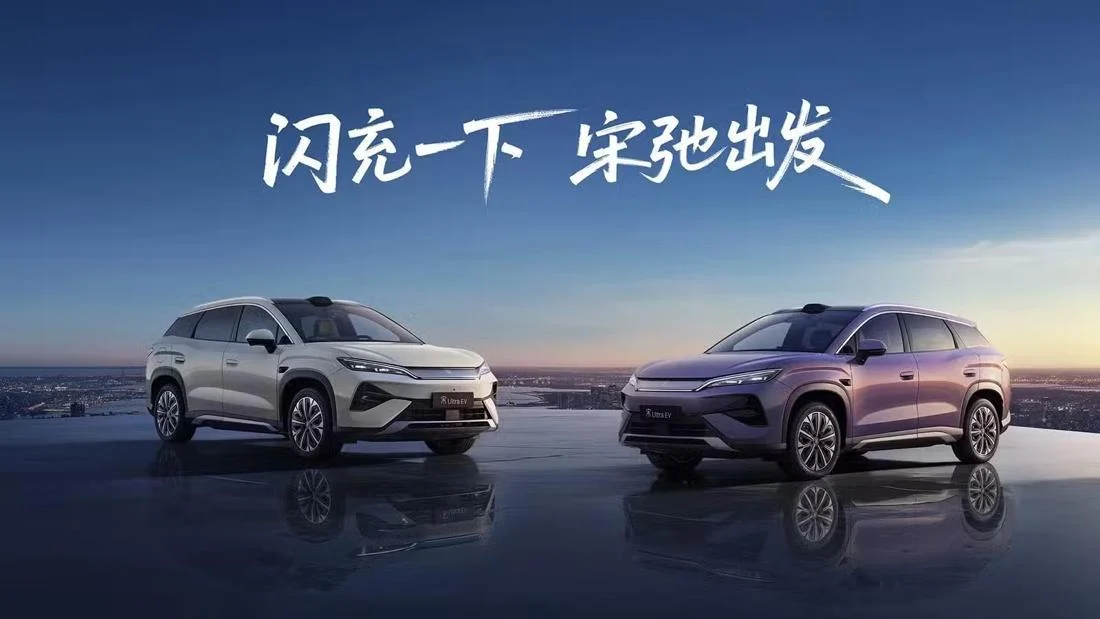
The global electric vehicle landscape has witnessed a significant shift as BYD, the world’s leading manufacturer of new energy vehicles, officially launched its latest flagship SUV, the BYD Song Ultra EV. This release marks a pivotal moment for the Shenzhen-based automaker, as the Song Ultra EV serves as the debut platform for several of the company’s most advanced technological innovations, including the highly anticipated second-generation Blade Battery and a revolutionary flash-charging architecture. By positioning this vehicle at a starting price of 151,900 yuan (approximately Rp 372 million), BYD has not only undercut its own pre-sale estimates of 155,000 yuan but has also sent a clear signal to competitors in the mid-sized SUV segment. This aggressive pricing strategy, combined with high-end performance specifications, aims to solidify BYD’s dominance in a market increasingly crowded by both domestic rivals and international legacy automakers.
Technical Specifications and Engineering Excellence
The BYD Song Ultra EV is engineered to compete in the highly contested mid-sized SUV category, boasting dimensions that prioritize both aerodynamic efficiency and interior spatial comfort. The vehicle measures 4,850 millimeters in length and features a generous wheelbase of 2,840 mm. This architecture allows for a spacious cabin environment, catering to the demands of modern families and tech-savvy professionals alike. The exterior design follows BYD’s "Dragon Face" evolution, integrating sleek lines with functional aerodynamic elements to minimize drag and maximize range.
Under the hood, or more accurately, beneath the chassis, the Song Ultra EV utilizes a single-motor rear-wheel-drive configuration. This powertrain is capable of delivering a maximum power output of 270 kW, allowing the SUV to reach a top speed of 210 km/h. Such performance figures place the Song Ultra EV at the top of its class, offering a driving experience that balances daily utility with spirited performance. The decision to employ a rear-wheel-drive setup highlights BYD’s commitment to improved handling dynamics and traction control, which are essential for a vehicle of this size and power.
The Second-Generation Blade Battery and Flash Charging Capabilities
The most significant technological leap found in the Song Ultra EV is the integration of BYD’s second-generation Blade Battery. Since its inception, the Blade Battery—a lithium iron phosphate (LFP) cell-to-pack technology—has been lauded for its safety, longevity, and energy density. The second generation pushes these boundaries further, offering enhanced thermal management and power discharge rates.
The Song Ultra EV is offered with two primary battery configurations, providing range options of 605 km and 710 km under standardized testing cycles. However, it is the "flash charging" capability that has captured the industry’s attention. Under optimal temperature conditions, the vehicle can replenish its battery from 10 percent to 70 percent in just five minutes. A nearly full charge of 97 percent can be achieved in a mere nine minutes. This level of charging speed effectively eliminates "range anxiety," bringing the EV refueling experience closer to the time required to fill a traditional internal combustion engine vehicle with gasoline.
Furthermore, BYD has addressed one of the most persistent challenges for electric vehicles: performance in cold climates. The Song Ultra EV’s thermal management system is so advanced that even in extreme temperatures as low as minus 30 degrees Celsius, the charging time only increases by approximately three minutes. This resilience makes the vehicle a viable option for consumers in northern latitudes, where EV adoption has previously been hindered by battery efficiency drops during winter months.
Intelligent Chassis and Safety Innovations
Safety and ride quality are central pillars of the Song Ultra EV’s design. The vehicle comes standard with the DiSus-C intelligent damping body control system. Part of BYD’s broader DiSus Intelligent Body Control System family, the "C" variant focuses on active damping, allowing the vehicle to adjust its suspension firmness in real-time based on road conditions. This results in a smoother ride over uneven surfaces and increased stability during high-speed cornering or sudden maneuvers.
In an industry-first safety move for this segment, the Song Ultra EV also features a specialized flat tire stabilization system. This technology is designed to maintain vehicle control even in the event of a sudden tire blowout at speeds of up to 140 km/h. By integrating electronic stability control with the chassis’s active components, the system prevents the vehicle from swerving or flipping, providing a critical layer of protection for passengers.
The vehicle’s "intelligence" extends to its autonomous driving and driver-assistance features. Equipped with a suite of 27 high-precision sensors, including ultrasonic radars, millimeter-wave radars, and high-definition cameras, the Song Ultra EV supports comprehensive urban navigation assistance. These sensors facilitate a "full-scenario" intelligent parking function, which can navigate complex garage environments and tight street spots with minimal driver intervention.
Market Context and Competitive Landscape
The launch of the Song Ultra EV occurs against the backdrop of an intense "price war" in the Chinese automotive market. BYD’s decision to launch the vehicle at 151,900 yuan—lower than its initial pre-sale price—is a calculated move to capture market share from established players. The Song Ultra EV is positioned as a direct challenger to the Xpeng G6 and the Leapmotor C11, both of which have gained popularity for their tech-forward approach.
Industry analysts suggest that BYD’s vertical integration—manufacturing its own batteries, semiconductors, and motors—allows it to maintain margins that other manufacturers cannot match. This cost advantage is being passed on to the consumer, making high-end EV technology accessible to a broader demographic. The market response has been immediate and overwhelming. Since the pre-sale period began on March 6, BYD has recorded over 21,586 firm orders for the Song Ultra EV, signaling strong consumer confidence in the product’s value proposition.
Chronology of the Song Ultra EV Launch
The journey of the BYD Song Ultra EV from concept to market has been swift, reflecting the rapid pace of innovation in the Chinese EV sector.
- Early 2024: Rumors began to circulate regarding a "super-fast charging" SUV within BYD’s Dynasty series.
- March 6, 2024: BYD officially opened pre-sales for the Song Ultra EV, announcing a starting price of 155,000 yuan. The event showcased the second-generation Blade Battery for the first time.
- March to August 2024: The vehicle underwent rigorous testing in various climates, including extreme heat in Turpan and extreme cold in Hailar, to validate the new thermal management systems.
- August 2024: Official launch event in Jakarta and Beijing, where the final price was revealed to be lower than the pre-sale estimate, sparking a surge in final bookings.
- September 2024: Mass deliveries are scheduled to begin, with BYD ramping up production capacity at its dedicated EV plants to meet the backlog of over 21,000 orders.
Broader Implications for the Global EV Industry
The introduction of the BYD Song Ultra EV has implications that reach far beyond the borders of China. As BYD continues its aggressive global expansion into Southeast Asia, Europe, and Latin America, the technologies debuted in the Song Ultra EV are expected to become the new standard for the brand’s international offerings.
The 5-minute flash charging capability, in particular, sets a new benchmark for the industry. While Tesla’s Supercharger network and 800V architectures from brands like Porsche and Hyundai have made strides in charging speed, BYD’s ability to offer such performance in a mass-market vehicle priced under $25,000 USD is a disruptive force. It puts pressure on global automakers to accelerate their R&D cycles or risk losing relevance in the transition to electrification.
Moreover, the focus on LFP (Lithium Iron Phosphate) chemistry through the Blade Battery provides a more sustainable and cost-effective alternative to Nickel Cobalt Manganese (NCM) batteries. By proving that LFP batteries can achieve high ranges (710 km) and extreme charging speeds, BYD is challenging the notion that high-performance EVs must rely on expensive and environmentally contentious materials like cobalt.
Conclusion and Future Outlook
The BYD Song Ultra EV is more than just a new car; it is a showcase of the current peak of electric vehicle engineering. By combining the safety and efficiency of the second-generation Blade Battery with the comfort of the DiSus-C suspension and the security of flat-tire stabilization technology, BYD has created a compelling package that is difficult for competitors to ignore.
As the 21,586 initial buyers begin to take delivery, the real-world performance of the Song Ultra EV will be closely watched by industry experts. If the "flash charging" and extreme cold performance hold up to the company’s claims in everyday use, the Song Ultra EV may well become the blueprint for the next generation of affordable, high-performance electric SUVs worldwide. For now, BYD has once again demonstrated its ability to lead the market, not just through volume, but through genuine technological disruption.