
 Azin Asro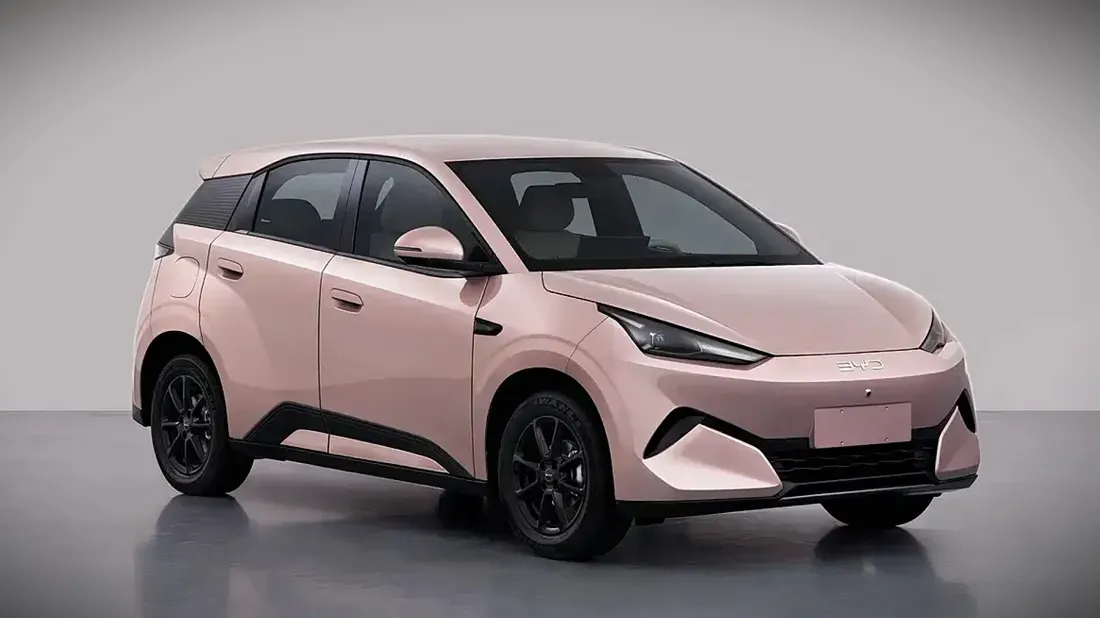
The global electric vehicle landscape is on the brink of another significant disruption as Chinese automotive giant BYD prepares to launch the second-generation version of its immensely popular compact hatchback, globally recognized in various markets as the BYD Seagull or the BYD Atto 1. Positioned strategically as an accessible entry point into zero-emission mobility, the upcoming iteration transcends traditional budget-car limitations by incorporating high-end luxury amenities typically reserved for premium segments. Industry reports and official disclosures originating from automotive media in China indicate that the heavily revised hatchback will introduce an array of comfort, technological, and architectural upgrades, headlined by an integrated driver massage seat, advanced digital interfaces, an optimized rear-wheel-drive platform, and groundbreaking charging capabilities. This comprehensive overhaul underscores BYD’s aggressive strategy to dominate both domestic and international markets by continually raising consumer expectations regarding what an affordable electric vehicle can deliver.
Evolution of a Global Bestseller: Main Facts and Product Overview
The first iteration of the BYD Seagull achieved phenomenal commercial success by offering remarkable value, modern styling, and practical electric performance. However, the impending second generation represents a dramatic evolutionary leap rather than a simple facelift. At the core of the new vehicle’s appeal is an upgraded cabin experience designed to maximize both driver ergonomics and passenger comfort.
According to specifications detailed by industry sources, the driver’s seat in the next-generation Seagull will feature power adjustability paired with an integrated pneumatic massage function—a rarity in the sub-compact hatchback category. This luxury touch is complemented by a sophisticated ambient lighting system that allows occupants to tailor the cabin atmosphere with a spectrum of color options.
Technological integration remains a focal point of the interior architecture. The dashboard is anchored by a prominent floating center console screen utilizing a distinctive 3/7 split-display design philosophy. The left-hand portion of this expansive panel functions as a fully digital instrument cluster, conveying critical driving metrics such as current vehicle speed, gear selection, cumulative trip distance, instantaneous energy consumption rates, and active driving modes. Meanwhile, the right-hand section serves as the command center for infotainment, multimedia playback, and real-time navigation systems, tailored specifically for left-hand drive configurations.
Practicality and clever packaging continue to be hallmarks of BYD’s engineering philosophy. The interior incorporates dual storage compartments ingeniously concealed beneath the second-row seating bench, alongside adjustable rear passenger air conditioning vents to ensure optimal climate distribution throughout the cabin. Furthermore, the vehicle retains BYD’s signature magnetic magic buttons, enhancing functional versatility for everyday use.
Architectural Redesign and Performance Enhancements
Underpinning the second-generation BYD Seagull is a profoundly re-engineered platform architecture that shifts the motor placement to the rear axle, transforming the hatchback into a rear-wheel-drive (RWD) vehicle. This mechanical realignment not only alters the driving dynamics to offer a more engaging and balanced handling profile but also frees up valuable space in the front of the vehicle. By relocating the propulsion unit entirely to the rear, engineers successfully carved out a generous 94-liter front trunk, commonly referred to as a "frunk," providing additional secure cargo storage alongside the traditional rear boot.
In terms of physical footprint, the new hatchback has grown to accommodate improved interior spaciousness. The vehicle measures 4,205 millimeters in length, 1,810 millimeters in width, and 1,570 millimeters in height, supported by a stretched wheelbase of 2,650 millimeters. Powering this compact frame is a robust permanent magnet synchronous motor delivering a peak output of 95 kilowatts.
Energy storage options have been tailored to suit diverse consumer needs, with BYD offering two distinct battery capacity configurations. Depending on the trim level chosen, buyers can select between a 30 kWh and a 39.2 kWh battery pack, utilizing BYD’s proprietary Blade Battery technology renowned for its exceptional thermal stability and safety credentials. Under the China Light-Duty Vehicle Test Cycle (CLTC), these battery configurations yield an estimated driving range spanning between 320 kilometers and 420 kilometers on a single charge, making it exceptionally well-suited for urban commuting and suburban transit.
Perhaps the most astonishing engineering breakthrough associated with the new platform is the inclusion of advanced thermal and electrical management systems capable of supporting ultra-fast flash charging. Industry insiders reveal that the updated Atto 1 variant will incorporate rapid-charging technology capable of replenishing the battery state from 10% to 97% in a mere nine minutes under optimal conditions. Additionally, higher-tier trims are expected to feature a roof-mounted LiDAR sensor suite, seamlessly integrated into BYD’s advanced driver-assistance system, known as the DiPilot 300, signaling a major leap forward in autonomous driving capabilities for entry-level electric vehicles.
Chronology and Strategic Rollout Timeline
The development and impending market introduction of the second-generation BYD Seagull reflect the rapid product lifecycle management characteristic of China’s dominant new energy vehicle (NEV) sector.
The original Seagull made its public debut at the Shanghai Auto Show, where it immediately captured global attention due to its aggressive pricing strategy and futuristic design language. Following its domestic commercial launch, the vehicle quickly scaled production volumes, consistently registering tens of thousands of monthly sales in China and solidifying BYD’s position as a global leader in vehicle electrification.
Anticipation for the second-generation model began building as patent filings and regulatory ministry disclosures from China’s Ministry of Industry and Information Technology (MIIT) surfaced, revealing a substantially larger body and revised mechanical layouts. Industry analysts tracking the supply chain noted that prototype testing commenced in late 2023, with road trials extending throughout the following year to stress-test the new RWD platform and thermal thresholds of the flash-charging architecture.
As manufacturing lines are currently being retooled for mass production, BYD is expected to officially unveil the production-ready second-generation Seagull/Atto 1 at an upcoming major international automotive exhibition in China. Commercial deliveries in the domestic market are slated to commence shortly after the official premiere, followed by a phased international export rollout targeting key emerging and developed automotive markets across Southeast Asia, Latin America, and Europe, where the first-generation model has already established a strong commercial footprint.
Market Implications and Strategic Analysis
The introduction of the second-generation BYD Seagull carries profound implications for the global automotive industry, particularly concerning the affordability and accessibility of electric vehicles. For years, automotive manufacturers have struggled to reconcile the high cost of advanced features—such as comfort-oriented pneumatic seating, sophisticated ADAS sensor suites, and ultra-fast charging systems—with the strict margin constraints of entry-level urban vehicles.
By leveraging its vertically integrated supply chain, which includes in-house battery manufacturing, semiconductor production, and software development, BYD continues to defy conventional economic barriers. The inclusion of premium amenities like driver massage seats and roof-mounted LiDAR in a vehicle targeted at the budget-conscious segment puts intense competitive pressure on legacy automakers. Traditional global brands that have relied on higher price points to amortize the research and development costs of advanced technologies now face a formidable challenge from Chinese manufacturers capable of scaling innovation rapidly across high-volume platforms.
Furthermore, the integration of ultra-fast flash charging capable of a near-complete recharge in under ten minutes addresses one of the primary consumer psychological barriers to electric vehicle adoption: charging anxiety. While urban commuters typically travel modest daily distances, the ability to rapidly replenish energy during incidental stops significantly enhances the practical utility of a compact hatchback, bridging the gap between city car and versatile all-rounder.
From a geopolitical and trade perspective, the global expansion of the upgraded Atto 1 is poised to reshape EV adoption curves in international territories. As trade authorities in various Western markets scrutinize the influx of competitively priced Asian electric vehicles through tariffs and regulatory hurdles, automakers like BYD are increasingly responding by localizing production, refining vehicle feature sets to match local consumer preferences, and establishing robust service networks.
Ultimately, the second-generation BYD Seagull serves as a bellwether for the broader trajectory of the automotive industry. It signals that the era of basic, stripped-down budget electric vehicles is drawing to a close, rapidly being replaced by a new paradigm where affordability no longer necessitates compromise on comfort, safety, or technological sophistication. As this model hits showrooms, competitors will undoubtedly be forced to accelerate their own product development timelines to match the unprecedented value proposition established by BYD’s latest engineering triumph.








