Nila Kartika Wati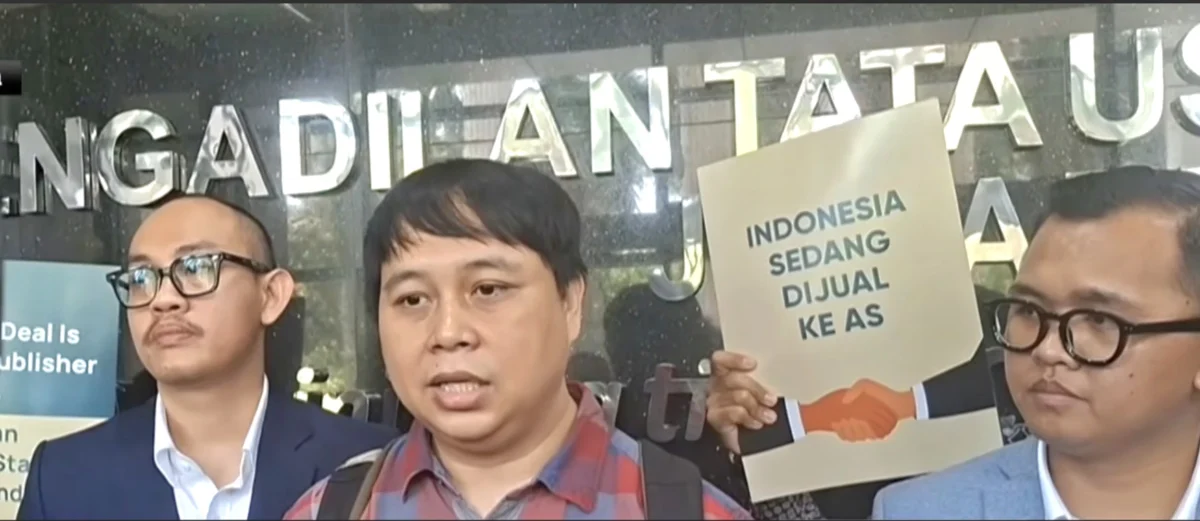
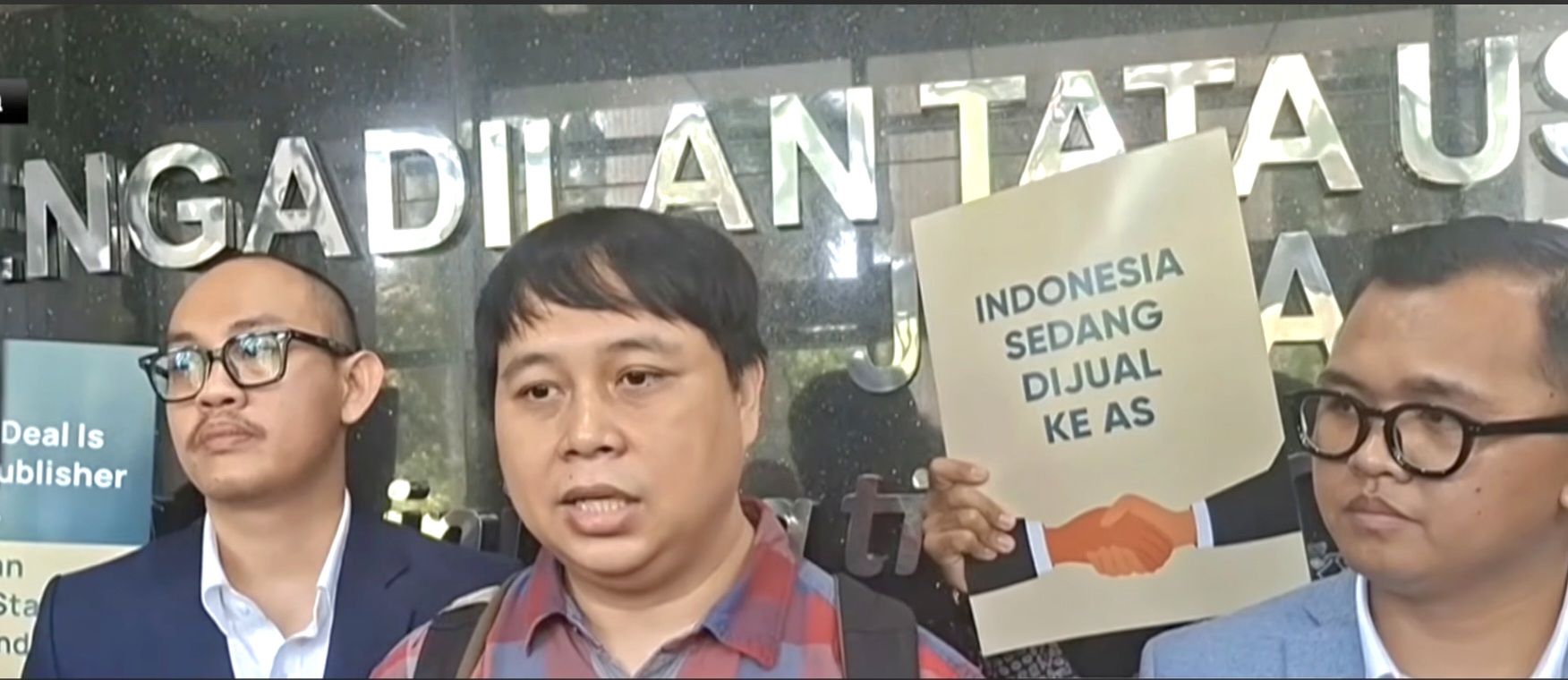
A broad coalition of Indonesian civil society organizations officially filed a lawsuit against the President of the Republic of Indonesia at the Jakarta State Administrative Court (PTUN) on March 11, 2026, alleging an "unlawful act by the government" (onrechtmatige overheidsdaad). The legal action centers on the administration’s decision to sign the Indonesia–United States Agreement on Reciprocal Trade (ART) without obtaining the necessary approval from the House of Representatives (DPR) and without facilitating meaningful public participation. The coalition, which includes the Center of Economic and Law Studies (Celios), the Alliance of Independent Journalists (AJI), Indonesia for Global Justice (IGJ), the Women’s Solidarity Union (Solidaritas Perempuan), Walhi National, and Trend Asia, contends that the trade pact poses systemic risks to Indonesia’s energy security, food sovereignty, and environmental integrity.
In addition to the main lawsuit, the plaintiffs have submitted a motion for a provisional injunction, requesting that the PTUN Jakarta suspend the implementation of the ART until a final and binding court decision is reached. The legal challenge highlights a deepening rift between the executive branch and civil society over the direction of Indonesia’s international trade policy, particularly regarding bilateral agreements that bypass legislative scrutiny.
The Legal Foundation of the Dispute
The coalition’s legal argument rests on several key constitutional and statutory pillars. They assert that the President’s unilateral signing of the ART violates Article 11 of the 1945 Constitution (UUD 1945), which mandates that any international agreement with significant impacts on state finances or those requiring changes to national laws must receive the consent of the DPR. Furthermore, the lawsuit cites violations of Law No. 24/2000 on International Treaties, specifically Articles 2 and 10, which outline the categories of treaties requiring legislative ratification.
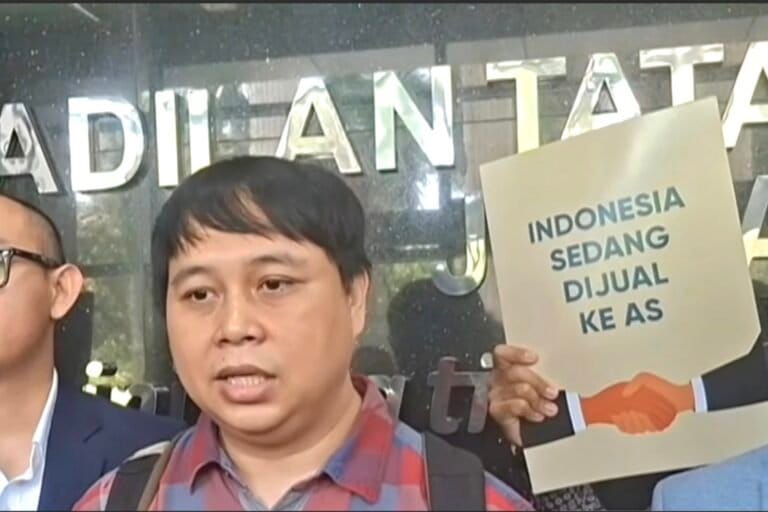
From an administrative perspective, the government is accused of breaching the General Principles of Good Governance (AAUPB) as stipulated in Law No. 30/2014 on Government Administration. The coalition argues that the lack of transparency and the exclusion of public discourse during the negotiation phase—which reportedly took place between April and December 2025—represents a failure of the state to uphold democratic processes. By bypassing the DPR, the government allegedly avoided the rigorous debate necessary to assess the long-term socio-economic consequences of the agreement.
Economic Vulnerabilities and the Threat of Deindustrialization
Bhima Yudhistira Adhinegara, Executive Director of Celios, pointed out that the substantive provisions of the ART are heavily skewed in favor of U.S. interests, potentially leading to significant economic losses for Indonesia. One of the most alarming clauses involves a mandatory obligation for Indonesia to import oil and gas from the United States valued at $15 billion (approximately Rp253.3 trillion). This requirement is expected to exacerbate Indonesia’s oil and gas trade deficit and increase the nation’s dependence on foreign energy sources at a time when global energy markets remain volatile.
Furthermore, the ART mandates the removal of various non-tariff barriers and certification requirements. This deregulation is predicted to trigger a surge in imported agricultural products, such as beef, milk, and cheese. Local farmers and cattle breeders, who already struggle with high production costs and limited infrastructure, may find it impossible to compete with subsidized U.S. imports.
The agreement also targets Indonesia’s industrialization strategy by seeking the abolition of Local Content Requirements (TKDN) for various imported goods. The coalition argues that this move directly contradicts Ministry of Industry Regulation (Permenperin) No. 35/2025, which was designed to empower domestic industries, facilitate technology transfer, and move Indonesia up the global value chain. The removal of TKDN protections could accelerate a process of "premature deindustrialization," where Indonesia reverts to being a mere exporter of raw materials and a consumer of high-value foreign finished goods.
Resource Sovereignty and the Mining Sector
The mining sector is another major point of contention within the ART. The coalition discovered clauses that open the door for absolute foreign ownership in the mining industry, a provision that stands in direct opposition to the divestment obligations mandated by Indonesia’s Mineral and Coal Mining Law (UU Minerba). Specifically, the agreement appears to circumvent Government Regulation (PP) No. 96/2021, which requires foreign mining companies to gradually divest their shares to Indonesian entities.
Melky Nahar, National Coordinator of the Mining Advocacy Network (Jatam), emphasized that the ART effectively locks Indonesia into an extractive regime that serves U.S. supply chains. For instance, the agreement includes an Annex that facilitates the export of "critical minerals" to the U.S. while restricting Indonesia’s ability to levy export taxes or impose domestic processing requirements. This undermines the government’s own "downstreaming" (hilirisasi) policy, which aims to ensure that mineral wealth is processed domestically to maximize economic returns.
Perhaps most controversially, a derivative Memorandum of Understanding (MoU) under the ART framework reportedly grants a long-term extension to Freeport-McMoRan for its operations at the Grasberg mine in Papua. This extension was allegedly negotiated without the involvement of the Papuan provincial government or the indigenous communities who are most directly impacted by the mine’s environmental and social footprint. Jatam describes this as a form of "permanent colonialism," where Papua is treated as a strategic mineral warehouse for foreign powers.
Environmental Paradoxes and Energy Transition
The environmental implications of the ART are equally concerning to the coalition. Despite global calls for a transition to renewable energy, the agreement reportedly forces Indonesia to purchase and facilitate the importation of U.S. coal. This creates a bizarre paradox where the Indonesian government is being pressured to cut domestic coal production for climate goals while simultaneously being legally bound to import coal from abroad.
The agreement also introduces high-risk energy options, including the mandatory development of nuclear power plants. Bhima Yudhistira argues that nuclear energy is inconsistent with the principles of a "just energy transition." The massive capital expenditure required for nuclear reactors could place an unsustainable fiscal burden on the state electricity company (PLN) and the national budget (APBN), diverting funds away from more accessible and safer renewable sources like solar and wind.
In addition to energy, the ART touches on waste management. Clauses regarding the processing of critical mineral waste and the importation of shredded second-hand clothing for "recycling" purposes have raised fears that Indonesia will become a dumping ground for U.S. electronic and textile waste. The coalition views these provisions as "false solutions" that use pro-environmental rhetoric to mask the externalization of waste from developed to developing nations.
Geopolitical Shifts and Foreign Policy
The ART is seen by analysts as a tool for the United States to draw Indonesia into an exclusive trade bloc, potentially compromising Jakarta’s long-standing "free and active" (bebas aktif) foreign policy. The agreement reportedly contains "exclusivity" clauses that limit Indonesia’s ability to enter into similar trade arrangements with countries deemed "adversarial" to U.S. interests.
"The ART creates a stigma where the trade enemies of the U.S. are effectively treated as the enemies of Indonesia," the coalition stated. This geopolitical alignment could damage Indonesia’s relations with other major trading partners and reduce its strategic autonomy in the Indo-Pacific region.
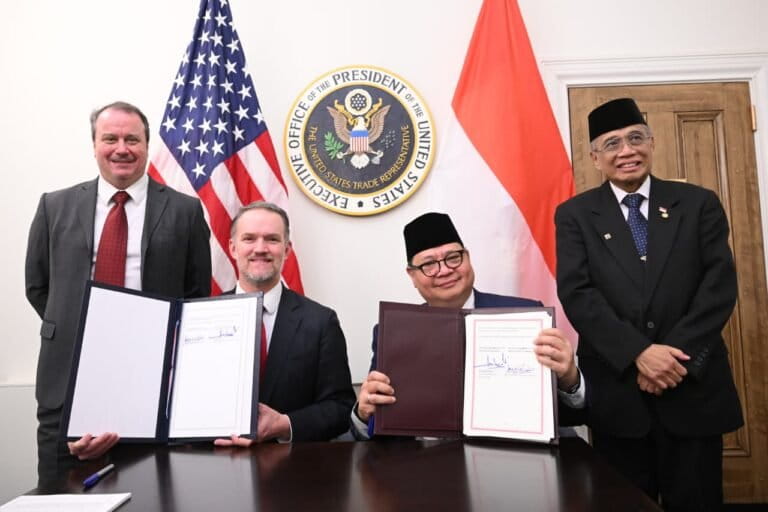
The timing of the lawsuit is also significant. The coalition pointed to a February 20, 2026, ruling by a U.S. court which found certain aspects of the Trump administration’s reciprocal tariff policies to be unlawful. This suggests that the ART may not even have a solid legal footing within the United States, making the Indonesian government’s haste to implement it even more questionable.
Impact on Women and Vulnerable Communities
The Women’s Solidarity Union (Solidaritas Perempuan) has highlighted the "layered impacts" the ART will have on women and marginalized groups. Armayanti Sanusi, Chairperson of the organization, warned that the liberalization of strategic sectors would lead to the further erosion of labor protections. In the wake of the controversial Job Creation Law (UU Cipta Kerja), the ART is expected to trap more women in low-wage, precarious work while destroying the natural resources they depend on for their livelihoods.
Specifically, the removal of fisheries subsidies—a condition of the ART—threatens the survival of approximately 2.7 million small-scale fishers. Women, who play a crucial role in the processing and marketing of fish, will bear the brunt of the resulting economic instability. Furthermore, the agreement’s push for Indonesia to ratify the UPOV 1991 Convention on plant variety protection is seen as a direct threat to seed sovereignty. By criminalizing the traditional practice of saving and exchanging seeds, the ART would disenfranchise female farmers who have historically been the guardians of local biodiversity.
Allegations of Conflict of Interest
Research conducted by Trend Asia has added a layer of political scandal to the trade deal. Their analysis of company ownership records suggests that seven out of the eleven specific agreements under the ART framework involve entities with historical or family ties to Coordinating Minister for Economic Affairs Airlangga Hartarto. As the lead negotiator for the ART throughout 2025, Airlangga’s alleged connection to these deals has raised serious questions about the integrity of the negotiation process.

Zakki Amali, Research Manager at Trend Asia, stated that the agreement appears designed to benefit a narrow circle of political and corporate elites rather than the Indonesian public. "It is difficult to imagine any broad-based gain for the people when the agreement facilitates the transfer of private data to the U.S., forces the importation of bioethanol (E10) which drives deforestation in Papua, and destroys food self-sufficiency," Amali noted.
Conclusion and Demands
The lawsuit filed at the PTUN Jakarta is a desperate attempt by civil society to hit the "pause" button on a trade deal they believe will reshape the nation for decades. The coalition is demanding that President Prabowo Subianto immediately issue a notification of termination to the U.S. government, arguing that the agreement is legally flawed and socially destructive.
They have also called on the DPR and the People’s Consultative Assembly (MPR) to exercise their oversight functions, including the use of an "inquiry right" (hak angket) to investigate the negotiation process. As the legal proceedings begin, the case stands as a landmark test for the Indonesian judiciary’s ability to hold the executive branch accountable for international commitments that bypass the democratic will of the people. For the plaintiffs, the ART is not just a trade document; it is a blueprint for a new era of "extractive colonialism" that threatens the very sovereignty of the Indonesian republic.