Azin Asro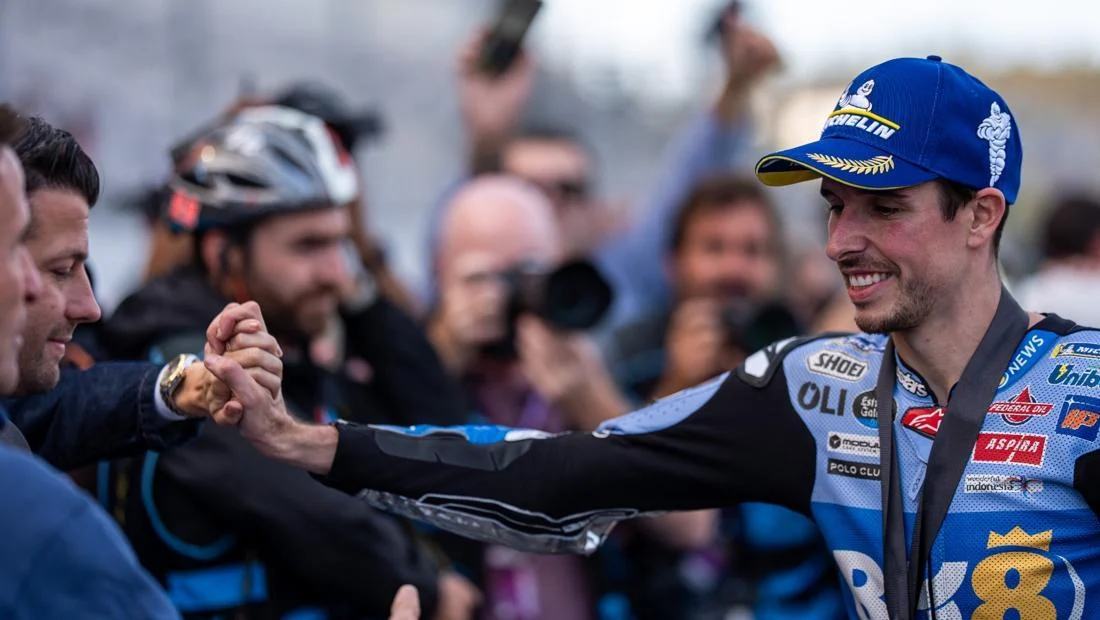
The long-awaited return of the MotoGP World Championship to Brazilian soil has been overshadowed by severe criticisms regarding the integrity and safety of the racing surface at the Ayrton Senna Circuit. Following the conclusion of the 2026 Grand Prix, prominent riders, including Gresini Racing’s Alex Marquez and Monster Energy Yamaha’s Alex Rins, voiced significant frustrations over what they described as "unacceptable" track conditions. The complaints centered on rapidly deteriorating asphalt, which reportedly began to disintegrate during the race, creating hazardous environments more akin to off-road racing than elite-level motorcycle competition.
Despite the commercial success and the enthusiastic reception from the Brazilian fans, the technical execution of the event has come under intense scrutiny. Alex Marquez, who secured a commendable sixth-place finish amidst the chaos, did not mince words when assessing the state of the circuit. Speaking at the post-race press conference, Marquez highlighted specific sectors of the track where the infrastructure appeared to fail under the immense mechanical stress exerted by 1,000cc prototype machines.
The Motocross Comparison: Alex Marquez’s Assessment
The primary grievance cited by the younger Marquez brother involved the stretch of the circuit between Turn 10 and Turn 11. According to the Spaniard, the asphalt in this section began to "crumble," sending loose stones and debris into the air as riders navigated the corners at high speeds. This phenomenon created a dual hazard: a loss of predictable traction and a barrage of projectiles for following riders.
"It felt very strange, with fewer laps and conditions that were not easy," Marquez told accredited media. "Between Turn 10 and 11, all the asphalt was falling apart, along with all the stones. To be honest, the conditions we are experiencing right now are completely unacceptable. But that is how it is; we have raced, and it was a great show, but the safety aspect cannot be ignored."
Marquez further elaborated on the physical sensation of racing on a disintegrating surface, drawing a sharp comparison to dirt-track disciplines. He noted that when a rider is positioned closely behind another, the lead bike acts as a catapult for the loose aggregate. "(Everything) did not go badly, but there are two corners where the asphalt is peeling off. When there is a rider in front of you, they will kick up stones; it feels more like motocross than speed racing," Marquez added.
Physical Toll and Technical Failures: The Case of Alex Rins
The criticisms were echoed by Alex Rins, whose race was compromised not just by the lack of mechanical grip but by physical injury sustained from the track debris. Rins, representing the Monster Energy Yamaha factory team, reported that the overall grip levels at the Ayrton Senna Circuit were "very, very low," a factor he attributed partly to the rubber deposits from the preceding Moto2 race, which utilized different tire compounds that often do not interact well with the Michelin rubber used in the premier class.
Rins’ experience was particularly harrowing as he became a victim of the "flying stones" described by Marquez. Early in the race, a piece of dislodged asphalt struck his hand, causing immediate pain and affecting his ability to operate the controls of his Yamaha YZR-M1.
"What I felt was very, very low grip," Rins explained. "I think it was because of the Moto2 race, because of the Moto2 tires. While I didn’t see huge sections of the track missing while riding, the reality is that a piece of asphalt hit my finger. You can see it for yourself."
The Spaniard noted that while the injury did not force a retirement, it significantly hampered his performance during the most critical phases of the Grand Prix. "It happened at the beginning of the race. It did not stop me from going faster, but it bothered me because I brake with that finger," Rins revealed. The incident raised immediate questions regarding the homologation standards of the circuit and whether the asphalt mixture used was suitable for the high-torque demands of modern MotoGP aerodynamics and engine braking systems.
Background Context: MotoGP’s Return to Brazil
The 2026 Brazilian Grand Prix marked a significant milestone for Dorna Sports, the commercial rights holder of MotoGP, as it sought to re-establish a firm foothold in the South American market. Brazil has a rich motorcycling history, famously hosting rounds at the Jacarepaguá circuit in Rio de Janeiro until 2004. However, after the demolition of that venue to make way for the 2016 Olympic Park, the country was left without a Grade A facility capable of hosting the world championship.
The transition to the Ayrton Senna Circuit was intended to be the culmination of years of infrastructure development and local investment. Named after the legendary Formula 1 icon, the venue was promoted as a state-of-the-art facility designed to meet the rigorous safety standards of the Fédération Internationale de Motocyclisme (FIM). The return was seen as a strategic move to tap into Brazil’s massive fan base and provide a continental partner to the Argentine Grand Prix at Termas de Río Hondo.
Chronology of a Developing Crisis
The issues at the Ayrton Senna Circuit did not emerge suddenly during the Sunday race; rather, they followed a trajectory of increasing concern throughout the weekend:
- Friday Practice: Riders initially reported "green" track conditions, which is common for a circuit that does not see year-round heavy usage. However, lap times were significantly slower than projected, and several riders complained of a "dusty" surface.
- Saturday Qualifying: As the racing line became more defined, the heat and the high-downforce loads of the bikes began to stress the surface. Reports of "micro-cracks" in the braking zones of Turn 10 began to circulate in the paddock.
- Sunday Moto2 Race: The intermediate class race, characterized by heavy sliding and different tire characteristics, appeared to be the breaking point for the asphalt. The mechanical scrubbing of the Moto2 tires likely loosened the top layer of the aggregate.
- Sunday MotoGP Race: Within the first five laps, the premier class riders noticed "marbles" and stones off the racing line. By mid-race, the deterioration in Turns 10 and 11 became a critical safety concern, leading to the post-race outbursts from Marquez and Rins.
Technical Analysis: Why Did the Asphalt Fail?
Track surface failure in professional motorsport is usually the result of a combination of factors. Asphalt for a MotoGP circuit must be specifically engineered to provide high friction while resisting the extreme "shear forces" generated by bikes that accelerate from 0 to 100 km/h in approximately 2.4 seconds and lean at angles exceeding 60 degrees.
Engineering experts suggest that the failure at the Ayrton Senna Circuit could be attributed to "delamination," where the top layer of the asphalt fails to bond correctly with the base layer. This can be caused by:
- Inadequate Curing Time: If the track was resurfaced too close to the race date, the bitumen may not have hardened sufficiently to withstand the heat cycles of racing.
- Substandard Aggregate: The use of local stones that are too brittle can lead to the "motocross" effect described by Marquez, where stones break away from the bitumen binder.
- Thermal Stress: High ambient temperatures in Brazil, combined with the heat generated by Michelin’s high-performance slicks, can soften the binder, allowing the asphalt to "unravel."
Broader Implications for the Championship
The fallout from the Brazilian Grand Prix is expected to reach the FIM Safety Commission. Riders such as Aleix Espargaro and Pecco Bagnaia, who are vocal members of the commission, are likely to demand a full investigation into how the circuit passed its final inspection.
For the organizers of the Brazilian Grand Prix, the criticisms are a significant blow to the event’s reputation. While the attendance figures were high, the negative feedback from the athletes could jeopardize the circuit’s long-term contract. Dorna Sports typically requires circuits to undergo mandatory resurfacing if safety issues are identified, a process that can cost millions of dollars.
Furthermore, the incident highlights the ongoing tension between MotoGP’s expansion into new markets and the necessity of maintaining world-class safety standards. As the calendar expands to more venues in diverse climates, the pressure on local promoters to deliver perfect racing surfaces has never been higher.
Official Responses and Next Steps
While the local promoters have yet to issue a comprehensive technical report, early indications suggest they will point to an "unprecedented" combination of heat and tire wear. However, for the riders who put their lives on the line at speeds exceeding 330 km/h, excuses provide little comfort.
The FIM is expected to conduct a "core sample" analysis of the asphalt at Turns 10 and 11 to determine if the material met the specifications submitted during the homologation process. If the circuit is found to be deficient, it may be placed on a "probationary" status, requiring significant upgrades before the 2027 season.
In conclusion, while the 2026 MotoGP Brazilian Grand Prix was a triumph of atmosphere and passion, it served as a stark reminder of the technical complexities involved in hosting top-tier motorsport. The accounts provided by Alex Marquez and Alex Rins are not merely complaints about performance; they are warnings about the thin margin between a "great show" and a catastrophic safety failure. The eyes of the motorcycling world will now turn to the FIM and the circuit organizers to see if they can rectify these "unacceptable" conditions before the championship returns to South America.