Nila Kartika Wati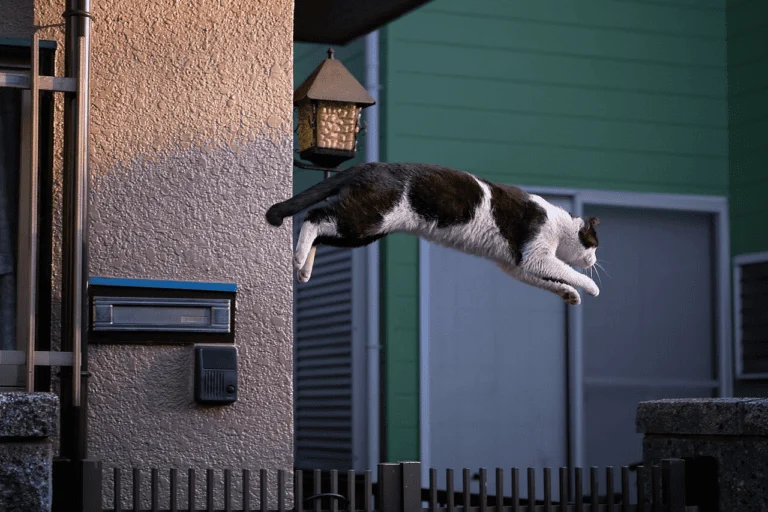
The age-old observation that cats possess an almost supernatural ability to land on their feet has transitioned from a curiosity of natural history to a complex puzzle of biomechanical engineering. For centuries, the "falling cat problem" has intrigued physicists and biologists alike, posing a fundamental challenge to the laws of classical mechanics—specifically, how an object in mid-air can rotate its body without a solid platform to push against. While the phenomenon has been documented through high-speed photography as early as the late 19th century, the internal anatomical mechanisms that facilitate this graceful maneuver remained partially obscured. However, a landmark study conducted by a research team at Yamaguchi University in Japan has finally provided a comprehensive anatomical explanation for this feat, identifying the unique structural properties of the feline spine as the primary catalyst for their mid-air acrobatics.
Published in the prestigious journal The Anatomical Record in early 2026, the research titled "Torsional flexibility of the thoracic spine is superior to that of the lumbar spine in cats: Implications for the falling cat problem" offers a granular look at the feline skeletal system. Led by Yasuo Higurashi and his colleagues, the study reveals that the secret to a cat’s perfect landing does not reside in sheer muscular strength or rapid reflexes alone. Instead, it is a result of a sophisticated "differential flexibility" within the spinal column, where the front and rear sections of the body operate under different mechanical constraints to achieve controlled rotation.
The Physics of the Falling Cat Problem
To appreciate the significance of the Yamaguchi University findings, one must first understand the physical paradox the cat must overcome. According to the law of conservation of angular momentum, an object that is not rotating cannot start rotating without an external torque. When a cat falls, it has no ground to push off from, yet it manages to flip its body 180 degrees to face the ground.
Historically, scientists like James Clerk Maxwell and Étienne-Jules Marey studied this by dropping cats and using early chronophotography. They discovered that cats do not violate the laws of physics; rather, they change their moment of inertia by tucking and extending their limbs—much like a figure skater spinning faster by pulling their arms in. However, the Yamaguchi study adds a critical layer to this understanding: the role of the spine as a torsional spring. The researchers found that the cat’s ability to twist its torso is not uniform, and this lack of uniformity is exactly what allows for precise, rapid orientation.
Methodology: High-Speed Analysis and Mechanical Testing
The team at Yamaguchi University employed a dual-methodology approach to crack the code of feline agility. First, they conducted rigorous mechanical testing on feline spinal specimens. These tests were designed to measure the "torsional stiffness"—the resistance to twisting—of different segments of the vertebral column. By applying measured force to various sections, the researchers could quantify exactly how much the spine could rotate before meeting significant resistance.
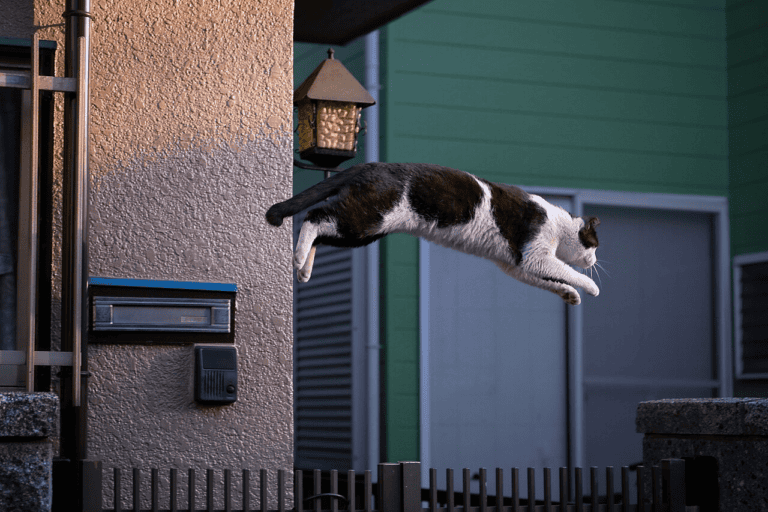
Complementing the laboratory testing was a series of kinetic observations involving healthy domestic cats. Using state-of-the-art high-speed cameras capable of capturing thousands of frames per second, the researchers recorded cats as they were safely dropped from a height onto soft, cushioned surfaces. To track the movement with mathematical precision, the cats were fitted with non-invasive motion-tracking sensors placed at key anatomical landmarks, including the scapula (shoulders) and the pelvis (hips). This allowed the team to map the "sequential rotation" of the body in real-time, correlating the external movement with the internal spinal data gathered during mechanical testing.
Key Discovery: The Thoracic-Lumbar Divide
The data yielded a groundbreaking revelation regarding the feline anatomy. The researchers discovered that a cat’s spine is divided into two distinct functional zones with vastly different mechanical properties.
The thoracic spine, which comprises the upper and middle sections of the back, exhibits an extraordinary degree of flexibility. The study identified a "neutral zone" in the thoracic region where the spine can rotate almost freely with minimal muscular effort. According to the report, this section can achieve a torsion of nearly 50 degrees. This high level of flexibility allows the cat to initiate the "righting" process by twisting the front half of its body toward the ground almost instantly upon sensing a fall.
Conversely, the lumbar spine—the lower back region—was found to be significantly stiffer and more resistant to torsion. While this might seem like a limitation, the researchers argue it is a vital component of the landing mechanism. The stiffness of the lumbar region provides the necessary stability and acts as a "mechanical anchor." Without this rigid rear section, the cat would likely over-rotate or lose control of its momentum, resulting in a chaotic tumble rather than a controlled flip.
The Chronology of a Mid-Air Maneuver
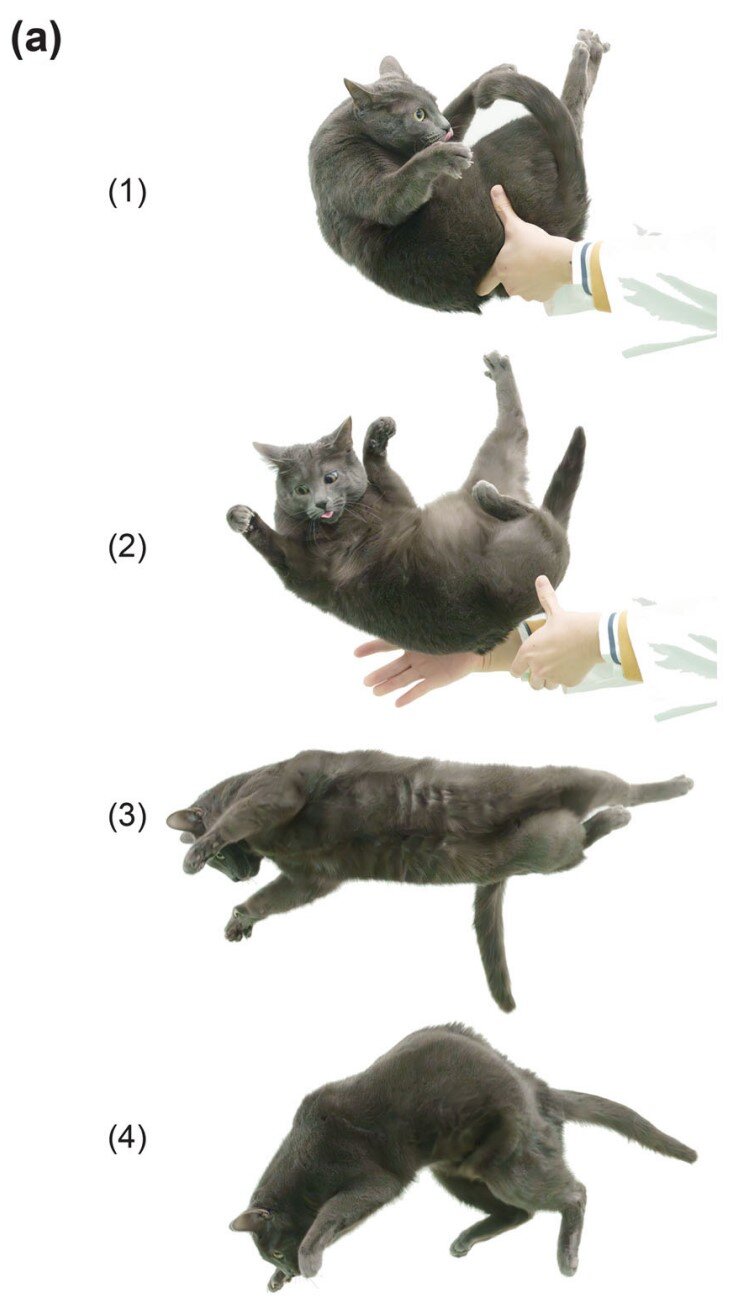
Based on the findings, the researchers have outlined a precise chronology of what happens during the few seconds a cat is in the air. This process, known as the "sequential turn," occurs in four distinct phases:
- Sensory Detection: The moment the fall begins, the cat’s vestibular system (located in the inner ear) detects the change in orientation and acceleration. This triggers an immediate reflex.
- Anterior Rotation: Utilizing the highly flexible thoracic spine, the cat tucks its front legs in to reduce its moment of inertia and rotates its head and front torso toward the ground. The 50-degree freedom of the thoracic vertebrae allows this movement to happen with incredible speed.
- Posterior Alignment: As the front half of the body aligns with the ground, the cat extends its front legs and tucks its back legs. The rigid lumbar spine now acts as a lever. The momentum generated by the front of the body is transferred through the stiff lumbar region, pulling the rear of the cat into alignment.
- Impact Absorption: Once all four paws are facing downward, the cat arches its back to act as a shock absorber, distributing the force of the impact through its joints and muscles, thereby protecting its internal organs from trauma.
Implications for Veterinary Medicine
The discovery of this "differential flexibility" has immediate and profound implications for the field of veterinary science. Understanding the specific torsional limits of the thoracic and lumbar regions allows veterinarians to diagnose and treat spinal injuries with greater precision.
"This research provides a baseline for what a ‘normal’ feline spine should be able to handle," noted a veterinary surgeon familiar with the study. "When we see cats with ‘High-Rise Syndrome’—injuries sustained from falling from balconies—we can now better understand why certain vertebrae are more prone to fractures than others. It could lead to better surgical techniques for spinal stabilization and more effective physical therapy protocols for cats recovering from paralysis or nerve damage."
From Biology to Bionics: The Future of Robotics
Beyond the realm of animal health, the Yamaguchi University study is being hailed as a blueprint for the next generation of robotic systems. Engineers in the field of biomimicry are already looking at ways to replicate the cat’s spinal structure to improve the stability of autonomous robots.
Current robotic designs often struggle with balance on uneven terrain or recovering from a fall. By incorporating a "dual-stiffness" chassis—where a flexible front section is paired with a rigid rear section—roboticists could create machines capable of reorienting themselves in mid-air or mid-stride. This has potential applications in search-and-rescue robotics, where machines must navigate debris-heavy environments, and even in aerospace engineering, where self-orienting probes could be deployed on low-gravity planetary surfaces.
Scientific Consensus and Broader Impact
The scientific community has responded to the Yamaguchi study with significant interest. Dr. Yasuo Higurashi emphasized that while the "falling cat" has been a staple of physics textbooks for decades, the anatomical "how" was the missing piece of the puzzle. "We have long had the mathematical models, but we lacked the biological data to confirm them," Higurashi stated. "By showing that the thoracic spine is designed for rotation while the lumbar spine is designed for stability, we have reconciled the biology with the physics."
The study also sheds light on the evolutionary history of felines. The development of such a specialized spinal column likely gave ancestral cats a significant survival advantage, allowing them to hunt in trees and survive accidental falls that would be fatal to other predators. This specialized anatomy is a testament to millions of years of evolutionary refinement, resulting in one of the most efficient movement systems in the animal kingdom.
Conclusion
The research from Yamaguchi University serves as a reminder that even the most common natural phenomena can hide complex scientific truths. By deconstructing the feline spine, scientists have not only solved a centuries-old mystery but have also opened new doors in medicine and technology. As we move toward 2026 and beyond, the humble house cat continues to serve as an inspiration for human innovation, proving that the secrets to the future of robotics and medicine may very well be walking—and occasionally falling—right under our feet.