Nasution Nanang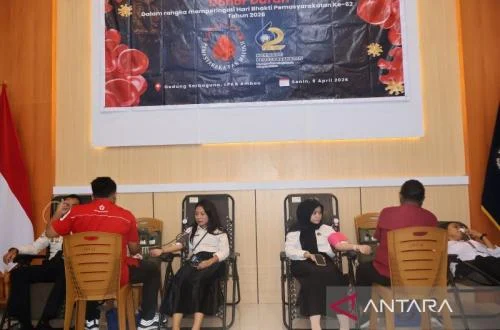
The Regional Office of the Directorate General of Corrections (Ditjenpas) Maluku recently played a crucial role in addressing the persistent blood supply challenges in Ambon by donating 30 bags of blood to the Indonesian Red Cross (PMI) Kota Ambon. This vital initiative, conducted on a Monday as part of the 62nd Hari Bhakti Pemasyarakatan (HBP) commemoration, underscores the correctional agency’s commitment to public health and social responsibility, aiming to provide immediate assistance to patients in dire need of transfusions across the region. The contribution highlights the critical need for collaborative efforts among government agencies, civil society organizations, and the public to maintain a stable and sufficient blood stock, particularly in areas facing logistical and donor recruitment hurdles.
Addressing Ambon’s Critical Blood Needs
The donation from Ditjenpas Maluku comes at a time when the demand for blood in Ambon frequently outstrips supply, a challenge exacerbated by various factors including geographical dispersion, limited donor awareness, and the sporadic nature of mass blood drives. Ricky Dwi Biantoro, the Head of the Ditjenpas Maluku Regional Office, emphasized the imperative for government institutions to actively participate in such humanitarian endeavors. "The need for blood in the region often experiences limitations, making the participation of government agencies crucial in maintaining stock availability," Biantoro stated, highlighting the broader responsibility of public entities beyond their core mandates. He articulated that this blood donation drive was conceived as a tangible contribution to support PMI’s tireless efforts in ensuring blood availability. "Our hope is that this can have a direct impact on the community members who require transfusion services," he added, pointing to the immediate life-saving potential of each donated bag. The 30 units collected, while a modest number in the face of annual demand, represent a significant boost to PMI Ambon’s fluctuating inventory, offering a lifeline to individuals undergoing surgeries, managing chronic illnesses, or recovering from emergencies.
Hari Bhakti Pemasyarakatan: A Tradition of Service
The blood donation event was not merely an isolated act of charity but an integral component of the 62nd Hari Bhakti Pemasyarakatan (HBP) celebration. HBP, observed annually on April 27th, marks the founding of Indonesia’s correctional system, a day dedicated to reflecting on the achievements and challenges of the nation’s penal institutions and reaffirming their commitment to rehabilitation and public service. Throughout its history, HBP has evolved to encompass not only internal evaluations and reforms but also outward-facing community engagement programs. These initiatives are designed to foster a positive image of correctional services, demonstrate their social utility, and build stronger ties with the communities they serve. Holding the blood drive at the Lembaga Pembinaan Khusus Anak (LPKA) Ambon, a special correctional facility for children, added another layer of symbolism, underscoring the values of care, responsibility, and civic contribution even within the correctional environment. Employees from various correctional units within Maluku actively participated as donors, showcasing a deep sense of solidarity and commitment to public welfare. The collected blood bags were immediately handed over to PMI Kota Ambon, ensuring a swift transition into the vital supply chain that serves hospitals and clinics across the city and surrounding areas.
The Indispensable Role of the Indonesian Red Cross (PMI)
The Indonesian Red Cross (PMI) plays an indispensable role in the national healthcare system, serving as the primary entity responsible for blood collection, processing, storage, and distribution. In a vast archipelago like Indonesia, with diverse geographical challenges and varying levels of healthcare infrastructure, PMI’s work is particularly complex. In Ambon, the provincial capital of Maluku, PMI Kota Ambon confronts unique obstacles. The original report indicates that based on PMI Kota Ambon data, the region requires approximately 7,500 to over 7,700 bags of blood annually. This figure aligns closely with the World Health Organization’s (WHO) recommendation, which suggests that a country needs blood donations equivalent to 1-2% of its population to meet its basic blood requirements. With Ambon City’s population hovering around 450,000, a demand of 7,700 bags translates to roughly 1.7% of the population, underscoring the scientific basis for this critical target.
However, the availability of blood stock at PMI Ambon’s Blood Transfusion Unit (UDD) remains highly volatile. This fluctuation is primarily due to a heavy reliance on intermittent mass blood donation campaigns organized by various institutions and community groups. This dependency creates periods of abundance followed by acute shortages, making it challenging for healthcare providers to plan and manage patient care effectively. A stable and predictable blood supply is crucial for emergency medical services, surgical procedures, cancer treatments, and for patients suffering from chronic conditions such as thalassemia and severe anemia. The logistical challenges in Maluku, an island province, further complicate matters, as transporting blood products to remote areas or during emergencies can be difficult and costly. Therefore, consistent and diversified donor recruitment strategies, coupled with sustained support from government and non-governmental organizations, are vital for overcoming these systemic hurdles.
A Vision for Sustained Contribution and Wider Reach
Ricky Dwi Biantoro articulated a forward-looking vision for the Ditjenpas Maluku’s involvement in blood donation. He stated that this blood drive would not be a one-off event tied solely to the HBP commemoration. Instead, efforts would be made to transform it into a regular, recurring agenda, involving a broader network of correctional technical implementation units across Maluku. "Going forward, we will encourage similar activities to be carried out routinely and in a coordinated manner so that their benefits are wider, including reaching areas that still lack blood stock," Biantoro emphasized. This commitment to sustained engagement is critical for long-term blood supply stability. A coordinated approach, involving multiple correctional facilities across the province, could significantly enhance the overall volume of donations and provide a more consistent flow of blood to PMI. Such an initiative could serve as a model for other government agencies and institutions in Maluku and beyond, demonstrating how sustained institutional support can contribute meaningfully to public health infrastructure.
The involvement of correctional employees in this humanitarian endeavor also serves a dual purpose: it cultivates a stronger sense of social responsibility and civic duty within the workforce, and simultaneously strengthens the perception and role of correctional services within the wider community. By actively engaging in acts of public service, Ditjenpas Maluku aims to build greater trust and rapport with the populace, transcending the traditional image of correctional facilities. Biantoro further underscored that synergy with PMI is a strategic imperative for Ditjenpas Maluku. This collaboration ensures that the distribution of collected blood is optimized, directly supporting the broader public health services in the region.
Inferred Statements and Reactions from Key Stakeholders
While the original report focuses on Ditjenpas Maluku’s perspective, it is logical to infer the reactions and potential statements from other critical stakeholders:
- PMI Kota Ambon: Officials from PMI Kota Ambon would undoubtedly express profound gratitude for Ditjenpas Maluku’s contribution. A PMI representative might emphasize the life-saving impact of such donations, stating something to the effect of: "We are incredibly grateful for the unwavering support from Ditjenpas Maluku. Every bag of blood donated directly translates into a chance at life for our patients. This consistent support from government agencies is vital in bridging the gap between demand and supply, allowing us to continue our critical mission of serving the community." They would likely reiterate the ongoing need for blood and encourage other institutions and individuals to follow Ditjenpas Maluku’s lead.
- Local Health Authorities: The local health department would likely welcome such inter-agency collaboration as a cornerstone of a robust public health system. A spokesperson might comment: "Public health is a collective responsibility. Initiatives like this blood donation drive by Ditjenpas Maluku exemplify the kind of cross-sectoral cooperation needed to strengthen our healthcare services. A stable blood supply is fundamental to our ability to deliver quality medical care, from routine surgeries to emergency interventions, and we commend all participating parties for their commitment."
- Donating Employees: The correctional employees participating in the drive would likely feel a sense of pride and fulfillment. Their motivations would stem from a desire to contribute positively to society, understanding that their donation could directly save a life. One hypothetical donor might reflect: "Being a part of this drive is incredibly rewarding. We work within the correctional system, but our commitment to the community extends beyond our daily duties. Knowing that a small act on our part can make such a significant difference to someone’s life is a powerful motivator."
Broader Impact and Implications
The implications of this blood donation drive extend far beyond the immediate collection of 30 units. Firstly, it provides a tangible boost to public health in Ambon, directly enabling critical medical procedures and emergency care. A reliable blood supply is a fundamental component of any functional healthcare system, impacting everything from routine childbirth to complex surgical interventions and disaster response. In a region susceptible to natural disasters, a readily available blood stock is even more critical for emergency preparedness.
Secondly, the initiative serves as a powerful example of community engagement and corporate social responsibility from a government agency. By stepping beyond its primary mandate to address a pressing societal need, Ditjenpas Maluku enhances its public image, fostering trust and positive relations with the community. This is particularly important for institutions like correctional services, which often face societal misconceptions. Such acts of civic contribution can help bridge divides and build a more integrated community fabric.
Thirdly, Ricky Dwi Biantoro’s commitment to making these drives a regular and coordinated effort points towards a sustainable model for addressing blood shortages. A predictable source of donations from a large institutional body like Ditjenpas can significantly stabilize PMI’s inventory, reducing its reliance on ad-hoc campaigns. This consistency is vital for long-term health planning and ensures that patients do not face unnecessary delays or risks due to blood scarcity. The strategy to involve more technical implementation units across Maluku further amplifies this potential impact, creating a province-wide network of institutional donors.
Finally, this initiative contributes to national health objectives. The Indonesian government, through its Ministry of Health, continually strives to improve healthcare access and quality across the archipelago. Stable blood supplies are a key indicator of a resilient health system. By proactively engaging in blood donation, Ditjenpas Maluku is contributing directly to these broader national goals, setting an example for other government bodies and state-owned enterprises to emulate. The challenges of ensuring adequate blood supply are not unique to Maluku, and successful models of institutional partnership can be replicated elsewhere, strengthening Indonesia’s overall blood banking system and ultimately saving more lives across the nation. The ongoing commitment demonstrated by Ditjenpas Maluku, in collaboration with PMI, offers a beacon of hope for communities striving for better health outcomes and a more robust, responsive healthcare infrastructure.