
 Azin Asro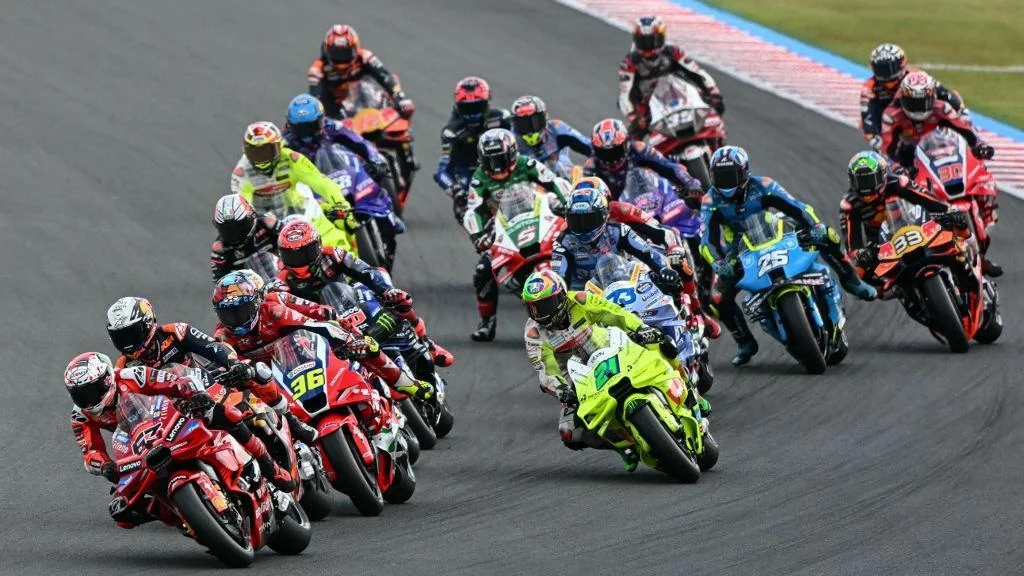
The 2026 MotoGP World Championship season delivered another unforgettable chapter at the Mobility Resort Motegi, where Ducati Lenovo Team’s Marc Marquez masterfully controlled the Japanese Grand Prix Sprint Race. Under crisp autumn skies in Tochigi, the Spanish veteran executed a textbook performance from pole position to checkered flag, neutralizing early chaos and managing his tire degradation to perfection. However, the 12-lap dash was far from straightforward for the rest of the grid. Behind the dominant Marquez, a flurry of dramatic overtakes, early-race attrition, and a pivotal post-race stewards’ investigation completely reshaped the final podium standings.
While Marquez celebrated his latest masterclass in racecraft, rookie sensation Diogo Moreira capitalized on late-race penalties handed out to title contenders to secure a stunning career-best second place in the premier class. Meanwhile, home hero Ai Ogura electrified the partisan Japanese crowd with a heroic charge through the field, and several championship protagonists left the circuit licking their wounds after costly errors.
Main Facts of the Sprint Race
The Saturday afternoon Sprint at Motegi lived up to its reputation for high-octane unpredictability, compressing the fierce rivalries of the MotoGP paddock into a high-speed 12-lap sprint. Marc Marquez converted his blistering pace from practice sessions into an immediate holeshot as the starting lights went out, never relinquishing the lead. The factory Ducati rider crossed the finish line with a comfortable margin, further solidifying his championship ambitions and showcasing his enduring supremacy on stop-and-go circuits like Motegi.
Yet, the defining narrative of the race extended well beyond the victor’s podium. The strict enforcement of track limits policing proved to be the ultimate arbiter of the afternoon. Initial runner-up finishers Jorge Martin and Enea Bastianini were both demoted following the conclusion of the race due to exceeding track limits on the final lap. This regulatory intervention promoted Diogo Moreira to second place, elevating the young Brazilian to a historic podium finish, while Martin salvaged valuable championship points in third. Bastianini, who had fought valiantly to break into the podium places, dropped further down the classification, missing out on the celebratory champagne entirely.
The race also highlighted the brutal nature of premier-class competition, evidenced by a multi-rider collision on the opening lap that immediately altered the tactical landscape of the afternoon. With championship points at a premium as the 2026 season enters its critical final third, every tenth of a second and every millimeter of asphalt carried immense weight.
Chronology and Race Development
The sequence of events at Motegi unfolded rapidly, beginning with a chaotic start that set the tone for the remainder of the afternoon. When the red lights extinguished, Marc Marquez launched his Desmosedici GP26 with surgical precision, seizing the holeshot into Turn 1. Hot on his heels were the factory Aprilia duo of Jorge Martin and Marco Bezzecchi, who slotted into second and third respectively, attempting to match the early tempo set by the Spaniard.
However, the opening lap drama was compounded further down the order. As the pack compressed through the braking zone of the early corners, a major incident unfolded. Fabio Di Giannantonio, Pedro Acosta, and Alex Marquez became entangled in a high-speed crash, resulting in immediate retirements for all three riders. The severity of the incident and the presence of debris on the racing line forced race control to wave yellow flags in the affected sectors, temporarily neutralizing any ambitious overtaking maneuvers in those zones.
By the completion of the fourth lap, Marc Marquez had successfully broken the tow, exploiting the clean air at the front to establish a commanding advantage of over one second ahead of Martin. Further back, Marco Bezzecchi, who had initially looked comfortable defending his podium position, began to struggle with rear-grip management. The Italian rider’s pace faded, allowing Enea Bastianini to launch a successful attack and demote Bezzecchi to fourth place.
Midway through the race, specifically around the sixth lap, the competition experienced a brief lull. The intensity of the early laps subsided into a tactical procession as riders prioritized tire conservation over high-risk overtaking attempts on the abrasive Motegi asphalt. The field appeared to settle into a rhythm, with riders seeking to protect their rubber for a potential late-race charge.
That relative calm was shattered as the race entered its final stages on lap seven. Bezzecchi’s downward spiral continued as he came under sustained pressure from chasing competitors. Struggling visibly with machine setup and rear traction, Bezzecchi plummeted down the order to sixth position. Capitalizing on the chaos was local favorite Ai Ogura. Riding on the crest of a wave supported by roaring home fans, the Japanese star executed a series of clinical moves to break into the top five, vindicating his strong weekend form.
The climax of the race occurred at the checkered flag, but the true results were only finalized in the stewards’ room minutes later. Both Enea Bastianini and Jorge Martin were found to have breached track limit regulations on the final lap—specifically running outside the white lines at designated sensor points while pushing to the absolute limit. The subsequent application of standard penalties dropped Bastianini down the order, while promoting Martin to third and elevating Diogo Moreira to an unexpected yet thoroughly deserved second position.
Supporting Data and Technical Context
The Mobility Resort Motegi is historically one of the most demanding circuits on the MotoGP calendar, specifically engineered for severe braking and rapid acceleration. Spanning 4.8 kilometers with 14 turns—six left-handers and eight right-handers—the track places an immense burden on carbon brake systems and rear tires. Riders experience deceleration forces exceeding 1.5 Gs multiple times per lap, particularly heading into the famous V-corner (Turn 11) and the heavy braking zone at the end of the back straight.
In 2026, tire manufacturer Michelin brought compound allocations specifically formulated to withstand the abrasive nature of Motegi’s stop-and-go layout. Track temperatures hovered around 32 degrees Celsius during the Sprint, forcing teams to carefully calculate tire pressures and degradation rates over the 12-lap distance. Marquez’s ability to build a one-second gap by lap four was directly attributable to his precise throttle application and exceptional preservation of the rear Michelin slick, allowing him to dictate the pace without thermal degradation.
Track limits have also become an increasingly critical compliance factor in modern MotoGP. Utilizing high-definition camera arrays and pressure sensors embedded in the green painted runoff areas outside the white lines, race control enforces a strict "three strikes and a penalty" rule during Grands Prix, with stricter zero-tolerance applications often enforced on final laps where gaining an asphalt advantage directly alters finishing positions. This technological enforcement was the ultimate deciding factor in the shuffling of the podium behind Marquez.
Official Responses and Paddock Reactions
In the aftermath of the Sprint, the paddock was a hive of analytical discussions and contrasting emotions. Speaking in the media pen, Marc Marquez maintained a composed and analytical demeanor, emphasizing the importance of consistency over raw speed in the championship hunt.
"The start was crucial today," Marquez stated through team channels. "We knew that getting away cleanly and avoiding the early battles was the only way to manage the race. Once we had that initial gap, the focus shifted entirely to managing the tire wear and maintaining concentration, especially with the track conditions changing slightly. It’s a fantastic result for the team, but tomorrow’s full Grand Prix will be a completely different challenge."
Conversely, the atmosphere in the Aprilia and Ducati garages regarding the post-race penalties was one of tense realization. Jorge Martin acknowledged the fine margins that define modern MotoGP racing, noting that pushing to the absolute limit to chase Marquez inevitably invited track limit infractions.
"We gave everything out there today," Martin remarked. "Marc had a very strong pace from the very beginning, and we were trying to find every tenth of a second to stay within striking distance. On the final lap, when you are fighting for every centimeter, sometimes you run wide by a few millimeters. It is disappointing to lose second place, but the speed is there, and we will regroup for the main race."
Diogo Moreira was visibly emotional following his promotion to second place. The young rider, representing a new wave of talent in the premier class, expressed immense gratitude for the machinery provided by his team and the unexpected turn of events that elevated him to the rostrum. "To finish on the podium in MotoGP is a dream come true, especially on a technical track like Motegi," Moreira said. "We kept our heads down, managed our race consistently, and capitalized when opportunities arose. This gives us massive confidence for the rest of the season."
Meanwhile, Ai Ogura’s performance drew immense praise from team management and local media alike. Competing in front of thousands of passionate Japanese fans, Ogura’s surge to the upper echelons of the points-paying positions demonstrated his rapid adaptation and mental resilience under the intense pressure of a home Grand Prix weekend.
Broader Impact and Implications
The outcome of the Japanese Grand Prix Sprint Race carries profound implications for the 2026 MotoGP World Championship standings. Marc Marquez’s victory reinforces his psychological dominance in the championship battle, demonstrating that he can win across diverse track layouts through a combination of tactical intelligence and unmatched speed. As the championship heads into its final rounds, Marquez’s rivals face an increasingly difficult task in closing the points deficit.
Furthermore, the strict enforcement of track limits continues to be a major talking point among teams, riders, and fans. As MotoGP machinery becomes increasingly aerodynamically dependent, following other bikes closely in dirty air makes precision steering exceptionally difficult, often forcing riders wide into sanctioned runoff areas. The penalties handed to Martin and Bastianini serve as a stark reminder that regulatory compliance is just as critical as raw horsepower and rider bravery in the modern era of motorcycle Grand Prix racing.
Looking ahead to the main Grand Prix on Sunday, teams will utilize the telemetry data gathered during the Sprint to refine their setups for the full 24-lap distance. Tire longevity, fuel management, and weather forecasts will dominate engineering briefings overnight. With Marquez showing ominous race pace, the rest of the grid faces a monumental task to find a competitive edge if they are to prevent another masterclass from the Spanish champion at Motegi.








