Nila Kartika Wati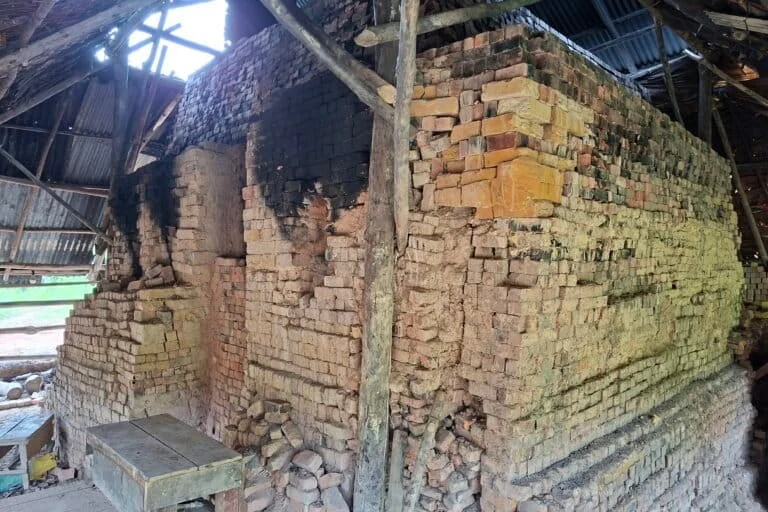
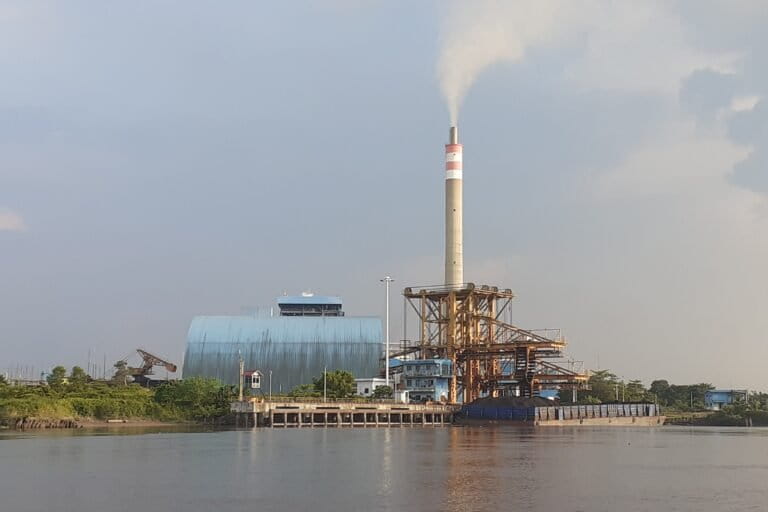
For more than a year, a resident known as Marni has been forced to cook in the middle of her living room. Her kitchen, once a functional part of her home in Badak Ujung, Tenayan Raya, Riau, now lies partially buried under a thick layer of industrial waste. The culprit is not a natural disaster, but the encroaching residue of the Tenayan Raya Coal-Fired Power Plant (PLTU), located approximately seven kilometers away. Despite the distance, the environmental footprint of the facility has reached Marni’s doorstep, bringing with it a tide of coal ash that has dismantled her livelihood and compromised her family’s health.
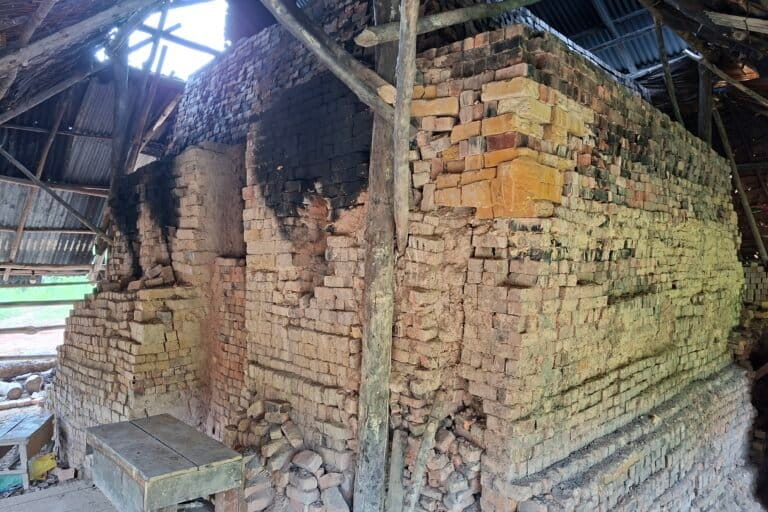
Marni, a mother of six, has lived in this area for over three years, where she operates a rented brick-making machine and kiln. Her story is a microcosm of a larger environmental crisis unfolding in the shadow of Indonesia’s coal-dependent energy grid. When the tropical rains arrive, her situation shifts from precarious to dire. Her home, situated at the base of a small hill, frequently floods. Water surges into the living quarters, and the roof, weakened by age and neglect, leaks incessantly. During these periods, her family must scramble to find dry patches of floor just to sleep.
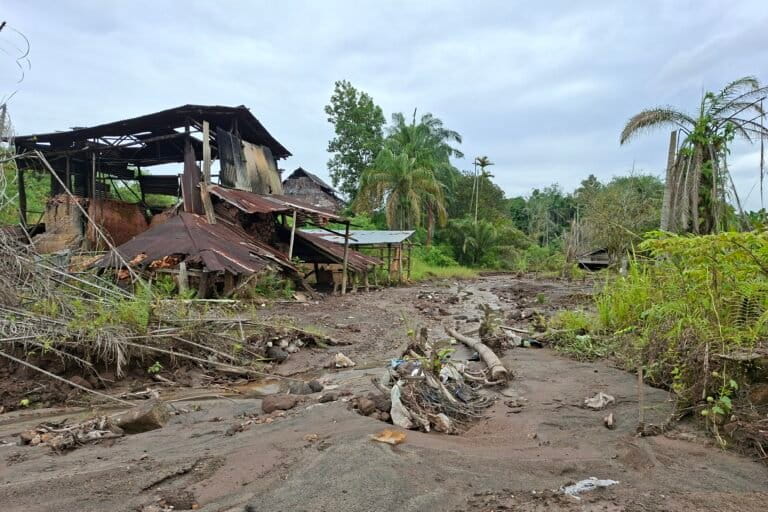
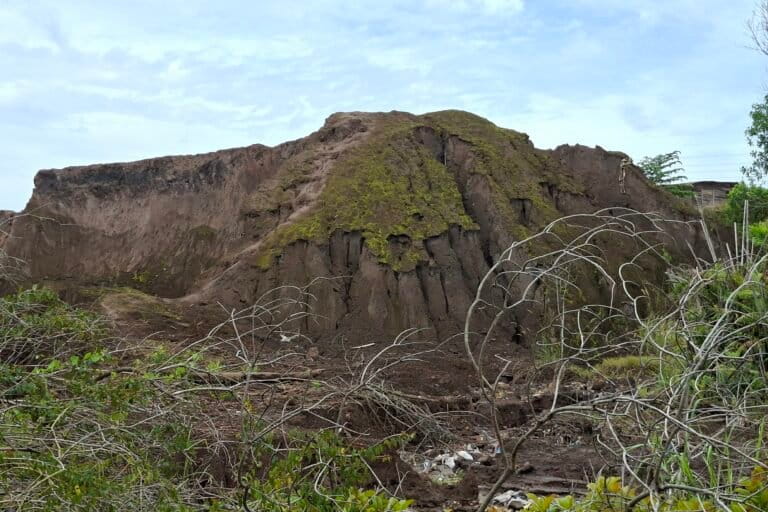
The devastation extends beyond the walls of her home. The surrounding flora, once a source of secondary income and sustenance, is dying. Rows of oil palms stand as skeletal remains, their green fronds long gone. Of the four coconut trees that graced the property when she first arrived, only two remain standing, and neither has produced fruit in years. The land, once fertile enough to support a decades-old brick-making industry, is now being consumed by Fly Ash and Bottom Ash (FABA)—the fine and heavy particulate matter left over from burning coal.
The Buried Livelihoods of Tenayan Raya
The production of red bricks in the Tenayan Raya district is not a new venture; it has been the economic backbone of the local community since the 1980s. However, the arrival and operation of the PLTU Tenayan Raya have fundamentally altered the landscape. Local witnesses and business owners report that the power plant has been disposing of FABA in the area from morning until evening. Initially, the community was told that the ash was being used to "reclaim" or refill pits where soil had been excavated for brick-making. Instead of reclamation, the process has resulted in a slow-motion landslide of industrial waste.
Underneath meters of coal ash lie several buried brick kilns and machinery, along with the modest shacks that once housed workers. Protests from the residents eventually led to a temporary halt in the dumping, but the damage was already done. In May 2025, local media outlets documented the sight of homes half-submerged in grey ash. Kitchens and boreholes—the primary sources of water for these families—have been completely destroyed.
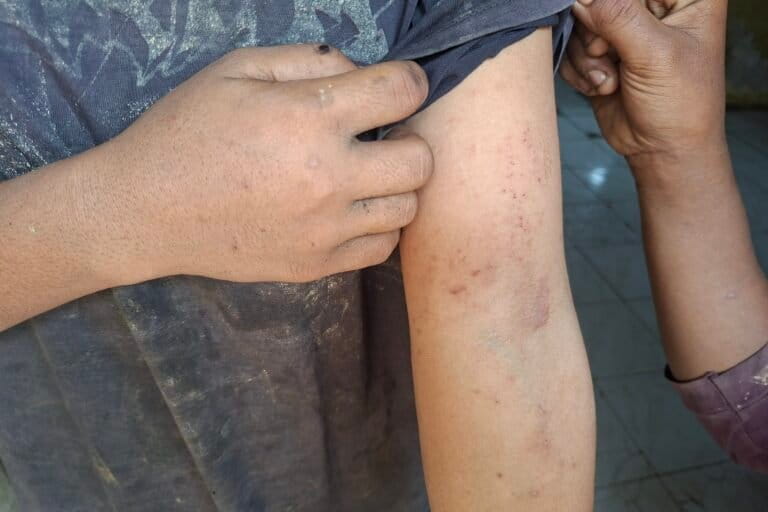
For Marni, the "black earth" has not only claimed her workspace but also contaminated her water supply. The well her family uses for bathing and washing is now clouded with pollutants. The physical toll is visible on her children; her two daughters frequently suffer from persistent rashes and red spots across their arms, a common symptom of exposure to the caustic elements found in coal waste.
The Paradox of the Green Rating
Despite the visible degradation in Tenayan Raya, the power plant has maintained a prestigious standing in the eyes of the Indonesian government. The facility was previously awarded a "Green" rating under the Program for Pollution Control, Evaluation, and Rating (PROPER), managed by the Ministry of Environment (KLH). Furthermore, it has been listed as a candidate for the Green PROPER award for the 2024–2025 period.
This discrepancy has sparked outrage among environmental advocates. Wilton Amos Panggabean, Head of Research and Organizational Development at YLBHI-LBH Pekanbaru, has called for an immediate revocation of this status. He argues that the plant is a primary contributor to local pollution, citing not only the FABA accumulation but also the long-term contamination of the Siak River.
The PROPER system is designed to categorize companies based on their environmental performance: Gold and Green signify "beyond compliance," Blue represents "compliance," while Red and Black indicate varying degrees of "non-compliance." For a facility like PLTU Tenayan Raya to be considered "Green" while local homes are buried in its waste suggests a profound failure in the auditing process.
The Ministry of Environment, through its Public Relations Bureau, maintains that the plant underwent a series of evaluations covering water pollution control, air emission standards, and hazardous waste management. According to official records, the facility received a "Blue" rating (compliant) after an evaluation of its monitoring documents. Under Indonesian regulations, a company that achieves a Blue rating and demonstrates efforts "beyond compliance" can be nominated for a Green rating. However, the law also stipulates that a Green candidate must have no ongoing conflicts with the local community. The Ministry has stated that if evidence of such conflict is verified, the Green status can be annulled.
Allegations of Greenwashing and Regulatory Gaps
Environmental experts and civil society organizations view the situation at Tenayan Raya as a classic case of "greenwashing"—a practice where a company or entity uses marketing and administrative certifications to project an environmentally responsible image while its actual operations cause significant harm.

Firdaus Cahyadi, a Program Officer at the TIFA Foundation, argues that the PROPER system often relies too heavily on self-assessment reports and administrative documentation rather than rigorous, independent field investigations. "The Green rating does not necessarily reflect the actual emission burden or the health impacts on the community," Cahyadi noted. "As long as a plant meets technical standards on paper, it can be deemed ‘compliant’ regardless of the reality on the ground."
From a business perspective, a Green PROPER rating is highly valuable. It enhances a company’s brand, makes it more attractive to investors, and provides a competitive edge in tenders and loan applications from financial institutions. However, Atina Rizqiana, a researcher at the Center of Economic and Law Studies (CELIOS), warns that when the system is used as a reputational tool rather than an instrument for ecological justice, it loses its credibility.
The regulatory environment further complicates the issue. In 2021, the Indonesian government issued Government Regulation (PP) No. 22/2021, which declassified FABA from coal-fired power plants as "hazardous waste" (B3). This shift has significantly lowered the bar for how these materials are handled and disposed of, providing a legal loophole that activists say encourages "corporate impunity."
A Pattern of Lack of Transparency
The struggle for accountability in Tenayan Raya is hampered by a lack of transparency. While the Ministry of Environment operates the Speed (System for Digital Reporting and Evaluation) platform, the data is largely inaccessible to the public. This information asymmetry leaves affected residents in a weak position, unable to verify the waste volumes reported by the company or the results of government inspections.
Novita Indri, a campaigner for Trend Asia, highlighted that this is a recurring problem across Indonesia. She cited a similar case involving the PLTU Ombilin in West Sumatra, where residents fought a legal battle for information regarding coal ash management, only to have their claims dismissed by the Public Information Commission (KIP). "The lack of data transparency directly harms the community," Indri stated. "Without access to the reports, residents cannot hold the polluters accountable for the leaks and contamination they witness every day."
The STuEB Coalition (Sumatra Terang untuk Energi Bersih), which monitors coal plants across the island, found 47 environmental violations related to PLTU activities in the region. Despite reporting these findings to the Ministry of Environment, the coalition claims there has been no meaningful response or enforcement action.
Recommendations for Reform and Restitution
The situation in Tenayan Raya has led to calls for a fundamental shift in how the Indonesian government manages industrial waste and corporate oversight. Eko Yuvanda, Executive Director of WALHI Riau, emphasized that the constitutional rights of citizens to a clean and healthy environment—as enshrined in Article 28H of the 1945 Constitution—cannot be traded for corporate ratings.
WALHI Riau and other advocacy groups have proposed several urgent measures:
- Buffer Zones: The Pekanbaru City Government should issue regulations prohibiting the dumping of FABA within a one-kilometer radius of residential areas.
- Infrastructure Requirements: Any FABA storage or disposal sites must be equipped with concrete retaining walls and closed drainage systems to prevent landslides and runoff.
- Independent Monitoring: The government should install at least four air quality monitoring stations around the PLTU Tenayan Raya and conduct regular, independent testing of the Siak River.
- Public Transparency: The "Speed" reporting system should include a public module, allowing residents to monitor waste management data in real-time.
- Revocation of Ratings: The Ministry of Environment must evaluate and revoke the Green PROPER status of facilities that are in active conflict with their neighbors or are causing documented ecological damage.
For Marni and the other families in Badak Ujung, these policy discussions are a matter of survival. As the grey ash continues to encroach on their homes and the water in their wells remains tainted, the "Green" label on the power plant serves as a bitter reminder of the gap between government rhetoric and the lived reality of those on the front lines of coal power. The case of PLTU Tenayan Raya stands as a challenge to Indonesia’s environmental governance: whether the state will protect its most vulnerable citizens or continue to shield the industries that displace them.