Nila Kartika Wati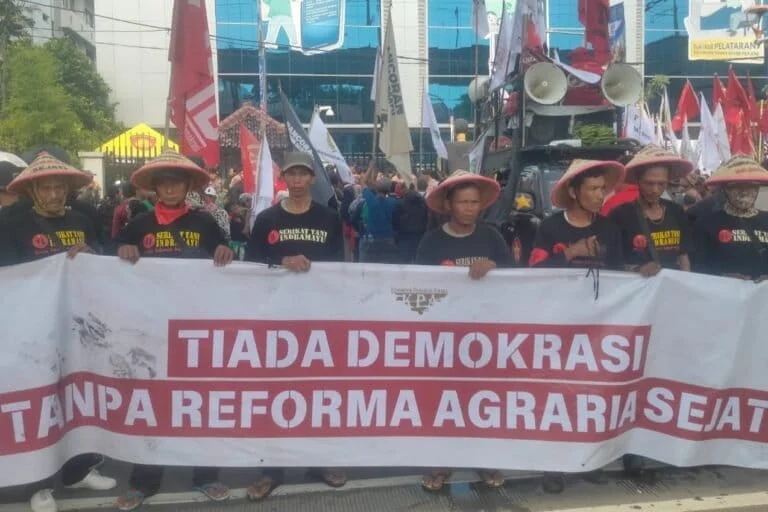
A collaborative study conducted by the Center for Rural and Regional Studies (PSPK) at Universitas Gadjah Mada (UGM), the National Land College (STPN) Yogyakarta, and the Sajogyo Institute has revealed that Indonesia’s long-standing transmigration program is increasingly becoming a primary driver of new land conflicts rather than a solution for population distribution. The research, which culminated in a policy brief released in mid-March, warns that without a fundamental overhaul of land governance, the program risks victimizing both indigenous communities and the transmigrants themselves, who often find themselves trapped in legal disputes and systemic poverty instead of achieving the promised better life.
The research findings highlight a recurring pattern where the government designates target areas for transmigration without ensuring the land is "clean and clear" of existing claims. This lack of due diligence has led to severe friction with indigenous and local populations who have inhabited these lands for generations but lack formal state recognition of their ancestral domains. Consequently, the program often functions as a mechanism for "transferring poverty" from densely populated regions like Java to underdeveloped outer islands, where the lack of infrastructure and legal certainty prevents any real economic progress.
The Failure of Tenurial Security and Infrastructure
Mohammad Ghofur, a researcher at PSPK UGM, pointed to the ongoing crisis in East Luwu, South Sulawesi, as a primary example of the program’s flaws. In this region, local indigenous communities have steadfastly rejected the inclusion of their ancestral lands in the transmigration program. The root of the resistance lies in the government’s failure to grant formal recognition of indigenous land rights, even though the area has a documented history of agrarian conflict. Ghofur noted that the government’s insistence on moving forward with the program in such volatile areas is a recipe for disaster.
Beyond the legal disputes, the physical reality of these transmigration sites is often dire. Ghofur described the infrastructure in target zones as woefully inadequate, citing instances where national roads remain unpaved and muddy. In some remote areas, the cost of a motorcycle taxi (ojek) can reach IDR 1 million during the rainy season—a figure that doubles when conditions worsen. Such exorbitant logistics costs mean that transmigrants, who are usually landless or marginal farmers, are effectively cut off from markets and essential services, ensuring they remain trapped in a cycle of indigence.
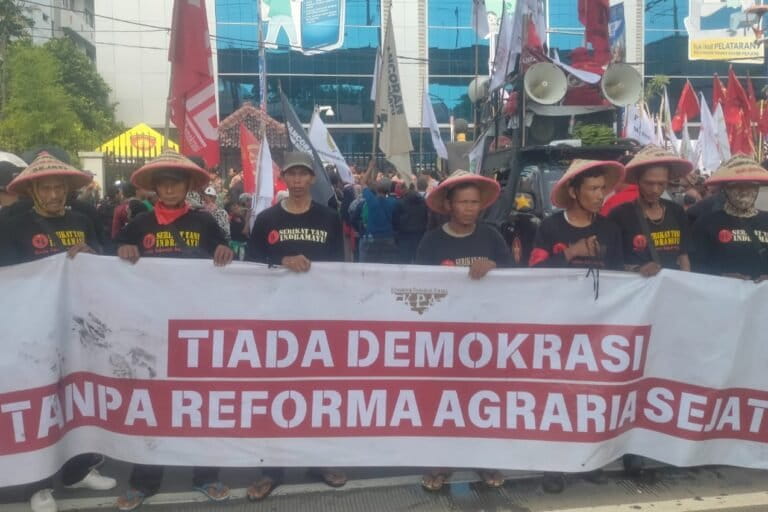
The study emphasizes that economic institutions and commodity development cannot flourish in a vacuum of legal uncertainty. Without accurate mapping of existing land rights—including forest zones, plantations (HGU), and ancestral lands—the transmigration program will continue to be plagued by tenurial disputes that stall any hope of regional development.
Historical Context and the Shift Toward Conflict
The transmigration program, which dates back to the Dutch colonial era’s "kolonisatie" policy, was originally intended to provide labor for plantations in the outer islands. Following Indonesia’s independence, the program was rebranded as a tool for national integration and poverty alleviation. However, M. Nazir Salim, a lecturer at STPN Yogyakarta, argues that the character of the program shifted significantly after 1965. During the New Order era, transmigration was frequently used as a substitute for genuine agrarian reform. Instead of redistributing fertile land in Java and Bali, the state opted to move populations to marginal lands in Sumatra, Kalimantan, Sulawesi, and Papua.
This historical trajectory has created a legacy of overlapping claims. Nazir noted that the most widespread pattern of conflict involves transmigrants being settled on land that the state later—or simultaneously—classifies as protected or production forest. Cases in Sukapura and Bukit Rigis, Lampung, illustrate this phenomenon, where transmigrants discovered decades later that their settlements were technically located within restricted forest zones, making it impossible for them to secure permanent land titles or access government assistance.
Corporate Interests and the Erasure of Rights
The complexity of these conflicts is further exacerbated by the encroachment of corporate interests, particularly in the extractive and plantation sectors. In Kotabaru, South Kalimantan, a high-profile case emerged where the state unilaterally canceled 717 land certificates (SHM) belonging to transmigrants. The reason for the cancellation was a "priority overlap" with mining permits issued after the transmigrants had already been settled. This case highlights a disturbing trend where the state prioritizes industrial expansion over the basic land rights of its citizens.
Similar issues are prevalent in Central Kalimantan and Jambi, where large-scale palm oil companies have been known to gradually acquire transmigration lands through market mechanisms. Because many transmigrants wait for more than a decade to receive their formal land titles, they often fall into debt and are forced to sell their plots through "under-the-table" transactions. While Government Regulation No. 19/2024 attempts to restrict the sale of transmigration land for 15 years, researchers argue that this policy often backfires, pushing transactions into the informal sector and accelerating the transfer of land to wealthy capital holders.
The Demographic and Ecological Pressure
The urgency for a policy shift is underscored by data from the 2023 Agricultural Census, which recorded 28.42 million farming households in Indonesia. As the number of landless and "gurem" (marginal) farmers increases, the pressure on available land reaches a breaking point. Simultaneously, Indonesia has seen approximately 24.2 million hectares of production forest converted into non-forest land. Eko Cahyono, a researcher from the Sajogyo Institute, warns that if these newly converted lands are used for transmigration without meticulous planning, they will become the next frontier for agrarian violence.
Cahyono highlighted the stark difference between government-led transmigration and "spontaneous" transmigration, which was studied extensively by the late Professor Sajogyo, a pioneer of Indonesian agrarian sociology. In the 1950s, spontaneous migrants in Way Sekampung, Lampung, demonstrated that when farmers move autonomously with their own knowledge and strategies, they are better able to adapt to new ecological conditions and build fair social relations with local residents. In contrast, the modern state-led model often treats migrants as "administrative objects" to be relocated, ignoring the complex social and ecological history of the destination sites.
Social Friction and the "Colonization" Model in Papua
One of the most sensitive areas for the transmigration program is Papua. Researchers noted that in the easternmost provinces, the program is often perceived as a tool for demographic engineering and land dispossession. This "colonization" model prevents meaningful acculturation between newcomers and indigenous Papuans. Instead of a transfer of knowledge or mutual economic benefit, the program often results in the marginalization of local tribes who lose their hunting grounds and sacred sites to government settlements.
Without a framework that respects local customary laws and traditional land management systems, horizontal conflicts between transmigrants and indigenous groups are nearly inevitable. The lack of government-led mediation and the failure to facilitate social integration have turned many transmigration sites into enclaves of tension rather than hubs of national unity.
Recommendations for Structural Reform
In light of these systemic failures, PSPK UGM, STPN, and the Sajogyo Institute have issued a formal recommendation for an immediate moratorium on the placement of new transmigrants and the expansion of existing sites. This "pause" is intended to allow for a comprehensive evaluation of the program’s impact and a thorough synchronization of data.
The researchers propose several key steps for the Ministry of Transmigration and the Ministry of Agrarian Affairs and Spatial Planning (ATR/BPN):
- Inventory and Synchronization: A joint task force involving the Ministry of Transmigration, the Ministry of Forestry, and local governments must conduct a field-level audit to map every transmigration site. This is necessary to identify overlaps with indigenous lands, forest zones, and corporate concessions.
- Recognition of Customary Rights: No transmigration project should proceed without the Free, Prior, and Informed Consent (FPIC) of local indigenous communities. The government must prioritize the recognition of ancestral domains before designating a region as a target for relocation.
- Reformulating the Subject: Transmigration must be reframed within the context of agrarian reform. Priority should be given to landless laborers and marginal farmers who possess the agricultural skills to manage land sustainably, rather than treating the program as a purely administrative relocation of the urban poor.
- Ecological and Social Suitability: Land designated for transmigration must be assessed not just for its "emptiness" on a map, but for its ecological viability and social history. The state must stop viewing remote lands as "empty spaces" and recognize them as living ecosystems with existing social structures.
- Digital Complaint and Mediation Systems: While online reporting systems are a start, the government must move beyond administrative fixes and address the structural roots of land inequality.
The research concludes that without these radical changes, the transmigration program will continue to be a source of krisis agraria (agrarian crisis). Instead of fostering equality, it risks deepening the divide between the state, corporations, and the rural poor. The government’s focus must shift from simply moving people to securing the "space of life" (ruang hidup) for all citizens, ensuring that land distribution serves the ends of social justice and ecological sustainability.