Eko Sulistyo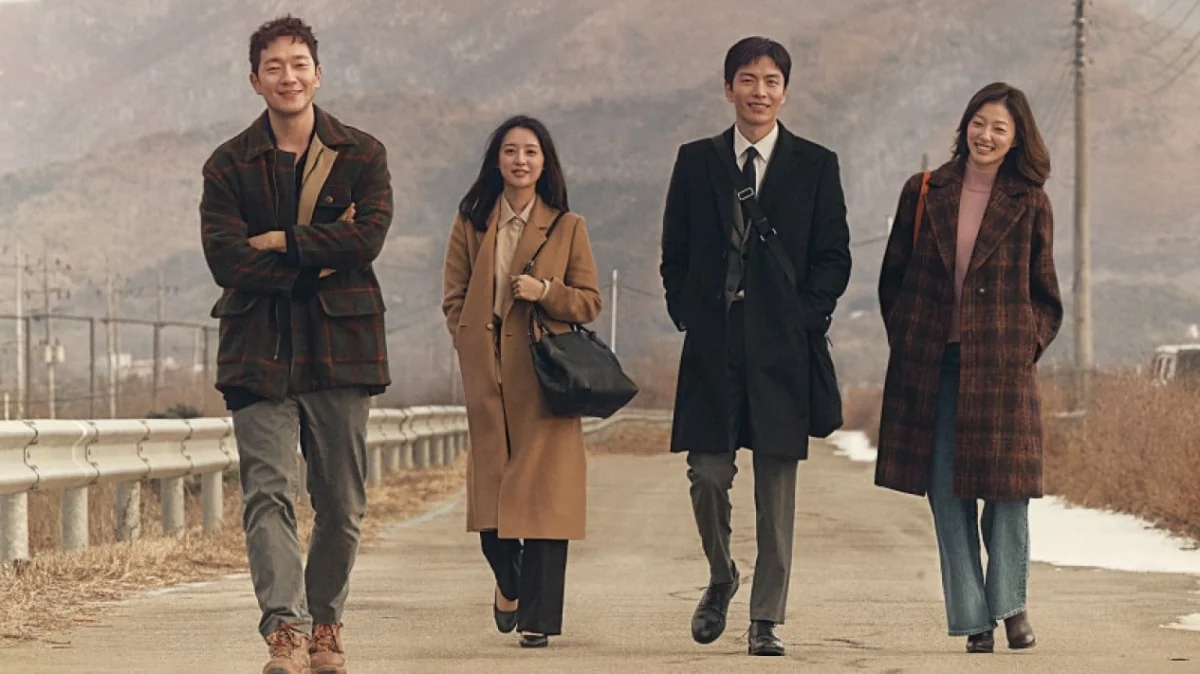
The landscape of South Korean television has undergone a significant transformation over the past decade, shifting from the traditional, high-stakes melodramas and "Cinderella" archetypes toward a more grounded, introspective form of storytelling. This evolution is particularly evident in a growing sub-genre of "slice-of-life" dramas that specifically target the demographic of individuals in their 30s. As of March 2026, industry data suggests that audiences are increasingly seeking content that mirrors their personal struggles with career stagnation, social isolation, and the deconstruction of traditional milestones. This demographic, often referred to as part of the "Sampo Generation"—a term describing those who have given up on courtship, marriage, and childbirth due to economic pressures—finds a unique form of catharsis in narratives that validate their quiet frustrations and small victories.
The Socio-Economic Context of the Thirties Crisis
To understand the resonance of these dramas, one must look at the socio-economic climate of contemporary South Korea. The transition into one’s 30s was historically marked by the achievement of stability: a permanent job, home ownership, and the start of a family. However, data from the Korea National Statistical Office indicates a steady decline in marriage rates and a significant delay in the age of first-time homebuyers. In Seoul, the soaring cost of real estate has made independent living an arduous financial burden for many young professionals.
Furthermore, the South Korean labor market is characterized by intense competition and a culture of "overwork." The OECD has consistently ranked South Korea among the countries with the highest number of working hours. For those in their 30s, this often translates to a "burnout" phase, where the initial excitement of a career is replaced by the realization of corporate futility. It is against this backdrop of systemic exhaustion and shifting social values that realistic K-dramas have found their footing, moving away from escapism and toward radical empathy.
A Detailed Analysis of Thematic Resilience in Modern Dramas
The following seven productions represent a pinnacle in this realistic storytelling movement, each addressing a specific facet of the "30s experience" with nuanced scripts and atmospheric direction.
1. My Liberation Notes: The Search for Emotional Autonomy
Released to critical acclaim, My Liberation Notes explores the lives of three siblings living on the outskirts of Gyeonggi-do who endure grueling daily commutes to Seoul. The drama meticulously captures the "drudgery of existence." For the protagonist, Yeom Mi-jeong, the struggle is not a lack of success in the traditional sense, but a profound internal void. The series introduced the concept of "worship" over "love," suggesting that individuals in their 30s require a level of unconditional support that transcends romantic clichés. Analysts note that the show’s popularity stemmed from its depiction of introversion and the courage required to simply "be," rather than to constantly "achieve."
2. Thirty-Nine: Confronting Mortality and Mature Friendship
While many dramas focus on the beginning of life’s journey, Thirty-Nine tackles the sobering reality of the approaching 40s. The narrative centers on three best friends whose lives are upended by a terminal illness diagnosis. Unlike youth-centric dramas where friendship is often a backdrop for romance, Thirty-Nine places platonic bonds at the forefront. It addresses the "sandwich generation" pressure—caring for aging parents while managing one’s own declining youth. The drama’s impact lies in its insistence that life does not end at 40, but rather requires a deeper level of intentionality and emotional honesty.
3. Because This Is My First Life: Deconstructing the Marriage Contract
This series serves as a sharp critique of the "Home-Poor" phenomenon. By centering on a cohabitation agreement between a software engineer who has sacrificed everything for a mortgage and a struggling writer who cannot afford rent, the drama deconstructs the institution of marriage. It argues that for the modern 30-something, marriage is often a financial or pragmatic decision rather than a fairy-tale ending. Through its philosophical dialogue, the show explores how individuals negotiate their personal space and values within a society that demands conformity.
4. Call It Love: The Weight of Past Trauma
At age 30, individuals often carry the accumulated baggage of family trauma and past heartbreaks. Call It Love deviates from the fast-paced "revenge thriller" tropes to provide a slow-burn look at how two people, exhausted by their circumstances, find solace in one another. The cinematography, characterized by a distinct hazy hue, mirrors the emotional fatigue of the characters. It highlights a specific type of adult maturity: the realization that revenge is often too tiring to pursue and that healing is a quiet, solitary process.
5. Work Later, Drink Now: The Culture of Coping Mechanisms
Alcohol consumption as a social lubricant and a coping mechanism is a recurring theme in South Korean media. Work Later, Drink Now uses the ritual of after-work drinking to explore the hidden lives of three women. While the show features comedic elements, it strikes a chord by revealing the "toxic" work environments and the loneliness that follows the laughter. The drama highlights a significant reality for the 30s demographic: the reliance on a small circle of friends to survive the pressures of a corporate world that views employees as replaceable assets.
6. Be Melodramatic: The Meta-Narrative of Grief and Growth
Directed by Lee Byeong-heon, Be Melodramatic (also known as Melo Is My Nature) is a meta-commentary on the television industry itself. The three protagonists—a scriptwriter, a documentary director, and a marketing executive—navigate the complexities of their professional and personal lives with sharp, fast-paced dialogue. The show is particularly noted for its honest portrayal of grief; one character hallucinates her deceased boyfriend, representing the lingering shadows of loss that many adults carry. It emphasizes that in one’s 30s, "making it" is often less about fame and more about maintaining one’s sanity and integrity.
7. Love Next Door: The Phenomenon of the "Burnout Return"
The most recent addition to this movement, Love Next Door, addresses the "U-turn" trend, where high-achieving professionals quit their prestigious jobs in the city to return to their hometowns. This reflects a real-world shift among millennials who are prioritizing mental health over corporate status. The drama explores the "prodigal child" syndrome—the guilt of not meeting parental expectations and the subsequent journey of self-reflection. It suggests that returning to one’s roots is not a sign of failure, but a necessary recalibration of one’s life compass.
Industry Trends and Global Consumption Patterns
The rise of these "relatable" dramas is not a localized phenomenon. According to data from global streaming platforms like Netflix and Disney+, slice-of-life K-dramas consistently rank in the Top 10 across various Southeast Asian and Western markets. International viewers, particularly those in the 25–40 age bracket, report that these stories provide a sense of universal solidarity.
Market analysts observe that the production budgets for these dramas are often lower than those for historical epics or action-heavy sci-fi, yet they yield a higher "emotional ROI" (Return on Investment). The success of scripts written by authors like Park Hae-young (My Liberation Notes, My Mister) has encouraged production houses to invest in writer-driven projects that prioritize psychological depth over spectacle.
Expert Perspectives on Viewer Psychology
Psychologists in South Korea have coined the term "healing dramas" (hil-ling deura-ma) to describe this genre. Dr. Kim Hae-won, a specialist in adult developmental psychology, notes that "Viewers in their 30s are in a developmental stage where they must reconcile their youthful dreams with their current reality. When they see a character on screen who is also tired, also lonely, and also struggling with a mortgage, it reduces their sense of isolation. It validates their struggle, which is a powerful form of informal therapy."
Furthermore, these dramas often lack a clear "villain," instead presenting the "system" or "time" as the antagonist. This shift reflects a more sophisticated understanding of life’s challenges, where problems cannot be solved by defeating a single bad actor, but by learning to navigate a complex and often indifferent world.
Implications for the Future of Media
The continued popularity of these narratives suggests a permanent shift in audience appetite. As the "30s demographic" grows in purchasing power and influence, media outlets are likely to continue producing content that leans into the "ordinary." The "relate-ability factor" has become a new currency in the entertainment industry.
In conclusion, the seven dramas highlighted—My Liberation Notes, Thirty-Nine, Because This Is My First Life, Call It Love, Work Later, Drink Now, Be Melodramatic, and Love Next Door—are more than mere entertainment. They serve as cultural artifacts that document the anxieties and aspirations of a generation caught between the traditions of the past and the uncertain economic realities of the future. By providing a mirror to the lives of those in their 30s, these stories offer more than just a distraction; they offer the comfort of being understood in a world that often feels overwhelmingly loud and lonely. For the viewer, seeing their own "unremarkable" life treated with such cinematic care is a reminder that their journey, however quiet, is inherently meaningful.