Azin Asro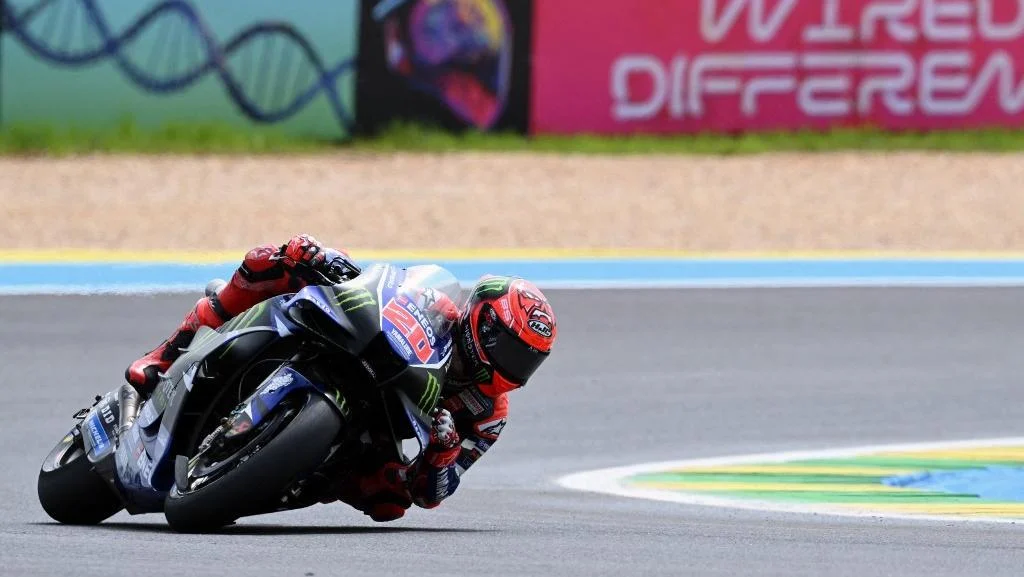
The landscape of the MotoGP World Championship witnessed a moment of symbolic significance at the Autódromo Internacional de Goiânia during the MotoGP Brazil Grand Prix, where Fabio Quartararo finished in a hard-fought sixth position. While the numerical result might appear modest for a former World Champion, the French rider left the circuit with a sense of profound psychological victory that transcends the points table. For Quartararo and the Monster Energy Yamaha MotoGP team, the primary takeaway from the weekend was not the final classification, but a fleeting yet fierce battle in the opening laps where the Yamaha YZR-M1 successfully challenged and overtook the Ducati of Marc Marquez.
This performance in Brazil marks a significant upward trajectory for Quartararo, who had struggled immensely during the season’s opening rounds. Finishing sixth serves as a stark contrast to his disappointing 14th-place finish in the season opener, signaling that the technical adjustments made by the Iwata-based manufacturer are beginning to bear fruit. Amidst a period of intense development and rumors regarding Yamaha’s long-term technical direction, Quartararo’s ability to mix it with the leading Ducatis, even briefly, provides a much-needed morale boost for a team currently navigating the most challenging era in its modern racing history.
Race Chronology: A Lightning Start in Goiânia
The race weekend in Brazil was characterized by high humidity and demanding track conditions, putting both tire management and rider physical fitness to the test. Qualifying had already shown glimpses of Quartararo’s renewed form, as he managed to place his Yamaha on the second row of the grid, starting from the fourth position. This starting spot proved crucial, providing the Frenchman with the clean air needed to exploit the M1’s agility in the early sectors of the lap.
As the lights went out for the Sunday feature race, Quartararo executed what many observers described as a "vintage" start. By the time the pack reached the apex of the first corner, the Frenchman had surged forward, momentarily snatching the second position. In a daring maneuver that showcased his trademark late-braking ability, he dove down the inside of both Marco Bezzecchi and the multi-time champion Marc Marquez. For the first two laps, Quartararo held his ground, demonstrating a level of aggression and defensive riding that has often been stifled by the Yamaha’s lack of top-end power in recent seasons.
However, the reality of the current technical gap between the Japanese inline-four engines and the Italian V4 powerhouses became evident on the third lap. As the riders crested the rise onto the long start-finish straight, Marquez utilized the superior aerodynamic efficiency and horsepower of his Ducati to reclaim the position with clinical ease before the braking zone of Turn 1. Despite losing the podium spot, Quartararo maintained a consistent pace, eventually crossing the finish line in sixth place, securing ten valuable championship points to add to the four he earned during the Saturday Sprint Race.
The Psychological Weight of the Overtake
For Quartararo, the duel with Marquez was more than a battle for track position; it was a validation of his own skill set. Speaking to the media following the race, Quartararo was candid about his emotional state. "To be honest, I don’t care where I finished," he remarked. "I just overtook Marc, who is the reference rider right now. When I was younger, this had a lot of meaning, and today it still does because it makes me feel like I haven’t lost it."
The significance of this statement cannot be overstated. Since his title-winning campaign in 2021, Quartararo has often expressed frustration with his inability to fight wheel-to-wheel with his rivals due to the technical limitations of his machinery. By successfully passing Marquez—the rider many consider the gold standard for racecraft—Quartararo proved to himself and the paddock that his talent remains intact. This psychological breakthrough is essential as Yamaha prepares for the upcoming regulatory shifts and continues to refine its current package.
Technical Context: Yamaha’s Uphill Battle Against Ducati
The struggle Quartararo faces is rooted in the current technical disparity in MotoGP. Ducati has dominated the landscape with a bike that excels in almost every department: acceleration, top speed, braking stability, and aerodynamic downforce. Yamaha, conversely, has spent the last two seasons attempting to modernize the YZR-M1 without losing its core strength—cornering speed.
In Brazil, the limitations were clear. While Quartararo could out-brake and out-maneuver Marquez in the technical sectors, he was defenseless on the straights. Yamaha has recently benefited from "concession" rules, which allow them more testing days and engine development freedom compared to top-tier manufacturers like Ducati. The progress seen in Goiânia is a direct result of these concessions, with a new aero package and revised electronics mapping helping Quartararo find a better "feeling" with the front end of the bike.
The fact that Quartararo could even attempt a pass on Marquez’s Ducati suggests that the gap, while still significant, is no longer an insurmountable wall. This performance serves as a data point for Yamaha’s engineers, confirming that the bike is capable of competing in high-stress combat situations, provided the rider can find a window of opportunity in the corners.
Official Reactions and Team Outlook
The Monster Energy Yamaha team management echoed Quartararo’s cautious optimism. Team Director Massimo Meregalli noted that while the team is far from where they want to be—fighting for wins—the sixth-place finish is a building block. The focus within the garage has shifted toward the 2026 season, which many see as the real opportunity for a title charge, given the long-term nature of Yamaha’s current rebuilding phase.
"Fabio showed the heart of a champion today," Meregalli stated in a post-race debrief. "We know the M1 still has a deficit in pure power, but seeing him fight at the front in the early laps gives everyone in the factory the motivation to push harder. We are collecting data that will be vital not just for the rest of this season, but for the fundamental design of the 2025 and 2026 machines."
Inside the paddock, the reaction was one of respect. Rival riders acknowledged that Quartararo is currently "riding over the problems" of his bike. Marc Marquez himself commented on the battle, noting that the Frenchman remains one of the hardest riders to pass because of his precision and bravery under braking.
Broader Implications for the 2026 MotoGP Season
The mention of 2026 is a recurring theme in Quartararo’s recent discourse. With major technical regulation changes on the horizon for the sport, Yamaha is currently in a "bridge" period. The results in Brazil suggest that Quartararo is willing to remain patient, provided he sees occasional flashes of competitiveness.
The implications of this race extend to the rider market as well. By proving he can still challenge the elite on inferior machinery, Quartararo maintains his high market value. For Yamaha, keeping their star rider motivated is a priority. Performances like the one in Goiânia—where the "potential" of the rider is visible even if the "potential" of the bike is lagging—are critical for maintaining team harmony.
Furthermore, the MotoGP Brazil Grand Prix has highlighted the sport’s growing global footprint. The return to South American soil provided a unique atmosphere that seemed to energize the riders. For Quartararo, the energy of the Brazilian fans and the technical demands of the Goiania circuit provided the perfect stage to reassert his presence in the top tier of the field.
Conclusion: A Turning Point in the Narrative
As the MotoGP circus moves on from Brazil, the narrative surrounding Fabio Quartararo has shifted from one of despair to one of "measured hope." A sixth-place finish rarely makes headlines in the career of a world champion, but in the context of Yamaha’s current struggle, it represents a significant milestone.
Quartararo’s enthusiasm regarding his overtake on Marc Marquez serves as a reminder that at the highest level of motorsport, the mental game is just as important as the mechanical one. Knowing that he can still go toe-to-toe with the best gives Quartararo the "asa" or "hope" he needs to endure the long development process ahead. While the Ducati remains the bike to beat, the "El Diablo" of old was seen in Brazil, and that is a prospect that should excite fans and wary rivals alike as the championship progresses toward the pivotal 2026 era.