Azin Asro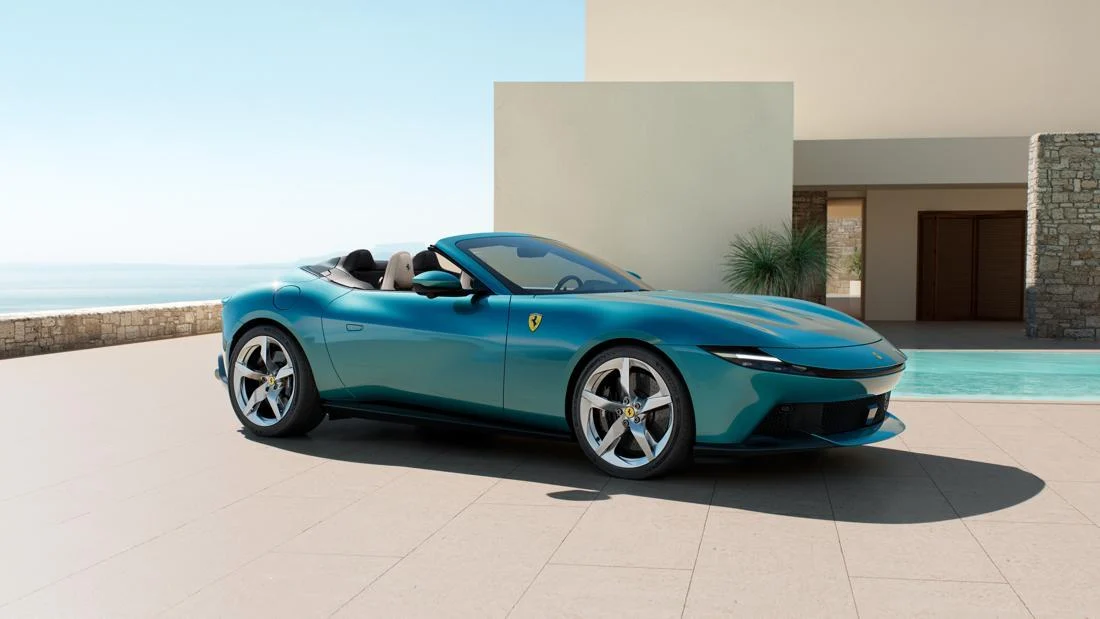
Maranello has officially unveiled its latest masterpiece in the form of the Ferrari Amalfi Spider, a high-performance roadster that signals a new chapter for the Italian marque’s grand touring lineage. Designed as the direct successor to the critically acclaimed Ferrari Roma Spider, the Amalfi Spider arrives not only as a sophisticated evolution of the brand’s open-top philosophy but also as a strategic entry point into the exclusive world of Ferrari ownership. By blending the timeless elegance of mid-century Italian design with the cutting-edge mechanical prowess of modern Formula 1-derived engineering, the Amalfi Spider seeks to capture the spirit of "La Nuova Dolce Vita" for a new generation of discerning enthusiasts.
The introduction of the Amalfi Spider marks a significant pivot in Ferrari’s product portfolio. While the brand has recently pushed the boundaries of hybridization with the SF90 Stradale and the 296 GTB, the Amalfi Spider remains committed to the raw, emotive power of the internal combustion engine. It serves as the bridge between Ferrari’s storied past and its high-tech future, offering a driving experience that prioritizes sensory engagement and grand touring comfort without sacrificing the blistering performance expected of the Prancing Horse.
A Design Language of Minimalist Sophistication
The visual identity of the Amalfi Spider is a masterclass in "subtractive" design, a philosophy shared with its fixed-roof sibling, the Amalfi coupe. Ferrari’s styling center, led by Flavio Manzoni, has opted for a clean, monolithic aesthetic that eschews unnecessary vents and aggressive aerodynamic appendages in favor of pure, flowing lines. The front fascia is characterized by a "shark-nose" profile, featuring a body-colored upper wing that appears to float over a recessed, dark-toned grille. This minimalist approach conceals a suite of advanced sensors and lighting elements, including ultra-slim LED headlights that give the vehicle a focused, predatory gaze.
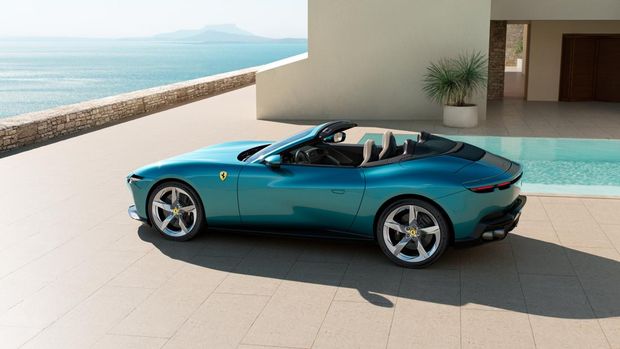
The transition from coupe to convertible has been executed with surgical precision. The Amalfi Spider utilizes a sophisticated soft-top mechanism, a departure from the retractable hard-tops seen on previous models like the Portofino M. This fabric roof can be deployed or retracted in a mere 13.5 seconds, even while the vehicle is in motion at speeds of up to 60 km/h. Ferrari engineers have utilized a proprietary five-layer material for the roof, specifically engineered to provide acoustic and thermal insulation that rivals traditional metal structures. When stowed, the roof folds into a compact Z-shape, ensuring that the car’s rear proportions remain balanced and elegant.
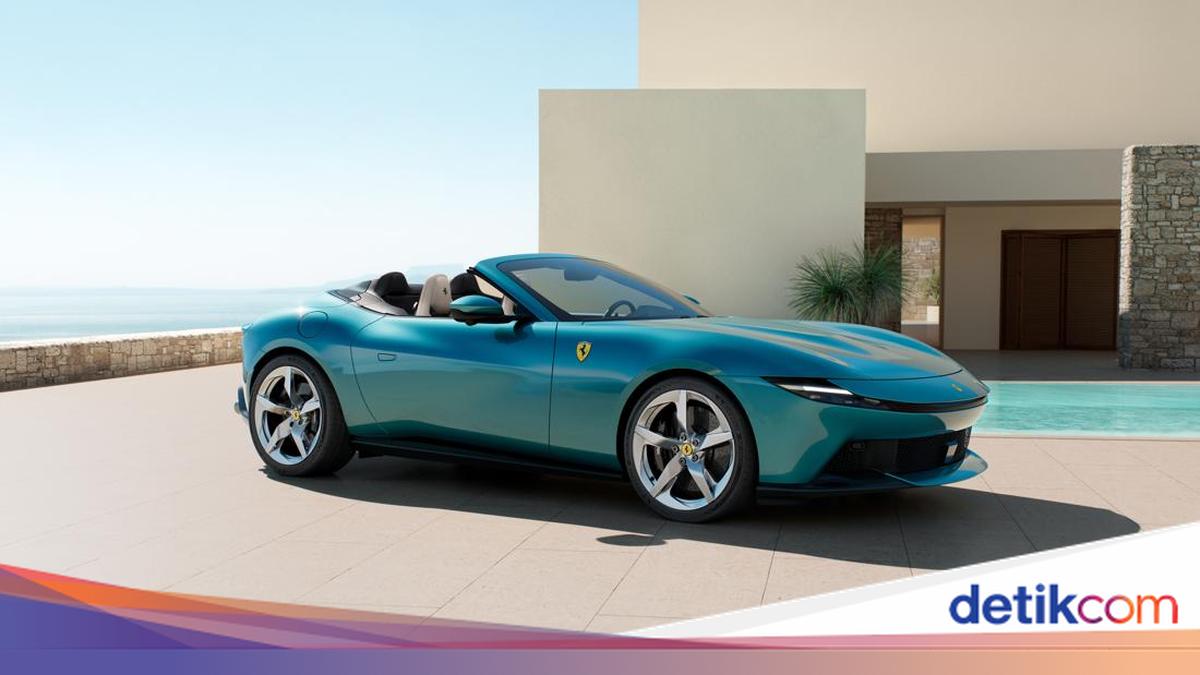
To further distinguish this model, Ferrari has introduced a bespoke exterior paint named Rosso Tramonto. This hue, a deep crimson infused with subtle orange undertones, is inspired by the legendary sunsets over the Amalfi Coast, the very region from which the car takes its name. The color is designed to shift in appearance depending on the lighting, highlighting the subtle curves and muscular haunches of the Spider’s rear wheel arches.
The Heart of Maranello: The F154 V8 Powertrain
Beneath the long, sculpted hood of the Amalfi Spider lies the beating heart of the machine: a 3.9-liter twin-turbocharged V8 engine from the multi-award-winning F154 family. In this latest iteration, the engine has been tuned to deliver 640 horsepower at 7,500 rpm. Perhaps more impressive is the torque delivery; the engine produces a massive 760 Nm of torque, available in a broad plateau from 3,000 to 5,750 rpm.
This power is managed by Ferrari’s Variable Boost Management software, which adjusts torque delivery based on the selected gear. This ensures that the Amalfi Spider provides the linear, escalating acceleration of a naturally aspirated engine while retaining the explosive mid-range punch of a modern turbo. The power is transmitted to the rear wheels via an eight-speed dual-clutch transmission (DCT). This gearbox, derived from the unit used in the SF90 Stradale, features shorter gear ratios in the lower range for rapid acceleration and an overdrive eighth gear for relaxed, efficient highway cruising.
Despite the necessary structural reinforcements and the weight of the roof mechanism—which adds approximately 86 kilograms compared to the coupe—the Amalfi Spider remains a formidable performer. Ferrari’s official performance figures state a 0-100 km/h sprint time of just 3.3 seconds. The vehicle will continue to pull relentlessly until it reaches a top speed in excess of 320 km/h, placing it firmly in the upper echelon of the global convertible market.
Advanced Dynamics and Active Aerodynamics
Ferrari has equipped the Amalfi Spider with an array of chassis technologies designed to make its performance accessible to drivers of all skill levels. Central to this is the Side Slip Control (SSC) system, version 8.0, which integrates the electronic differential (E-Diff), F1-Trac traction control, and SCM-E Frs magnetorheological dampers. This suite of electronics allows the car to dance on the edge of its grip limits, providing the driver with confidence and feedback during spirited driving on winding coastal roads.
The braking system has also seen a significant upgrade with the inclusion of "Brake-by-Wire" technology. This system replaces the traditional hydraulic link between the pedal and the calipers with electronic sensors, allowing for more precise modulation and a more consistent pedal feel, regardless of brake temperature. The Amalfi Spider also features the ABS Evo system, which debuted on the 296 GTB, providing shorter stopping distances and improved stability during high-speed deceleration.
Aerodynamics play a crucial role in the Amalfi Spider’s dual personality. The rear of the car features an active spoiler integrated into the boot lid. This spoiler automatically adjusts between three distinct configurations:
- Low Drag: The spoiler remains flush with the body to minimize air resistance during high-speed cruising.
- Medium Downforce: The spoiler deploys to a moderate angle to provide stability during high-speed cornering.
- High Downforce: The spoiler reaches its maximum angle of attack, generating significant vertical load to aid braking and low-speed agility.
A Digital Sanctuary: The Interior Experience
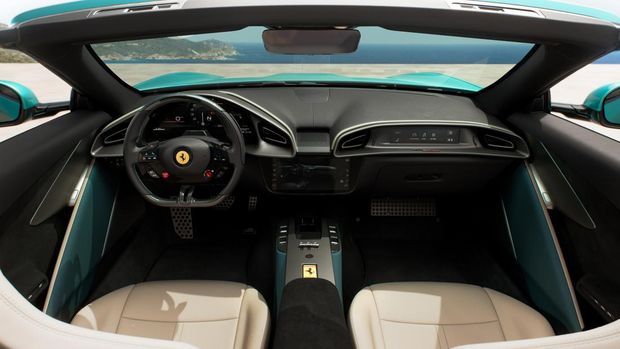
The cabin of the Amalfi Spider is a "Dual Cockpit" evolution, designed to involve both the driver and the passenger in the emotional experience of the journey. The driver is greeted by a massive 15.6-inch curved digital instrument cluster that is fully customizable, capable of displaying everything from a traditional yellow tachometer to full-screen navigation maps.
In the center of the dashboard sits a 10.25-inch vertical touchscreen that controls the infotainment, climate, and vehicle settings. In a nod to the grand touring nature of the car, Ferrari offers an optional 8.8-inch dedicated display for the passenger. This screen allows the co-driver to view performance data, manage media, or assist with navigation, fostering a shared sense of engagement.
Sustainability and luxury intersect in the choice of materials. The interior features a blend of traditional Italian leathers and modern sustainable textiles. Ferrari has also redesigned the steering wheel, incorporating haptic touch controls that allow the driver to manage almost every aspect of the car without ever taking their hands off the wheel, adhering to the "eyes on the road, hands on the wheel" philosophy developed in Formula 1.
Chronology and Market Evolution
The launch of the Amalfi Spider represents the culmination of a decade-long evolution for Ferrari’s entry-level grand tourer line. The timeline of this segment showcases Ferrari’s shifting priorities:
- 2008 – 2014: Ferrari California. The introduction of the first front-engined V8 with a retractable hard-top, aimed at broadening Ferrari’s customer base.
- 2014 – 2017: Ferrari California T. The return of turbocharging to the V8 range, offering a significant leap in torque and efficiency.
- 2017 – 2020: Ferrari Portofino. A more aggressive, sharper-handling successor that improved upon the California’s proportions.
- 2020 – 2023: Ferrari Roma & Portofino M. The split into two distinct identities—the elegant Roma coupe and the performance-oriented Portofino M spider.
- 2023 – 2025: Ferrari Roma Spider. The return of the soft-top to the front-engined V8 range, setting the stage for the Amalfi.
- 2026: Ferrari Amalfi Spider. The definitive evolution, merging the elegance of the Roma with enhanced performance and next-generation digital architecture.
Industry analysts suggest that the Amalfi Spider is positioned to compete directly with the Aston Martin Vantage Roadster and the Bentley Continental GTC. By maintaining a starting price point that remains relatively "accessible" within the Ferrari hierarchy—expected to hover around the $280,000 to $300,000 mark before options—Ferrari is ensuring a steady influx of new-to-brand customers.
Strategic Implications and Global Outlook
The debut of the Amalfi Spider comes at a time when the automotive industry is grappling with the transition to electrification. While Ferrari has committed to a carbon-neutral future, the Amalfi Spider reinforces the idea that there is still a place for the pure, unadulterated internal combustion engine in the luxury segment. For many collectors, the Amalfi Spider represents one of the final opportunities to own a brand-new, non-hybrid V8 Ferrari, a factor that is expected to drive high resale values and strong initial demand.
From a corporate standpoint, the Amalfi Spider is a vital component of Ferrari’s "Value over Volume" strategy. By offering a vehicle that is as comfortable in a metropolitan setting as it is on a racetrack, Ferrari is tapping into the "lifestyle" segment of the luxury market. This segment is less sensitive to economic fluctuations and more focused on the brand experience and emotional connection.
Initial reactions from the global dealer network have been overwhelmingly positive, with many reporting that order books are already filling up for the 2026 and 2027 model years. The Amalfi Spider is not just a car; it is a statement of intent from Maranello. It proves that even as the world changes, the allure of an open-top Ferrari, powered by a roaring V8 and draped in exquisite Italian design, remains one of the most potent symbols of automotive excellence. As the first units prepare to roll out of the Maranello factory, the Amalfi Spider stands ready to reclaim the title of the world’s most desirable grand touring roadster.