Bambang Pamungkas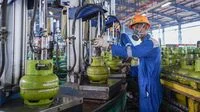
A significant fire incident engulfed the Stasiun Pengisian Bulk Elpiji (SPBE), or Bulk LPG Filling Station, located in Cimuning, Mustika Jaya, Bekasi, on Wednesday evening, April 1, 2026. The facility, which plays a crucial role in the local distribution network of Liquefied Petroleum Gas (LPG), is owned and operated by the private entity PT Indogas Andalan Kita, a registered partner of the state-owned energy giant PT Pertamina Patra Niaga. The blaze prompted an immediate and extensive emergency response, raising concerns over industrial safety standards and the resilience of essential energy supply chains in densely populated urban areas.
Incident Unfolds: A Detailed Chronology
The evening of April 1, 2026, began routinely at the PT Indogas Andalan Kita SPBE. This facility is responsible for receiving bulk LPG shipments, typically via tanker trucks, storing it in large tanks, and then refilling smaller cylinders (ranging from 3kg to 12kg) for distribution to households and commercial establishments. Operations were likely in full swing, preparing for the next day’s deliveries, a common practice in the round-the-clock energy supply chain.
Reports from local residents began filtering in around 7:00 PM local time, describing a sudden, loud explosion followed by a rapidly escalating fire. Witnesses from nearby residential areas spoke of a bright orange glow against the night sky and the distinct smell of burning gas, immediately signaling the severity of the situation. The initial explosion is believed to have occurred in or near one of the filling bays or storage areas, though the exact ignition point and cause remain subject to official investigation.
Within minutes of the initial reports, the facility’s internal emergency protocols were activated, prompting an immediate evacuation of all personnel on site. Simultaneously, calls were placed to the local fire department and police. The Bekasi City Fire Department (Dinas Pemadam Kebakaran Kota Bekasi) swiftly mobilized its units, deploying multiple fire engines and specialized hazardous materials response teams. Local police units from the Mustika Jaya sector were also dispatched to secure the perimeter, establish a safety cordon, and manage traffic flow to facilitate emergency access and prevent public encroachment into the danger zone.
By 7:30 PM, the fire had reportedly intensified, with towering flames visible from several kilometers away. Firefighters faced a formidable challenge, characteristic of LPG fires, which involve highly flammable and pressurized gas. The primary objective for emergency responders was to contain the fire, prevent its spread to adjacent storage tanks, and cool surrounding infrastructure to mitigate the risk of a Boiling Liquid Expanding Vapor Explosion (BLEVE), an extremely dangerous phenomenon where heated liquid within a pressure vessel rapidly vaporizes, causing the vessel to rupture violently. Water cannons were continuously deployed to cool the remaining storage tanks, while foam agents were prepared to suppress the flames once the gas flow could be isolated.
Throughout the night, firefighting efforts continued unabated. The coordinated response involved not only the fire department and police but also personnel from Pertamina Patra Niaga and PT Indogas Andalan Kita, who provided crucial technical guidance on the facility layout, shut-off valves, and potential hazards. By midnight, significant progress had been made in bringing the main blaze under control, though residual fires and smoldering sections required continuous monitoring and cooling operations. The focus then shifted to ensuring the stability of the site and preventing any reignition. The full extent of the damage to the facility’s infrastructure, including filling machinery, storage tanks, and administrative buildings, was not immediately ascertainable but was expected to be substantial.
The Vital Role of LPG in Indonesia’s Energy Landscape
The incident at the Bekasi SPBE underscores the critical role that LPG plays in Indonesia’s energy matrix and the inherent risks associated with its widespread distribution. For millions of Indonesian households, particularly those in urban and suburban areas, LPG is the primary fuel for cooking, having largely replaced kerosene through a government-initiated conversion program implemented over the past two decades. This program aimed to provide a cleaner, more efficient, and more affordable energy source to the populace. Beyond domestic use, LPG also fuels a myriad of small and medium-sized enterprises, including restaurants, laundries, and various industrial applications, making its consistent and safe supply indispensable to the national economy and daily life.
Indonesia’s reliance on LPG is significant. Annually, the country consumes tens of millions of metric tons of LPG, a substantial portion of which is imported to meet domestic demand. This vast consumption necessitates a robust and extensive distribution network, comprising import terminals, storage depots, SPBEs like the one affected in Bekasi, and thousands of smaller agents and retailers. The efficient functioning of this intricate network is paramount to national energy security and consumer welfare. Any disruption, especially due to safety incidents, can have immediate and far-reaching consequences, affecting not only the availability of fuel but also public confidence in the safety of the entire system.
Pertamina’s Network and Partnership Model
PT Pertamina (Persero), the state-owned oil and gas company, holds a near-monopoly on LPG distribution in Indonesia. Its subsidiary, PT Pertamina Patra Niaga, is specifically tasked with managing the downstream oil and gas business, including the procurement, storage, and distribution of LPG across the archipelago. To achieve this vast logistical feat, Pertamina Patra Niaga operates a comprehensive network of its own facilities while also collaborating extensively with private partners like PT Indogas Andalan Kita.
This partnership model is a cornerstone of Pertamina’s distribution strategy. Private entities are licensed and authorized to operate SPBEs, often investing in the infrastructure and managing day-to-day operations, while adhering to Pertamina’s stringent operational guidelines, safety standards, and supply protocols. These partners act as crucial intermediaries, bridging the gap between Pertamina’s large-scale distribution hubs and the final consumers. The relationship between Pertamina and its partners is typically governed by contracts that stipulate adherence to national safety regulations (such as those issued by the Ministry of Energy and Mineral Resources and the National Standardization Agency, SNI), operational procedures, and quality control measures. The incident at PT Indogas Andalan Kita therefore places not only the private operator but also Pertamina’s oversight mechanisms under scrutiny. Pertamina’s reputation and its commitment to ensuring safety across its entire value chain, including its partners’ facilities, are intrinsically linked to such events.
Immediate Response and Emergency Protocols
Susanto August Satria, Area Manager Communications, Relations & CSR for PT Pertamina Patra Niaga Regional Jawa Bagian Barat (RJBB), promptly issued a statement confirming the incident and extending an apology for the distress caused. His statement emphasized Pertamina Patra Niaga RJBB’s swift action, coordinating immediately with the local fire department and other relevant authorities. "Pertamina Patra Niaga Regional RJBB and the SPBE directly moved quickly and coordinated with the local Fire Department," Satria stated, underscoring the collaborative effort in the initial hours of the crisis.
The immediate priority for all parties involved was the containment of the fire, ensuring the safety of the community surrounding the SPBE, and safeguarding the workers who were present at the time of the incident. Emergency protocols typically include activating internal fire suppression systems, isolating the affected areas, and evacuating personnel. For external responders, this involves establishing a clear command structure, deploying appropriate resources, and implementing a multi-pronged approach to fire suppression specific to highly flammable gases. This includes using large volumes of water to cool adjacent tanks and equipment, preventing pressure build-up and subsequent explosions, and cutting off the fuel supply if possible. The police, in conjunction with local disaster management agencies, played a crucial role in managing the evacuation of residents from the immediate vicinity, if deemed necessary, and ensuring public order.
Official Statements and Calls for Accountability
Beyond Pertamina’s initial apology and commitment to action, the incident has drawn reactions from various official bodies. The Bekasi City Government, through its Mayor’s office, is expected to issue a statement expressing concern and assuring residents that all necessary measures are being taken. The Head of the Bekasi City Fire Department would likely provide details on the firefighting operations, the number of personnel and vehicles deployed, and an assessment of the challenges faced in combating the LPG blaze. The local police force, responsible for the criminal investigation, would confirm the launch of a probe into the cause of the fire. This investigation would involve forensic analysis of the scene, collection of evidence, interviewing witnesses and facility staff, and reviewing operational logs and safety records of PT Indogas Andalan Kita.
The Ministry of Energy and Mineral Resources (ESDM), which oversees the country’s energy sector and sets safety standards for LPG facilities, is also expected to weigh in. A representative from the Directorate General of Oil and Gas within ESDM might issue a statement reaffirming the government’s commitment to safety and indicating that the incident will trigger a broader review of safety compliance across all SPBEs nationwide. This could involve spot checks, audits, and potentially stricter enforcement of existing regulations or the introduction of new ones. The National Standardization Agency (Badan Standardisasi Nasional – BSN) might also be involved, particularly in reviewing the adherence of the facility to SNI standards for LPG storage and handling.
The Broader Implications for Safety and Regulation
The fire at the Bekasi SPBE carries significant implications for industrial safety and regulatory oversight in Indonesia’s energy sector. While incidents of this scale are relatively rare, they serve as stark reminders of the inherent dangers associated with handling highly volatile substances like LPG. The immediate aftermath will undoubtedly trigger a comprehensive safety audit, not just for PT Indogas Andalan Kita but potentially for all similar facilities operating under Pertamina’s network. Regulators will be keen to identify any systemic weaknesses, whether in equipment maintenance, operational procedures, staff training, or emergency response protocols.
One critical area of focus will be the effectiveness of existing safety regulations and their enforcement. Indonesia has a framework of regulations governing the storage, handling, and distribution of LPG, but the efficacy of these regulations hinges on rigorous compliance and robust oversight. The investigation into this incident will determine if there were any lapses in these areas, such as inadequate safety equipment, expired certifications, or deviations from standard operating procedures. The findings could lead to calls for updated regulations, enhanced inspection regimes, and more severe penalties for non-compliance. Furthermore, the incident might spur a review of urban planning regulations, particularly regarding the proximity of hazardous industrial facilities to residential areas, a common challenge in rapidly developing regions.
Ensuring Supply Stability Amidst Crisis
Despite the severity of the incident, Pertamina Patra Niaga has moved to reassure the public that "Pertamina Patra Niaga RJBB ensures that LPG supply to the community is not disrupted." This commitment highlights Pertamina’s logistical prowess and its robust contingency planning. Given the extensive network of SPBEs across the region, it is likely that Pertamina will reroute supply to unaffected facilities, increasing their operational capacity to compensate for the temporary closure of the Indogas Andalan Kita plant. This might involve extending operating hours at other SPBEs, deploying additional tanker trucks, and optimizing delivery routes to ensure that retailers and end-users do not experience shortages.
However, even with these assurances, localized disruptions in the immediate vicinity of Bekasi cannot be entirely ruled out for a short period. Residents and small businesses accustomed to sourcing LPG from the affected facility might need to seek alternative suppliers, potentially leading to minor inconveniences. Pertamina’s communication strategy will be crucial in guiding consumers to alternative distribution points and maintaining public confidence in the overall stability of LPG supply.
Community Impact and Public Assurance
For the community of Cimuning, Mustika Jaya, and surrounding areas, the fire was a frightening experience. Residents reported a palpable sense of fear and anxiety, particularly given the explosive nature of LPG. While no immediate casualties or severe injuries to civilians were reported, the psychological impact and potential for property damage from the initial blast or falling debris are significant concerns. Local government and disaster management agencies will play a crucial role in providing support to affected residents, assessing any damage to nearby properties, and offering psychological aid if needed.
Pertamina’s public appeal for safety, urging people not to approach the incident site, is a standard and necessary measure to protect the public from residual hazards. Clear and consistent communication from all official channels will be vital in keeping the community informed, dispelling rumors, and rebuilding trust. This incident serves as a stark reminder of the delicate balance between industrial development and community safety, particularly in urban environments where such facilities are often situated near residential zones.
Moving Forward: Lessons Learned and Future Safeguards
The investigation into the Bekasi SPBE fire is expected to be thorough and transparent. The findings will be crucial for understanding the root causes and implementing corrective actions. This incident provides an invaluable opportunity for the entire LPG distribution industry in Indonesia to review and strengthen its safety protocols. Lessons learned from this event could lead to:
- Enhanced Maintenance Regimes: Stricter schedules and more advanced technologies for inspecting and maintaining critical equipment.
- Improved Training and Certification: Regular refresher courses and more rigorous certification for SPBE personnel, focusing on emergency response and hazard identification.
- Advanced Safety Technologies: Investment in real-time monitoring systems for gas leaks, pressure fluctuations, and temperature anomalies, coupled with automated shutdown mechanisms.
- Strengthened Emergency Response Plans: Regular drills and improved coordination protocols involving SPBE operators, fire departments, police, and local disaster management agencies.
- Regulatory Updates: Potential amendments to existing laws and regulations to reflect new safety standards and best practices from around the world.
- Public Awareness Campaigns: Educating communities residing near SPBEs about safety procedures, emergency contact numbers, and what to do in case of an incident.
The Bekasi SPBE fire, while a serious setback, can ultimately serve as a catalyst for a safer and more resilient LPG distribution network in Indonesia. The commitment of Pertamina Patra Niaga, in collaboration with government agencies and private partners, to conducting a thorough investigation and implementing robust safeguards will be critical in restoring public confidence and ensuring the long-term safety and stability of this essential energy supply.