Azin Asro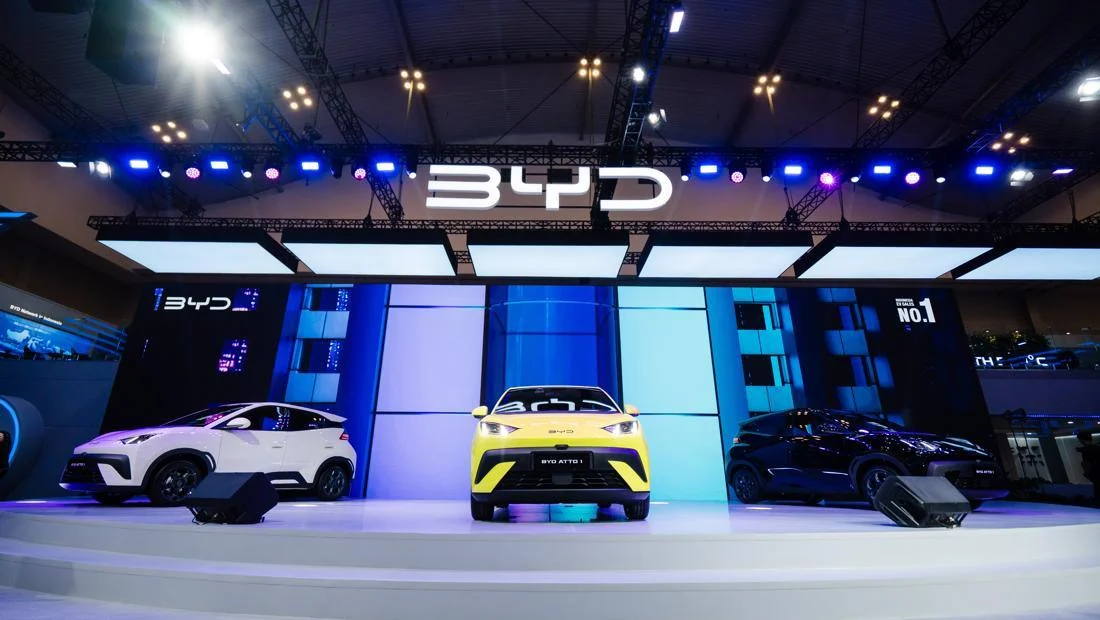
The meteoric rise of Build Your Dreams, commonly known as BYD, represents one of the most significant transformations in the modern industrial era. What began as a fledgling startup in a nondescript warehouse in Shenzhen has matured into a global powerhouse that currently dictates the pace of the global electric vehicle (EV) transition. Today, BYD is no longer merely a participant in the automotive sector; it is the architect of a comprehensive green energy ecosystem that spans from battery mineral processing to the final assembly of high-tech passenger cars. The company’s journey reflects a broader shift in the global economic landscape, where traditional internal combustion engine (ICE) dominance is being challenged by vertically integrated technology firms.
The Genesis: A Foundation Built on Battery Technology
The story of BYD began in February 1995. Founded by Wang Chuanfu, a chemist and researcher, the company’s initial headquarters was a simple warehouse. Operating with a modest team of just 20 employees and a starting capital of 4.5 million yuan (approximately IDR 11 billion), the firm’s early focus was not on transportation, but on the burgeoning consumer electronics market. During the mid-1990s, the global demand for rechargeable batteries was skyrocketing, and BYD positioned itself as a cost-effective, high-quality alternative to Japanese manufacturers who then dominated the market.
By the turn of the millennium, BYD had achieved significant breakthroughs in lithium-ion technology. This expertise caught the attention of global tech giants. In 2000, BYD became the first Chinese lithium-ion battery supplier for Motorola. This was followed in 2002 by a partnership with Nokia, which at the time was the world’s leading mobile phone manufacturer. These contracts provided the financial stability and technical credibility necessary for the company to look toward a more ambitious horizon: the automotive industry.
Strategic Entry into the Automotive Sector
On January 22, 2003, BYD made a move that was met with skepticism by many industry analysts at the time. The company acquired Tsinchuan Auto Co. Ltd., a small, struggling state-owned automaker. While investors initially reacted negatively—fearing that a battery company lacked the expertise to build cars—Wang Chuanfu viewed the acquisition as a necessary step toward his vision of electrified transport. He understood that the battery would eventually become the most valuable component of a vehicle, and BYD already held the intellectual property for that core technology.
The subsequent years were marked by rapid prototyping and innovation. On December 15, 2008, BYD launched the F3DM, which holds the distinction of being the world’s first mass-produced plug-in hybrid electric vehicle (PHEV). This launch occurred years before many Western legacy automakers had even considered a serious move into electrification. In 2009, the company introduced its first pure electric vehicle, the E6, which initially served as a fleet vehicle for taxis and public transport, allowing BYD to gather massive amounts of real-world data on battery degradation and motor performance.
The Technological Pivot and the Blade Battery Innovation
A defining moment in BYD’s history occurred in 2020 with the introduction of the "Blade Battery." Utilizing Lithium Iron Phosphate (LFP) chemistry, the Blade Battery addressed two of the most significant concerns in the EV industry: safety and energy density. Unlike traditional NCM (Nickel Cobalt Manganese) batteries, the Blade Battery proved to be exceptionally stable during "nail penetration tests," showing no signs of fire or explosion.

This technological edge, combined with BYD’s vertical integration—where the company manufactures its own semiconductors, motors, and battery cells—allowed it to scale production at a rate that baffled competitors. In 2022, BYD made the historic decision to cease the production of pure internal combustion engine vehicles entirely, focusing 100% of its resources on New Energy Vehicles (NEVs), which includes both Battery Electric Vehicles (BEVs) and Plug-in Hybrids (PHEVs).
Chronology of Global Growth and Market Dominance
The acceleration of BYD’s sales figures in the last decade is a testament to its operational efficiency and market appeal. The company’s trajectory can be summarized through the following milestones:
- 1995–2003: Foundation and rise as a global battery supplier for mobile devices.
- 2003–2008: Entry into the automotive market and development of the world’s first PHEV.
- 2009–2020: Introduction of the E6 and expansion into electric buses and commercial fleets globally.
- 2021: Reaching the milestone of 1 million NEVs sold, a feat that took 13 years to achieve from the launch of their first PHEV.
- 2022: Total cessation of ICE vehicle production; launch of the "Ocean" and "Dynasty" series.
- 2023: Annual sales surged to 3.02 million units, cementing its position as the "Global Sales Champion" for NEVs.
- 2024: BYD achieved a staggering milestone by selling 4.6 million units in a single year, reflecting an exponential growth curve where the company now sells in a single year more than four times what it sold in its first 13 years combined.
Furthermore, BYD’s international footprint has expanded to over 70 countries. For the first time in its history, the company’s export volume exceeded 1 million units in a calendar year, signaling that the brand has successfully transcended its domestic market to become a preferred choice for consumers in Europe, Southeast Asia, and Latin America.
Environmental Impact and Sustainability Metrics
Beyond financial success, BYD has framed its mission as a contribution to global decarbonization. By the end of the last fiscal year, the total population of BYD New Energy Vehicles on global roads surpassed 15 million units. According to company data, this fleet has collectively contributed to a reduction in carbon emissions totaling approximately 125.87 billion kilograms of CO2. To put this into perspective, this environmental impact is roughly equivalent to the carbon sequestration capacity of 2.1 billion trees.
This focus on sustainability has resonated with governments worldwide that are struggling to meet Paris Agreement targets. BYD’s ability to provide affordable, high-performance electric vehicles is seen as a key factor in democratizing green technology, moving it from a luxury niche into the mainstream market.
Dominating the Indonesian Landscape
Indonesia has emerged as a cornerstone of BYD’s Southeast Asian strategy. In a remarkably short period, the manufacturer has managed to capture the lion’s share of the local electric vehicle market. Last year, BYD recorded the sale of approximately 54,000 electric vehicles in Indonesia. This performance granted the company a commanding 52 percent market share in the EV segment, effectively making it the dominant player in the nation’s transition toward sustainable mobility.
The impact of BYD’s entry into the Indonesian market is visible in the broader industry data. Prior to BYD’s aggressive expansion, the market share of electric vehicles in Indonesia was negligible. However, last year, EV adoption reached 13 percent of total automotive sales—a fourfold increase compared to just two years prior. Industry analysts attribute this surge to BYD’s competitive pricing strategy and the introduction of versatile models like the Seal, Atto 3, and Dolphin, which cater to different consumer demographics.

Investment and Local Manufacturing in Subang
BYD’s commitment to Indonesia extends beyond sales. Recognizing the country’s potential as a regional automotive hub and its vast nickel reserves—a critical component for battery production—BYD has committed to significant localized investment. The company has finalized plans for a massive manufacturing facility located in Subang, West Java.
This plant is scheduled to begin operations in the first quarter of this year. The Subang facility is expected not only to serve the domestic Indonesian market but also to act as an export base for other Right-Hand Drive (RHD) markets in the region. This move aligns with the Indonesian government’s "Golden Visa" and downstreaming policies, which encourage foreign firms to build entire supply chains within the country rather than just exporting raw materials.
Analysis of Implications and Future Outlook
The rise of BYD carries profound implications for the global automotive industry. First, it demonstrates the power of vertical integration. By controlling the battery supply chain, BYD has remained resilient against the semiconductor shortages and raw material price volatility that have plagued traditional automakers.
Second, BYD’s success in Indonesia serves as a blueprint for how Chinese automakers may approach emerging markets. By combining high-technology products with localized manufacturing and infrastructure development—such as building charging networks—BYD is creating a "moat" that will be difficult for competitors to breach.
However, the path forward is not without challenges. As BYD expands, it faces increasing scrutiny regarding trade tariffs in markets like the European Union and North America. Furthermore, as the "early adopter" phase of EV ownership concludes, BYD will need to continue innovating in software and autonomous driving features to compete with tech-centric rivals.
In conclusion, the journey from a 20-person team in a Shenzhen warehouse to a global titan with 15 million vehicles on the road is a narrative of strategic patience and technological conviction. For Indonesia, the presence of BYD represents a pivotal shift in the industrial landscape, promising to turn the nation from a mere consumer of automotive technology into a vital hub for the global green energy revolution. As the Subang factory begins its first production runs this quarter, the "Build Your Dreams" moniker seems less like a slogan and more like a historical account of a company that re-imagined the future of transport.